
No products in the basket.
Henna is a very special dye used for many UK cultural celebrations and festivals. This natural plant paste creates beautiful orange or brown patterns on the skin. However, henna is also famous for creating very dark marks on your clothes. This happens because the plant contains tannins that bind tightly to fabric. If you spill it, you might think your garment is ruined forever. Fortunately, you can save your favourite outfit by acting very quickly. Always remember the most important rule for cleaning henna from clothing. You must never use hot water during the first cleaning stage. Hot water will permanently cook the dye into the fabric threads.
Can You Remove Stubborn Henna Stains from Fabric at Home?
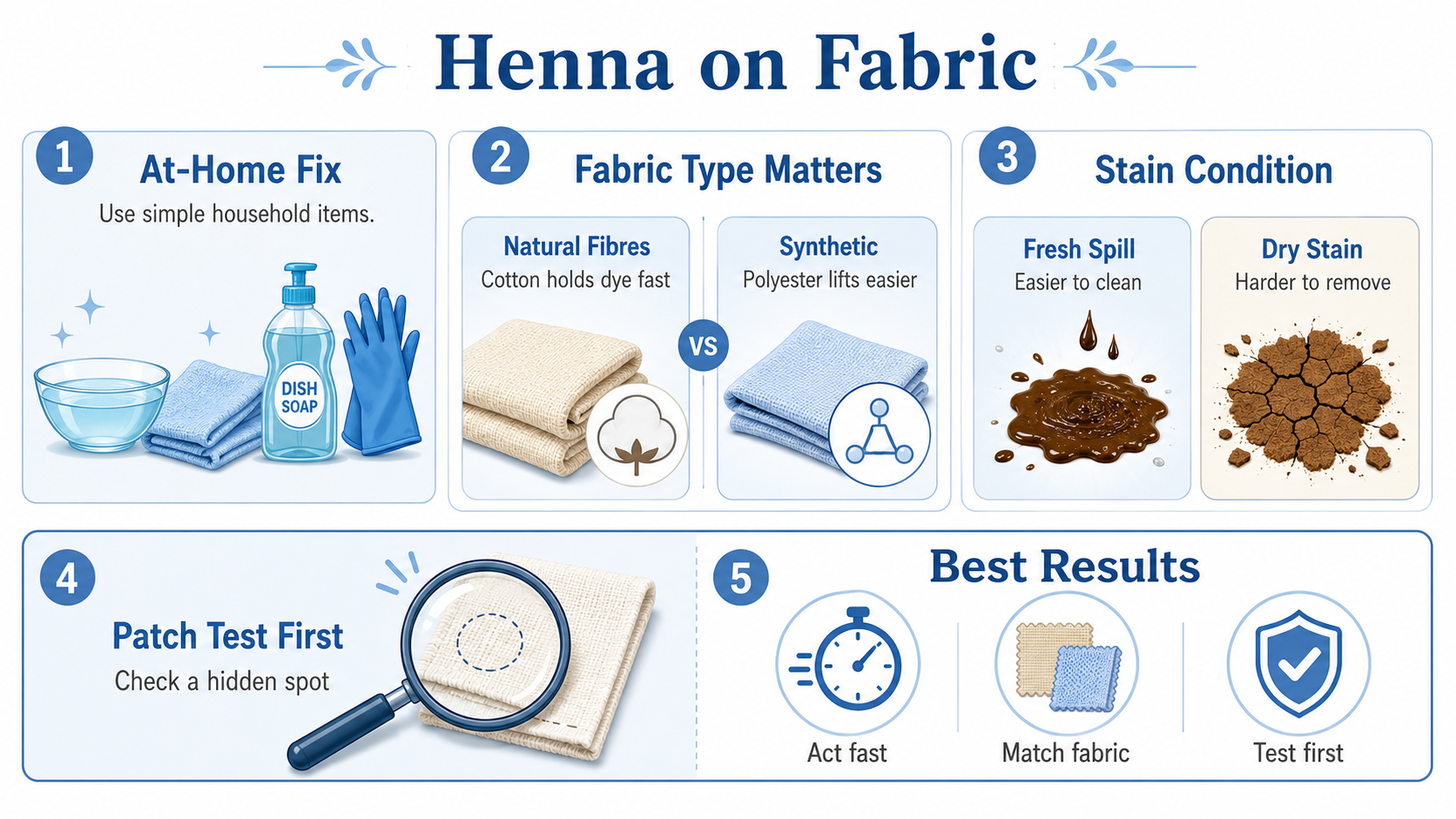
Many people wonder if they can fix these marks without professional help. You can learn how to remove stubborn henna stains from fabric using basic items. Most UK homes already have the right tools in their cupboards.
Actually, the results depend on your fabric type:
- Natural fibres like cotton soak up dye quickly.
- Synthetic materials like polyester release stains more easily.
Moreover, check if the henna is still damp or dry. Consequently, treat fresh spills much more easily than old marks. Always perform a small patch test on a hidden area. This protects the colour of your favourite clothes.
Why does henna stain fabric so quickly and deeply?
Henna is a natural dye that is designed to stay on surfaces. The plant contains a chemical called lawsone which loves to bind. This molecule is very small and travels deep into fabric fibres. Consequently, it creates a permanent bond as soon as the liquid dries. Because henna is organic, it behaves like a grass or food stain. It finds tiny gaps in the weave of your favourite cotton shirt. Once it settles there, it becomes very resistant to regular soapy water. This is why you must understand the science behind the cleaning process. Knowing the cause helps you choose the right chemical to break it.
Can you use biological laundry detergent for henna stains?
Biological detergents are a great choice for removing these plant-based marks. These products contain special enzymes that act like tiny scissors for stains. They cut through the organic proteins and tannins found in henna paste. Therefore, using brands like Persil Bio or Ariel can be very effective. However, you must be careful if you have very sensitive skin. Some people find that biological liquids cause a bit of irritation. Always rinse the clothing twice to remove any leftover detergent chemicals. If the stain is very old, let the detergent sit for an hour. This gives the enzymes more time to work on the dye.
Is baking soda better than lemon juice for these marks?
Baking soda and lemon juice work in very different ways on stains. Baking soda is an alkaline powder that helps to lift out odours. It also provides a gentle scrubbing action that does not hurt fabric. On the other hand, lemon juice is a natural bleach and acid. It works very well on white fabrics to brighten the stained area. When you mix them together, they create a bubbling chemical reaction. This fizzing action helps to lift the henna dye out of threads. However, you should only use lemon on white or very light items. It might cause dark colours to fade or look very patchy.
How do you handle henna stains on delicate upholstery?
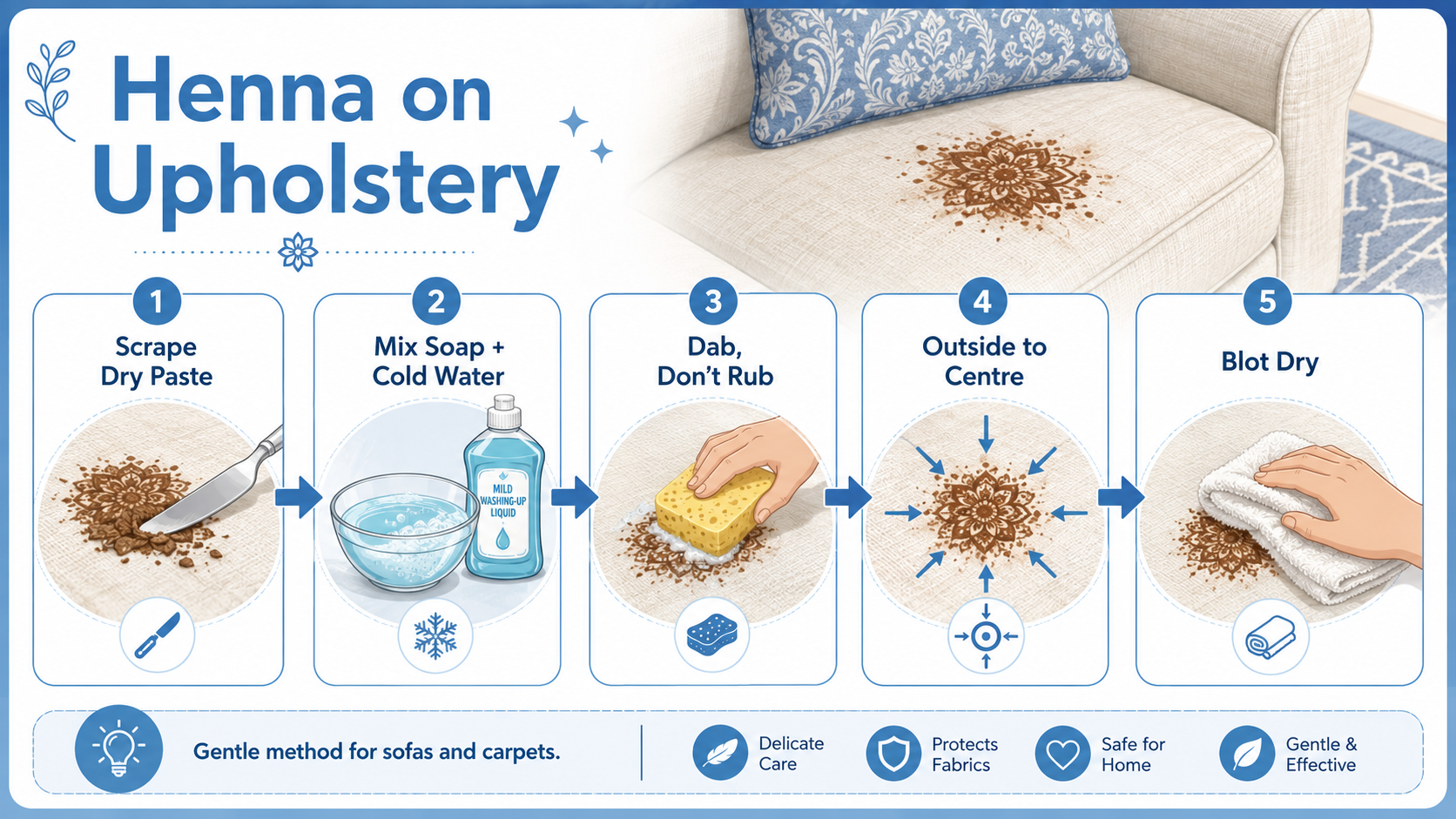
Stains on your sofa or carpet are harder to fix than clothes. You cannot simply throw your living room couch into the washing machine. Instead, you must use a careful “damp cloth” cleaning method. Initially, scrape away the dried paste with a very dull butter knife. Then, mix a little Fairy Liquid with cold water in a bowl. Use a sponge to dab the soapy water onto the stain. Always work from the outside of the mark toward the middle. This prevents the henna from spreading across a larger area of fabric. Use a dry towel to blot the moisture out as you work.
When should you take your stained clothes to a professional?
There are times when home cleaning might cause more harm than good. If your garment is labelled “Dry Clean Only,” do not wash it. Water can shrink these fabrics or ruin their delicate shape forever. Additionally, if the stain is very large, a professional is better. They have access to industrial chemicals that are not sold in shops. Most UK high streets have a dry cleaner who understands henna stains. They see these marks often after wedding seasons or major religious holidays. Paying a small fee is better than ruining a very expensive outfit. Be honest with the cleaner about what products you already tried.
Does the age of the stain change the cleaning process?
The age of the henna mark is the most important factor. Fresh, wet henna is much easier to remove with simple cold water. Once the paste dries and cracks, the dye has already moved. It has travelled from the surface into the core of the threads. Therefore, an old stain requires much more patience and stronger cleaning chemicals. You might need to repeat the cleaning steps four or five times. Do not get discouraged if the mark is still there after washing. Simply treat it again while the fabric is still damp and wet. Never put an old stain into a hot dryer or iron.
What common mistakes should you avoid when cleaning henna?
One major mistake people make is using chlorine bleach on dark clothes. Bleach will remove the henna but it also removes the fabric colour. This leaves a permanent white or yellow hole in your garment. Another error is using a stiff brush to scrub the delicate area. This can fray the fabric and make it look fuzzy or old. Moreover, many people forget to check the garment’s care label for instructions. Always avoid using hot water or steam on a fresh henna spill. Heat locks the dye in and makes it almost impossible to remove. Finally, do not wait several days before you start the cleaning.
How can you prevent henna spills during your celebrations?
Prevention is always better than spending hours cleaning up a messy spill. When applying henna, wear an old T-shirt that you do not mind staining. You can also use an old towel to cover your lap. This protects your nice clothes from any falling pieces of dried paste. If you are a bride, ask someone to help you move carefully. Keep children and pets away from the area where henna is used. Meanwhile, make sure the henna paste is the right thickness for use. If it is too watery, it will drip onto everything nearby. Use a professional applicator to keep the process very clean and tidy.
Are natural remedies better than chemical stain removers?
Natural remedies are often safer for the environment and your delicate skin. Using milk or lemon juice is a very traditional and cheap method. Many UK immigrants prefer these because they are easy to find. However, chemical removers like Vanish are often much faster and more powerful. They are specifically designed in labs to target tough plant-based dye molecules. The best choice depends on how much you value the stained item. For a cheap t-shirt, a quick bicarb scrub is usually enough. For a special wedding outfit, you might want a high-quality chemical cleaner. Both methods can work if you follow the steps very correctly.
What is the best way to clean white cotton shirts?
White cotton is one of the most common fabrics for henna stains. Since it is white, you can use stronger bleaching agents without fear. Start by applying a paste of bicarbonate of soda and water. Let it dry completely in the sun if the weather is nice. Sunlight acts as a natural bleach and helps to fade the orange. Afterwards, wash the shirt with a biological detergent at a cool temperature. If the mark remains, you can try using a little hydrogen peroxide. This chemical is very strong and works wonders on bright white cottons. Always rinse the fabric thoroughly after using any strong chemical agents.
How do you remove henna from jeans or denim?
Jeans are very thick and the dye can hide deep in the weave. Firstly, you should soak the denim in cold water for an hour. This helps to loosen the particles of henna trapped in the fabric. Use a brush to gently work some Fairy Liquid into the stain. Because denim is tough, you can scrub a bit harder than silk. However, do not use bleach as it will ruin the blue colour. Rinse the area with cold water and check the progress frequently. If the stain is still there, try using some surgical spirit. Blot it with a cotton ball until the orange colour transfers over.
Can you use hairspray to lift a henna stain?
Some people suggest using hairspray to remove stains from their expensive clothes. This trick works because many hairsprays contain a high amount of alcohol. The alcohol acts as a solvent to dissolve the stubborn henna dye. Simply spray a generous amount onto the mark and let it sit. After five minutes, use a clean cloth to blot the area carefully. You should see the colour starting to lift off the fabric. Afterwards, wash the garment as you normally would in the machine. Please check that your hairspray does not contain extra oils or glitters. These extra ingredients could create a brand new mess on your outfit.
Is cold milk really effective for deep-set henna dyes?
Using cold milk is a very old and famous cleaning trick. Milk contains proteins and fats that help to pull out plant dyes. Firstly, pour enough milk into a bowl to cover the stain. Submerge the fabric and leave it there for at least six hours. Many people find that leaving it overnight gives the best results. Consequently, the henna moves from the fabric into the liquid milk. When you wake up, rinse the item with plenty of cold water. You will need to wash it with soap to remove the smell. This method is very gentle and perfect for your delicate summer dresses.
Should you use a toothbrush to scrub the stain?
A soft toothbrush can be a very helpful tool for cleaning. It allows you to target the stain without hurting the whole garment. Apply your cleaning solution to the bristles and scrub in circles. This motion helps to lift the dye out of the fabric weave. However, you must be very careful not to press down too hard. Hard scrubbing can break the fibres and leave a fuzzy mark. If the fabric is very thin, avoid using a brush entirely. Instead, use your fingertips to gently massage the soap into the threads. This ensures that you are being as safe as possible with clothes.
Are there any eco-friendly ways to remove henna?
Many people prefer to use green cleaning methods in their British homes. You can use white vinegar and baking soda for an eco-friendly fix. These items are non-toxic and very safe for children and pets. Another green option is using a vegetable-based soap like Castile soap. This soap is very gentle on the earth but tough on dyes. You can also try using a steam cleaner for very old stains. The steam helps to open the fibres without using harsh chemicals. However, be careful not to use too much heat on fresh marks. Combining natural ingredients is a great way to protect the environment and clothes.
Final Thought
Removing henna is a big task, but you can definitely do it. We have explored many ways to protect and save your favourite clothes. Whether you use Fairy Liquid or surgical spirit, stay very patient. Start with the gentlest methods before moving to the stronger chemicals. Always use cold water and avoid rubbing the stain into the fabric. If you feel unsure, visiting a professional dry cleaner is wise. Your clothes are an important part of your culture and your life. With these tips, you can enjoy your celebrations without any cleaning stress. Please share your success stories or ask questions in the comments!
FAQs
1. How to remove dried henna stains from clothes?
- Rinse with cold water, apply a stain remover or liquid detergent, then wash according to the fabric care label.
2. Does henna come out of fabric?
- Fresh henna stains are easier to remove. Dried stains may require repeated treatment.
3. Can henna stains be removed?
- Many henna stains can be reduced or removed with prompt cleaning and the right stain-removal methods.
4. Does henna stain permanently?
- Henna can leave long-lasting stains, especially on light fabrics, but it is not always permanent.
5. Can toothpaste remove henna stains?
- Toothpaste is not a reliable stain remover and may damage some fabrics. Use a fabric-safe stain remover instead.
6. Is henna permanent on fabric?
- Henna is not usually permanent on fabric, but it can leave stubborn stains if not treated quickly.