
No products in the basket.
Many people in the UK now choose clean beauty products for themselves. You might want to skip harsh chemicals for your hair care needs. Finding natural products on the British high street can be very tricky. Often, labels use words that sound healthy but are quite confusing. Pure henna is a great choice for a safe, natural hair glow.
However you must know exactly what is inside the cardboard box. This guide helps you choose the best henna for your unique needs. We will explore the right ingredients for your beautiful, healthy hair. Let us start this journey to natural hair care together today.
What Ingredients Should I Look for in Pure Henna Hair Dye?
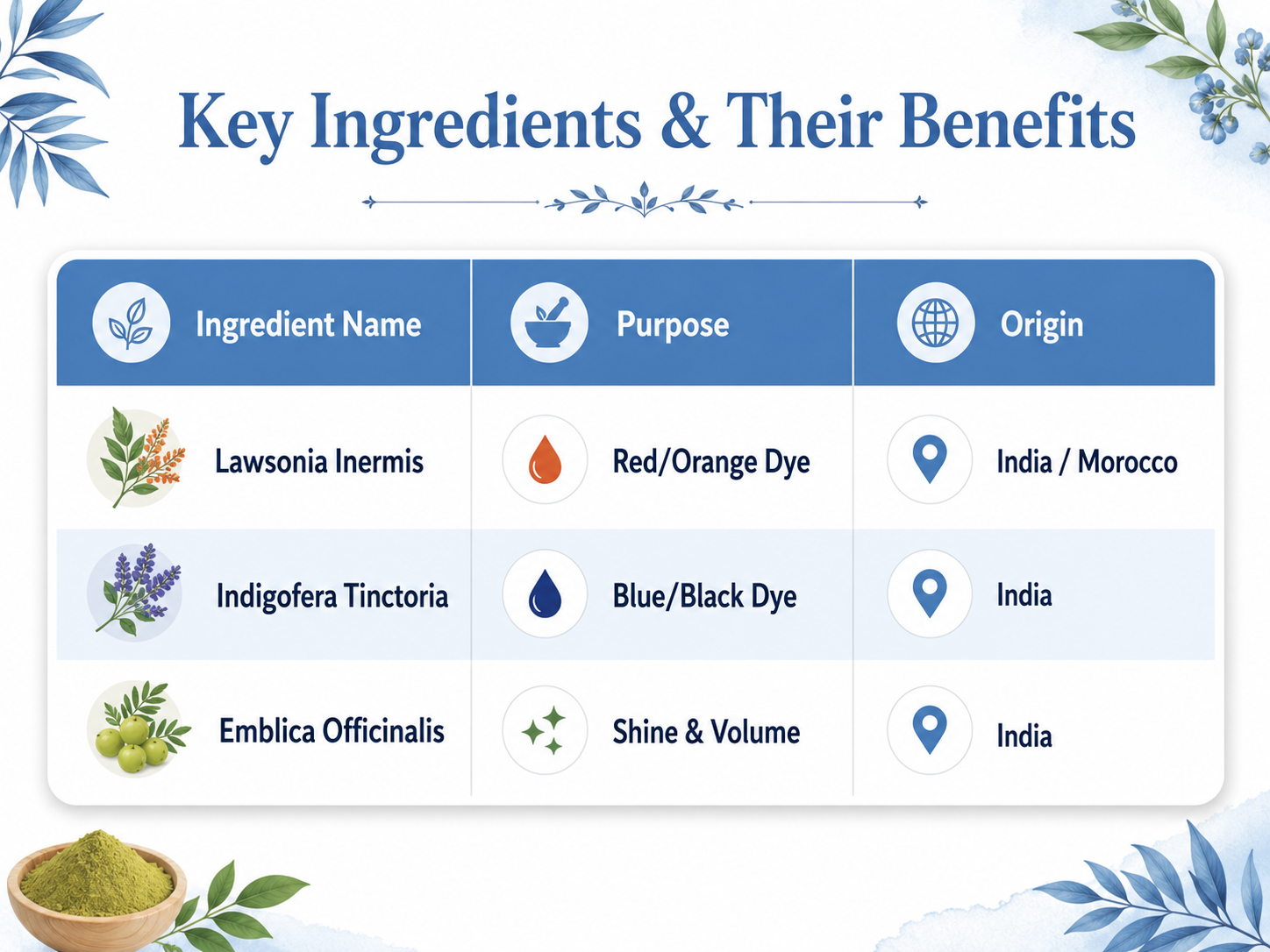
First, you must look for the name Lawsonia Inermis on the label. This is the official botanical name for the 100% pure henna plant. Specifically, this plant provides the orange and red tones for your hair. Authentic henna products usually have only one item on the ingredient list.
If the list is very long, the product is likely not pure. Furthermore, the best henna comes from very hot and dry regions. High-quality sources like Rajasthani or Moroccan henna are popular in UK shops. These powders are very fine and easy to mix into a paste.
Consequently, they provide a much better stain for your grey hair strands. You should check where the plant was grown before you buy it. Truly pure henna will always feel like a soft, green herbal powder. Additionally, the smell should remind you of freshly cut hay or grass. If it smells like chemicals, you should put it back quickly.
Are Hidden Chemicals Lurking in Your Henna Products?
Unfortunately, some brands hide dangerous chemicals inside their “natural” hair products. One major danger is a chemical called PPD, or Paraphenylenediamine. This ingredient is often found in something people call black henna. Actually, PPD can cause very bad skin reactions or even scarring. The UK has strict laws about how much PPD products can contain. However, it is much safer to avoid this chemical entirely for health.
Moreover, you should watch out for hidden metallic salts in the mix. These salts react very poorly with previous chemical salon hair treatments. They might turn your hair green or cause it to break off. Similarly, synthetic fragrances can irritate a sensitive scalp during the dying process. Ammonia is another harsh chemical that pure henna never needs to use. Truly natural henna works with your hair instead of damaging the layers. Therefore, you must read every single word on the back of the pack.
How Do Natural Additives Affect Henna Colour Shades?
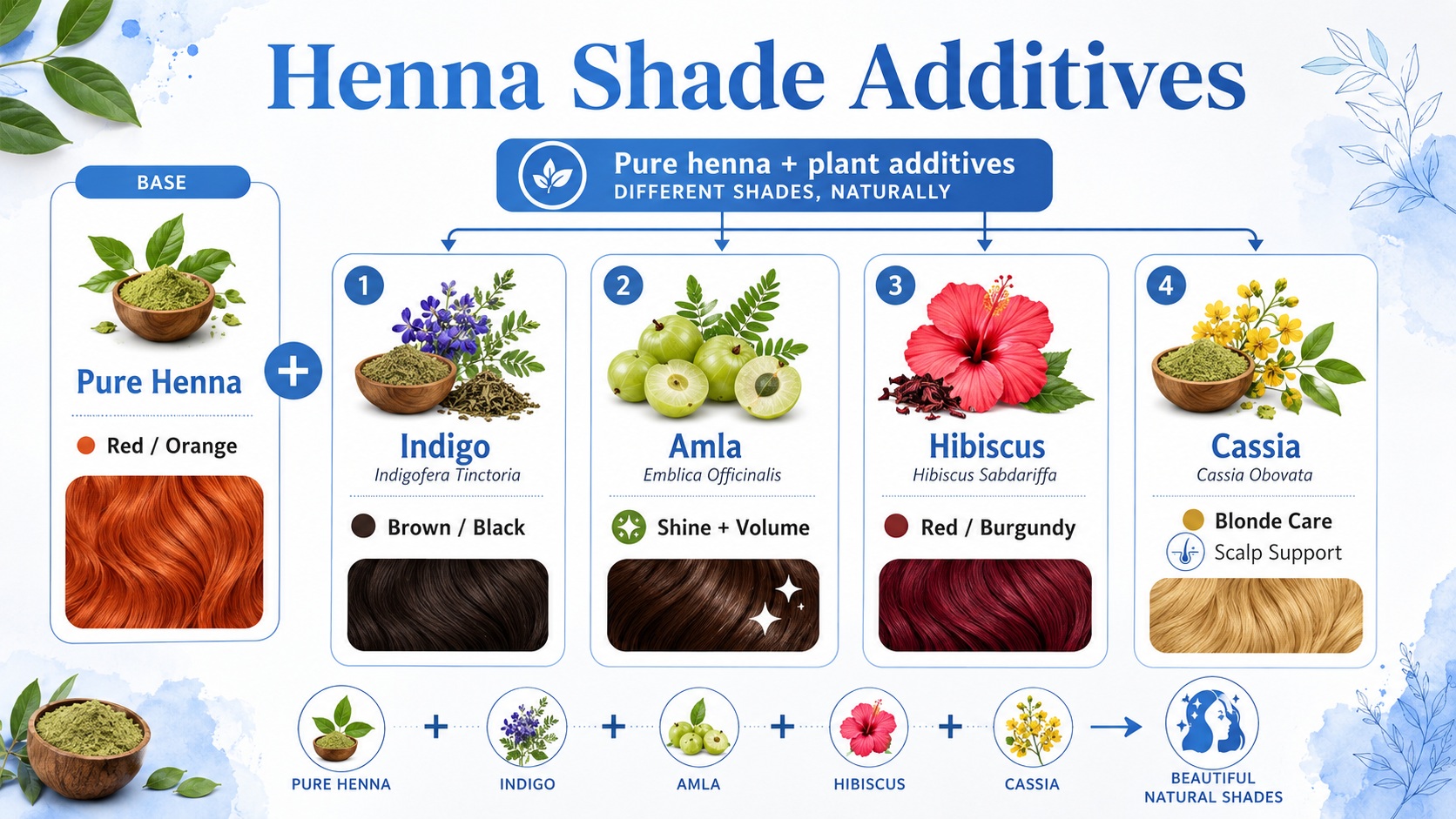
Pure henna alone will only give you red or orange hair tones. To get different colours, you need other safe plants in the mix. For darker browns or blacks, you should look for Indigofera Tinctoria. This plant is commonly known as Indigo and creates a deep blue-black. When mixed with henna, it creates a lovely range of brown shades. Next look for Emblica
Officinalis, which is also called Amla powder.
This ingredient adds amazing shine and helps to boost your hair volume. If you want bright red or burgundy tones, look for Hibiscus. Hibiscus Sabdariffa is a flower that adds a cool pinkish-red tint naturally. For scalp health and blonde tones, Cassia Obovata is a great choice. People often call this neutral henna because it does not change colour. It acts like a deep conditioner for your hair and your scalp. Consequently, these plant additives are safe and very effective for your hair.
How to Spot Quality Henna in the UK Market
Finding the best henna in the UK requires a little bit of research. You should look for the soil association certification logo on the box. This organic “leaf” symbol proves the product is grown without nasty pesticides. Furthermore, the quality of the sift is very important for a smooth paste.
Look for “triple-sifted” powder to make rinsing the paste much easier. This is especially helpful if you live in a hard water area. Hard water in the UK can make washing out herbal pastes difficult. Additionally, always check the expiry date printed on the bottom of the pack. Fresh henna powder will always give you the strongest and longest-lasting colour.
If the powder is old, it will turn a dull brown colour. Pure, fresh henna should be a vibrant, dusty green like dried peas. Also, ensure the packaging is airtight to keep the dye very fresh. Properly stored henna will last much longer and work much better for you.
Is Lush Henna Pure Henna?
Many shoppers in the UK visit Lush for their natural beauty products. Their henna comes in a solid brick made with cocoa butter. This version is very moisturising, but it is not just pure powder. It contains essential oils and butter to help condition your dry hair. Therefore, it is safe but different from traditional loose henna powder. You should check if you prefer a solid block or powder.
Some people find the powder easier to mix to a specific texture. Others love the smell and feel of the pre-made Lush blocks. However, the results are usually more subtle than using a pure powder. If you want a very strong colour, pure powder is often best. Always read the ingredients on their website before you go to the shop. This helps you understand what you are putting on your hair and scalp.
Can I Use Pure Henna Over Bleached Hair?
You can use pure henna on bleached hair, but you must be careful. Bleached hair is very porous and absorbs the dye very quickly. Specifically, the henna might turn a very bright neon orange at first. You should always perform a strand test on a small hidden area. This shows you exactly how the colour will look on your hair. Additionally, wait at least one month after bleaching before using any henna.
This gives your hair some time to recover from the chemical damage. Furthermore, you should avoid henna with any metallic salts on bleached hair. These salts can cause a chemical reaction that ruins your hair texture. Pure henna is actually a wonderful way to strengthen your damaged hair. It fills in the gaps in the hair shaft created by bleach. Your hair will feel thicker and much stronger after a few applications.
How Do I Know if My Henna Contains Metallic Salts?
There is a simple test you can do at home to check. You will need some of your hair from a hairbrush for this. Mix a small amount of henna with water in a glass bowl. Place your hair into the paste and leave it for a while. If the hair changes colour instantly, it might have metallic salts. Moreover, if the hair starts to smoke or smell bad, stay away.
This is a sign of a very dangerous chemical reaction taking place. Pure henna will never smoke or get hot when mixed with water. Usually, salts are found in cheap, low-quality dyes from unverified sellers. You should buy from trusted UK brands to stay completely safe and happy. Authentic henna only needs warm water to create a beautiful, safe dye. Consequently, doing this test will give you great peace of mind today.
How Does UK Water Affect Your Henna Results?
The water in your UK home can change your henna results. Many parts of the UK have very hard water with high minerals. These minerals can sometimes make the henna colour look a bit duller. To fix this, you can use filtered water for your hair paste. Alternatively, adding a little lemon juice helps the dye release more quickly.
However, do not use too much juice if your scalp is dry. You might find that rainwater is also a very soft, natural option. Some people like to use distilled water from the local supermarket too. This ensures that no heavy metals interfere with your natural hair dye.
Consequently, your hair will feel much softer after you finish the process. Using the right water makes the application a very pleasant experience today. It also helps the plant ingredients bond to your hair strands better.
Why Is Dye Release Time Important for Henna?
Pure henna needs time to release its dye into the water mix. You cannot just mix it and put it on your hair immediately. Usually, you should let the paste sit for a few hours first. Place the bowl in a warm spot in your kitchen or lounge. You will see the top of the paste turn a darker brown. This means the dye is now ready to colour your hair strands. However, indigo powder does not need a long wait time like henna.
If you are using indigo, mix it just before you apply it. Mixing them correctly ensures you get the exact brown or black shade. Some people like to mix their henna the night before they use it. This allows the plant chemicals to develop fully for a deep stain. Therefore, patience is the secret to a professional-looking result at home.
FAQs
1. What ingredients should I avoid in henna?
- Avoid PPD (paraphenylenediamine), metallic salts, ammonia, and synthetic dyes. These can damage hair and cause allergic reactions.
2. What are the ingredients in pure henna?
- True pure henna contains only the leaf powder of Lawsonia inermis. Nothing else should be added.
3. What is the healthiest hair dye to use?
- The healthiest option is 100% plant-based dyes like pure henna, indigo, or cassia. They are chemical-free and gentle on the scalp.
4. How to tell if henna is pure?
- It should have a single ingredient list, usually “Lawsonia inermis”, a fresh green colour, and a natural grassy smell. No chemicals or long ingredient lists.
5. Why do hairdressers not like henna?
- Henna coats the hair and can make chemical colouring or bleaching unpredictable. It can also be hard to fully remove from hair.
6. What is the safest henna to use?
- The safest henna is 100% pure Lawsonia Inermis with no additives, preferably certified organic and lab-tested.