
No products in the basket.
Safe henna brands should make safety easy to check. Real henna comes from Lawsonia inermis and develops into orange, copper, red or reddish-brown tones. It should not promise instant black colour. That kind of claim can point to PPD, metallic salts or hidden synthetic dyes.
For UK buyers, the smartest choice is fresh pure henna powder from a trusted supplier with full ingredients, batch details, storage advice and patch-test guidance. A safe product does not hide behind words like ‘herbal’ or ‘natural’. It proves safety on the label.
Now, let’s dive in and discover the essential answers you need before choosing a safe henna brand for your hair or skin.
What Are Safe Henna Brands?
Safe henna brands sell clear plant-based henna products with honest ingredient lists. A safer product should show what is inside, avoid instant black colour claims, and give proper use instructions. The best choice usually starts with pure plant powder from a trusted seller who provides batch-tested, high-quality botanical ingredients without hidden synthetic dyes.
What makes a henna brand safer?
When you are hunting for a new brand, look for transparency above everything else. A safe brand does not treat its ingredients like a state secret. Instead, they proudly list the botanical names of the plants they use. They also give you realistic expectations about how long the dye takes to release and how the colour will develop over 48 hours.
Why does the ingredient list matter most?
The interesting thing is that many people trust a brand just because it has been around for decades. But names can be misleading. A brand might sell a “pure” powder in one box and a “fast-acting” chemical blend in another. If you look at the ingredients first, you stop being a target for clever marketing and start being an informed buyer.
The easiest rule for how to choose safe henna brands without harmful chemicals is to ignore the flashy promises on the front of the box and go straight to the back label. Marketing can sound convincing, but the ingredient list usually tells the truth.
What is the 30-second safety check?
Before you head to the checkout, run through these quick points:
- Check if you can see a full list of ingredients.
- Look for the specific plant name Lawsonia inermis.
- See if the box promises a colour result in under 30 minutes.
- Check if the manufacturer provides a batch number or expiry date.
- Verify if the seller specialises in natural products or just general groceries.
Why Is Black Henna Different From Natural Henna?
Black henna is often not the same as natural henna. Many black henna products use added dye chemicals for fast, dark colour. Natural henna does not turn black instantly. It usually gives orange, copper, red, or reddish-brown tones. Adding chemicals like PPD to henna creates a high risk of severe allergic reactions.
What is the main risk of black henna?
The biggest issue is that “black henna” is frequently just a cocktail of industrial chemicals. The most common additive is PPD, which is a dye used in rubber and permanent hair colours. When it is mixed into henna paste in high amounts, it can cause weeping sores, permanent scarring, and lifelong allergies. It is simply not worth the risk for a temporary stain.
How can readers spot risky black henna?
Actually, it is quite easy to spot if you know what to look for. Use these signs as a warning:
- The product claims to give “instant” results.
- The paste itself is jet black rather than dark green.
- It has a chemical or “inky” smell instead of an earthy, grassy scent.
- The stain on your skin appears black immediately after you wash the paste off.
What colour does real henna give?
Natural henna only has one dye molecule, and it is warm. Depending on your original hair colour or your skin tone, it will range from a bright ginger to a deep burgundy. If you want black hair safely, you have to use a mix of plants, which we will explain later in this guide.
Which Henna Ingredients Should You Look For?
A safer henna product should list simple plant ingredients. Pure henna should show Lawsonia inermis. Darker hair kits may include indigo powder. Some blends may also include cassia or amla. Readers should avoid products that hide the full formula. A short, recognisable list of plants is always the best sign of a safe product.
What does Lawsonia inermis mean?
This is the scientific name for the henna plant. If this is the only thing listed on the packet, you are looking at pure, unadulterated henna. It is the most reliable way to ensure you are not putting metallic salts or synthetic dyes on your scalp.
Which plant powders may appear in safe blends?
The honest truth is that henna is often at its best when it has some plant-based friends in the mix.
- Indigo powder (Indigofera tinctoria) helps create brown and black shades.
- Cassia helps with conditioning and adds a golden shine to lighter hair.
- Amla is great for supporting the hair texture and cooling down the red tones.
Which ingredients should readers avoid?
Keep an eye out for these “hidden” dangers on the back of the packet:
- PPD or Para-phenylenediamine.
- Metallic salts like silver nitrate.
- Sodium picramate (used to make the red more intense).
- Any vague terms like “perfume” or “proprietary fragrance”.
- Words like “coal tar” or “lead acetate”.
How Can You Check a Henna Label Before Buying?
A trustworthy henna label should show the full ingredient list, plant names, storage advice, expiry details, and safety steps. If the label hides key information or uses vague claims, the product may not be a smart choice. Safe buying starts with demanding transparency from the manufacturer regarding their sourcing and testing.
What should a good henna label include?
A high-quality brand wants you to have a good experience, so they will be very detailed. Look for a batch number, as this shows the company tracks their inventory. You should also see clear instructions on how to perform a patch test. The reality is that a brand will always remind you to do a patch test before full use.
Which label words should make readers careful?
Marketing can be very sneaky. Be careful if you see words like:
- “No-Wait Henna”
- “Permanent Herbal Black”
- “One-Step Black Dye”
- “Professional Strength”
Why can “herbal” still mislead people?
Just because something says “herbal” or “ayurvedic” does not mean it is 100% plant-based. Many products use these words on the front of the box while the fine print on the back reveals chemical additives. You must look past the big green leaves on the packaging and read the actual ingredient list every single time.
What Type of Henna Powder Should You Choose?
The best henna powder depends on the reader’s goal. Hair colour, grey coverage, body art, and darker results may need different powders or kits. Fresh, finely sifted, pure powder usually gives better control and safer use. Always look for “body art quality” if you want the easiest application and the best dye release.
What is organic henna?
Organic henna is grown without synthetic pesticides or fertilisers. While this is great for the environment, you still need to check the ingredients. An organic label does not automatically mean there are no chemicals added after the harvest. Look for certification logos from groups like the Soil Association to be sure.
What is body art quality henna?
The challenge is that lower-grade henna can be very gritty and hard to wash out of your hair. Body Art Quality (BAQ) henna is sifted multiple times to create a powder that is as fine as flour. It makes a smooth, creamy paste that is much easier to work with, whether you are drawing a design on your hand or covering your hair.
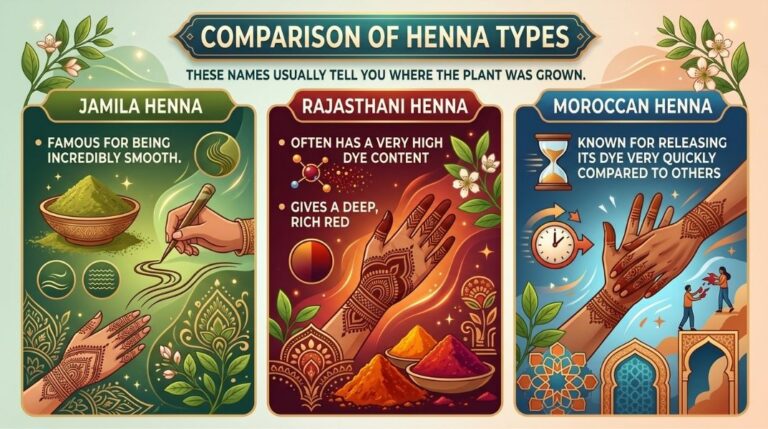
What are Jamila, Rajasthani, and Moroccan henna?
These names usually tell you where the plant was grown.
- Jamila is famous for being incredibly smooth.
- Rajasthani henna often has a very high dye content and gives a deep, rich red.
- Moroccan henna is known for releasing its dye very quickly compared to others.
Which Henna Brands and UK Suppliers Should You Check?
UK readers should check henna suppliers that sell clear plant-based products and give full ingredient details. Renaissance Henna and it’s Pure are useful UK options from the supplied research. Readers can also compare trusted international brands, but every product label still needs checking to ensure the formula has not changed.
Which UK henna suppliers are worth checking?
The simple fact is that buying from a UK-based specialist is usually safer than grabbing a box from a random corner shop.
- Renaissance Henna: They have a great reputation for pure, lab-tested powders.
- It’s Pure: This brand is widely available in UK health shops and is Soil Association certified.
Which UK body-art sellers may readers compare?
If you are specifically looking for henna for skin art, these specialists are excellent:
- Mehndi Seasons
- Henna Shop
- Henna Boy
- Karuna Bilimoria
- Henna Cat
Why should readers still check every product label?
Even if you have used a brand for years, recipes can change. Sometimes a company gets a new supplier or updates it’s formula to make it “improved”. Always take those few seconds to read the back of the box before you head to the till. It is the only way to be 100% certain of what you are getting.
Which Henna Products Should You Avoid?
Readers should avoid henna products with instant-black claims, unclear labels, poor safety notes, or chemical dye warnings. A product that hides ingredients should not go on the skin or scalp. Safe buying starts with saying no to risky products found in shops that do not specialise in botanicals.
Which hair henna products need extra care?
The surprising part is that many brands you see in local grocery aisles are the ones with the most additives. Be extra careful with brands like Reshma, Godrej, Vatika, or Patanjali. These often contain metallic salts or “herbal” dyes that are actually synthetic. Also, keep an eye on Henné Colour Paris, as some of their shades have historically used sodium picramate.
Which henna skin products need extra care?
Pre-mixed cones are the biggest risk for skin art. Brands like Golecha, Kaveri, and Neha are often sold on the high street, but they are frequently full of solvents and preservatives to make them shelf-stable. If a cone can sit at room temperature for six months without spoiling, it is not natural henna.
Why can personal reviews confuse readers?
You might see a 5-star review from someone saying a product gave them “perfect black hair in 10 minutes”. While they might be happy with the colour, they might not realise the long-term damage those chemicals are doing to their hair or the risk of a future allergy. Safety warnings matter more than a quick result.
Should You Buy Henna From Amazon, Temu, Etsy, or eBay?
Buying henna from large marketplaces can be risky. Some listings may contain fake products, old powder, copied packaging, or unclear ingredients. The safer choice is to buy from the brand’s official shop or a trusted henna supplier. Marketplaces often struggle to regulate the quality and storage of natural botanical products.
What can go wrong on marketplaces?
The unexpected thing is that even a genuine-looking box can be a problem on these sites.
- The powder could be three years old and have no dye power left.
- The packaging might be a copy of a famous brand but filled with cheap, chemical-laden powder.
- The product might have been stored in a hot warehouse, which kills the henna plant’s natural dye.
What should readers check before paying?
If you absolutely must buy from a marketplace, check the “Sold by” section. It should ideally be the official brand name. Look at the most recent reviews, not just the overall score. If people are complaining about a chemical smell or a lack of colour, stay away.
Can Henna Damage Hair or Cause Hair Loss?
Pure henna does not usually damage hair like strong chemical dyes. Yet it can feel drying for some people. Thick paste, rough rubbing, and long handling can cause breakage, especially on weak, fine, or fragile hair. Most “henna damage” is actually caused by improper handling or hidden chemicals.
Why can hair feel dry after henna?
Henna coats the hair shaft, which is what makes it feel thicker. However, this coating can sometimes make the hair feel a bit stiff or “crunchy” right after you rinse it. What matters most is that you use a deep conditioner or a light oil treatment immediately after your henna session to restore that soft feel.
How can readers reduce breakage?
If you have fine or weak hair, you need to be gentle.
- Make sure your hair is fully detangled before you start.
- Apply the paste in small sections so you aren’t pulling on the roots.
- Don’t let the paste get bone-dry on your head; keep it covered with a cap.
- Rinse with lots of water and conditioner to let the “mud” slide off easily.
How Can You Get Black Hair and Mix Henna More Safely?
Black hair usually needs a two-step henna and indigo method. Henna goes on first, then indigo follows. This takes more time, but it avoids risky instant black products. Readers should also mix henna gently and follow product instructions for the best and safest colour results on dark hair.
Why is henna alone not enough for black hair?
Henna is naturally red. There is no such thing as a “black henna” plant. To get a dark and raven-black colour, you need to use the blue dye from the indigo plant. When you put blue over the orange-red of henna, you get a beautiful, natural black that doesn’t look flat or “fake”.
Why do separate powders work better?
The remarkable thing is that henna and indigo like different environments. Henna loves a bit of acidity (like apple juice) and needs hours to sit. Indigo likes a neutral environment and must be used within 20 minutes of mixing. By doing them in two separate steps, you get a much stronger and more permanent black colour.
Should you use lemon juice?
Many old guides tell you to use lots of lemon juice. Actually, this can be very harsh on your scalp and make your hair feel like straw. Try using warm water or a splash of apple juice instead. It provides enough acidity to release the dye without being so aggressive on your skin.
How Do You Patch Test Henna Before Full Use?
A patch test helps readers spot a reaction before using henna fully. Even plant-based products can bother some people. Readers should follow the product instructions and stop if they feel burning, swelling, pain, or strong itching. Never skip this step, regardless of how “natural” the brand claims to be.
Where should readers patch test?
The best spot is usually the inside of your elbow or behind your ear. These areas are sensitive enough to show a reaction quickly but are easy to hide if you do get a small red mark. Apply a tiny bit of the mixed paste, let it dry, and leave it for at least 24 hours.
What warning signs should readers watch for?
If you feel any heat, tingling, or itching, wash it off immediately. Look out for redness, little bumps, or any kind of swelling. Even if you have used henna before, you should test every new batch you buy. It is the only way to be completely sure that your skin is happy with that specific harvest.
What Is the Simple Buying Checklist?
A simple checklist helps readers choose safer henna without confusion. They should check the ingredient list, product type, colour claim, seller trust, storage advice, and patch-test guidance before buying. Having a set of rules makes it much harder for dishonest brands to trick you into buying chemical dyes.
What should readers check before buying?
So, before you tap your card or head to the till, ask yourself:
- Does it list the full botanical names like Lawsonia inermis?
- Is it free from “instant” or “fast-acting” claims?
- Does the seller specialise in natural or organic products?
- Is the powder a dull green colour (good) rather than black or brown (bad)?
- Does the packaging have an expiry date and batch number?
What is the easiest rule to remember?
Basically, if you feel like the brand is hiding something, they probably are. If you cannot find a clear list of what is inside the box, do not let it touch your skin. Your health is much more important than a bargain price or a quick hair colour fix.
So, How Do You Choose Safe Henna Brands With Clarity?
You can choose safe henna brands with confidence by reading the label, avoiding black henna, checking seller trust, and doing a patch test. A safer product should show clear plant ingredients and honest instructions. Taking your time to research the brand ensures you get the beautiful results of henna without the risks.
Think of henna as a slow beauty ritual rather than a quick fix. The biggest benefit is that once you find a brand you trust, you can enjoy thicker, shinier hair and beautiful skin art without ever worrying about chemical burns or long-term allergies. Stick to pure powders, buy from specialists, and always listen to what your skin tells you during a patch test.