
No products in the basket.
Have you seen beautiful brown patterns on your hands lately? Many people in the UK wear these lovely designs today. You will see them at colourful summer festivals or weddings. Often, friends share these patterns during Eid or Diwali celebrations. People in Britain really love natural and vegan beauty products now. Henna fits perfectly because it comes from a green plant. However, you might wonder what this cooling paste contains. Knowing the ingredients is vital for your skin’s safety. Let us explore the secrets of this ancient, herbal art form together. You will learn why it is so popular across the United Kingdom.
Natural henna is safe and slowly fades away over time. Because of this, parents usually allow children to try it. But first, we must understand the ingredients inside the cone. Is it just a plant, or is there more inside? We will look at the science behind the stain today.
What Henna Made of Exactly?
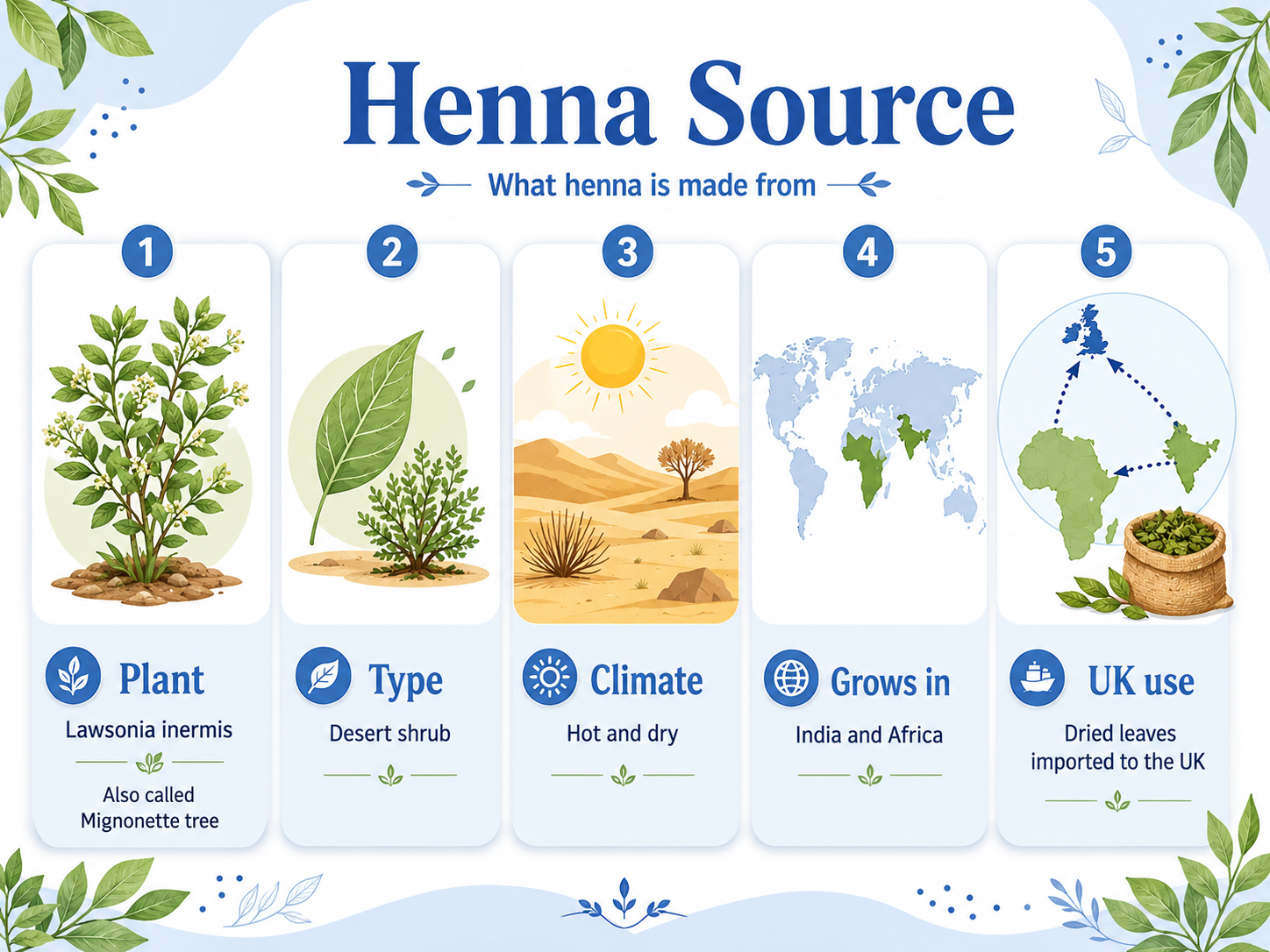
Initially, we must look at a very specific desert plant. The henna paste starts as a shrub called Lawsonia inermis. Some people also call this the Mignonette tree. This plant loves to grow in very hot, dry climates. Consequently, it grows best in places like India and Africa. However, we import the dried leaves to the UK for use.
Which Part of the Lawsonia Inermis Plant is Used?
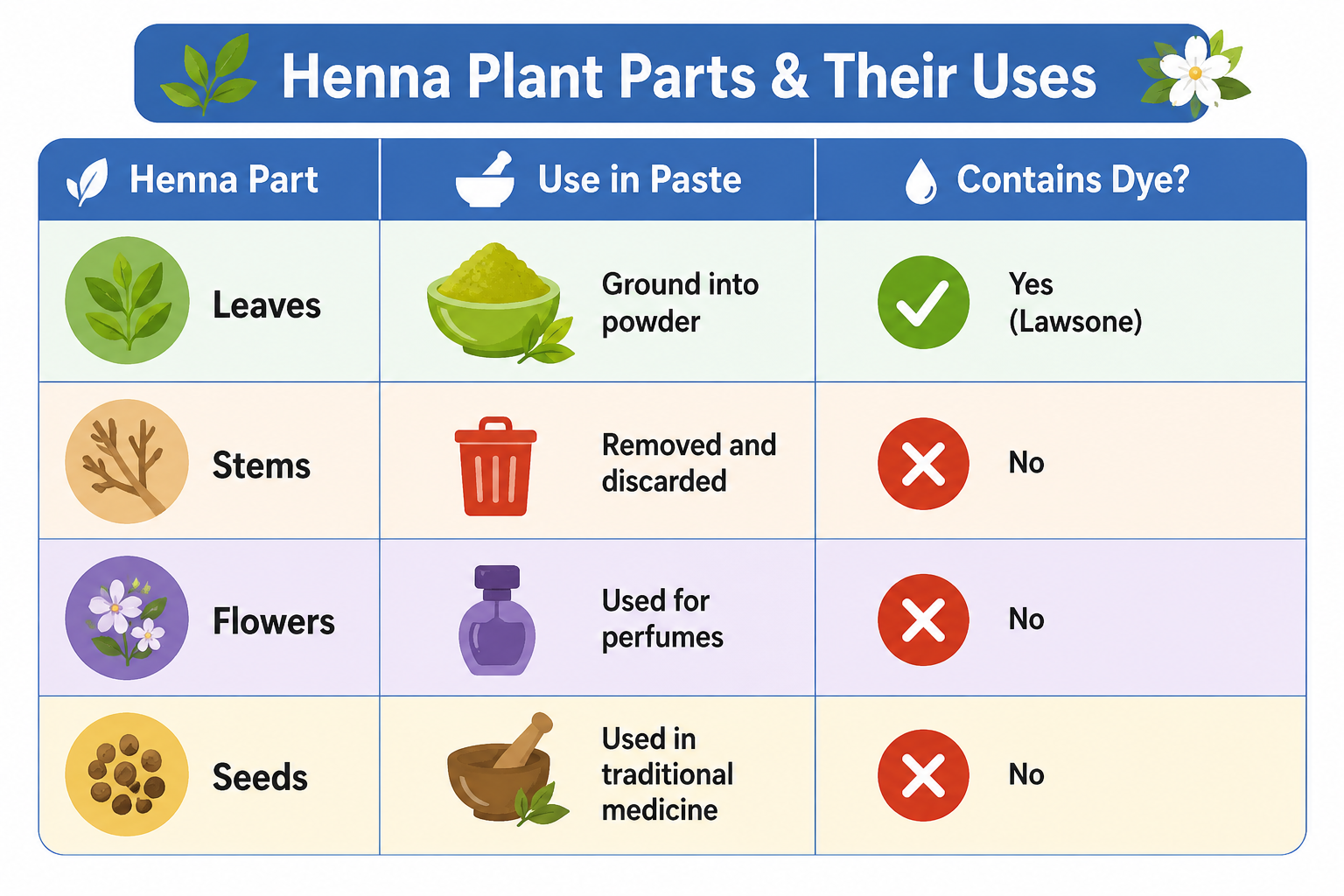
Surprisingly, only the leaves of the plant are actually useful. The stems and roots do not contain any dye. Inside these green leaves, there is a special molecule. Scientists call this molecule lawsone which provides the orange colour. When the leaves are fresh, they do not stain. They must be dried and crushed to work. This process releases the colour so it can stain skin.
How is the Plant Turned into a Fine Powder?
Workers harvest the leaves during the hot season. Next, they dry them under the warm sun carefully. Once they are crunchy, the leaves are ground down. This creates a bright green powder that smells like grass. In the UK, professional artists look for triple-sifted powder. This means the powder is very smooth and fine. It helps the artist draw very thin, delicate lines easily. If the powder is grainy, the design looks messy. Therefore, high-quality powder is essential for great body art.
What Henna Made of Determines its Safety and Color?
The green powder alone cannot stain your skin effectively. You must mix it with liquids to create a paste. This chemical reaction allows the dye to leave the leaf. Usually, the mixing process takes about twelve hours to complete. In the UK, artists have their own special recipes.
What liquids are added to create the paste?
Most people use simple liquids found in a British kitchen. Water is the most common choice for mixing the powder. Some artists prefer using lemon juice for a darker stain. The acidity in the juice helps release the dye molecules. Occasionally, people use strong black tea or coffee instead. These liquids provide a very pleasant and earthy scent. Moreover, they help the paste reach a smooth consistency.
Which Essential Oils are Used for “Terps”?
Experienced artists often add specific essential oils to the mix. These oils are often called “terps” by the henna community. This name comes from the word terpenes found in oils. Specifically, Lavender, Eucalyptus, and Cajeput are very popular in England. These oils make the henna stain much darker on the skin. Without them, the design might look very pale and orange. Additionally, these oils make the henna smell like a spa. Always ensure the oils used are safe for the skin.
Does Natural Henna Contain Sugar?
Actually, adding sugar is a very clever trick for artists. In the UK, the weather is often cool and dry. Sugar helps the paste stay moist on your warm skin. It also makes the paste very stretchy and flexible. Consequently, the design will not crack and fall off early. Most artists use plain white sugar or even some syrup. This helps the dye soak deep into your skin layers.
- Lemon Juice: Releases the dye slowly and steadily.
- Essential Oils: Darkens the colour to a deep brown.
- Sugar: Keeps the paste sticky and very smooth.
- Water: Creates the perfect texture for drawing lines.
How can UK shoppers tell the difference between Natural and “Black” Henna?
You must be very careful when shopping in the UK. Not all products sold as henna are actually natural. Some shops sell dangerous chemical cones called black henna. These products do not contain the Lawsonia plant at all. Instead, they use harsh chemicals to stain skin quickly.
What is PPD and why is it dangerous?
“Black henna” often contains a chemical called PPD. This stands for para-phenylenediamine, which is used in hair dye. It is illegal to use PPD on the skin. Unfortunately, some seaside stalls still use it for fast tattoos. PPD can cause very painful blisters and permanent scars. Many people in the UK have suffered from these burns. Therefore, you must avoid any paste that stains instantly. Natural henna always takes several hours to develop its colour.
What are the Red Flags on a Henna Ingredient List?
Fortunately you can spot the bad products quite easily. Look at the colour of the paste itself. Natural henna is always dark green or brown. If the paste is jet black, do not use it. Second, check how the product is stored on shelves. Natural henna must be kept in a cold freezer. If it sits on a warm shelf, it is chemical. Finally, use the smell test to be sure. Natural henna smells like herbs, grass or essential oils. Chemical henna smells like bleach, ammonia, or strong petrol.
- Colour: Real henna is never black.
- Speed: Real henna takes hours to stain.
- Storage: Real henna needs a freezer.
- Scent: Real henna smells like a garden.
Are there Regional UK Variations in Henna Ingredients?
The UK is a melting pot of different cultures. Because of this, henna recipes vary across different cities. A London artist might mix their paste differently from someone else. Each community brings its own unique secrets to the craft.
How does the UK Weather Affect Henna Application?
The British climate is often quite damp and very cold. This can make the henna drying process a bit difficult. In a heated British home, the air is very dry. Therefore, artists add extra sugar to keep the paste wet. If the paste stays wet, the dye stays very active. Some people even wrap their hands in warm medical tape. This keeps the skin warm, so the colour becomes deep. Warmth is the best friend of a dark henna stain.
Is Henna Powder in the UK strictly vegan and cruelty-free?
Most UK suppliers focus on very high ethical standards now. They ensure the powder is 100% plant-based and vegan friendly. No animals are ever harmed to make this green powder. Furthermore, many UK brands support fair trade for desert farmers. When you buy from a reputable UK shop, it is safe. Always read the label to find the vegan symbol. This ensures your beauty routine is kind to the planet.
Conclusion
Natural beauty is about knowing your ingredients well. Now you understand exactly what henna made of for your skin. It is a simple mix of leaves, juice, and oils. This ancient plant brings joy to many people in Britain. It connects different cultures through beautiful and temporary body art. Always remember to choose pure products for your health.
Avoid the black henna traps at festivals or cheap shops. Pure henna is a gift from nature that we enjoy. Furthermore, being careful protects your skin from harmful chemical burns. Natural paste offers a soothing and very cooling sensation instead. If you are ever unsure, ask the artist questions. A good artist will always know their own ingredient list.
They will be happy to explain their recipe to you. Exploring this art is a fun way to celebrate life. Always patch test your henna, even if it’s 100% natural. This simple step ensures you have a wonderful, safe experience. Enjoy your beautiful, earthy designs and share the knowledge today!
FAQs
-
What is real henna made of?
- Real henna is made from the dried and powdered leaves of the henna plant, mixed with water and sometimes natural ingredients like lemon juice or essential oils.
-
What are the bad chemicals in henna?
- Avoid henna containing PPD (para-phenylenediamine), metallic salts, ammonia, or artificial dyes, as these can damage hair or cause allergic reactions.
-
What is the main ingredient in henna?
- The main ingredient is pure henna leaf powder from the Lawsonia inermis plant.
-
Is henna cultural or Islamic?
- Henna is both cultural and Islamic. It has been used for centuries in many cultures and is also traditionally used in Islamic celebrations and practices.
-
Which henna is 100% natural?
- 100% natural henna contains only pure Lawsonia inermis leaf powder with no added chemicals, dyes, or preservatives.
-
Why don’t hairdressers like henna?
- Some hairdressers avoid henna because it can be difficult to remove and may react unpredictably with chemical hair dyes or treatments.
-
Is 100% natural henna safe?
- Pure, 100% natural henna is generally safe for most people when used correctly. Always do a patch test before applying it.