
No products in the basket.
Natural henna paste is a traditional way to create beautiful temporary body art on the skin. If you are wondering how long does natural henna paste last on skin, the answer depends on both application time and aftercare. The paste is usually left on the skin for 4 to 12 hours, with longer application giving a darker stain. After scraping off the dried paste, the stain gradually develops and can last from 1 to 3 weeks. Areas like palms and feet hold the colour longer, while arms and legs fade faster. With proper care, henna designs stay rich and visible for a longer time before naturally fading as the skin exfoliates.
What Is Natural Henna Paste Exactly?
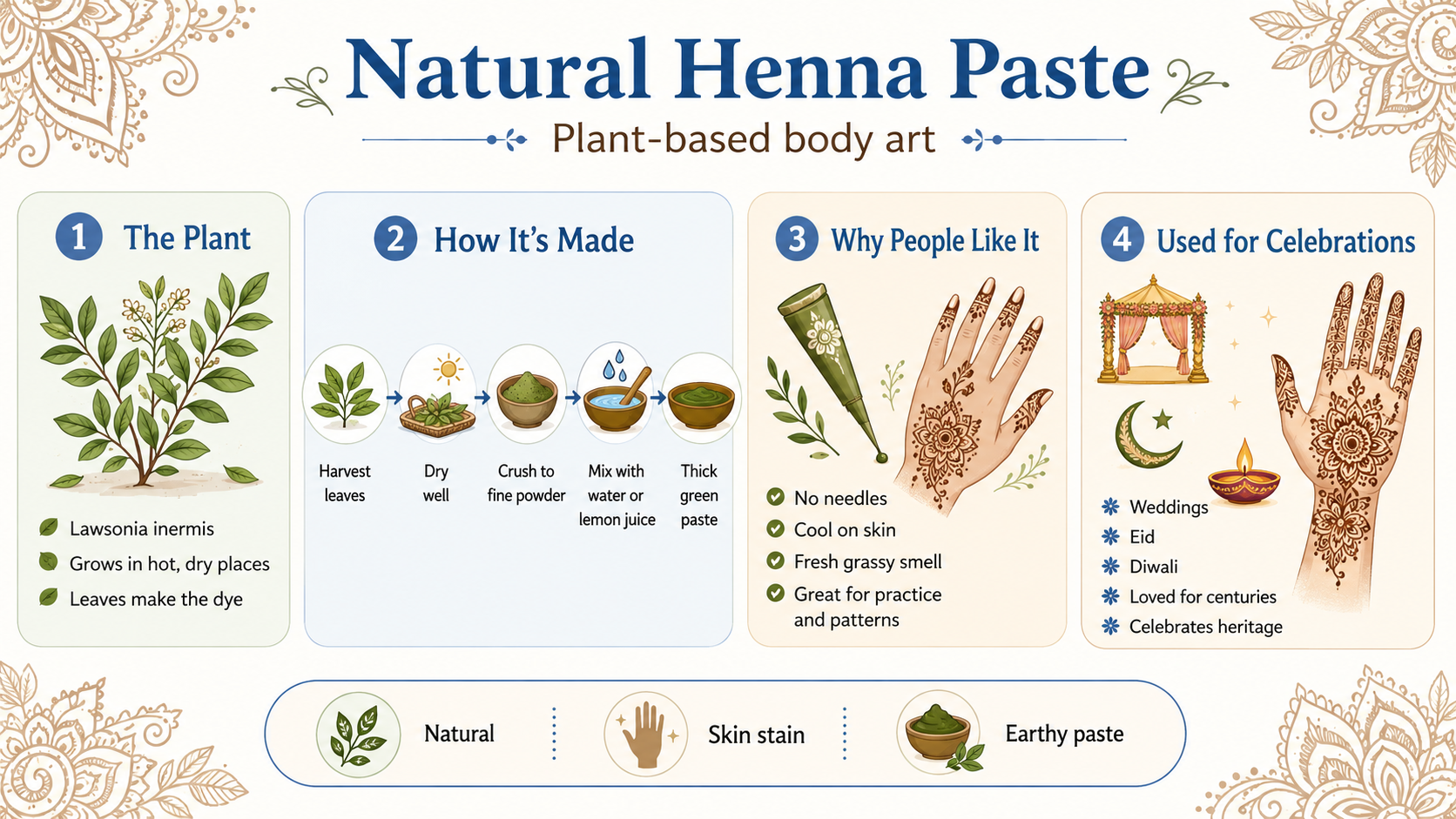
Natural henna comes from a plant called Lawsonia inermis. People find these shrubs in hot, dry climates. Farmers harvest the leaves and dry them carefully. Then, they crush them into a very fine green powder. You mix this powder with water or lemon juice. This creates a thick and earthy-smelling paste. Many cultures use it for weddings and big festivals. In the UK, people love it for Eid and Diwali.
It is a beautiful way to celebrate your heritage. The paste stains your skin without using any needles. It feels cool and soothing when you apply it. Because it is natural, it smells like fresh grass. This art has brought joy to people for centuries. You can create amazing patterns with just a little practice.
How Long Does Natural Henna Paste Last on Skin?
Most natural henna stains last for one to three weeks.
- Initially, the colour appears as a bright orange tint.
- The shade deepens within the first 48 hours after removal.
- It slowly turns into a rich reddish-brown colour.
- Skin type affects how long henna lasts on the skin.
- Dry skin usually holds henna better than oily skin.
- Body location also changes how long the stain stays.
- Palm areas stay darker and last longer due to thicker skin.
- Skin naturally sheds cells every day, causing gradual fading.
- The design usually starts fading noticeably after about 7 days.
Enjoy the beauty of henna while it gradually fades over time.
Why Does The Stain Fade Over Time?
Your body is constantly busy growing new skin cells. Older cells on the surface fall off naturally. Since henna only tints the top layer, it disappears. Washing your hands frequently also speeds up this fading process. Soap acts like a tiny scrubber on your beautiful design. Furthermore, hot water can lift the dye from your pores.
Even your clothes rubbing against the skin can cause some fading. If you go swimming, chlorine will bleach the colour quickly. Using harsh hand sanitisers also makes the pattern vanish sooner. Think of henna like a lovely, temporary sunset. It is meant to be a fleeting piece of art. Because of this, you can try new designs often. It never stays long enough to become boring or old.
What Influences the Staying Time of Henna Stain on Skin?
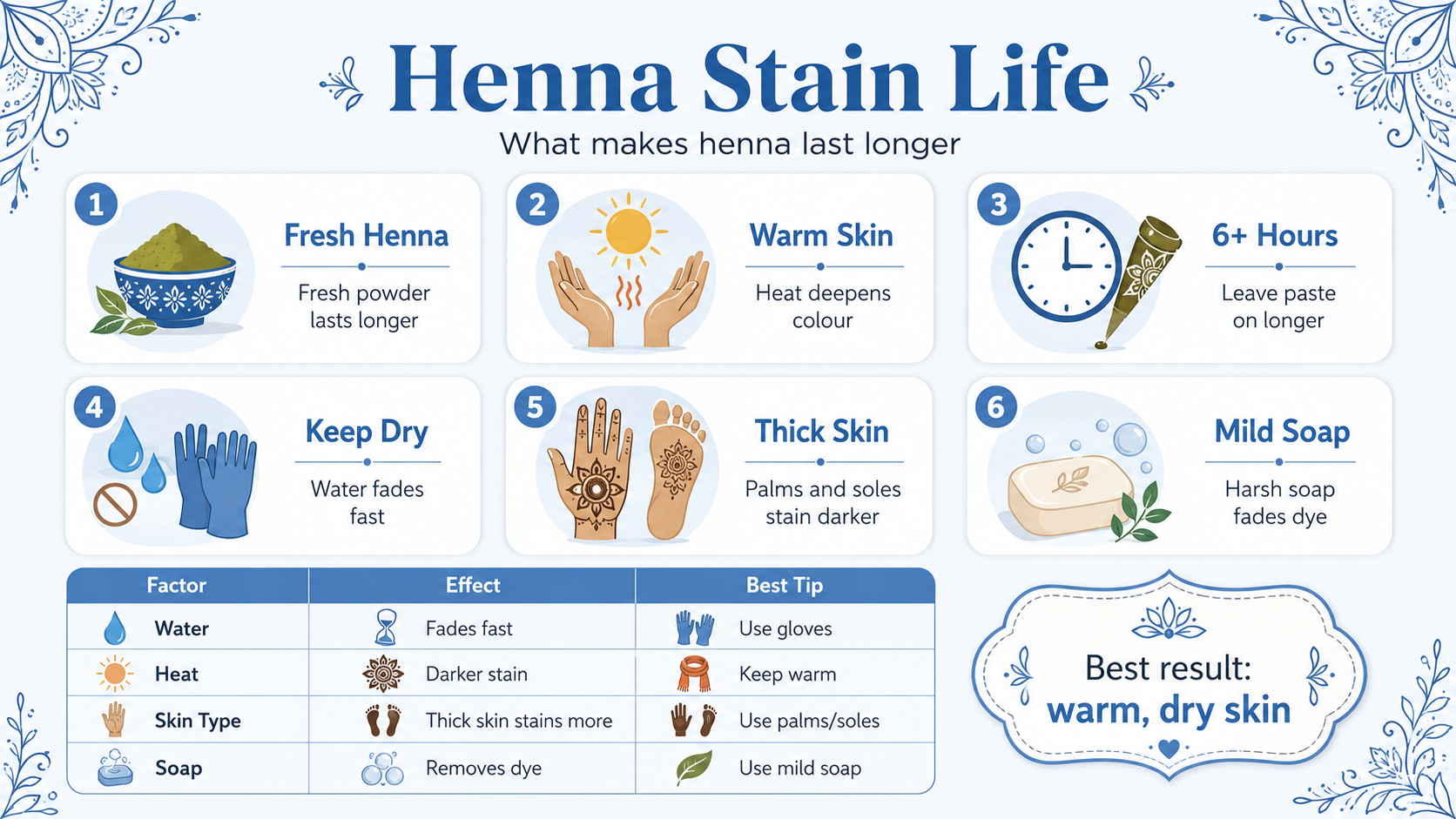
Many different things change the life of your henna. First, the quality of the henna powder is very important. Fresh powder always gives a deeper and longer-lasting result. Second, your own body temperature plays a very big role. Henna loves warmth and develops better on warm skin. Third, the length of time you leave the paste matters.
You should keep it on for at least six hours. This gives the dye enough time to soak inside. Fourth, the amount of water contact affects the total duration. If you keep the area dry, the stain stays longer. Finally, your daily activity level can change the outcome too. People who work with their hands often see faster fading.
Can You Use Henna on Sensitive Skin Safely?
Pure natural henna is generally very safe for most people. It does not contain any nasty chemicals or artificial dyes. However, you must always avoid something called “Black Henna.” That product often contains a dangerous chemical named PPD. It can cause severe burns and permanent scars on the skin. Natural henna should never smell like chemicals or petrol. Instead, it should smell like herbs or essential oils.
Keep in mind that if you have sensitive skin, do a patch test. Apply a small dot of paste behind your ear. Wait twenty-four hours to see if any redness appears. Usually, natural henna feels very gentle on the skin. It even has natural cooling properties that feel great. Most people enjoy it without any issues at all.
How Do You Prepare Your Skin Beforehand?
Preparation is the secret to a very dark stain. First, wash the area thoroughly with plain soap. This removes any oils or lotions from your skin. Oils act like a shield and block the dye. Consequently, the henna cannot reach your skin cells properly. Do not apply any moisturiser before you start the art. Additionally, you might want to exfoliate the skin gently. Removing dead cells creates a fresh surface for the paste.
However, do not scrub too hard or cause any irritation. Make sure the area is completely dry before you begin. If your skin is cold, try to warm it up. Rub your hands together or drink a warm cup of tea. Warm skin absorbs the henna dye much more effectively.
What is the Best Way to Apply Paste?
You can use a plastic cone to draw designs. Hold the cone like a pen and squeeze gently. Initiate with simple dots and lines to build confidence. Many people like drawing flowers or intricate lacy patterns. If you make a mistake, wipe it away immediately. Use a damp cotton bud to fix any small errors. Moreover, try to keep your hand very still while working.
This prevents the wet paste from smudging on your skin. If the paste is too thick, it might clog. If it is too thin, it will surely run. Finding the right balance takes a little bit of time. Practice on a piece of paper before touching your skin. Soon, you will create beautiful art just like a professional.
How Can You Seal the Design Correctly?
Once the paste dries, it might start to flake off. You need to keep it stuck to your skin. Mix some sugar and lemon juice in a bowl. Use a cotton ball to dab this syrup onto the henna. This sticky mixture acts like a glue for the paste. Additionally, the lemon juice helps release more dye into the skin. Be careful not to use too much liquid at once.
You do not want the design to melt or bleed. Some people also use medical tape to cover the henna. This keeps the paste in place while you sleep at night. Moreover, it traps your body heat against the skin. Heat is the best friend of a dark henna stain.
- Mix one spoon of sugar with two spoons of lemon.
- Wait for the henna to feel dry to the touch.
- Dab the mixture very gently over the whole design.
- Avoid moving too much while the sealant dries.
- Keep the paste on for as long as possible.
Why is Heat Good for Darker Henna Stains?
Henna is a heat-activated dye that loves warm temperatures. When your skin is warm, the pores open up wide. This allows the dye to travel deeper into the layers. A heating pad can help warm your hands gently. Alternatively, sit near a warm radiator during the cold UK winters. Some artists use the steam from boiling cloves for heat.
This traditional method helps create a very deep, blackish-brown colour. However, never use a hairdryer on a high heat setting. Intense, dry heat can actually damage the delicate dye molecules. Instead, aim for a gentle and consistent warmth for hours. This patience will reward you with a stunning, dark pattern. You will love how the colour pops against your skin.
How Should You Remove the Dried Paste?
Never use water to wash off your dried henna paste. Water stops the oxidation process and lightens the final stain. Instead, use a blunt butter knife or your fingernails. Scrape the dry crust away gently over a bin. You can also use a little bit of coconut oil. Rub the oil over the paste to help it slide off. This oil also provides a protective layer for the stain.
Once the paste is gone, avoid water for twenty-four hours. This allows the oxygen in the air to darken the colour. Initially, you might feel disappointed by the bright orange look. Do not worry because the colour will change very soon. Within two days, it will reach its most beautiful shade.
What Daily Habits Make Henna Fade Fast?
Certain habits can ruin your henna design very quickly.
- Scrubbing your skin with a loofah removes stained skin cells faster than normal.
- Using cleaning chemicals without gloves can weaken and strip the henna colour.
- Dish soap, bleach, and strong detergents damage the stain quickly.
- Frequent gym workouts can cause faster fading due to sweat breaking down the dye.
- Long, hot baths and showers make henna fade much sooner.
- Using skin whitening or bleaching creams removes pigment from the henna area.
Treat your henna gently like a delicate design to help it last longer.
How Does Natural Henna Differ from Black Henna?
Natural henna comes from a plant and is safe for skin. It is made from the leaves of the Lawsonia inermis plant and gives a reddish-brown stain. People have used it for centuries for weddings, festivals, and body art. It also has a natural cooling effect on the skin and does not contain harmful chemicals.
In contrast, “black henna” is not natural. It is often mixed with strong chemicals like PPD (para-phenylenediamine), which can seriously damage the skin. It is sometimes sold as a faster and darker alternative, but it is unsafe.
Key differences:
- Ingredients
Natural henna is made from crushed henna leaves and contains a natural dye called lawsone. Black henna may contain chemicals or other dyes like PPD, which is used in hair dye. - Colour and smell
Natural henna is greenish-brown and smells like fresh plants or herbs. It first shows an orange stain, then slowly turns into a deep reddish-brown over 1–2 days. Black henna looks dark or jet black and often has a strong chemical smell. - Safety
Natural henna is generally safe and gentle on the skin. Black henna can cause burns, itching, blisters, and even permanent scars due to chemical reactions. Health experts warn against using it on skin.
Overall, natural henna is a safe, traditional art, while black henna can be harmful and should be avoided.
Can You Freeze Your Leftover Henna Cones?
You should not leave fresh henna at room temperature. The dye will lose its strength after just a few days. Consequently, your stains will look very light and disappear quickly. To keep it fresh, put your cones in the freezer. Use a zip-lock bag to protect them from any moisture. Henna can stay fresh in the freezer for several months.
When you want to use it, take one cone out. Let it thaw on the counter for about twenty minutes. Moreover, do not thaw and refreeze the same cone repeatedly. This can ruin the consistency of the smooth henna paste. Freezing is the best way to ensure a dark stain every time. It is a great tip for saving money and supplies.
Final Thoughts on How Long Does Natural Henna Paste Last on Skin
Natural henna is a beautiful and safe way to decorate your skin. It usually lasts 1 to 3 weeks, depending on your skin type, care and daily habits. If you want a darker and longer-lasting stain, keep the paste on for 6 to 12 hours and avoid water, soap and harsh chemicals after removing it. Good aftercare can make a big difference in how long the design stays visible. In the end, henna is a temporary art so enjoy it while it lasts and try new designs each time it fades naturally.
FAQs
1. How long does natural henna last on skin?
Natural henna usually lasts 1 to 3 weeks. It fades slowly as skin naturally sheds. Palms and feet keep it longer than other areas.
2. Is henna anti-inflammatory?
Yes, natural henna has mild anti-inflammatory and cooling properties. It may help soothe minor skin irritation, but it is not a medical treatment.
3. What does henna look like after 3 hours?
After 3 hours, henna paste is still drying or starting to crack. The skin underneath may show a light orange stain.
4. Is 2 hours enough for henna on hand?
2 hours is usually not enough for a dark stain. For best results, henna should stay on for 4–12 hours.
5. Why are salons against henna?
Some salons avoid henna because it is messy, takes time to develop, and gives lower profit than other quick treatments.
6. Does henna fade completely from skin?
Yes, henna fades completely over time as skin cells renew. It usually disappears within 1 to 3 weeks.
7. Is 100% natural henna safe?
Yes, pure natural henna is generally safe for most people. It should not contain chemicals like PPD or additives.
8. What does the Bible say about henna?
The Bible does not directly mention henna. However, it was used in ancient cultures for decoration and beauty.