
No products in the basket.
Hazard symbols and meanings help workers stay safe at work. These symbols show the dangers of chemicals and other harmful substances. So, people can understand risks before they start any job. Also, these symbols reduce accidents and injuries. Many workplaces use them every day for safety control. UK HSE reports more than 600,000 cases of workplace injury and illness each year.
In addition, these signs follow international safety rules. By using clear pictures, everyone understands there is harm. Therefore, anyone can spot danger without reading long notes. Workplaces place hazardous signs in containers and storage areas. Moreover, proper training helps people use them correctly. This improves safety and raises awareness at work. As a result, people work with fewer risks and more protection.
How Does the UK Label Dangerous Chemicals?
The UK uses clear warning symbols to mark dangerous chemicals. These symbols follow a system called CLP. It stands for Classification, Labelling and Packaging. Each chemical shows a red diamond pictogram. So, people can quickly understand the risk.
In addition, labels include simple safety words like “danger” or “warning”. They also show short instructions for safe use. For example, some tell you to wear gloves or avoid breathing fumes. Moreover, manufacturers must follow strict rules in the UK. This helps protect workers, students and the public every day. As a result, everyone can handle chemicals more safely.
What are the Most Common Hazard Symbols and Their Meanings?
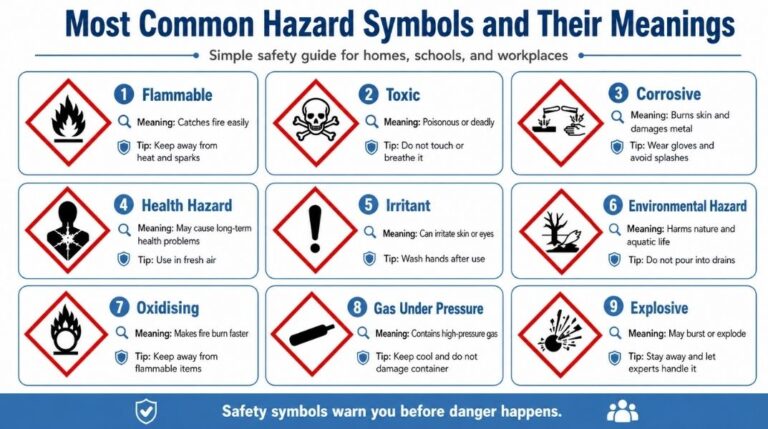
Every safety symbol has a clear purpose. It warns you before danger happens. Also, the red diamond shape makes it easy to notice. You will see these signs in homes, schools and workplaces. If you ignore them, accidents can happen quickly. That is why these symbols matter in daily life. Now let’s look at the main hazard symbols one by one.
Flammable
A black flame inside a red diamond shows this symbol. It means the item catches fire very easily. You often see it on petrol and hairspray cans. So, keep it away from heat and sparks. Even a small flame can start a big fire.
Toxic
Skull and crossbones mark dangerous and poisonous substances. It means the substance is poisonous or deadly. It can harm you if you swallow it or breathe it. You will find it in strong chemicals and pesticides. So, never touch it without adult supervision.
Corrosive
A hand and metal being damaged show this sign. It means the chemical can burn skin and destroy materials. You often see it on bleach and strong cleaners. So, wear gloves and avoid direct contact. Also, wash your skin quickly if a splash happens.
Health Hazard
A person with a star on their chest shows risk. It warns about long-term health problems. It can affect the lungs or other organs over time. You may see it on paints and strong glues. So, always use these products in fresh air.
Irritant
An exclamation mark shows mild but annoying effects. It means the substance can cause mild skin or eye irritation. You may feel itching, redness or watery eyes. You often see it on detergents and cleaning products. So, wash your hands after use.
Environmental Hazard
A dead fish and a dry tree show harm to nature. It means the chemical can harm nature and aquatic life. It should never go into rivers or drains. You may see it on garden sprays. So, dispose of it at proper recycling points.
Oxidising
A flame over a circle shows this symbol. It means the chemical helps fire burn faster. It can turn small fires into big ones. So, keep it away from paper and flammable items. You will often find it in science labs.
Gas Under Pressure
A gas cylinder icon shows stored high-pressure gas. It means gas is stored under high pressure. It can explode if the container gets too hot. So, never drop or damage the cylinder. Schools and labs store them safely with care.
Explosive
An exploding object warns of extreme danger. It means the substance can burst or explode. It is very dangerous and rarely seen in homes. Only trained experts handle it. So, stay away if you ever see this symbol.
Why Should You Master Hazard Symbols and Meanings?
Hazard symbols help you stay safe in daily life. They warn you before you touch harmful items. So, you can avoid accidents at home, school or work. Also, they help you understand danger fast. You do not need to read long instructions.
In addition, these symbols build strong safety habits. You learn to cover them up carefully in risky situations. Moreover, they protect your friends and family too. As a result, you create a safer place for everyone around you.
Want to learn more about workplace safety and COSHH rules? Explore our COSHH Hazardous Substances blog and learn more about real safety skills for daily life.
Where Should You Store Hazardous Bottles?
Keep hazardous bottles in a safe and locked place. Always choose a cool and dry area for storage. So, avoid heat and direct sunlight at all times. Also, place them on high shelves away from children and pets. Next, keep different chemicals in separate containers. This stops dangerous mixing and reactions.
Moreover, after using a jar, always close it tightly. In addition, label each bottle clearly for easy identification. Never keep any harmful objects near food or drinks. Check expiry dates and remove old items safely. This keeps your home and workplace much safer every day.
What Should You Do During A Chemical Spill?
Stay calm and step away from the spill area quickly. Do not touch the chemical at any time. Also, warn others nearby so they move away. Next, inform a teacher, supervisor or responsible adult immediately. Keep a distance and follow all instructions carefully. If you can do it safely, open windows for fresh air.
Do not try to clean the spill yourself. Stay away from the spill area and do not walk through it. If the chemical touches your skin, wash it with clean water quickly. Remove any dirty clothing if needed. After that, report the spill quickly so the right action can start fast.
Who Decides These Global Safety Rules?
International organisations set safety rules for hazard symbols. They make sure every country uses the same system. So, people can understand warnings anywhere in the world. The United Nations plays a key role in this work.
Therefore, it created the Globally Harmonised System, known as GHS. This system defines how symbols look and what they mean. Governments follow these rules in workplaces and schools.
Which Safety Equipment Protects You Best?
Safety equipment keeps you safe from harm at work and home. It reduces the chance of injury during risky tasks. So, using the right gear matters a lot in daily life.
- Safety goggles: Protect your eyes from chemicals, dust and splashes. Always wear them in labs or cleaning work.
- Gloves: Keep your hands safe from burns and harmful liquids. It also stops skin irritation.
- Face masks: Block dust, fumes and harmful gases. It helps you breathe clean air.
- Safety boots: Secure your feet from heavy objects and sharp items. It adds a strong grip, too.
- Protective clothing: Covers your body from spills and chemical contact.
How Can You Teach Safety to Your Family?
Talking about safety in simple daily moments. Explain hazard symbols and what they mean. Use real items from the kitchen or bathroom. This helps everyone understand faster. Also, show them where warning signs appear at home. Keep the explanation short and clear.
Always practise small safety habits with family. For example, keep all of the chemicals in safe places. Remind children not to touch unknown bottles. In addition, teach hand washing after using cleaning products. Make safety a daily habit, not a one-time lesson.
Finally, encourage questions from every family member. This builds confidence and awareness at home. So, everyone stays alert and protected every day.
Why is Fresh Air Important in the Lab?
Fresh air is very important in a lab. Air helps remove harmful fumes from chemicals quickly. So, students can breathe without danger. Also, it reduces headaches and dizziness during experiments. Many lab gases can affect the lungs. Therefore, good ventilation keeps everyone safe. Open windows and fans help bring clean air inside. This simple step prevents many health problems.
In addition, fresh air helps students think clearly. It improves focus during practical work. Moreover, it lowers the risk of accidents caused by bad air. Teachers always ask students to keep airflow active. As a result, the lab stays safe, fresh and healthy for all.
What is the Most Important Safety Rule?
The most essential safety rule is to always read and follow safety signs before you start any task. This helps you understand danger early and avoid mistakes. So, you protect yourself and the people around you.
Also, never ignore warning symbols on chemicals or equipment. They always guide you to stay safe. In addition, ask a teacher or adult if you feel unsure. This small step can stop big accidents.
At the same time, stay alert in every situation. Safety rules only work when you follow them properly. So, make it a daily habit in school and at home. Good safety behaviour keeps you safe and confident every day.
How Can You Remember Every Hazard Symbols and Meanings Easily?
You can remember chemical risk symbols by using simple tricks. First, group similar symbols together in your mind. For example, fire, poison and skin damage signs form one group. Look at COSHH hazard warning symbols every time you see cleaning or lab products.
This daily habit builds strong memory. Also, connect each symbol with real-life items like bleach, petrol or detergent. Then, repeat the names and meanings often. In addition, use posters or charts at home or school. Finally, practise with friends and test each other. This makes learning fast, easy and fun for everyone.
Final Thoughts
In the end, hazard signs and meanings help us stay safe every day. These symbols warn us about dangers in a simple way. So, we can act quickly and avoid accidents. Also, these symbols protect people at home, school and work. If we learn these symbols well, we reduce risks a lot. Overall, hazard symbols and meanings make safety easy for everyone.
Ready to learn safe handling of substances? Enrol in our Health and Safety Control of Substances Hazardous to Health (COSHH) Training Course today and become more confident in safety rules.
FAQs
1. What are the 10 hazard symbols?
- The 10 hazard symbols include flammable, toxic, corrosive, health hazard, irritant, environmental hazard, oxidising, gas under pressure, explosive and acute toxicity symbols.
2. What are the 7 safety symbols?
- 7 safety symbols usually include flammable, toxic, corrosive, irritant, health hazard, environmental hazard and gas-under-pressure symbols.
3. What are the 9 different hazard classes?
- The 9 hazard classes include explosives, gases, flammable liquids, flammable solids, oxidising substances, toxic substances, radioactive materials, corrosives and environmental hazards.
4. What are the 6 types of hazards and meaning?
- 6 types of hazards are physical, chemical, biological, ergonomic, psychosocial and safety hazards, and each one shows a different kind of risk to health or safety.
5. What are the 7 types of hazards?
- The 7 types of hazards are physical, chemical, biological, ergonomic, psychosocial, environmental and safety hazards that can cause harm in different ways.
6. What is the hazard class 6 symbol?
- Hazard class 6 symbol represents toxic and infectious substances that can harm health if swallowed, inhaled or touched.