
No products in the basket.
COSHH Hazardous Substances affect many UK workplaces. It includes chemicals, dust and fumes. They can harm health if not controlled. Studies show over 500,000 workers face exposure risks each year in the UK. That is a serious number for safety. Employers must manage these risks carefully. Workers also need to stay alert at all times.
These substances appear in cleaning, factories and labs. So, safety rules protect everyone at work. Proper training helps stop accidents and injuries. Workers must always read labels before use. Employers must also provide safety equipment on time. Simple steps like these make a big difference. They keep workplaces safe and healthy for everyone.
What are COSHH Hazardous Substances and Their Risks?
Hazardous substances at work can harm health if people do not handle them safely. These include chemicals, dust, fumes, gases and some cleaning products used in daily jobs. Workers find them in places like factories, hospitals and offices.
So, why do hazardous substances matter? Because they can cause burns, breathing issues or long-term illness. In some cases, they can damage the lungs or skin over time. That is why careful handling always matters.
First, workers must understand the risks before using any products. Next, workers should follow safety rules and wear proper protection to avoid health risks in the workplace. Employers also need to give clear training and support.
Why Do We Need Special Warning Labels?
Special warning labels help people stay safe at work. They show when a substance can harm health. So, workers can see danger before they use it. This helps simply stop accidents.
Also, these labels use clear symbols. For example, a flame means fire risk. A skull means ‘poison danger’. Because of this, workers understand risk quickly. They do not need hard words to stay safe. In the end, warning labels guide safe choices and protect everyone at work.
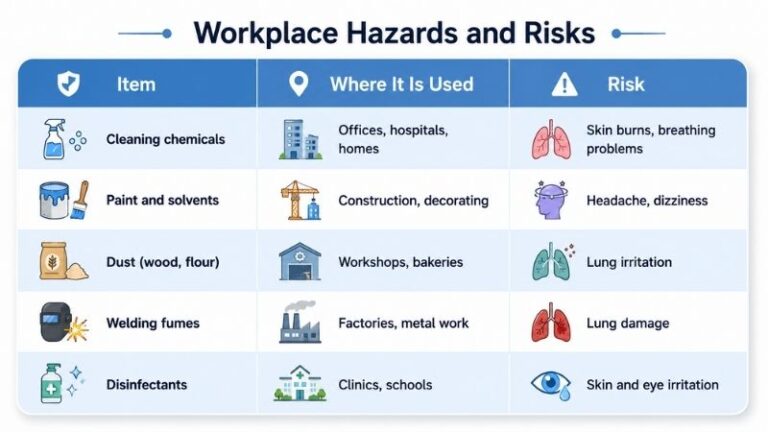
Which Common Items are Dangerous at Work?
Many items at work can be dangerous if you are not careful. These items often look normal. But they can harm your health quickly. So, you must always know what you are using. Here are some common items and their risks:
How Can You Identify COSHH Hazardous Substances?
These labels show clear warning symbols on containers. So, you can quickly see if something is dangerous. For example, you may see signs for toxic or flammable materials.
Next, read the product name and safety instructions carefully. These instructions show you what risks the substance carries. Also, check the safety data sheet for full information. It explains how to use the substance safely. On top of that, look for strong smells, fumes or dust. These signs often show hidden danger. In short, labels, sheets and awareness help you stay safe.
If you want to learn more about COSHH, explore our full blog on COSHH Harmful Symbol.
Who is Responsible for Your Safety?
Your employer is responsible for your safety at work. They must check risks and fix problems quickly. They must give clear safety rules before you start any task. Also, they must provide the right tools and safety gear.
Next, managers guide you during daily work. They show safe and easy ways to handle harmful substances. Health and safety staff also check the workplace often. They find danger and take proper steps to rescue them.
At the same time, you also share this responsibility. You must follow safety rules every day. Also, you can use safety gear every day. If you see a risk. Report it quickly. This teamwork keeps everyone safe.
How to Handle COSHH Hazardous Substances Safely?
Handling hazardous substances safely starts with knowing the risk. First, read the label and warning signs on the product. These signs tell you what danger you may face. So, never skip this step before you start work.
Next, wear the right safety gear, like gloves or a mask. This protects your skin and lungs from harm. Also, use the substance only in a safe and open space. Good airflow helps keep the air clean.
After that, store all substances in the right place. Keep them away from heat and food areas. Finally, clean your hands and tools after use. Simple steps like these keep you and others safe.
How Do Chemicals Enter the Body?
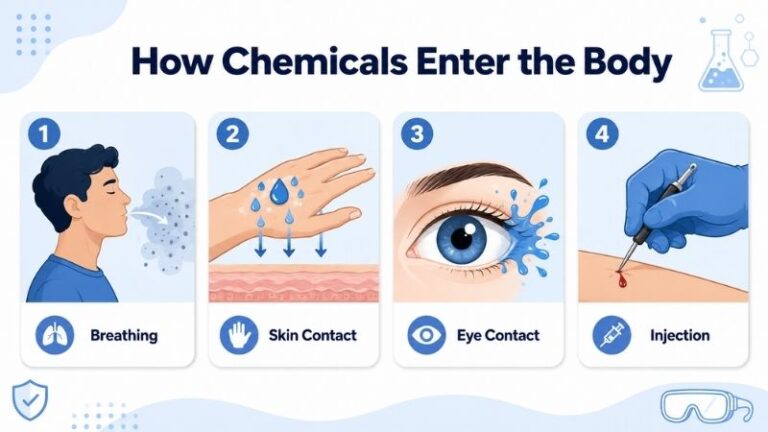
Chemicals can enter the body in a few common ways. You should know these to stay safe:
- Breathing (Inhalation): You breathe in fumes, dust or vapours from the air.
- Skin Contact (Absorption): Chemicals touch your skin and pass into your body.
- Eye Contact: Chemicals splash into your eyes and cause harm.
- Injection: Sharp objects or cuts let chemicals enter your body directly.
What Should You Do During an Emergency?
Sometimes accidents happen even if we are very careful indeed. If a chemical spills, tell everyone to move away immediately. Furthermore, find the spill kit if you have been trained. If a substance touches your skin, wash it with water.
Similarly, if it gets in your eyes, use the eyewash station. You must alert a first aider or a manager straight away. Never try to hide an accident because things could get worse. Speed is very important when dealing with strong chemical reactions.
Why is Training So Important for New Workers?
Training helps you understand the specific dangers of your new job. Every workplace uses different tools and chemicals for its daily tasks. Therefore, you must attend every safety meeting your company organises. During these sessions, you will learn how to use the equipment correctly.
Moreover, you can ask questions if you feel confused about anything. Knowing the right way to work makes you a better employee. Additionally, it gives you peace of mind while you are working. Never start a job if you do not feel fully trained.
What are the Long-Term Effects of Hazards?
Long-term exposure to hazards can slowly harm your body. At first, you may not notice any problem. However, damage can build up over time. For example, breathing in dust or fumes can hurt your lungs. This may cause breathing problems later in life.
Also, some chemicals can damage your skin or eyes. In some situations, they can lead to critical illnesses like cancer. Because of this, you must take every warning seriously. Always follow safety rules and use the right protection. In the end, small safety steps today protect your health for years.
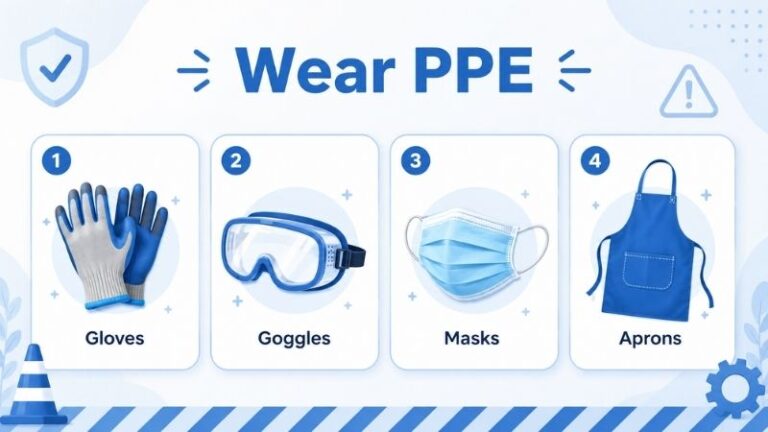
What Protective Equipment Should You Wear?
Personal Protective Equipment or PPE, acts like a shield for you. Depending on the chemical, you might need different types of gear. Wearing the wrong size might not give you enough protection.
- Gloves: Protect your hands from burns and rashes.
- Goggles: Stop splashes from hitting your sensitive eyes.
- Masks: Prevent you from breathing in harmful dust or fumes.
- Aprons: Keep your clothes clean and protect your skin.
How Does Ventilation Help Keep You Safe?
Ventilation means bringing fresh air into a room to clear fumes. If you work with strong smells, open a window or door. Additionally, many factories use big fans to suck the air out. This prevents harmful gases from building up around your face. If a room feels stuffy, the ventilation might not be working.
In that case, you should tell your supervisor about the problem. Breathing clean air is a basic right for every single worker. Good airflow makes the workplace much more comfortable for everyone, too.
How to Dispose of Hazardous Waste?
First, check the label on the substance before you act. It indicates the risk of the substance. Next, wear safety gear like gloves and a mask. This protects your skin and lungs. Then, place the waste in a safe place. Never mix two types of hazards. This can cause danger. After that, close the container tightly to stop leaks. Keep it in a safe, marked place.
Follow your workplace rules for disposal. Report the waste to your supervisor if needed. Clean your hands after you finish. Safe disposal keeps everyone protected.
How to Stay Safe with COSHH?
To stay safe with COSHH, you need to follow the exact safety steps. Always read labels before using any substance. These labels show clear warning signs and risks. Also, wear the right safety tools, like gloves or masks. It protects you from danger. This protects your skin and lungs from harm.
Also, keep the working area clean and move all substances to a safe place. In this way, you can avoid workplace accidents. After that, store all substances in the right place. Proper storage keeps everyone safe at work. If something feels unsafe, tell your supervisor right away. Finally, follow training rules and stay alert at all times. These small steps make a big difference.
Final Thoughts
In the end, COSHH hazardous substances can harm health. For this reason, everyone can stay safe in the workplace. Workers must stay alert and follow clear safety steps every day. Also, employers must guide and protect their teams at work by indicating substance and avoiding risk issues. Simple actions like safe handling and proper storage reduce risks fast. With the right care and awareness, workplaces stay safe, clean and healthy for everyone.
Want to learn how to handle COSHH safely with proper training? Join our Control of Substances Hazardous to Health (COSHH) Training Course.
FAQs
1. What substances are hazardous under COSHH?
- Hazardous substances under COSHH include chemicals, dust, fumes, vapours, gases and biological agents that can harm health.
2. What three substances are not covered by COSHH?
- COSHH does not cover asbestos, lead or radioactive substances because separate laws control them.
3. What are 5 hazardous substances?
- Five hazardous substances include cleaning chemicals, paint fumes, silica dust, bacteria and industrial gases.
4. What are examples of COSHH?
- Examples of COSHH include bleach, paint, glue, dust from wood and fumes from welding.
5. What are the 7 types of hazards?
- The seven types include physical, chemical, biological, ergonomic, safety, electrical and environmental hazards.
6. What are the 10 hazards in the workplace?
- Ten hazards include slips, trips, chemicals, noise, dust, fire, machinery, electricity, stress and poor lighting.
7. What are the 9 chemical hazards?
- Nine chemical hazards include toxic, corrosive, flammable, explosive, oxidising, irritant, harmful, carcinogenic and environmental hazards.
8. What are the 4 types of hazards in the workplace?
- Four main hazards include physical, chemical, biological and ergonomic hazards.
9. What are the 8 common workplace hazards?
- Eight common hazards include slips, trips, falls, chemicals, noise, fire, machinery and electricity.