
No products in the basket.
A good salary can create more freedom but only when the career path makes sense. Well Paid Jobs UK can offer strong earnings through healthcare, law, aviation, technology and construction. The UK median full-time salary is £39,039, so jobs paying £50,000 or more already sit above the national level. Some roles can reach over £100,000, while others offer faster entry through apprenticeships, college study or work experience. Still, pay is only one part of the picture. Training costs, required licences, entry rules and years of experience can all affect how quickly you reach the top salary.
This guide compares 15 careers by pay, training, entry route and career progress, helping you choose a job that offers strong earnings and a path you can realistically follow.
What Counts as Well Paid Jobs UK in 2026?
The UK has no official salary that makes a job well paid. However, the national full-time median of £39,039 gives us a useful guide. In this article, salaries above £50,000 count as strong earnings. Still, your location and household costs can change how that salary feels.
These four pay bands make the comparison easier:
- £40,000 to £50,000: Close to or above typical full-time earnings.
- £50,000 to £75,000: Strong pay for a skilled or professional career.
- £75,000 to £100,000: High pay for specialists or senior workers.
- More than £100,000: Usually linked to rare skills or major responsibility.
These bands are only an editorial guide. They do not create an official UK salary rule. A £45,000 salary may feel comfortable in one area but tight in another. Rent, travel costs and family size all affect the real value.
Salary figures can also describe different forms of income. Some figures show basic pay written in an employment contract. Other figures may include bonuses, overtime, allowances or self-employed income. That is why you should always check what each number covers before comparing two careers.
Which 15 Careers Offer the Best Pay and Entry Routes?
These 15 careers offer recognised entry routes and strong earning potential. Some need university study, professional exams and legal approval. Others allow entry through apprenticeships, college courses or workplace experience. The last column explains how hard the top salary may be to reach.
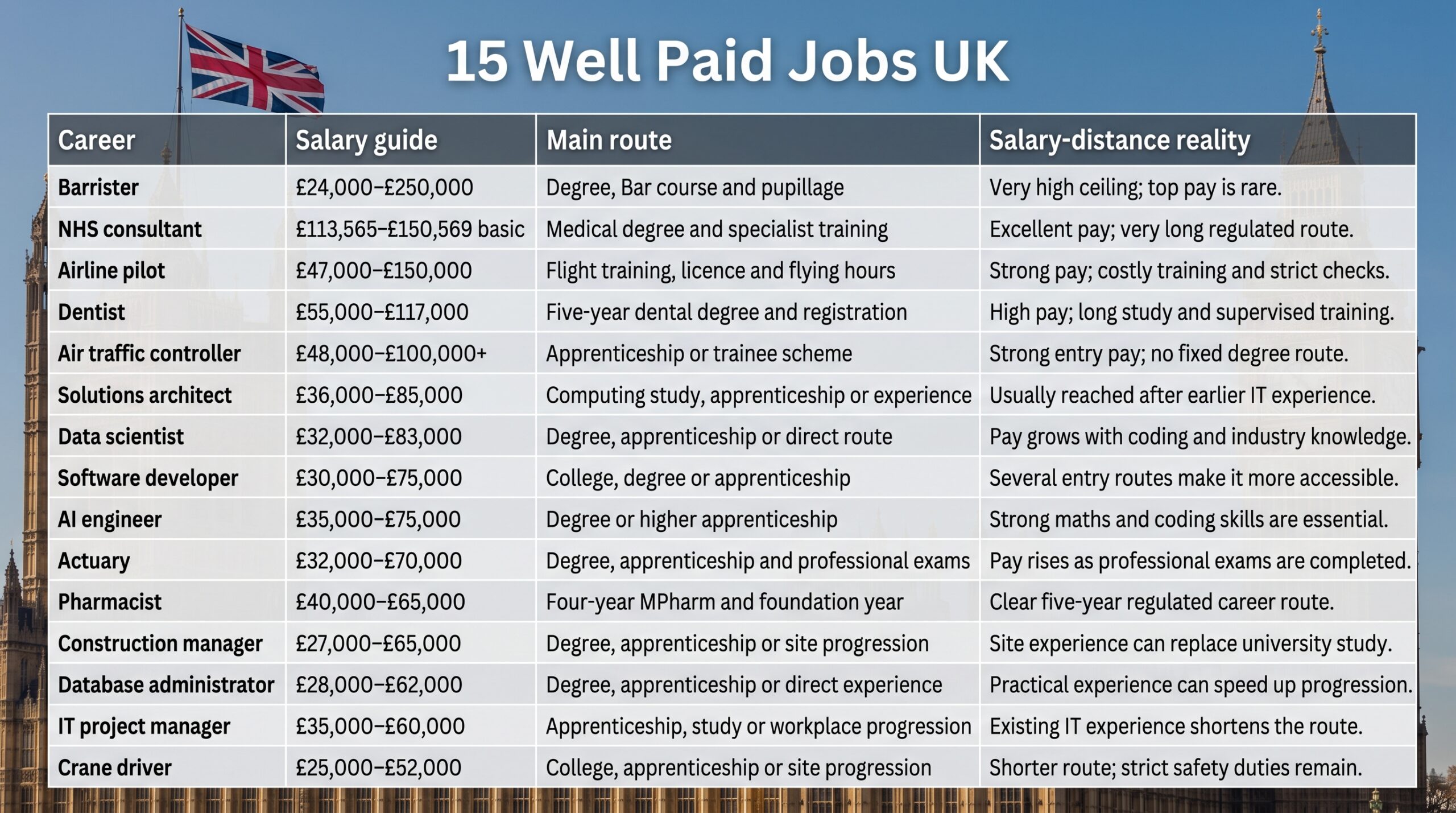
The table shows why salary alone can give the wrong idea. Barristers have the highest earning ceiling, which means the most they may earn. However, their starting pay can be around £24,000. NHS consultants also earn a high basic salary but they only reach that level after years of medical training. On the other hand, air traffic control offers a shorter route, although the selection process is still strict.
Technology careers often offer more flexible entry routes. Software developers can enter through college, university, apprenticeships or practical experience. However, solutions architects usually need several years of earlier IT work. This means the highest technology pay rarely comes at the start.
Which Careers Reach Strong Pay Fastest?
Some careers reach solid pay faster than medicine, dentistry or law. They still need skill, training and careful selection. However, they may avoid many years of full-time university study. This can reduce training costs and help you start earning sooner.
Here are four careers with a shorter route to strong pay:
- Air traffic controller: Pay can start at around £48,000. You may enter through an apprenticeship or trainee scheme.
- Software developer: New developers often earn about £30,000. College courses and apprenticeships can help you get started.
- IT project manager: Entry pay is usually close to £35,000. Previous digital experience may help you move up faster.
- Crane driver: Beginners may earn around £25,000. With experience, pay can rise to about £52,000.
People often search for easy jobs that pay well UK employers offer. However, these careers are only easier because their entry routes may be shorter. Air traffic controllers need strong focus, while crane drivers carry serious safety duties.
Software development may suit people who enjoy problem-solving. Learners can build skills through projects, college courses or apprenticeships, while a strong portfolio can help when formal experience is limited. IT project management may also suit people with a background in support, software or systems.
A shorter route can help you start earning sooner and reduce study costs. Even so, you should check job demand and career growth before choosing. Fast entry has little value if the role offers weak long-term progress.
Which Well Paid Jobs UK Take the Longest to Qualify For?
NHS consultants, barristers, airline pilots and dentists are among the well paid jobs UK that take the longest to qualify for. These careers can offer high salaries but they also require years of training, professional approval or costly study. As a result, they suit people who are ready for a long-term career plan rather than a quick route to higher pay.
Here are four careers with strong pay but longer entry routes:
- NHS consultant: Basic pay sits between £113,565 and £150,569. Reaching this level requires medical school and specialist training.
- Barrister: Earnings can range from £24,000 to £250,000. Experience, reputation and area of law shape the top end.
- Airline pilot: Annual pay may reach £47,000 to £150,000. Pilots need licences, medical approval and enough flying hours.
- Dentist: Salaries usually fall between £55,000 and £117,000. Most students complete a five-year dental degree before registration.
These roles often appear on lists of the best-paid jobs UK. Still, the highest figures need careful explanation. A consultant salary belongs to an experienced doctor, not a new medical graduate. A barrister may also spend years building a trusted practice.
Pilot training can create a different type of challenge. The university route is not always required but professional training can cost a large amount. New pilots may also need time to build enough flying hours. The strong salary comes after those early barriers.
Dentistry follows a more structured path. Students normally complete an approved dental degree before registration and further development. The route takes time but the earnings guide starts higher than many careers. It may suit people who want a clear professional path.
Why Does Pay Vary Within the Same Career?
One job title can include beginners, experienced workers, contractors and senior specialists. Since each group brings different skills and responsibilities, pay can vary widely. People with the same title may also work in different industries, which can create even bigger differences in their duties and earnings.
Here are the five main factors that affect pay within the same career:
- Experience: Senior workers handle harder tasks and greater responsibility.
- Location: London and major business centres may offer higher pay.
- Employer: Large organisations often have larger salary budgets.
- Specialism: Finance, healthcare and AI knowledge may raise technical pay.
- Extra income: Bonuses, allowances and self-employed work can increase earnings.
For example, A new barrister may earn around £24,000, while an established specialist may reach £250,000. However, the top figure remains rare. Reputation, area of law and workload all shape income.
Software developers usually earn between £30,000 and £75,000. At the start of their career, they often handle simple tasks with support from senior staff. Once they gain more experience, they may lead projects or work on difficult systems. Knowing a particular industry well can then help them earn even more.
Location can also make a big difference to pay. London employers often offer higher salaries to match the city’s living costs and tough hiring market. However, a bigger salary does not always give you more spending money. High housing and travel costs can quickly reduce the extra income.
Which Careers Do Not Always Need University?
Several well-paying careers offer routes outside a standard university degree. When people search for well-paid jobs without qualifications UK, they often mean roles that do not require university study. However, keep in mind that no degree does not mean no training. Employers may still ask for GCSEs, licences, industry cards or proven experience. Some roles also have strict entry tests.
Here are five careers with non-university entry routes:
- Air traffic controller: Apprenticeships or trainee schemes can lead to salaries between £48,000 and £100,000.
- Software developer: Pay can range from £30,000 to £75,000 after college, an apprenticeship or practical experience.
- Construction manager: Workers may earn £27,000 to £65,000 through an apprenticeship or steady site progression.
- Database administrator: Direct experience or an apprenticeship can open the door to earnings of £28,000 to £62,000.
- Crane driver: College courses and workplace training may lead to salaries between £25,000 and £52,000.
These are some of the best paying jobs UK workers can enter without a degree. Air traffic control offers strong starting pay but applicants still face medical checks, aptitude tests and detailed training.
Software developers have more choice over how they enter the field. College, apprenticeships and personal projects can all build useful skills. A strong portfolio often matters more than several basic certificates.
Construction managers usually begin on-site before moving into supervision and management. Practical knowledge and leadership can support this progress, although it may take several years. In every case, employers still expect proper training and proof that you can do the job safely.
What If You Already Have Useful Work Experience?
Yes, useful work experience can help you move into a higher-paying career. You may not need to start again from the bottom. Skills from your current job can shorten the training route and help you earn more sooner. The best career change often builds on what you already know.
A software developer can move into a solutions architect role. Experienced developers may earn around £75,000, while solutions architects can reach about £85,000. The new role needs a wider understanding of software systems and business needs. Strong communication also matters when working with clients.
A site worker can move into construction management. Practical experience provides useful knowledge of safety, schedules and contractor issues. Further management training can support the move into a construction manager role. Experienced pay may reach around £65,000.
Someone with a technical background may move into IT project management. Experience in IT support, software development or computer systems can make the change easier. They will still need skills in planning, budgeting and team leadership. Experienced pay may reach around £60,000.
Changing careers does not always mean losing your previous progress. Your existing skills may still have strong value in another role. Choosing a career that uses what you already know can save time and reduce training costs. It may also help you reach better pay sooner.
Can Online Courses Help You Earn More?
Yes, online courses can help you earn more when they build skills employers need. They work best when they fill a clear skill gap, support a promotion or prepare you for a new role. However, collecting random certificates is unlikely to improve your salary.
A coding course may help you explore software development. Data analysis training can support roles in reporting, finance or technology. Project management courses may also help experienced workers take on larger projects and more responsibility. Leadership and communication training can support promotion but learners must still practise these skills at work.
Online learning can support three useful goals. It can help you test a new career before paying for longer training. It can also strengthen your CV by showing relevant knowledge. For people already in work, the right course may support a promotion or career change.
However, online courses cannot replace the legal training required for regulated careers. Becoming a doctor, dentist, pharmacist or NHS consultant requires an approved degree and professional registration. Pilots need the correct licence and medical approval, while barristers must complete Bar training and pupillage.
How Can You Choose a Realistic Career?
Use the Pay, Path and Pressure Test before choosing a career. This simple method helps you look beyond the highest salary. It also shows whether the role fits your real situation.
- Pay: Compare the starting salary with the experienced figure. A large gap may look attractive but it can take years to close. You should also check whether the highest salary is common or rare. Then find out whether the figure includes bonuses, overtime or self-employed income.
- Path: Look at the training time, fees and entry rules. Pilot training can lead to high pay but the cost may be high. Pharmacy offers a clearer route, although it requires several years of approved study. By comparison, a software apprenticeship may provide a lower-cost option.
- Pressure: Think about the daily duties and level of responsibility. Air traffic controllers help keep aircraft safe, while crane drivers manage heavy loads on busy sites. NHS consultants face a different kind of pressure because they make serious clinical decisions.
The right career is not always the one with the highest salary. It should also have a route you can complete and daily work that suits your strengths. After all, a large salary may not feel worthwhile if the job makes your life difficult to manage.
Which Well-Paid Jobs UK Path Fits Your Goal?
The right well-paid jobs UK path depends on your current experience, budget and career goal. For that reason, it helps to choose a route that matches your starting point.
- School leavers: Apprenticeships in software, construction or air traffic control can offer a practical starting point. These routes reduce study costs while providing real workplace experience. They also allow you to start earning sooner.
- Graduates: Data science, actuarial work, pharmacy and law may suit people with a relevant degree. Even so, many of these careers still require professional exams or further training. A degree may open the door but it is often only one part of the journey.
- Career changers: Technical, digital or site experience can support a move into project management, solutions architecture or construction management. Since these roles build on skills you already have, you may not need to start from the beginning. This can shorten the path towards better pay.
- Long-term learners: Dentistry, medicine and aviation can lead to strong salaries and respected careers. However, these routes demand serious time, money and focus. Before committing, make sure you understand the full training journey.
Choose three careers from the table and compare their starting pay, training route and salary distance. Once you have compared them, take one practical step this month. Do not chase the biggest salary. Instead, choose the clearest route to skilled and valuable work.
Final Thoughts: Which Well Paid Jobs UK Route Can You Truly Reach?
The best well paid jobs UK option is not always the career with the biggest salary. Although a high figure may look attractive, long training, high costs or strict entry rules can make it difficult to reach. On the other hand, a slightly lower salary may offer a clearer route and help you start earning sooner.
For this reason, you should look at the full journey before choosing. Compare the starting pay, training time and pressure of the daily work. At the same time, think about your budget, current skills and personal responsibilities.
A good career should offer more than an impressive salary. It should also provide a route you can complete and work you can manage. When strong pay, realistic training and suitable daily duties come together, you have found a career you can truly build.
FAQs
What Job Gets Paid the Most in the UK?
- Barristers are among the highest earners, with top pay reaching around £250,000. However, this level is rare and usually needs years of experience and a strong reputation.
What Is the Least Stressful Job That Pays Well?
- There is no single stress-free job that pays well. Database administration may suit people who prefer organised technical work, with experienced salaries reaching around £62,000.
What Jobs Pay £30,000 a Year Without a Degree?
- Air traffic control, software development, construction management and database administration can pay £30,000 or more without a university degree. However, you will still need training, useful skills or work experience.
What Is a Top 10% Salary in the UK?
- A salary of around £77,000 before tax may place a full-time worker near the UK’s top 10% of earners. The exact amount can change each year.
What Salary Is Upper Middle Class in the UK?
- The UK has no official upper-middle-class salary. Earnings well above the national median may feel comfortable but rent, debt, family size and location can change the real value.
What Are the Top Five Highest-Paying Jobs?
- Barristers, NHS consultants, airline pilots, dentists and air traffic controllers are among the UK’s highest-paying careers. Their top salaries can range from around £100,000 to £250,000.