
No products in the basket.
Learning how to do a PAT test starts with three key parts such as checking the appliance, using the right test equipment, and recording the result. PAT testing helps find electrical faults before they become dangerous.
In this blog, you will learn what PAT testing means, who can do it, what tools you need, how to test appliances step by step, how long results last, and what to do if an item fails.
However, in the UK, strict safety laws and IET code rules help you maintain your gear without any confusion. Every test requires a passed sticker or a failed label. Because of this, you can identify dangerous items in seconds. These rules ensure that each tool works without giving anyone a nasty shock.
Let’s go and see in detail now.
What Does PAT Test Stand For and Mean?
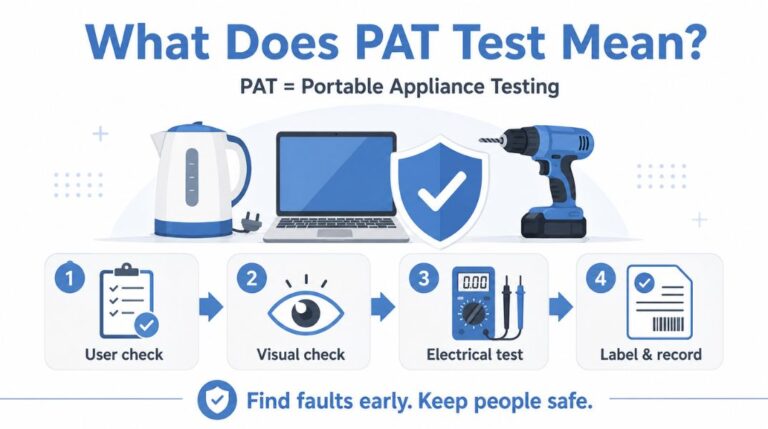
In simple words, PAT stands for Portable Appliance Testing. Many people say ‘PAT test,’ even though this repeats the word ‘testing.’ Everybody uses this name in daily life anyway.
Essentially, this process means you check portable electrical equipment to ensure it is safe. A full routine includes several clear steps. First, the user checks the item. Next, a worker looks at it closely for damage. Then, they run electrical tests on the equipment. Finally, they add a label, write a record and safely remove any failed items.
Furthermore, the Health and Safety Executive says you must examine these appliances to protect workers. They state that you can find many faults just by looking at the machine. However, you can only find some hidden dangers through proper electrical testing.
So, what does PAT stand for in workplace safety? It is a standard check for tools like kettles, laptops, and drills. It helps you find electrical faults early and keeps everyone safe.
How to Do a PAT Test?
To do a PAT test, you must follow a clear process to keep everyone safe.
First, make an appliance list so you can track every item. Then, ask the users if they noticed any faults, sparks, overheating, shocks, or damage. Next, inspect the plug, cable, fuse, casing, and appliance body for visible defects. After that, use a PAT tester to run the right electrical checks.
These checks usually include earth continuity, insulation resistance, or lead polarity. Finally, record your results, label the appliance if useful, and immediately remove failed items from use.
Important Safety Note: Only a qualified person should do a combined inspection and testing.
According to the HSE, a skilled person must have the right equipment. Furthermore, they must know how to use that equipment properly and understand the results correctly.
What Is a PAT Tester?
A PAT tester means two different things in the workplace. First, it means the person who checks and tests the electrical items. Second, it means the machine that checks the electrical safety of those items.
To begin with, the PAT testing machine checks several important safety levels. It looks at earth continuity, insulation resistance, and lead polarity. However, the machine alone does not make a person competent at the job.
After that, a good PAT tester needs specific skills to do the work safely. The person must know exactly which test to choose for each item. They must also understand how to use the equipment and how to read the final results correctly.
On top of that, training and knowledge support the whole process. A qualified tester spots hidden dangers that the machine might miss during the visual check. This ensures that all electrical equipment remains perfectly safe for everyone to use.
So, the person and the machine work together. The machine gives the technical readings during a safety check. At the same time, the person uses their skills to understand those readings and make the right decisions.
What Equipment Need for PAT Testing?
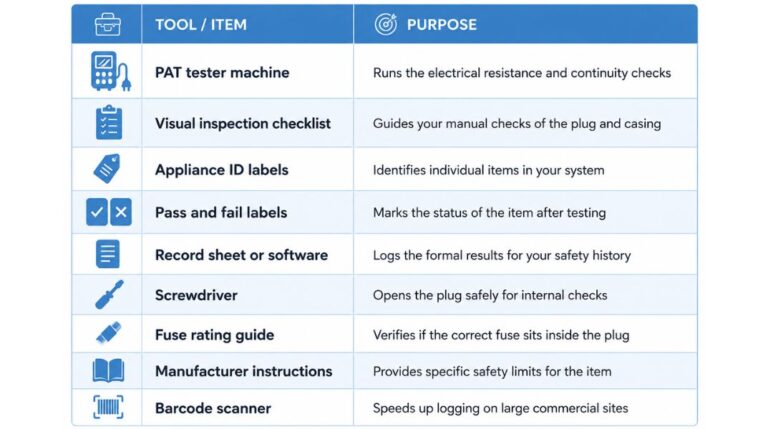
The tools depend on the device and the workplace risk. A basic PAT testing setup may include:
Only use electrical test equipment if you know how it works. Wrong testing can damage appliances or create a risk.
What Appliances and Classes Need PAT Testing?
PAT testing may apply to portable, movable, handheld, transportable, and plug-connected equipment. like:
- Kettles and microwaves
- Extension leads and laptop chargers
- Printers and monitors
- Power tools and vacuum cleaners
- Lamps and workshop equipment
Appliance Classes
- Class I: Relies on earthing protection. Often needs earth continuity and insulation checks.
- Class II: Has double or reinforced insulation. Often has the double-square symbol.
- Class III: Uses separated extra-low voltage. Usually lower risk, often mainly visual checks.
How Long Does a PAT Test Last?
One appliance test may take only a few minutes. But the time depends on the appliance type, condition, access, testing method, and record-keeping.
For validity, there is no fixed legal expiry date. The next inspection or test should depend on risk. HSE says inspection and testing frequency depends on the type of equipment and the environment where it is used.
- Office monitor: Lower risk, needs infrequent checks.
- Vacuum cleaner: Moved often, experiences more wear.
- Construction tool: High-risk environment, needs frequent testing.
- Extension lead: Often checked carefully because it can be damaged easily.
Remember, a pass label is not a lifetime safety guarantee.
What Records and Certificates Do You Need?
A portable appliance test certificate is usually a report that shows what was tested, what passed, and what failed. HSE says records and labels are not legal requirements, but they are useful for managing and reviewing equipment safety.
A useful record may include:
- Appliance ID and location
- Description and class
- Test date and overall result
- Specific voltage or resistance readings
- Tester name
- Failed item actions and next review date
If an appliance fails, remove it from use immediately. Mark it clearly. Then repair, replace, dispose of it or retest after repair.
What Mistakes Should You Avoid?
Avoid these common PAT testing mistakes during your inspections, which include:
- Testing without training
- Skipping the vital visual inspection stage
- Testing every item yearly by default without assessing risk
- Using the wrong test for the appliance class
- Keeping failed equipment in use
- Forgetting to record failed items
- Assuming a pass label means safe forever
Final Thoughts on How to Do a Pat Test
So now you know how to do a PAT test. Safe testing starts with a careful visual check, continues with the right electrical tests, and ends with clear action on your results.
Testing does not have to feel scary or difficult. In the UK, the law focuses on keeping equipment safe so you do not need to test every single appliance every year. Instead, you just need a smart routine to identify hazards early and stop accidents before they happen. Regular checks keep your workplace safe even when things get busy or rushed.
If you want to master these skills, you can take a look at the PAT Testing Course. This course teaches you everything about safe testing and gives you the confidence to manage electrical safety like a professional.
So, before you plug in your next appliance, take a moment to think about safety. Make visual inspections a daily habit because a quick look protects your team now and supports a safer workplace in the long run.
FAQs
How do you perform a PAT test?
Visually inspect the appliance, check the plug, then use a PAT tester machine for electrical checks.
Can you do a PAT test yourself?
Yes, provided you complete proper training and possess the competent skills to use testing equipment safely.
Can any electrician do a PAT test?
Yes, any qualified electrician has the technical skills and knowledge required to perform the testing.
Can you do a PAT test at home?
Yes, you can test home office gear or household appliances using proper testing equipment and checklists.
What will fail a PAT test?
Damaged cables, wrong fuses, cracked casings, and failed electrical resistance readings cause an immediate failure.
How much should a PAT test cost?
They typically cost between £1 and £3 per appliance, but there is often a minimum arrival fee.
Do you legally need PAT testing?
The law demands safe electrical maintenance, but does not strictly enforce formal yearly PAT testing routines.
How hard is the PAT exam?
The standard practical certification exam is straightforward for those who study the regulations and procedures.
How long does a PAT test take?
A single electrical appliance check normally takes between two and five minutes to complete fully.