
No products in the basket.
Is it possible to find easy jobs that pay well UK? Definitely but the strongest options often look different from what people expect. Some sit outside the usual office career path. Others depend more on practical skill than academic study.
These roles appear across driving, construction, sales and public services. Driving instructors earn £32,000–£45,000 while crane drivers may reach around £52,000. Sales representatives can also see yearly earnings rise to £50,000. The good news is that most of these careers do not require a university degree. However, some still need practical training, tests or a professional licence.
It is worth knowing that a high yearly salary may hide long working hours. At the same time, commission can make monthly income less predictable. Meanwhile, self-employed workers must cover fuel, insurance and other business costs.
What Does an Easy Job Really Mean?
An easy job usually means a role with a simpler entry route. You may not need a university degree or years of study. However, the work can still involve pressure, long shifts or serious responsibility.
The part most people forget is that easy entry does not mean easy work.
But what makes entry easier?
- No degree requirement: Employers often value practical skills and work experience.
- Shorter training: Many roles need weeks or months of preparation.
- Employer support: Some companies provide licences, training or supervised practice.
- Direct applications: Applicants can often apply without completing higher education.
A confident speaker may enjoy sales and dislike long-distance driving. Meanwhile, a patient driver may prefer transport work over office targets. Many easy careers to start for UK applicants still require real preparation. Employers may test communication, concentration, driving ability or customer service.
The best easy job is not the one with the least effort. It is the one whose demands fit the way you work.
What Is a Good UK Salary in 2026?
The latest complete ONS data places the median full-time annual earnings at £39,039. Meanwhile, median weekly earnings reached £766.60 in April 2025. Median hourly earnings stood at £19.67 before overtime.
A median shows the middle full-time employee. However, it does not reflect every worker’s exact income. Pay can still change through location, experience, specialist skills and shift patterns. Therefore, treat the national figure as a benchmark rather than a promise.
The fact worth noting is that annual salary means little without working hours. But why do working hours matter when comparing UK salaries?
Actually, A £40,000 role may look attractive at first. Yet its real value can fall when the job requires very long weeks. Someone working 50 hours may earn less per hour than someone working 37 hours. For example:
- £40,000 over 37 hours a week equals about £20.79 per hour.
- £40,000 over 50 hours a week equals about £15.38 per hour.
There is also a legal point to consider. Workers aged 21 or over must receive £12.71 per eligible hour. This rate started on 1 April 2026. As a result, some older starter salaries may no longer suit full-time working hours.
Which Easy Jobs That Pay Well UK Offer the Highest Income?
Crane drivers have the highest experience range at £52,000. Close behind, sales representatives may reach £50,000. Meanwhile, HGV drivers can earn up to £47,000. By comparison, driving instructors and Civil Service executive officers may reach £45,000.
The table shows gross income before tax and other deductions.
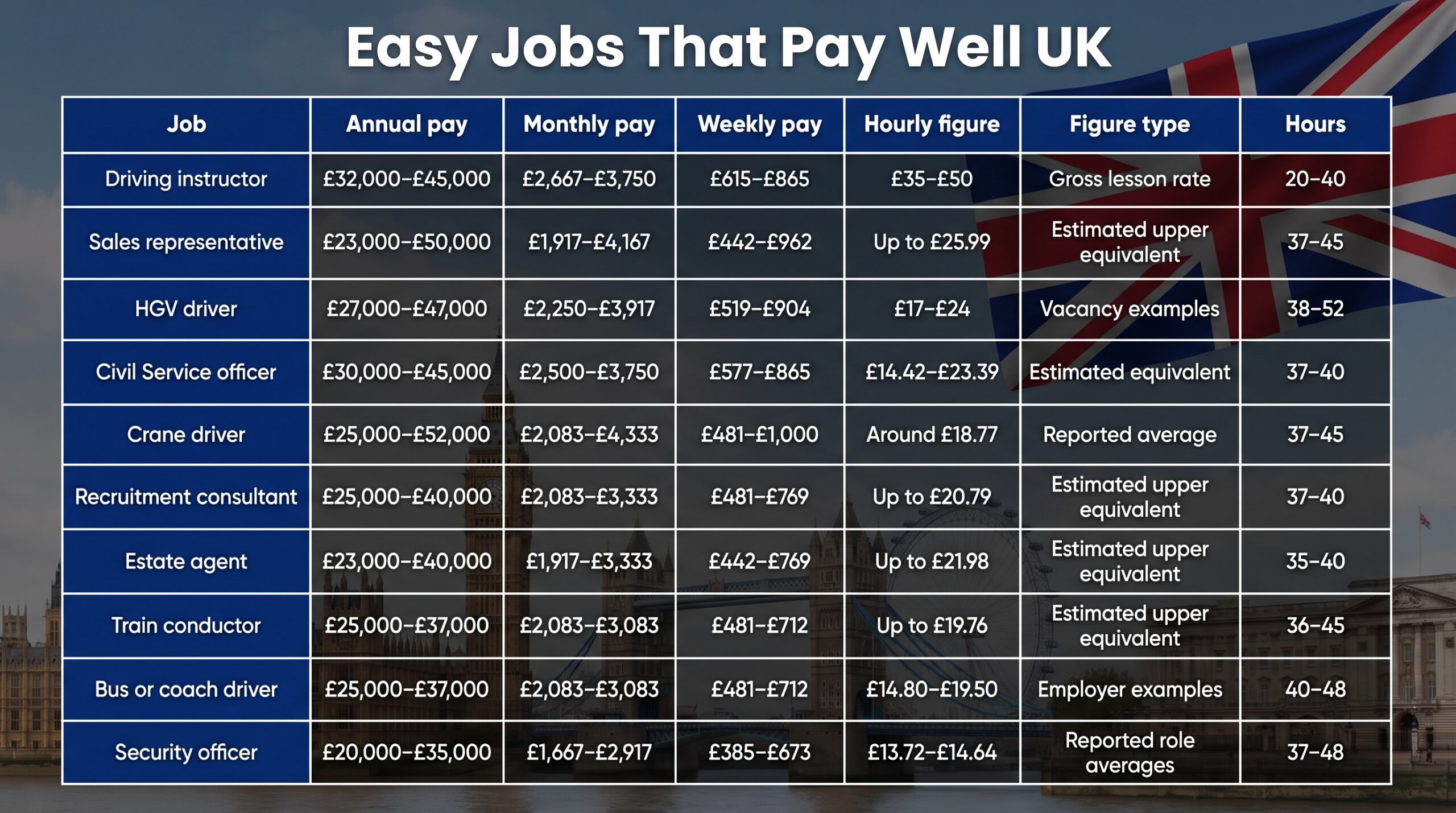
Monthly income comes from dividing the annual salary by 12. Weekly income uses the same yearly figure divided by 52.
For example, a £40,000 yearly salary works like this:
- Monthly income: £40,000 ÷ 12 = £3,333
- Weekly income: £40,000 ÷ 52 = £769
- Hourly value at 37 hours: £40,000 ÷ 52 ÷ 37 = £20.79
- Hourly value at 50 hours: £40,000 ÷ 52 ÷ 50 = £15.38
These calculations assume 52 paid weeks each year. However, self-employed workers may have fewer paid working weeks. Holidays, illness and cancelled bookings can reduce their yearly income.
Hourly figures still need careful reading. A lesson price shows gross business income before expenses. A vacancy rate reflects one employer’s offer. An estimated hourly figure comes from the annual salary and working hours.
This is where the real difference appears. The yearly salary stays the same in both examples. However, longer working weeks reduce the value of each hour.
How Much Can a Driving Instructor Earn?
A driving instructor can earn between £32,000 and £45,000 yearly. That equals £2,667 to £3,750 monthly. Their weekly income ranges from £615 to £865. Most instructors work between 20 and 40 hours.
Independent instructors may charge £35 to £50 per lesson. However, that figure shows gross customer income before expenses. It does not show personal profit.
Recent wider research placed typical earnings near £40,945. That equals roughly £3,412 monthly and £787 weekly. Company estimates also show £52,412 and £55,500 gross yearly income. However, these examples reflect specific franchise or business models.
What if an instructor collects £60,000 during one year? The final profit could still be much lower.
What Business Costs Do Driving Instructors Need to Cover?
Driving instructors may need to pay for:
- Fuel and regular vehicle charging
- Car finance and replacement costs
- Specialist insurance and servicing
- Repairs, tyres and unexpected faults
- Advertising and booking software
- Test cancellations and learner no-shows
- Tax, pensions and accounting
- Unpaid holidays and sickness
Applicants normally need three years of driving experience. They must pass instructor tests and join the official register. Normally, a first ADI certificate costs £300. A trainee licence costs £140. Renewal or re-registration also costs £300.
Experienced instructors can teach automatic lessons or motorway sessions. They may also offer intensive courses and fleet training. Some later train new instructors or open driving schools. For many instructors, growth begins when teaching turns into business ownership.
Can Sales Representatives Reach £50,000?
Yes. Sales representatives can earn up to £50,000 a year. However, the full amount may include commission or OTE. Basic pay often sits lower, so workers usually need to meet sales targets before reaching the highest advertised figure.
Sales representative pay ranges from £23,000 to £50,000 yearly. That equals £1,917 to £4,167 monthly. Weekly earnings range between £442 and £962. Most representatives work 37 to 45 hours.
At 37 hours weekly, £50,000 equals about £25.99 hourly. However, the full amount may include commission or OTE.
How Do Basic Salary, Commission and OTE Work in Sales?
OTE means on-target earnings. A role may offer £28,000 basic pay and £12,000 commission. The advert may then show £40,000 OTE. In reality, the employee only reaches £40,000 after meeting the agreed targets.
Sales administrators may earn between £22,000 and £28,000. Meanwhile, trainee representatives often start on £25,000 to £28,000 basic pay. With experience, the basic salary can rise to around £45,000. In specialist medical sales, earnings may reach £55,000.
Medical sales managers may earn around £60,000 plus bonuses. Strong senior performers can exceed £100,000 through commission. Still, that level remains exceptional. It should never appear as normal employee pay.
The unexpected thing is that poor months may leave only a basic salary. Rejection, difficult targets and changing demand can make income less stable.
A common career route moves through account management and sales management. Strong performers may later become regional managers or business development managers. These roles can pay between £28,000 and £80,000.
What Does an HGV Driver Earn Per Hour?
HGV drivers usually earn £27,000 to £47,000 yearly. Their monthly pay ranges from £2,250 to £3,917 and weekly income sits between £519 and £904. But the higher salary usually comes with longer shifts. Most drivers work around 38 to 52 hours each week.
Licence type can also affect pay:
- Class 1, or Category C+E: Drivers operate large articulated lorries with trailers. Recent vacancies have offered around £17 to £24 per hour.
- Class 2, or Category C: Drivers operate large rigid lorries. Some roles advertise £30,000 to £43,000 a year.
These figures come from selected vacancies. They do not represent national averages.
A specialist driver can pay more. Tanker drivers may earn around £18.60 per hour. Some fuel transport roles advertise £45,000 to £56,000 OTE. However, OTE may include overtime, bonuses or shift payments.
But Why Do Some HGV Driver Jobs Pay More?
HGV earnings often rise through:
- Class 1 driving experience
- ADR training for hazardous loads
- Tanker or fuel transport work
- Night and weekend shifts
- Longer routes and overnight stays
- Overtime during busy periods
The fact is that better pay often brings harder conditions. Drivers may work nights, weekends and long shifts. Some also spend several nights away from home.
Applicants need the correct HGV licence and Driver CPC. Some Skills Bootcamps provide flexible training for suitable applicants.
HGV drivers have several ways to grow their careers. A Class 2 driver can gain experience and move into Class 1 driving. Other options include tanker driving, driver training and transport supervision. Some drivers later become road transport managers. These roles can pay between £30,000 and £58,000 a year.
Experienced drivers may also buy their own lorry and work for themselves. This can bring in more money. However, they must pay for fuel, repairs, insurance and vehicle finance.
How Much Does a Civil Service Executive Officer Earn?
A Civil service executive officer’s salary usually ranges from £30,000 to £45,000 a year. That works out at around £2,500 to £3,750 a month. Weekly pay usually falls between £577 and £865. Most roles involve 37 to 40 working hours each week. Based on those hours, pay may equal about £14.42 to £23.39 per hour.
Civil Service pay is usually more stable than sales income. Most roles offer a fixed salary and do not rely on commission. However, pay can change between government departments. London roles and specialist jobs may offer higher salaries.
What Is a Civil Service Executive Officer Job Like?
Executive officers manage cases, public services or small teams. They also prepare reports and follow government rules.
You do not always need a university degree for this role. Still, the recruitment process can feel demanding. Applicants often complete online tests and behaviour-based applications. During interviews, they usually share examples from work, study or volunteering.
One strong benefit is stable pay and clear career growth. Civil Service pension benefits can also add long-term value. Some specialist tax careers pay around £57,000 a year. However, that salary belongs to a different role with separate duties.
This job suits only organised people who follow procedures carefully. It also works well for those who prefer steady and predictable income.
Can Crane Drivers Earn £1,000 a Week?
Yes, experienced crane drivers can earn as much as £1,000 a week. Annual pay usually sits between £25,000 and £52,000. That equals roughly £2,083 to £4,333 each month. Most crane operators work around 37 to 45 hours a week.
Recent salary research places typical crane work at £18.77 per hour. Lift supervisors may receive around £24 to £25.31 hourly. Actual earnings mostly depend on experience, location and project type.
Why Do Crane Driver Jobs Pay So Well?
The real reasons crane driver jobs pay well include:
- High responsibility: Operators move heavy loads above workers and buildings.
- Serious safety risks: One mistake can cause major damage or injury.
- Specialist skills: Drivers need strong control, focus and spatial awareness.
- Costly equipment: Cranes can cost large amounts to run and repair.
- Complex projects: Major construction work often needs experienced operators.
- Different crane types: Tower, mobile and port cranes can offer different rates.
- Night shifts: Late hours and difficult shifts can increase pay.
- Offshore conditions: Remote sites and demanding work can raise daily rates.
- Extra qualifications: Specialist roles often need added training and certificates.
- Proven experience: Employers value operators with a strong safety record.
Some offshore jobs offer £450 to £550 a day. But these contracts often last only a few weeks. Workers also need the right certificates and strong experience. So, do not treat this daily rate as a normal yearly salary.
How Much Do Recruitment Consultants Earn Without Commission?
Recruitment consultants usually earn £25,000 to £40,000 a year before extra commission. That works out at around £2,083 to £3,333 a month. Weekly pay falls between £481 and £769. Most consultants work 37 to 40 hours each week. Strong results can push total earnings higher through commission and bonuses.
Trainee recruitment consultants often earn around £25,000 to £30,000 in basic pay. Some London graduate roles offer £30,000 to £35,000 before commission. However, advertised OTE can include bonuses and is not guaranteed.
So, How Does Recruitment Commission Work?
Recruitment consultants earn commission when they place a candidate in a job. The employer pays a fee to the recruitment agency. The consultant then receives an agreed share of that fee.
For example, a consultant could earn:
- £27,000 in basic salary
- £8,000 in commission
- £3,000 as a target bonus
This would bring total yearly earnings to £38,000.
But you need to know that commission is not guaranteed. A client can cancel the vacancy. A candidate can reject the offer or leave soon after starting. In some cases, the agency may lose the fee.
Specialist areas often offer higher commission. Technology, healthcare and finance roles can produce larger placement fees. Executive search can pay even more.
Some adverts show earnings of £70,000 to £100,000. However, these figures usually represent high OTE. They do not show the normal guaranteed salary.
How Much Can an Estate Agent Make UK?
Estate agents in the UK usually earn £23,000 to £40,000 a year. That range equals around £1,917 to £3,333 a month. Weekly income sits between £442 and £769. Most UK estate agents work around 35 to 40 hours weekly. At £40,000 a year, the hourly value is about £21.98. Yet commission can push earnings up or down.
New sales and lettings negotiators often earn around £25,000 to £30,000, including commission or OTE. Some estate agents can earn £34,000 to £45,000, plus commission with experience. Most importantly, a branch manager can earn around £45,000 to £70,000. But this pay belongs to a senior role with added responsibility.
After All, Why Can Estate Agent Earnings Still Be Misleading?
Estate agent earnings can look higher than they really are. The main reason is the agency fee. This money goes to the business, not directly to the agent.
For example, a 1.42% fee on a £300,000 property equals £4,260. However, the agency receives the full amount. It then covers VAT, property adverts, online portals and staff costs. The individual agent only receives an agreed share as commission.
Property sales can also fall through before completion. The agent can lose the expected commission when this happens.
Some online or independent estate agent roles advertise £70,000 to £100,000 OTE. However, these figures often show possible earnings rather than guaranteed salary. They can also reflect business income before costs.
Career growth can still improve long-term pay. An agent can move from negotiator to valuer or branch manager. Other routes include commercial property and running an estate agency.
What Is a Train Conductor’s Hourly Income?
Train conductors in the UK earn about £15.81 to £19.76 per hour. The exact rate depends on weekly hours, shift patterns and the train company. Their yearly pay usually ranges from £25,000 to £37,000. That equals around £2,083 to £3,083 a month. Weekly income often falls between £481 and £712.
Most train conductors work between 36 and 45 hours each week. Shift allowances, overtime and weekend work can raise total earnings.
Conductors do more than check tickets. They help passengers, make announcements and deal with safety issues. Delays and emergencies can quickly make the role more demanding.
Train companies often recruit applicants directly. Many roles do not need one fixed qualification. What matters most is having good English, basic maths and strong customer service skills. Because employers look for these skills when choosing applicants. Applicants can also face communication and concentration tests. Medical checks and drug screening often form part of recruitment.
How Does Railway Progression Work?
Railway careers offer several routes into higher-paid roles. A common path can look like this:
Station Worker → Train Conductor → Senior Onboard Role → Train Driver
Station workers usually earn around £24,000 to £29,000 a year. Some later complete conductor training and move into onboard passenger services. Then, conductors can apply for senior onboard roles with experience. These include senior conductor or train manager positions, depending on the railway company.
Train driving offers another possible route. Train drivers can earn between £28,000 and £65,000 a year. However, conductor experience does not guarantee selection. Applicants must still pass ability tests, medical checks and full driver training.
Conductors can also explore other railway careers:
- Railway Signaller: £35,000 to £55,000 a year
- Rail Operations Controller: Around £29,000 to £40,000 a year
- Revenue Protection Officer: Around £30,285 a year
Some revenue protection vacancies offer £33,789 during training. Pay can rise to £41,617 after successful completion.
What Do Bus and Coach Drivers Earn Per Hour?
Bus and coach drivers can earn around £14.80 to £20.75 per hour. The final rate depends on experience, location and working hours. Annual pay usually falls between £25,000 and £37,000. That works out at roughly £2,083 to £3,083 a month. The weekly figure works out at about £481 to £712. Most drivers work 40 to 48 hours each week. Training pay often starts near £14.80 per hour. Once qualified, drivers can earn around £16.23 to £16.30.
Pay improves with experience and harder shifts. Some experienced drivers earn up to £19.50 per hour. Weekend work can push rates to around £20.75.
Coach driving can offer a slightly different pay structure. Some vacancies advertise £17.13 per hour. Others offer around £29,700 a year, plus overtime.
These rates come from different employers and locations. So, treat them as real job examples, not one fixed UK average.
What Affects Bus and Coach Driver Pay the Most?
Bus and coach driver pay can rise for several reasons:
- Experience: Skilled drivers often earn higher hourly rates.
- Weekend shifts: Saturday and Sunday work can pay more.
- Overtime: Extra hours can increase weekly income.
- Night work: Late shifts often come with added pay.
- Location: London and busy areas can offer higher rates.
- Employer: Pay levels differ between transport companies.
- Joining bonuses: Some employers offer bonuses near £1,500.
- Coach work: Long-distance and private hire routes can pay differently.
The work can still bring difficult days:
- Traffic delays can make shifts longer.
- Passenger conflict can create stress.
- Early starts can disrupt sleep.
- Late finishes can affect family time.
How Much Does a UK Security Officer Earn yearly?
A security officer in the UK can earn anywhere from £20,000 to £35,000 a year. In monthly terms, that is about £1,667 to £2,917. Weekly pay comes to roughly £385 to £673. Security officers mostly work between 37 and 48 hours each week. Because of this, the lowest yearly figures need careful checking. They may not meet current full-time pay rules.
Workers aged 21 or over must earn at least £12.71 per eligible hour. General security guards earn around £13.72 per hour.
Pay usually rises with added risk, specialist duties and location. Door supervisors earn about £14.13 per hour across England. Average pay reaches around £14.64 per hour in London.
Specialist security roles can offer more. Surveillance operators earn around £24,420 a year. Some CCTV jobs advertise £29,986 to £32,000. Experienced security officers can earn up to £35,000 yearly.
What Factors Increase Security Officer Pay?
Security officer pay usually rises through specialist work, night shifts and overtime. London roles can also offer higher rates. Door supervision, CCTV monitoring and control-room duties often pay more than basic guarding.
Experience can improve earnings too. Officers with several useful licences can apply for a wider range of jobs. Higher-risk sites and roles with more responsibility can also offer better pay.
However, higher earnings often come with harder conditions. Night work, weekend shifts and conflict can make the job more demanding.
How Much Do Security Training and an SIA Licence Cost?
Security training and an SIA licence can cost around £400 to £650 or more. From 1 April 2026, a new or renewed SIA licence costs £204. Training fees come on top of this charge. Door supervisor courses often cost £200 to £350. Security guard courses usually cost £180 to £270. CCTV training commonly ranges from £180 to £300. Some learners also need first aid training which can add another £50 to £100.
The final cost depends on the course provider and licence type. Travel, exam resits and document checks can also increase the total.
Training time also changes by role. Door supervisor courses take 44 to 52 hours. Security guarding courses take 30 to 38 hours. CCTV training takes 22 to 30 hours.
Before booking, check what the price includes. Some providers include exams and first aid training. Others charge for them separately.
Which Roles Offer Stable Pay or Higher Earnings?
Civil Service, railway and transport roles usually offer more predictable basic pay. Sales, recruitment and estate agency can provide stronger commission. Driving instruction gives workers more control through self-employment.
So, which option gives the best balance?
- Stable pay: Civil Service, railway and bus roles stand out.
- Higher commission: Sales, recruitment and estate agency offer more earning potential.
- Self-employment: Driving instruction and independent estate agency provide greater flexibility.
- Practical career growth: HGV, bus and railway roles offer clear routes forward.
- Highest salary range: Crane driving can reach around £52,000.
Income stability still matters when comparing well-paid UK jobs. Salespeople, recruiters and estate agents can earn more during strong months. Yet poor results can reduce commission quickly.
Self-employed driving instructors also face fuel, insurance and unpaid time. A guaranteed £40,000 salary can offer more value than £60,000 OTE.
What Is the Difference Between Salary, OTE and Turnover?
Here is what each pay term means and what you should check:
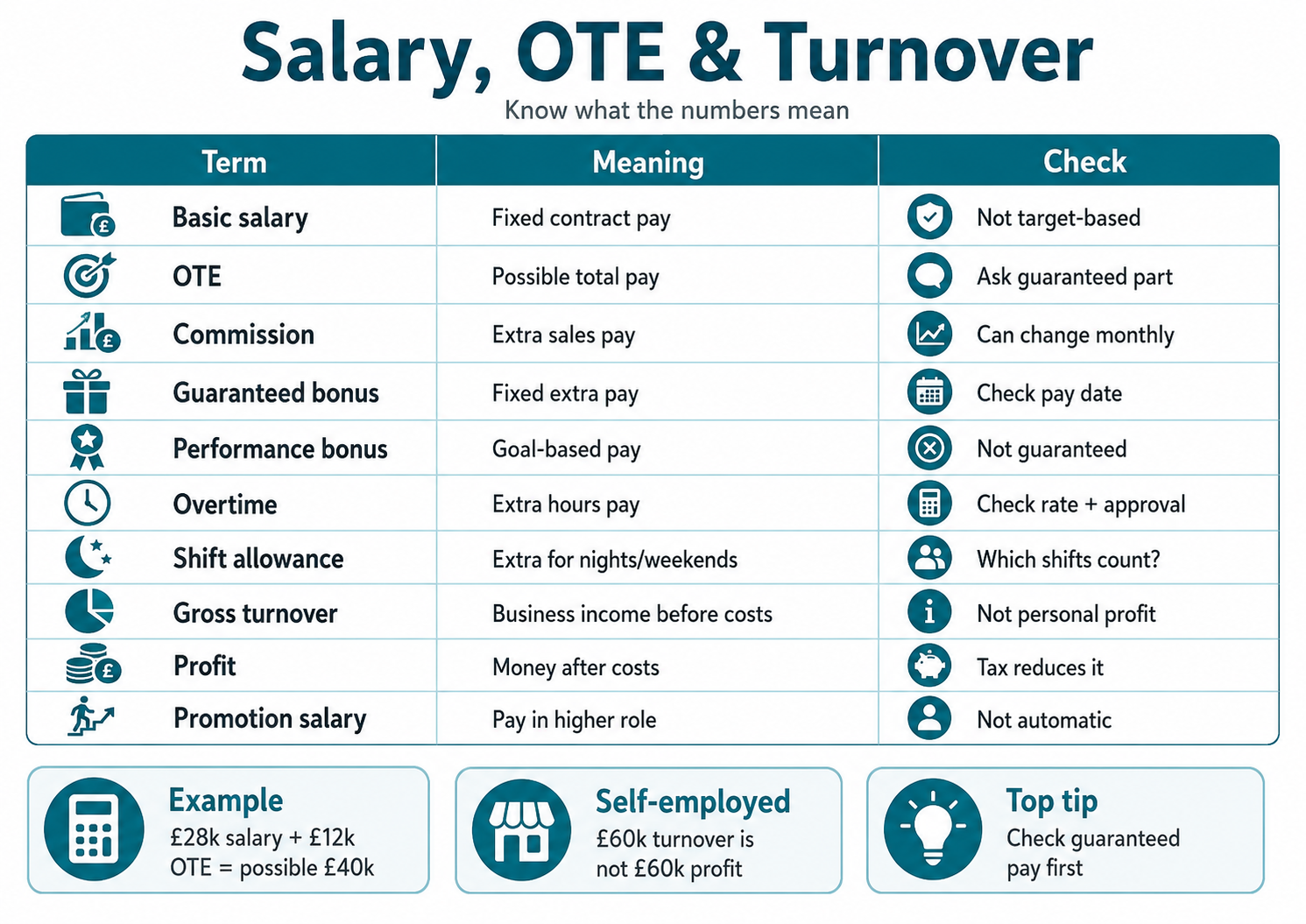
One job advert can show several different income figures. For example, a £28,000 basic salary with £12,000 OTE does not guarantee £40,000. The worker must meet the agreed targets first.
The same point applies to self-employment. A driving instructor can collect £60,000 in turnover. However, fuel, insurance and other costs reduce the final profit.
For this reason, always check the guaranteed pay before judging a job advert.
Which Job Should You Choose?
Start with fit, not salary. A high-paying job can still feel wrong every day. That’s why you must ask yourself these questions before applying:
- Do you need a steady monthly income?
- Can you work nights, weekends or holidays?
- Do you enjoy driving or meeting people?
- Can you afford training, licences or business costs?
- Are you comfortable with targets and rejection?
- Do you want a job or your own business?
Your strengths should guide the final choice.
For example, sales suit confident people who recover quickly from rejection. Meanwhile, driving roles fit patient workers who stay calm under pressure. Civil Service jobs work well for organised people who follow clear rules.
Crane and security roles demand focus and good judgement. Recruitment calls for quick thinking and strong people skills. Estate agency suits confident negotiators with good local knowledge.
No-degree jobs with good pay still need effort and skill. So, check local vacancies before making a final decision.
Are Easy Jobs That Pay Well UK Worth Considering?
Yes, easy jobs that pay well UK are worth considering. They can offer high income without a university degree. But every role comes with a price. Some jobs bring long hours. Others depend on commission. Self-employed workers face fuel, insurance and unpaid time. That is why salary alone should never make the final decision.
Stable roles suit people who need regular income. Commission jobs fit confident workers who handle pressure. On the other hand, self-employment works best for people who accept changing earnings and business costs.
Here is what matters most. Choose a job with fair hourly pay, realistic entry and clear career growth. The right role should match your strengths. It should also fit the life you want to build.
Frequently Asked Questions (FAQs)
What Is the Easiest Job That Gets Paid the Most?
- There is no single easiest high-paying job. Sales can suit confident speakers, while driving roles suit calm workers. Crane driving can reach £52,000 but it needs training and strong safety skills.
What Is a Low-Stress Job?
- No job is completely free from stress. Civil Service roles can feel calmer for people who like routine and fixed pay. Still, deadlines, public contact and responsibility can create pressure.
What Jobs Pay £1,000 a Week in the UK?
- Earning £1,000 a week means making about £52,000 a year before tax. Experienced crane drivers can reach this level. Commission, overtime or specialist shifts can also push some roles higher.
How Can You Earn £70,000 a Year Without a Degree?
- You usually need experience, specialist skills or strong results. An experienced Civil Service manager can earn up to £71,000. Some workers can progress internally without a degree, although rules differ by department.
What Jobs Will Boom in 2026?
- Digital technology, adult social care, construction and engineering show strong future demand. These sectors need more skilled workers as businesses grow and older workers retire.
Is £30,000 a Low Salary in the UK?
- £30,000 is below the UK full-time median of £39,039. However, it is not automatically a poor salary. Your location, working hours and household costs make the real difference.