
No products in the basket.
Living in a new country brings many exciting challenges for your family. One common issue in the UK is dealing with old house pipes. You might notice water sitting in your sink for a long time. This is often the first sign of a very annoying problem. A clogged pipe can cause bad smells and messy floods inside. However, you can learn simple ways to prevent blocked drains today.
Our guide explains how to keep your home clean and safe. Following these tips will save you from spending money on repairs. Let us explore how to manage your British plumbing system effectively.
Why is it Essential for UK Homeowners to Prevent Blocked Drains?
Many houses in the UK were built over one hundred years ago. These homes use old clay pipes that are very thin and fragile. Modern living puts a lot of pressure on these ancient systems. Consequently, debris can get stuck in the rough interior of the pipes. If you prevent blocked drains, you protect the history of your home.
Professional cleaning services in London or Manchester are often very expensive. Furthermore, blockages can lead to damp walls and expensive floor damage. Taking care of your pipes is a vital part of homeownership. You will feel much more relaxed in your new British property.

How Does Victorian Infrastructure Affect Your Modern Plumbing?
Victorian builders did not design pipes for modern washing machine usage. Their pipes were meant for much smaller amounts of daily water. Today, we use many chemicals and heavy fats in our kitchens. Therefore, these narrow pipes struggle to carry everything away safely. You must work hard to prevent blocked drains in older buildings. Clay pipes often shift in the ground and create small internal lips. These lips catch hair and food waste very easily over time. Understanding your home’s history helps you treat the pipes with care. Older systems require a bit more attention than brand new ones.
What Should You Never Put Down a UK Kitchen Drain?
Food scraps are a major cause of trouble in UK kitchens. Even tiny bits of rice can expand inside your narrow pipes. Coffee grounds are also very dangerous because they act like wet sand. They stick to the pipe walls and trap other pieces of waste. Consequently, a thick sludge forms and stops the water from moving.
Items to Keep Out of Your Pipes:
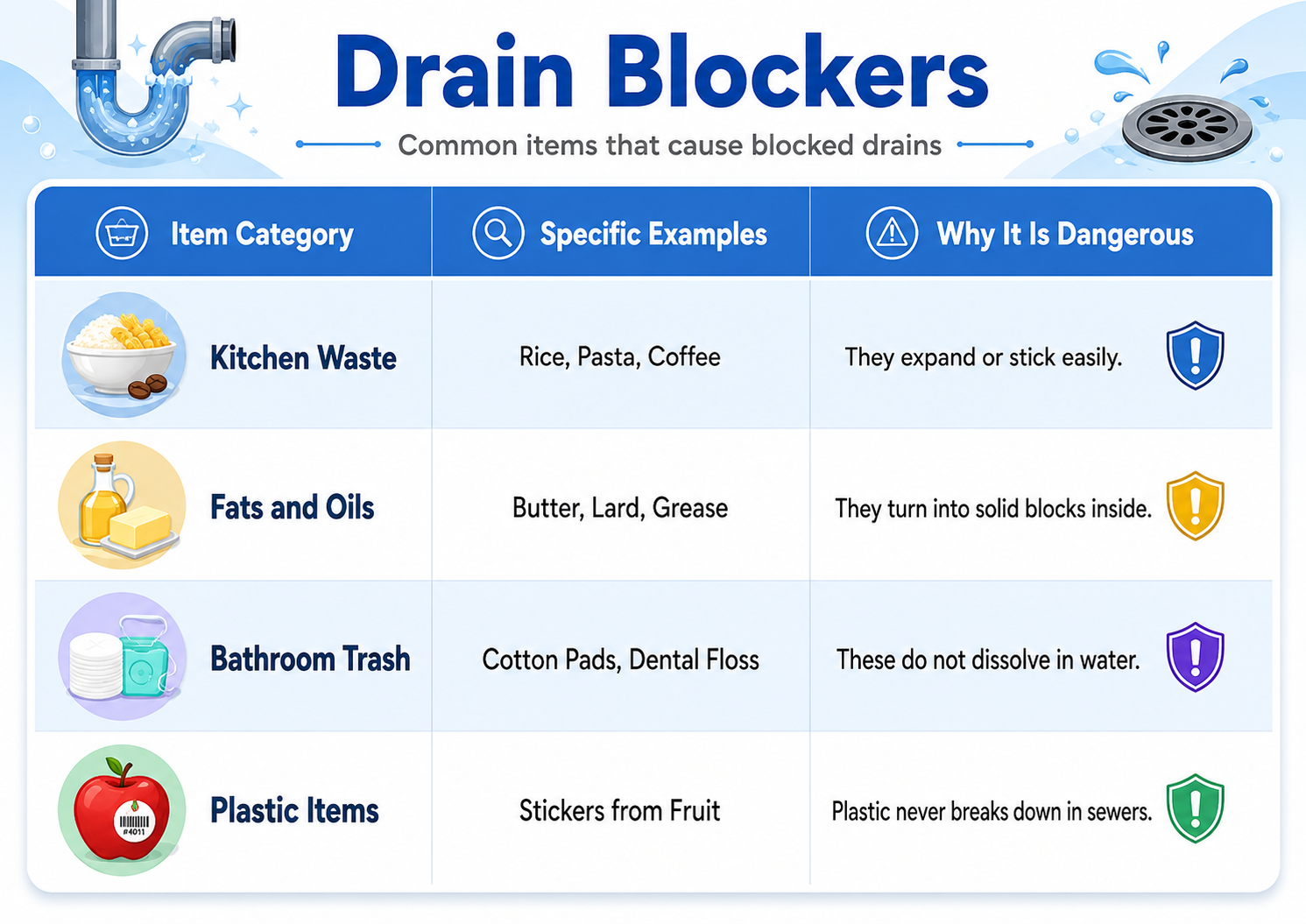
Furthermore, you should avoid using too many harsh chemical cleaners. Strong chemicals can actually eat away at old Victorian metal pipes. This damage leads to leaks that are very expensive to fix. Use mild soaps and natural cleaners whenever it is possible. Your plumbing system will be much happier and last longer.
Why Are “Flushable” Wipes Dangerous for UK Systems?
Many products in the supermarket claim to be safe for toilets. However, wet wipes do not break down like normal toilet paper. They stay whole and get caught in the bends of pipes. This creates a massive wall that stops everything from passing through. To prevent blocked drains, you should never flush any wet wipes. This includes baby wipes, cleaning wipes, and even facial makeup wipes. Place a small bin next to your toilet for these items. Your plumber will be very happy that you followed this advice. Keeping wipes out of the sewer protects the local UK environment.
How Can a 99p Hair Trap Save You Hundreds of Pounds?
Human hair is a very common cause of bathroom pipe clogs. Long hair gets tangled around the metal parts of the drain. Over time, soap scum sticks to the hair and grows larger. You can prevent blocked drains by buying a cheap mesh trap. These are available in most local UK hardware or pound shops. Place the trap over your shower or bath plug hole daily. Then, simply lift it out and bin the hair every morning. This prevents the need for expensive chemical cleaners or professional tools. It is the most cost-effective way to maintain your bathroom pipes.
Which Bathroom Items Are the Most Common Causes of Clogs?
Many people treat the toilet like a convenient rubbish bin. However, the pipes are only designed for human waste and paper. Cotton wool buds and pads will never dissolve in the water. They get stuck in the u-bend and cause immediate overflows. You can prevent blocked drains by being very strict about waste. Dental floss is another hidden danger for your bathroom’s plumbing. Floss is made of strong plastic and acts like a net. It catches everything and creates a very stubborn and solid block. Always dispose of these items in your bathroom vanity bin.
Why Should You Be Careful with Harsh Chemical Cleaners?
You might think that strong chemicals are good for your pipes. However, many liquid cleaners are actually very acidic and dangerous. They can heat up and melt the plastic joints in pipes. To prevent blocked drains, try to avoid using these heavy liquids. Older metal pipes can also suffer from corrosion due to chemicals. This leads to holes and leaks that damage your floor boards. Furthermore, these chemicals are not good for the British water fish. It is much better to use natural or mechanical cleaning methods. Your pipes will stay stronger and last for a longer time.
How Do You Maintain Outdoor Drains and Gullies?
The UK weather can be very wet and windy in autumn. Falling leaves often cover the grates in your garden or driveway. If the grates are covered, water cannot enter the drainage system. Therefore, you should clear your garden paths of all dead leaves. This simple task will prevent blocked drains during a heavy storm. Check your external gullies to ensure they are not full. Use a small shovel to remove any dirt or garden silt. Wear thick rubber gloves to protect your hands from any debris. Keeping the outside clear protects your home from local surface flooding.
Are there natural ways to keep drains clear?
Natural cleaning methods are very safe for your family and pipes. You can use a mixture of baking soda and white vinegar. First, pour half a cup of baking soda down the hole. Then, add half a cup of vinegar and wait ten minutes. This creates a fizzing action that eats away at light grease. To prevent blocked drains, do this routine once every month. It keeps the pipes clear without using any toxic or smelly gases. Finally, rinse the drain with a jug of warm tap water. This is an eco-friendly way to maintain a healthy British home.
When is Boiling Water Safe for Your House Pipes?
Boiling water can be a very effective tool for clearing grease. However, you must know what your pipes are made of first. Many modern UK homes use plastic UPVC pipes for their sinks. Boiling water can cause these plastic pipes to soften and leak. Therefore, you should prevent blocked drains using only warm soapy water. If you have old metal pipes, boiling water is usually fine. Always pour the water slowly to avoid splashing your own skin. This helps to melt any small fat deposits before they harden. Use this method carefully to keep your kitchen plumbing very clear.
How Do You Know If Your Drain Is Starting to Block?
Your home will often give you clues before a flood happens. You might hear a gurgling sound when the water drains away. This noise means that air is struggling to pass through pipes. To prevent blocked drains, pay attention to these strange new sounds. Another sign is a very bad smell coming from the sink. This smell usually means food is rotting inside the pipe walls. You might also see the water level in the toilet rise. Act quickly when you notice these warning signs in your house. Early action prevents a small problem from becoming a big disaster.
When should you stop DIY and call a professional?
Sometimes, a plunger is not enough to fix a deep clog. If water is coming up in multiple sinks, call a plumber. This usually means the main sewer line has a big problem. You cannot prevent blocked drains of this size with home tools. A professional has a special camera to see deep inside pipes. They can find out if a pipe has collapsed under ground. Furthermore, they use high-pressure water jets to clear the hardest blocks. Do not wait until your whole house is flooded with water. A quick call to an expert can save your property today.
Whose responsibility is it to fix the blocked drain?
Understanding UK law about drains is very helpful for every homeowner. You are responsible for all pipes within your property’s boundary line. This includes the drains that lead directly from your own house. However, the water company looks after the large public sewer pipes. If the block is on the street, call your water provider. They will often fix these external issues for no extra cost. To prevent blocked drains, keep your private section of pipe clear. Check your house insurance to see if it covers drainage repairs. This knowledge will help you stay calm during a plumbing emergency.
How Does Hard Water Affect Your UK Drains?
Many parts of the UK have what we call hard water. This means the water contains a lot of natural minerals like lime. These minerals can build up inside your pipes over many years. Consequently, the space for water to flow becomes much smaller today. You can prevent blocked drains by using a water softener system. Alternatively, use a descaling product in your kettle and washing machine. This prevents limescale from breaking off and causing a pipe blockage. Keeping your water “soft” helps all your home appliances last longer. It is a smart move for long-term home maintenance.
Why is a Plumbing Emergency Kit Useful to Have?
Every UK home should have a basic kit for plumbing issues. You should keep a high-quality plunger in your storage cupboard today. Include a pair of long rubber gloves for messy cleaning tasks. These tools help you prevent blocked drains from becoming a huge disaster. Keep the phone number of a local plumber on your fridge. You should also know where the main water stopcock is located. Turning off the water fast can save your carpets from ruin. Being prepared makes you feel much more in control of life. A little preparation goes a long way in a new home.
Conclusion
You have learned many valuable lessons about your home’s plumbing today. Maintaining your pipes is a simple way to protect your family. Remember to always bin your grease and avoid flushing wet wipes. Use natural cleaners like vinegar to prevent blocked drains every month. Check your outdoor gullies after the wind and heavy rainfall. If you see warning signs, act quickly to fix the issue. Being a proactive homeowner is the best way to save money. We hope this guide helps you enjoy your new UK life. Please share these tips with your friends and local community members. Stay safe and keep your home’s water flowing very freely!
FAQs
-
How to stop drains from getting blocked?
- Avoid pouring grease, food scraps, hair, and wipes down drains. Use drain strainers and flush with hot water regularly.
-
Why pour salt down the drain every night
- Salt can help reduce minor odors and buildup, but it won’t prevent or clear serious blockages.
-
Does Fairy Liquid unblock drains?
- Fairy Liquid may help break down light grease, but it is not effective for clearing blocked drains.
-
What is the biggest cause of blocked drains?
- The most common causes are grease and fat buildup, hair, food waste, soap residue, and non-flushable items.
-
What do plumbers recommend to unclog drains?
- Plumbers recommend using a plunger, drain snake, or enzyme-based cleaner. For stubborn blockages, professional drain cleaning is the best option.
-
Why pour vinegar down the drain in October?
- This is a seasonal cleaning tip, not a necessity. Vinegar can help reduce odours and dissolve light residue, but it doesn’t need to be done specifically in October.