
No products in the basket.
A lifeguard career can be a great choice for people who enjoy helping others. Many lifeguards start at pools, gyms or leisure centres. They learn how to keep swimmers safe and deal with water emergencies. With more experience, they can take on senior roles and new duties. But how much does lifeguards make in reality?
Lifeguards can earn about £19,000 to £28,000 a year. Hourly pay often sits between £11.50 and £14. Your pay can change with your experience, job and location. Extra hours and senior roles can also help you earn more.
Let’s look at lifeguard pay, skills and career growth in detail.
How Much Does Lifeguards Make in the UK as a Newcomer?
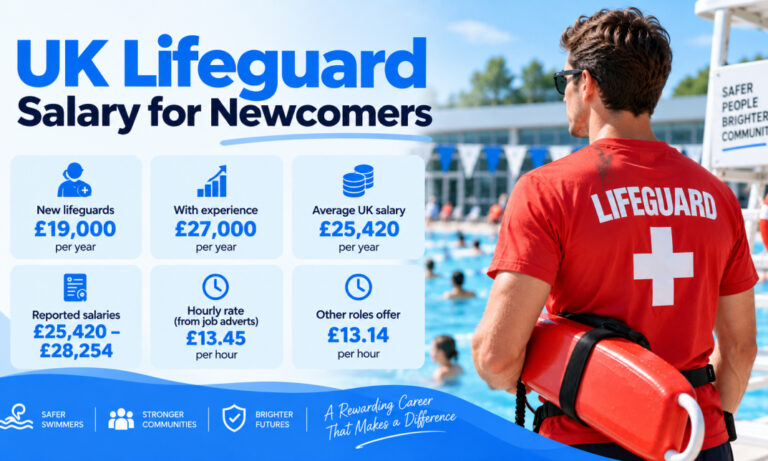
New lifeguards in the UK can earn around £19,000 each year. With experience, this figure can rise to around £27,000. The average UK lifeguard salary stands at around £25,420 yearly. Reported salaries range from £25,420 to £28,254.
Current job adverts also show hourly rates for lifeguards. Some roles offer around £13.45 or £13.14 per hour. However, part-time lifeguards can earn less each year. Hourly pay also does not guarantee a fixed yearly income. Overall, these figures give newcomers a clear view of lifeguard pay.
What is the Lifeguard Hourly Rate?
The lifeguard hourly rate UK usually ranges from £10 to £14. However, some current jobs offer higher rates. Several London jobs list pay of around £13.01 per hour. Another full-time role offers £13.45 per hour. Employers set different rates based on the job and workplace.
Lifeguards can receive pay by the hour, day, week or year. Your working hours affect your total yearly income. Evening, weekend and bank holiday shifts can also affect earnings. Age also matters because different minimum wage rates apply to workers. Therefore, check both the hourly rate and working hours before accepting a job.
Do Pool and Beach Lifeguards Earn Differently?
Pool and beach lifeguards can earn different amounts in the UK. Pool lifeguards often work all year in leisure centres and swimming pools. Beach lifeguards often work during the warmer months. Their work also brings different risks and working conditions.
- Pool lifeguards: Usually earn around £11 to £13 per hour.
- Beach lifeguards: Hourly pay can reach £16.55 in some roles.
- Seasonal beach work: Earnings can range from £22,000 to £26,000.
What is the Lifeguard Pay by Age?
Lifeguard pay can change based on a worker’s age. Workers aged 21 and over must earn at least £12.71 per hour. Those aged 18 to 20 must earn at least £10.85 per hour. Meanwhile, workers aged 16 to 17 must earn at least £8.00 per hour. Apprentices also have a minimum rate of £8.00 per hour.
These figures show the legal minimum wage, not standard lifeguard pay. Many employers offer higher rates than these minimums. Age does not decide a lifeguard’s salary on its own. Experience, working hours and the employer also affect earnings. A 16-year-old lifeguard can also gain the NPLQ qualification and start working.
Where Do Lifeguards Earn the Most?
Lifeguard pay can differ between towns and cities across the UK. Glasgow offers around £26,592 per year on average. London follows with around £26,270 per year. Oxford lifeguards earn about £26,224 each year. Chelmsford also offers around £26,097 per year.
Some areas near London show higher average lifeguard pay. New Malden offers around £29,883 per year. Hounslow and Putney offer around £27,542 and £27,390. South West London also reaches around £26,499 yearly. These figures can change as employers update their pay rates.
How Much Does Lifeguards Make in London?
The average lifeguard salary in London stands at £26,270. Salaries range from £25,420 to £28,675. Experience, qualifications and employers can affect your actual pay. Current London jobs also offer around £13.01 per hour.
Some jobs near London pay more each hour. But living in London can cost much more. Rent, travel and food can also cost more there. So, higher pay does not always mean more money left. Always think about your pay and living costs together.
What Affects a Lifeguard’s Salary?
Several factors affecting lifeguard salary can change your overall earnings. Experience, skills and extra training can help you earn more. Your workplace, location and working hours also affect your pay. Extra shifts can further increase your total earnings.
- Experience: More experience can lead to better-paying lifeguard roles.
- Qualifications: Extra training can improve your skills and job options.
- Responsibilities: Senior and supervisory roles often bring higher pay.
- Workplace: Hotels, gyms, pools and leisure centres offer different pay.
- Location: Local demand and living costs can affect wage levels.
- Working hours: Full-time work and extra shifts can increase earnings.
What Does a Senior Lifeguard Earn?
The senior lifeguard salary UK differs between locations and employers. Senior lifeguards in London earn around £30,305 yearly. Across the UK, senior lifeguards earn around £26,377 yearly. These figures differ because locations and salary data can vary.
Senior lifeguards take on more duties than regular lifeguards. They can supervise staff, organise shifts and lead emergency responses. They also help train staff and complete important safety checks. These extra duties can support higher pay with more responsibility.
What Qualifications Do Lifeguards Need?
The main lifeguard qualification UK employers look for is the NPLQ. Candidates must be at least 16 during their final assessment. They also need strong swimming skills before starting the course. The course usually costs around £200 to £300.
You need to swim 50 metres within 60 seconds and 100 metres continuously. The test also includes treading water, surface diving and climbing out unaided. NPLQ training covers rescue skills, first aid and CPR. The qualification stays valid for two years.
How Do You Become a Lifeguard?
Starting a lifeguard job begins with good swimming skills and training. The NPLQ is a common way to qualify for pool lifeguard jobs. You can also take a college course or join direct training. Another option is a Level 2 leisure team apprenticeship.
Some apprenticeships pay about £12,480 or £15,080 in the first year. Your pay depends on your age and employer. Beach lifeguards need special training for sea safety. Some employers also ask for extra skills or training.
What Do Lifeguards Do at Work?
Lifeguards help keep people safe in and around water. They watch swimmers at pools, beaches and other water areas. They look for danger and act quickly when problems happen. Lifeguards also make sure people follow safety rules. Staying calm and alert helps them handle emergencies safely.
- Monitoring: Lifeguards watch swimmers and check busy areas carefully.
- Safety checks: They look for hazards and unsafe behaviour.
- Rescues: They rescue people who face danger in the water.
- Emergency care: Lifeguards provide first aid and CPR when needed.
- Pool duties: They check water conditions and safety equipment.
- Beach duties: They watch sea conditions, flags and visitor safety.
Can Lifeguards Earn More With Experience?
Experience can help lifeguards move into senior or supervisor roles. These jobs involve more responsibility and team leadership. Extra first aid, AED and emergency training can improve career options. Swimming teaching skills can also open new leisure jobs.
More time as a lifeguard can bring new job chances. Some lifeguards train new staff. Others become team leaders or pool managers. Extra skills can also help them get other jobs. These jobs can bring more pay and more work choices. However, a new role does not always mean more pay.
Is Lifeguarding a Good-Paying Career?
So, how much do lifeguards make compared with other leisure jobs? Lifeguarding offers steady work for people who enjoy active roles. Salaries range from £19,000 to £27,000. The UK average sits around £25,420. London lifeguards earn around £26,270 on average.
Senior lifeguards can earn more because they have more duties. Beach lifeguards can also get higher hourly pay. Working part-time can mean less money each year. The NPLQ is a good first step for new lifeguards. More training can help lifeguards become teachers or managers.
Final Thoughts
Lifeguarding can be a good career with steady pay. But how much does lifeguards make depends on several things. Your experience, workplace and location can change your pay. More skills and duties can also help you earn more. Extra hours can boost your total pay too. Compare jobs and employers to find the right role for you.
Start your lifeguard journey today. Enrol in our Lifeguard Course and develop the skills needed to work safely.
FAQs
1. Do lifeguards get paid well in the UK?
- Lifeguards can earn a good income in the UK. Pay often increases with experience, location and extra duties.
2. What is the highest paid lifeguard?
- Senior or specialist lifeguards can earn more than entry-level lifeguards. Their pay depends on their role, employer and experience.
3. What jobs pay £500 an hour?
- Jobs paying £500 an hour are rare. Highly skilled professionals, consultants and business owners can sometimes reach this level.
4. How much does a 16-year-old lifeguard get paid?
- A 16-year-old lifeguard can earn around the legal minimum for their age. The exact rate depends on their employer and hours.
5. Is 20 too old to be a lifeguard?
- No, 20 is not too old to become a lifeguard. Many people start lifeguarding in their twenties or later.
6. Do you need GCSEs to be a lifeguard?
- You do not usually need GCSEs to become a lifeguard. However, employers can set their own entry requirements.
7. Is 40 too old to be a lifeguard?
- No, 40 is not too old to become a lifeguard. You need suitable training, fitness and the required lifeguard qualification.
8. Do lifeguards get paid for being on Bondi Rescue?
- Lifeguards featured on Bondi Rescue work as professional lifeguards. Their normal employer pays them for their lifeguard work, while television arrangements can differ.

Lifeguard Course
Course Description :
- Certificate: Yes(Free)
- Accreditation: CPD Accredited
- Access: Lifetime