
No products in the basket.
A kitchen sink drain often gets blocked at home. You may need to unblock a kitchen sink drain when water slows down. Grease, food scraps and soap usually cause this issue. As a result, the sink starts to smell and overflow. However, most small blockages are easy to fix with simple methods.
At first, you can try hot water or a plunger to clear the drain. Also, baking soda and vinegar can loosen small blockages easily. These methods work well for common kitchen blockages. Still, deeper problems may need extra tools or a plumber. Therefore, quick action keeps your sink clean and working properly.
Let’s explore how you can unblock a kitchen sink drain.
What Tools Do You Need for This Job?
Collecting the right tools makes the cleaning process much easier for you. Most of these items are already sitting in your kitchen cupboards. You will definitely need a large plastic bucket and rubber gloves. These gloves protect your hands from germs and dirty sink water. Additionally, find an old cloth to cover any overflow holes tightly. A standard plunger is also a very useful tool to have nearby. You can buy a good plunger for about £5 to £10.
Furthermore, keep some baking soda and white vinegar ready for the mess. These simple items work wonders on most common household blockages. Therefore, prepare your workspace before you start any of the heavy work. Having everything ready saves you a lot of time and effort.
How to Clear a Kitchen Sink Blockage Using Boiling Water?
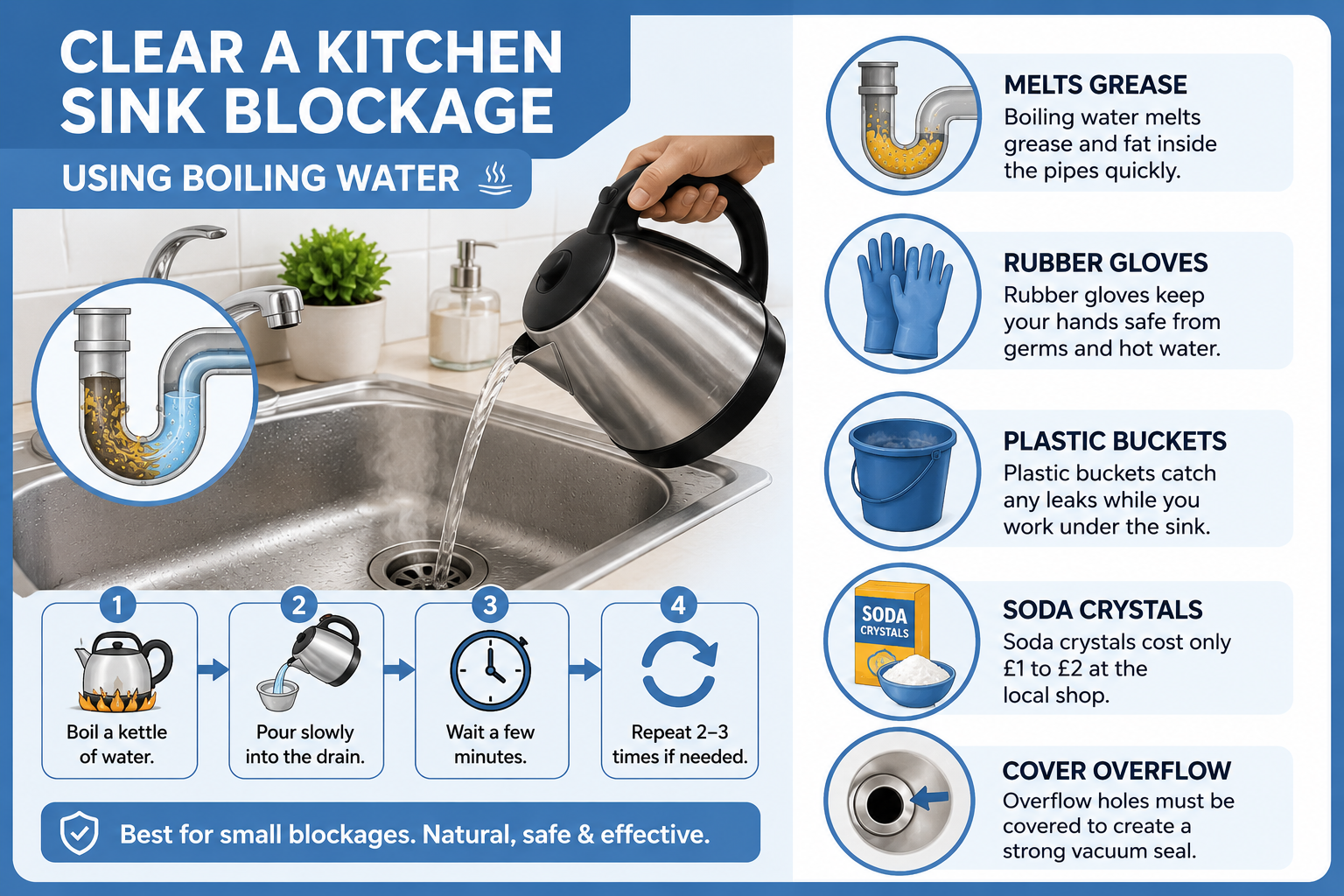
Boiling water is a simple way to clear a kitchen sink blockage. First, boil a kettle of water and pour it slowly into the drain. The heat helps melt grease and loosen light clogs like soap buildup. Be careful to avoid splashes during pouring. Wait a few minutes to see if the water drains. You may repeat it 2-3 times if needed. This method works best for small blockages and helps keep pipes clean naturally.
- Boiling water melts grease and fat inside the pipes quickly.
- Rubber gloves keep your hands safe from germs and hot water.
- Plastic buckets catch any leaks while you work under the sink.
- Soda crystals cost only £1 to £2 at the local shop.
- Overflow holes must be covered to create a strong vacuum seal.
Can Baking Soda and Vinegar Clear the Pipes?
Mixing baking soda and vinegar creates a very powerful natural cleaner. This chemical reaction produces bubbles that break down old food scraps easily. First, put half a cup of baking soda into the drain. Then, add half a cup of white vinegar immediately after it. You will hear a loud fizzing sound coming from the pipe.
This sound means the mixture is working hard to clear the path. Next, let the solution sit for at least twenty minutes. This gives it enough time to eat through the thick gunk. Afterwards, flush the drain with a full kettle of boiling water. Furthermore, this method removes any bad smells from your kitchen area. It is a very safe alternative to using harsh store chemicals.
Why Should You Use Soda Crystals Regularly?
Soda crystals are a secret weapon for many professional cleaners in Britain. They are very cheap and highly effective at removing stubborn grease. First, pour a large handful of crystals directly into the sink. Then, add some hot water to help them dissolve slowly. These crystals break down oil much better than many expensive products.
Also, they help to keep your pipes smelling fresh and clean. Next, leave the crystals to work for about thirty minutes total. This regular habit prevents big blockages from forming in the first place. Therefore, buy a bag for £1 or £2 at your local supermarket. Using them once a week keeps your drainage system in great shape. You will notice a big difference in how the water flows.
What are the Steps to Clean the U-Bend?
The U-bend is the curved pipe located directly under your sink. This part of the plumbing often catches most of the debris. First, place your plastic bucket under the pipe to catch water. Then, unscrew the plastic nuts by hand very slowly and carefully. Next, remove the pipe and empty the gunk into the bucket. You will likely find a lot of old food and hair.
Afterwards, clean the pipe with an old toothbrush and some soap. This is the most effective way to clear a major blockage. Finally, screw the pipe back on and check for any leaks. Make sure the rubber seals are sitting in the right place. Therefore, you have fixed the problem like a real professional today.
When is a Drain Snake the Best Choice?
A drain snake is a long wire that reaches deep blockages. You should use this tool when a plunger does not work. First, feed the end of the wire into the drain. Then, turn the handle to move it deeper into the pipe. This tool can reach clogs that are several metres away easily.
Next, you will feel resistance when it hits the blockage. Keep turning the handle to break the dirt into small pieces. Afterwards, pull the wire out and clean it with a rag. This tool is perfect for very old or hard blockages.
However, it requires some patience to use the wire tool correctly. Consequently, your pipes will be clear without using any harsh chemicals. You can buy one for about £15 at many shops.
How Much Does a Professional Plumber Cost?
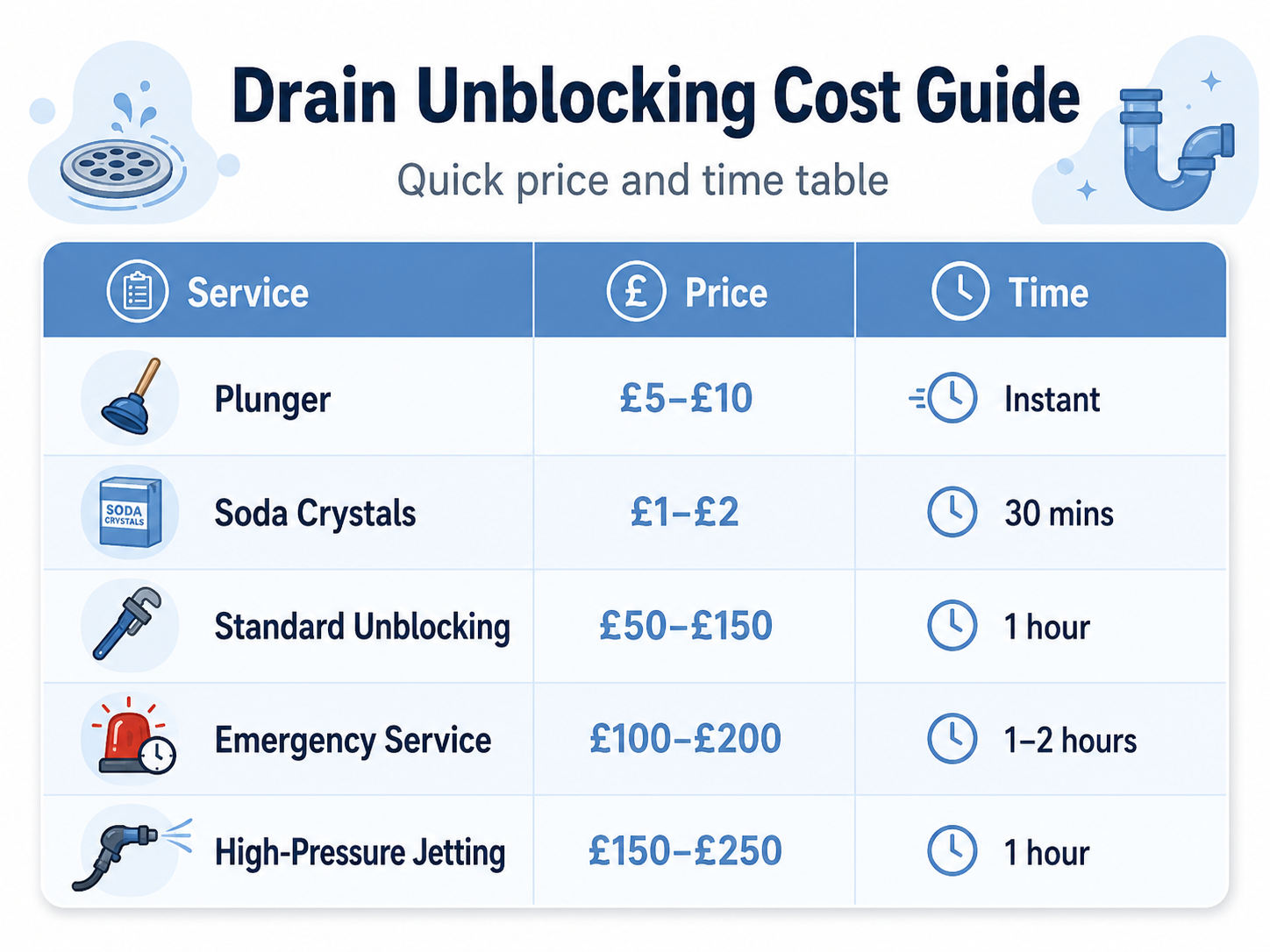
Sometimes a blockage is too hard to fix at home. In the UK, plumbers usually charge £50 to £150 for unblocking. The average visit cost is around £80. Some charge a fixed fee, while others work by the hour. Prices can vary based on location and job type. Always ask for a quote before work starts. This helps avoid surprise costs. Hiring a plumber ensures the job is done properly the first time.
Why is Emergency Plumbing More Expensive?
Emergency help is available twenty-four hours a day for your home. However, calling a plumber at night costs a lot more money. You might pay between £100 and £200 for emergency calls. This higher price covers the plumber’s travel during the late hours.
Also, weekend rates are often higher than normal weekday prices today. Next, consider if the repair can wait until the next morning. If your sink is not flooding, wait to save some cash. Consequently, you can use that extra money for other household items.
Therefore, always check the clock before you make the call. Most people wait until Monday morning to get the best price. Being patient can save you over £100 on a single job.
What is the Purpose of a CCTV Survey?
A CCTV drain survey uses a tiny camera to find problems. This service is very useful for old houses with deep pipes. Usually, this survey costs between £200 and £350 in the UK. First, the plumber feeds a flexible camera into the drainage system. Then, they watch a video screen to see the pipe walls. This helps them find tree roots or cracked pipes very quickly.
Although it is expensive, it saves time and prevents unnecessary digging. Next, you will receive a full report about your pipe health. This information is great if you are buying a new house. Therefore, it is a very smart investment for long-term home care. You will know exactly what is wrong with your kitchen sink.
How Does High-Pressure Water Jetting Work?
Water jetting uses high-pressure water to clear tough pipe blockages. It removes grease, roots, and deep buildup inside drains. In the UK, it usually costs £150 to £250. A plumber uses a hose and nozzle to clean the pipes thoroughly. This method works best for severe or repeated clogs. It also pushes waste safely into the main sewer. Many experts prefer it over chemicals because it is more eco-friendly and long-lasting.
- Emergency fees range from £100 to £200 for late calls.
- Water jetting costs between £150 and £250 for most homes.
- CCTV cameras find hidden cracks inside the drainage pipes.
- Weekend rates are usually higher than normal Monday to Friday.
- Insurance policies sometimes cover the cost of emergency plumbers.
How Can You Prevent Future Sink Blockages?
Prevention is always better than fixing a broken sink later today. First, buy a cheap sink strainer for a few pounds. This small mesh tool catches all the food bits easily. Then, empty the strainer into your bin after every single meal.
Additionally, never pour cooking grease or oil into the sink drain. Instead, put old oil into a jar and throw it away. Next, run some hot water after you finish your daily washing. This helps to move any small particles through the whole system.
Furthermore, tell your children not to put hair in the sink. Consequently, you will rarely have to deal with a nasty blockage again. These simple habits keep your kitchen running very smoothly and happily.
When Should You Call for Local Expert Help?
Local experts are there to help when DIY methods fail you. You should call them if the water starts to overflow. Also, call if you smell a very bad odour in the kitchen. If you have tried plunging many times, it is time to stop. Trying too hard might damage your plastic pipes or the joints. Next, look for a plumber with very good local reviews.
Make sure they belong to a trusted trade group for safety. However, always check their ID before they enter your family home. Afterwards, ask them for specific tips to keep your sink clear. Consequently, you will feel very safe and happy in your kitchen. Maintaining your home is a great way to live a happy life.
Final Thoughts
Overall, small sink blockages are usually easy to fix at home. Simple methods like hot water, baking soda, vinegar or a plunger often work well. Most clogs come from grease, food and oil buildup. So regular cleaning helps a lot. If water still drains slowly after trying these steps, the blockage may be deeper in the pipe. In that case, a plumber is the safest and most effective option to fix the problem properly.
FAQs
1. What is the best thing to unclog a kitchen sink drain?
- The best option is a plunger or a drain snake because they remove the blockage quickly.
2. What will dissolve a blocked drain?
- Baking soda and vinegar help dissolve light grease and food residue.
3. Does fairy liquid unblock drains?
- It can help loosen grease, but it usually does not fully unblock a drain.
4. Does boiling water unblock a sink?
- Yes, boiling water can melt grease and clear small blockages.
5. Why shouldn’t you pour boiling water down a drain?
- It can damage plastic pipes and may not fix hard blockages.
6. What do I do if I can’t clear the clog?
- Call a plumber because the blockage may be deep or serious.
Professional Online Plumbing Course
Course Description :
- Certificate: Yes(Free)
- Accreditation: CPD Accredited
- Access: Lifetime