
No products in the basket.
A noisy heating system can be annoying in any home. It often makes banging, tapping or gurgling sounds that disturb daily life. If you are dealing with this issue, learning how to stop a noisy central heating pipe can help you fix the problem early. Over 300,000+ household noise complaints in the UK come from heating and pipe systems each year, showing how common this issue is.
These noises usually come from trapped air, sludge build-up, or pipes that expand when hot water flows through them. Sometimes, loose pipe clips or water hammer can also create loud sounds. The good news is that most of these problems have simple solutions.
Let’s dive into the blog to learn the causes and simple ways to quiet your heating pipes.
Why is Your Central Heating System Making So Much Noise?
A noisy system is usually a sign that something is not right. For instance, metal pipes expand when they get hot. Because of this, they might rub against your wooden floors. Furthermore, air bubbles can get trapped in the water. These bubbles make a loud rattling or gurgling sound. Consequently, your home feels less peaceful. Understanding the “why” is the first step to fixing the problem. Most UK homes use copper pipes, which are very prone to these issues.
What Do Different Pipe Noises Actually Mean for Your Home?
Different sounds tell different stories about your heating. For example, a clicking sound usually means your pipes are moving. In contrast, a loud bang is often called a “water hammer”. This happens when water stops or starts too fast. Additionally, a whistling sound might mean your pump is set too high. Therefore, you should listen closely to the type of noise. Each sound has a specific fix that we will cover. Identifying the noise correctly saves you a lot of time.
How Do You Fix Gurgling Heating Pipes?
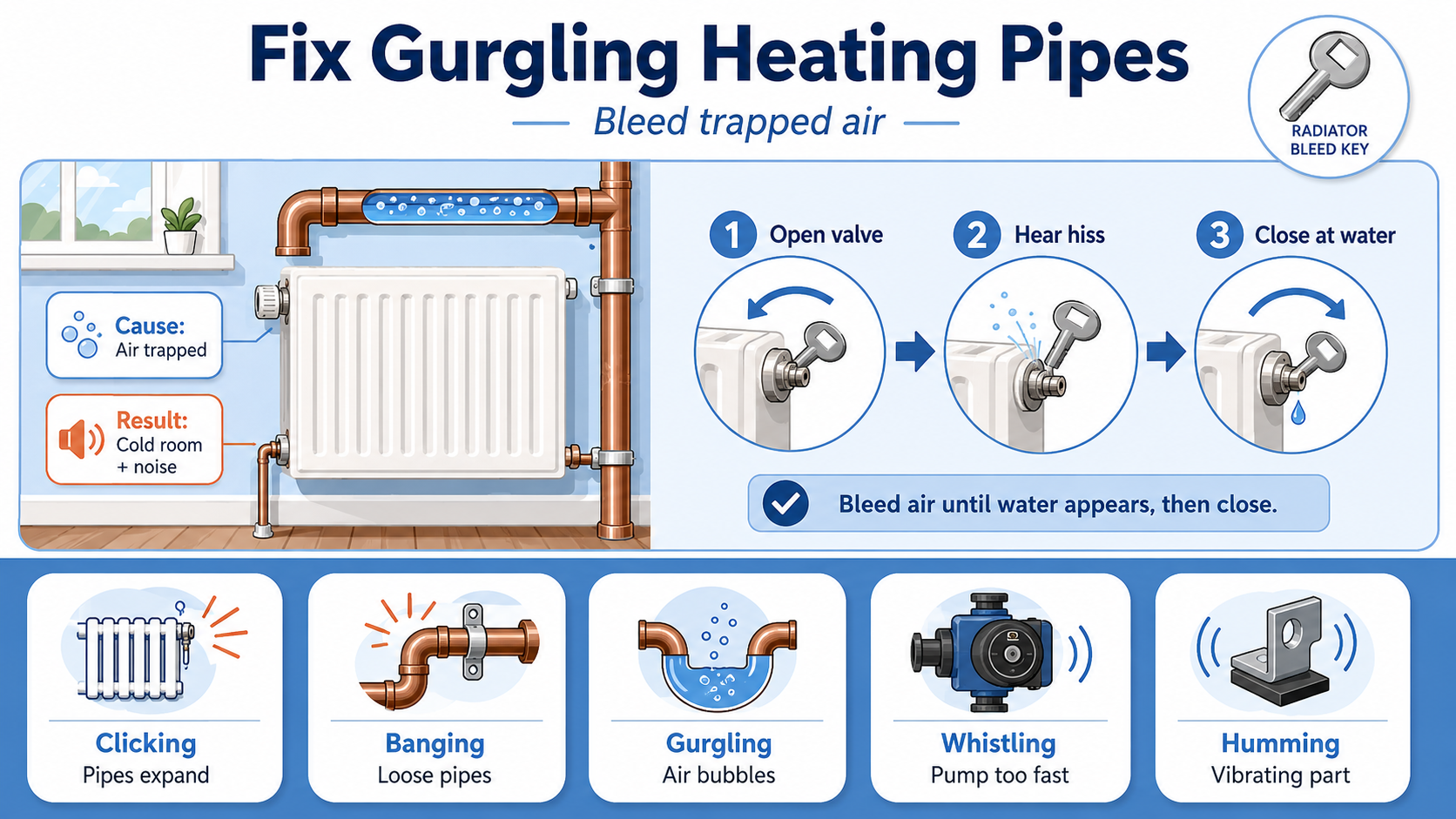
Gurgling is almost always caused by air trapped in the system. Because air is lighter than water, it rises to the top. This prevents hot water from filling the radiator. As a result, your room stays cold, and the pipes make noise. To fix this, you need a radiator bleed key. Turn the valve slowly until you hear a hiss. Once water starts to come out, close it tightly. This simple step usually stops the gurgling immediately.
Quick Summary of Common Noises
- Clicking: Usually caused by pipes expanding against wood.
- Banging: Often a sign of loose pipes or water hammer.
- Gurgling: Caused by trapped air bubbles in the water.
- Whistling: Likely due to a pump that is running too fast.
- Humming: Could be a sign of a vibrating boiler part.
Why Do Pipes Make Clicking Noises When the Heating Is On?
Clicking happens because of a process called thermal expansion. When hot water flows, the copper pipes get bigger. Because they are in tight spaces, they rub against joists. This friction creates a rhythmic clicking or tapping sound. Moreover, the sound happens again when the pipes cool down. To stop this, you can add padding around the pipes. Thin pieces of felt or foam work very well. Therefore, the pipe can move without hitting the wood.
How Can You Stop Banging Pipes Under Your Floor?
Banging is often caused by pipes that are not clipped down. When water moves through them, they vibrate and hit the floor. In addition, a “water hammer” can cause a very loud thud. This occurs when a valve closes suddenly, and the water hits the pipe wall. You can fix this by securing loose pipes with plastic clips. Furthermore, you might need a shock arrestor. This device absorbs the energy of the moving water. Consequently, the banging sound will disappear.
Why is Your Boiler Making a Kettling Noise?
Kettling sounds like a tea kettle boiling on the stove. This usually happens because of lime-scale buildup in the heat exchanger. Because the water cannot flow freely, it starts to boil and turn to steam. This is very common in hard water areas like London. To fix this, you may need a chemical descaler. Moreover, adding a central heating protector can prevent it. This keeps the water clean and the system quiet. Most importantly, it helps your boiler last much longer.
How Does High Water Pressure Cause Noisy Pipes?
If your boiler pressure is too high, it puts stress on the pipes. Because of the extra force, the water moves too fast. This can cause humming or vibrating throughout the house. You should check the pressure gauge on your boiler. For most UK homes, it should be between 1 and 1.5 bar. If it is too high, you must drain some water. You can do this through the radiator bleed valve. Therefore, the system will return to a safe and quiet level.
Tools You Might Need to Stop Pipe Noise
- Radiator Bleed Key: Release trapped air.
- Pipe Clips: Prevent pipes from vibrating and moving.
- Foam Lagging: Wrap around pipes for cushioning.
- Adjustable Wrench: Tighten loose joints.
- Chemical Inhibitor: Maintain a clean system.
When Should You Bleed Your Radiators to Stop Noise?
You should bleed your radiators at least once a year. However, if you hear gurgling, do it immediately. First, turn off your heating and let it cool down. This is important because hot water can burn you. Next, open the valve at the top of the radiator. You will hear air escaping like a small hiss. When water appears, the air is gone. Finally, check your boiler pressure to make sure it is still correct. Doing this regularly keeps your home quiet and warm.
How Can a Heating Pump Cause Whistling Noises?
The pump is the heart of your central heating. If the pump speed is too high, it pushes water too fast. This creates a whistling or “whooshing” sound in the pipes. In many cases, you can simply turn the speed down. Most modern pumps have three different settings. Try the lowest setting first to see if the noise stops. However, if the noise sounds like grinding, the pump might be broken. In that case, you will need a new one soon.
Why Does Thermal Expansion Cause Constant Tapping?
Thermal expansion is a law of science that affects all metals. When copper gets hot, it must grow in size. Because the pipes are often squeezed into small holes, they get stuck. When they finally move, they make a sharp tapping sound. This is very common in older UK houses with wooden floors. To fix this, you can make the holes in the joists slightly larger. Furthermore, you can use plastic sleeves to reduce friction. This allows the pipe to grow and shrink silently.
Should You Use Pipe Lagging to Reduce Noise?
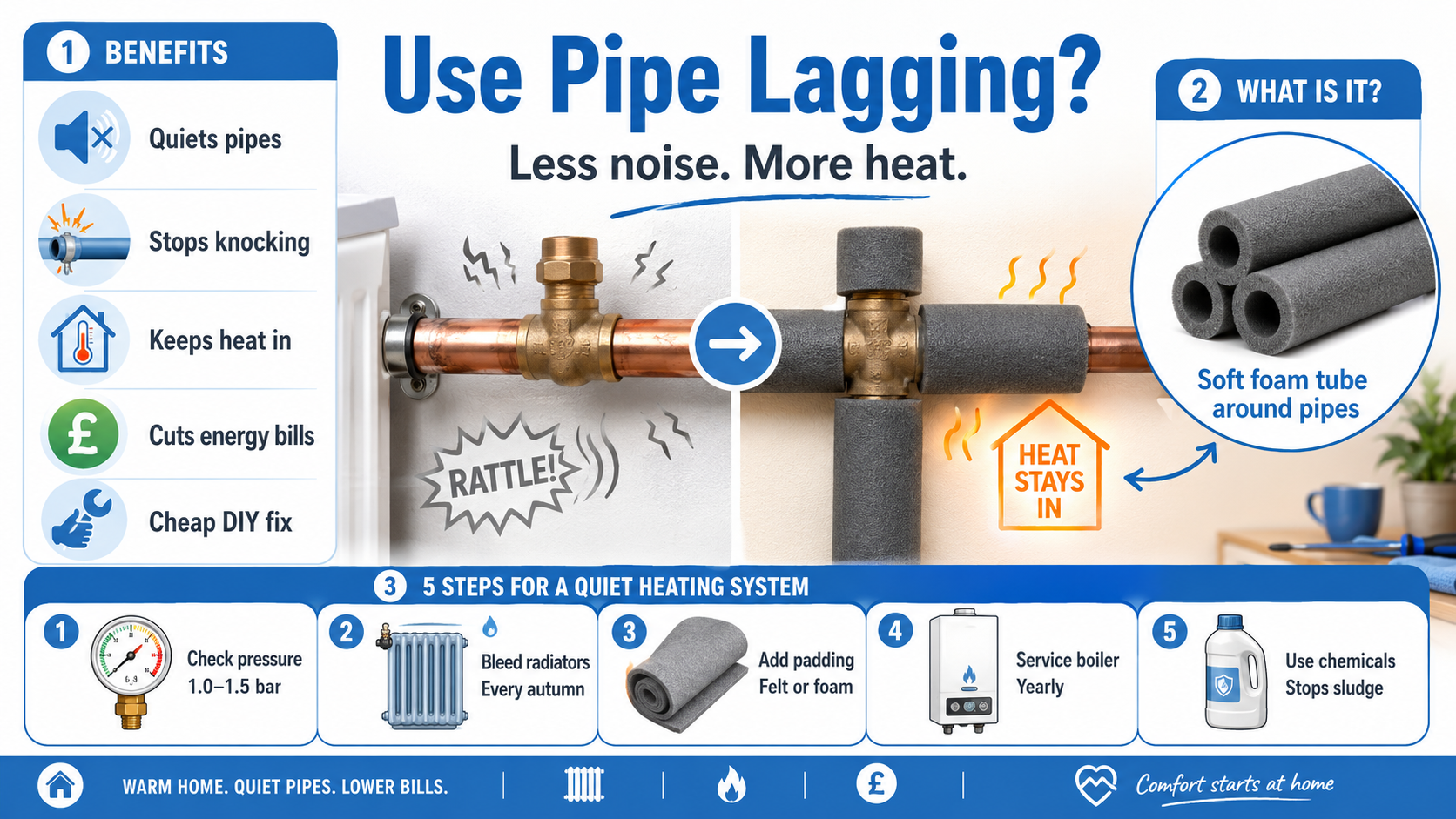
Pipe lagging is a great way to quiet your home. It is a soft foam tube that goes around your pipes. Because it acts as a cushion, it stops pipes from hitting the wood. In addition, lagging keeps the heat inside the pipes. This means your water stays hot for a longer time. Therefore, you save money on your energy bills. It is a very cheap and easy DIY task. You can buy lagging at any local hardware store.
Steps for a Quiet Heating System
- Check Pressure: Keep it between 1.0 and 1.5 bar.
- Bleed Radiators: Do this every autumn before winter.
- Add Padding: Use felt or foam on pipes under floors.
- Service Boiler: Get a pro to check it every year.
- Use Chemicals: Keep the water clean from sludge.
What Chemicals Help to Keep Your Pipes Quiet?
Chemicals called “inhibitors” are very helpful for your pipes. Over time, water reacts with metal to create “sludge”. This sludge is a thick, black liquid that blocks the pipes. Because the pump has to work harder, the system gets noisy. Adding a high-quality inhibitor prevents this rust from forming. You can also add a noise silencer chemical. It is designed to stop kettling sounds in a boiler. Most experts recommend the brand Fernox or Sentinel.
How Can Loose Pipe Clips Lead to Banging?
Pipes must stay firmly secured in place. However, they also need a little room to move. A broken or loose clip can make the pipe rattle. This happens every time the pump turns on or off. You should check the pipes in your airing cupboard and under the sink. If you see a pipe shaking, add a new plastic clip. Also, space the clips evenly for proper support. Having clips every metre is a good rule to follow.
When is it Time to Call a Gas Safe Engineer?
While many fixes are DIY, some jobs are for pros. For example, if you suspect a gas leak, call an engineer. Additionally, if the noise is inside the boiler, do not open it. In the UK, only Gas Safe engineers can work on boiler internals. If your system needs a “power flush”, you will also need an expert. A power flush uses a machine to clean all the pipes at once. This is a big job but it makes the system like new.
How Can You Prevent Noisy Pipes in the Future?
Prevention is always better than a noisy repair. First, always keep your system clean with chemicals. Secondly, make sure your boiler is serviced every single year. During a service, the engineer will check for any early signs of trouble. Furthermore, keep an eye on your water pressure every month. If you notice it dropping, you might have a small leak. By catching problems early, you keep your home peaceful. A well-maintained system is a quiet system.
Benefits of a Quiet Central Heating System
- Better Sleep: No more clicking or banging in the night.
- Lower Bills: A clean system is much more efficient.
- Longer Life: Your boiler will last many more years.
- Higher Value: A quiet house is easier to sell.
- Peace of Mind: You know your home is safe and working.
Final Thoughts
Keeping your central heating quiet needs simple care and regular checks. Most pipe noise issues can be solved with simple tools like bleeding radiators or adding insulation to pipes. Always monitor boiler pressure and keep the system clean. If the noise continues, get help from a professional. With the right steps, you can enjoy a warm, quiet and stress-free home all winter.