No products in the basket.
Working at height is a very common task in British workplaces. Consequently, the UK government created strict rules to keep everyone safe. These rules are called the Work at Height Regulations 2005 (WAHR). They apply to every person who works above the ground. If you are an employer, you must follow these laws. If you are a worker, you must use gear correctly. Furthermore, the goal is to prevent any person from falling. No job is so urgent that we forget about safety. Selecting the right working at height equipment is the most vital step. You cannot just grab any old ladder from the shed. Instead, you must think about the task and the risks.
Proper gear creates a stable base for your daily work. It gives you the confidence to do a great job. This guide will help you understand all the legal requirements. We want every worker in the UK to return home safely. Let us look at the gear you might need today.
What Is Working at Height Equipment?
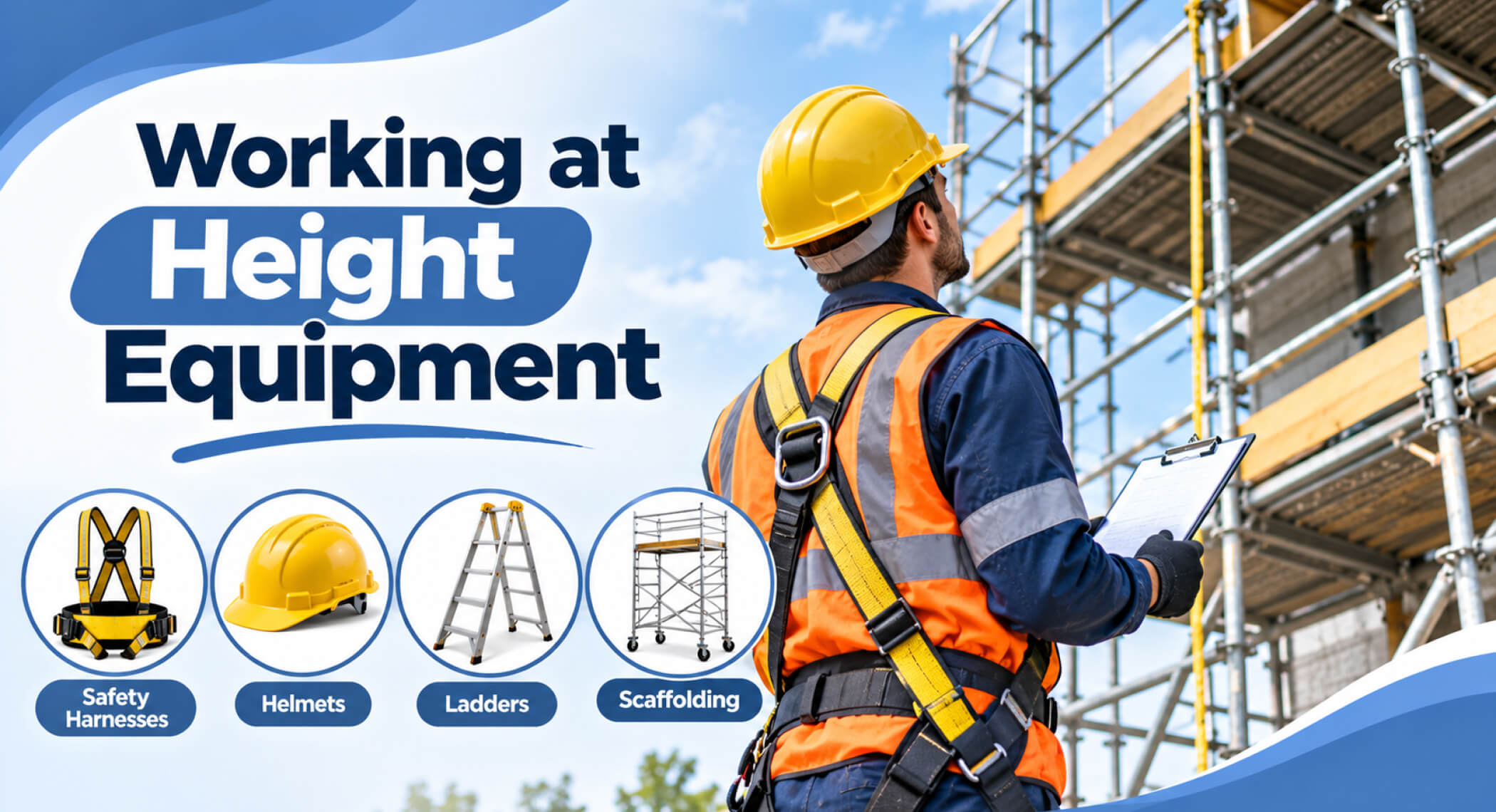
Working at height equipment refers to tools and safety gear used to help workers work safely above ground level. This equipment helps prevent falls, injuries and accidents during tasks such as roof repairs, construction, painting and building maintenance.
Common examples of working at height equipment include ladders, scaffolding, mobile access towers, safety harnesses, lanyards, guardrails and mobile elevating work platforms (MEWPs).
The right equipment depends on the type of work, the working environment and the risks involved. Employers in the UK must follow the Work at Height Regulations 2005 to protect workers from falls. They should avoid working at height where possible, use suitable equipment and provide proper training.
Regular equipment checks and safe working practices are also important. Choosing the right working at height equipment helps workers complete tasks safely and reduces the risk of serious injuries.
Why Is It Essential?
Working at height equipment helps keep workers safe when they work above the ground. For example, workers may use ladders, scaffolds, safety harnesses, and guardrails.
This equipment helps prevent falls and serious injuries. Also, it gives workers a safe place to stand and work. As a result, they can do their jobs with more care and confidence.
Moreover, the right equipment helps workers reach high places safely. For example, a strong ladder or safe scaffold can make work easier. Safety harnesses can also help protect workers from falling.
However, workers must use the correct equipment for each task. They should check it before use and follow safety rules. Employers must also provide suitable equipment and proper training.
In the UK, the Work at Height Regulations 2005 set rules for working safely at height. Therefore, using the right equipment is important for reducing risks and keeping everyone safe.
What UK Regulations Apply to Working at Height Tools?
In the UK, the Work at Height Regulations 2005 help keep workers safe when working at height. Employers must check risks, choose suitable equipment and provide proper training.
They must also keep equipment in good condition and check it when needed. In addition, employers should prevent falls by using safety measures such as guardrails and safety harnesses where suitable. The Health and Safety Executive (HSE) provides guidance to help employers follow these rules and protect workers from accidents and injuries.
How Do UK HSE Regulations Influence your equipment Choice?
UK HSE (Health and Safety Executive) regulations influence equipment choice by ensuring that equipment is safe and suitable for the job. Equipment must meet health and safety standards and reduce the risk of accidents and injuries. A risk assessment helps identify the correct equipment needed for the task. Workers must be trained to use the equipment safely. Equipment should also be inspected and maintained regularly to keep it in good condition. Suitable personal protective equipment (PPE), such as helmets, gloves and safety boots, must be provided when necessary. Overall, HSE regulations help protect workers, prevent accidents and ensure a safe working environment.
What Types of Working at Height Equipment Are Available in the UK?
There are many types of working at height equipment available in the UK. Each type helps workers reach high places and stay safe while doing their jobs. The right choice depends on the task and the level of risk.
Here are some common types of equipment:
- Ladders: Ladders help workers reach high places for short tasks. However, they should only be used when safer options are not suitable.
- Scaffolding: Scaffolding gives workers a stable platform for tasks such as building, painting and repairs.
- Mobile access towers: These towers provide a raised platform and can be moved around a work area.
- Safety harnesses: A safety harness helps protect workers from falls when used with a suitable fall protection system.
- Guardrails: Guardrails create a barrier around raised areas to help stop workers from falling.
- Safety nets: Safety nets can catch workers if they fall, where suitable for the job.
- Mobile elevating work platforms (MEWPs): These machines lift workers to high places for repairs, cleaning and maintenance.
In addition, helmets, lanyards and other safety equipment can provide extra protection. Employers should assess the risks and choose suitable equipment before work begins.
How Do You Choose the Right Working at Height Tools for Your Project?
Selecting the right gear requires a very careful thought process. You cannot guess which tool is best for the site. Instead, you must look at the environment and the task. Many accidents happen because the wrong tool was chosen. Follow these simple steps to make the right safety choice.
- Check the duration of the work.
- Is this a quick fix that takes ten minutes? Or is it a project that lasts all day? Use ladders only for very short and light tasks. Choose a platform or scaffold for any long-term work.
- Inspect the ground conditions carefully.
- Is the surface level, hard, and very stable? Soft mud can make a heavy scissor lift tip over. Never put a ladder on a pile of loose bricks. Ensure the ground can support the weight of the gear.
- Calculate the height and the reach.
- You must know exactly how high you need to go. Do not stand on the very top step of ladders. Check the safe working load of your chosen platform. Ensure it can hold you and all your heavy tools.
- Observe the surrounding environment.
- Look up for any dangerous overhead power lines. Check the UK weather forecast for any high winds. Strong winds can make towers or lifts very unstable. Cold rain can make metal steps very slippery and dangerous.
What are the Legal Inspection Requirements for Height Safety Gear?
UK law is very clear about checking your safety gear. You cannot just assume that your gear is still strong. Regular checks are required by a law called LOLER. This stands for Lifting Operations and Lifting Equipment Regulations. It specifically applies to machines like cherry pickers and lifts. These machines must have a deep inspection every six months.
However, machines are not the only things that need checks. Every piece of gear needs a quick “pre-use” check. You should look at your ladder every single morning. Look for cracks, bends, or missing rubber feet on it. If it looks broken, do not use it today. Tell your supervisor about the problem immediately for a fix.
In addition to daily checks, formal inspections are needed. A trained expert must look at scaffolds every seven days. They must also check it after any very bad weather. High winds can loosen the bolts on a large tower. These inspections must be written down in a formal log. This log proves that the site is following UK laws.
Moreover, keeping an inspection log is a legal requirement. If an accident happens, the HSE will ask for it. It shows that you care about the safety of workers. Documentation helps you track the age of your safety gear. Older gear might need more frequent checks to stay safe. Never skip an inspection to save a little bit time.
How Much Does Working at Height Equipment Cost in the UK?
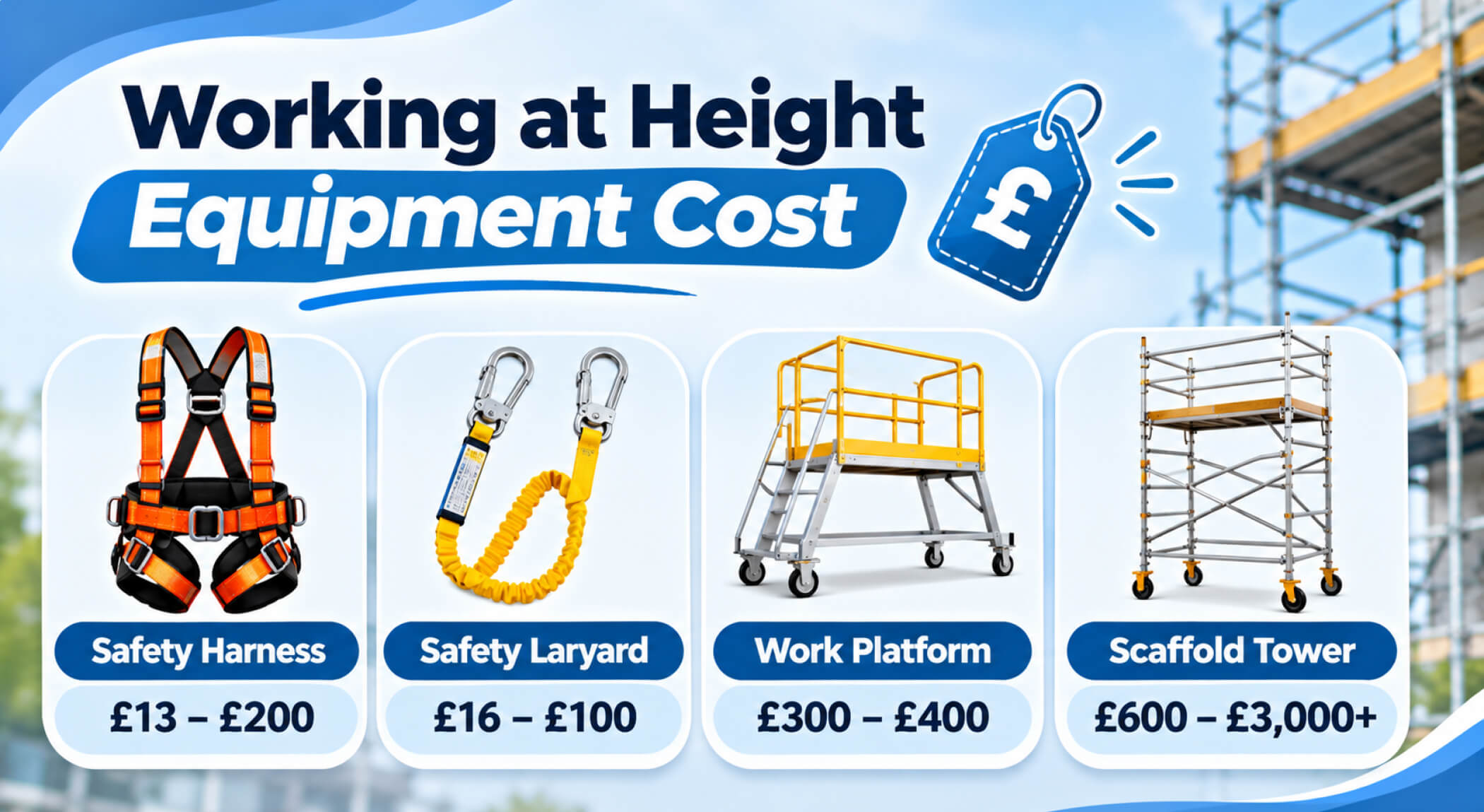
Working at height equipment prices in the UK depend on the type, size, material, and safety features.
- Safety Harness: A basic safety harness may cost around £13, while advanced harnesses can cost up to £200. The price depends on the material, comfort, design, and safety features.
- Safety Lanyard: A basic safety lanyard may cost around £16. However, models with special connectors, shock absorbers, or extra safety features can cost up to £100.
- Work Platform: A small or basic work platform may cost around £300. Larger platforms with stronger materials and better designs can cost around £400.
- Scaffold Tower: A small scaffold tower may cost around £600. However, taller towers with larger platforms and more parts can cost £3,000 or more.
However, prices can change based on the brand, size, and quality. Buying strong and safe equipment may cost more at first. Also, some companies choose to hire equipment instead of buying it.
For example, a small ladder may cost less than a large scaffold tower. Therefore, workers should choose the right tools for their job and safety needs. Always check the equipment’s quality and safety standards before buying or hiring it.
When Should You Replace Your Safety Equipment?
Even the best gear will wear out after many years. You must know when to throw away old safety items. Using damaged gear is just as bad as using none. Firstly, look at your textile items like safety harnesses. Check for any fraying or small rips in the fabric. Chemical spills can also make the strong straps very weak.
Secondly, check the structural integrity of your metal gear. Look for any rust on your steel scaffolding poles. Check for deep dents in your aluminium ladder frames. Dents make the metal much more likely to snap suddenly. If a ladder wobbles, it is probably time to replace it. Never try to fix a broken ladder with duct tape.
There is also a very important “post-fall” rule in UK. If a harness stops a fall, it must be destroyed. You cannot use that harness ever again for any job. The force of a fall stretches the safety fibres inside. It might look okay, but it is no longer safe. This rule also applies to lanyards and some anchor points.
Finally, always follow the manufacturer’s guide for the gear’s life. Some plastic helmets must be replaced every few years. Sunlight can make plastic very brittle and easy to break. If you are unsure, it is better to be safe. Replacing working at height equipment is cheaper than a hospital visit. Your life is worth much more than a new harness.
Conclusion on working at height equipment
taying safe at height starts with choosing equipment that suits the task and its risks. To improve workplace safety, consider taking a Working at Height Training Course from Training Tale. This course helps workers understand the risks of working at height and learn safe working practices. With the right training, suitable equipment and regular checks, you can create a safer workplace and protect everyone on site. UK businesses must follow the Work at Height Regulations 2005, assess risks, check equipment regularly and provide proper training. Always choose suitable equipment for the task and replace damaged gear when needed.
Frequently Asked Questions (FAQs)
1. What safety equipment is needed for working at height?
- Essential safety equipment includes safety harnesses, lanyards, helmets, guardrails, safety nets, ladders, scaffolding and suitable access platforms. The right equipment depends on the task and risk assessment.
2. What are 10 safety equipment items for working at height?
- Ten common items are safety harnesses, helmets, lanyards, fall arrest systems, safety nets, guardrails, ladders, scaffolding, mobile access towers and MEWPs.
3. Who is responsible for checking your work-at-height equipment?
- Employers must ensure equipment is suitable, maintained and inspected as required. Workers should also check equipment before use and report any defects immediately.
4. What are the HSE guidelines for work at height?
- The HSE advises employers to avoid working at height where possible, prevent falls, assess risks and provide suitable equipment and training.
5. Can I refuse to lift heavy objects at work?
- You should report unsafe lifting tasks to your supervisor. If you believe the work presents a serious and immediate danger, you may have grounds to refuse it.
6. What must employers do when working at height?
- Employers must assess risks, plan the work, provide suitable safety equipment, train workers and ensure equipment is properly maintained and inspected.

Working at Height Training Course
Course Description :
- Certificate: Yes(Free)
- Accreditation: CPD Accredited
- Access: Lifetime