
No products in the basket.
Different fire extinguisher types are not the same. Each one works for a specific fire. If you use the wrong one, the fire can spread quickly and get worse.
Water works for paper and wood fires. Foam works for flammable liquids like petrol. CO2 is used for electrical fires. Dry powder works on different types of fire. Wet chemical is used for cooking oil fires in kitchens.
In the UK, clear colour codes and BS EN 3 rules help you pick the right extinguisher fast. Each one has a colour band and a simple label. So, you can understand it in seconds. These rules make sure each extinguisher works when needed.
Now let’s dive into different fire extinguisher types, fire classes and how each one is used in the UK.
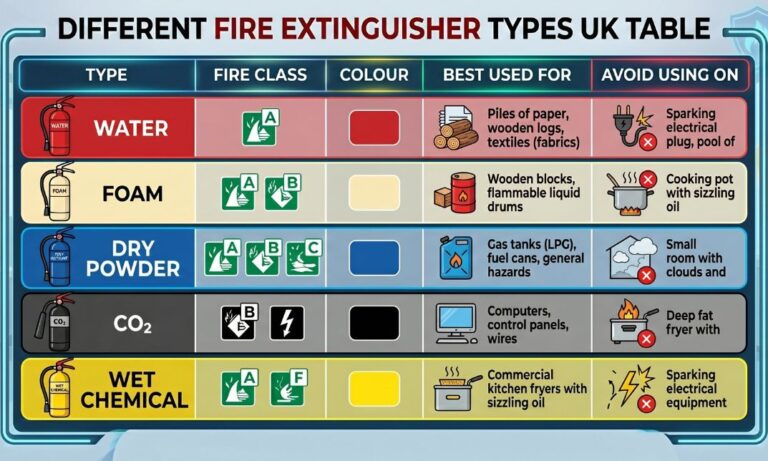
Different Fire Extinguisher Types UK Comparison Table
Here is a simple view of different fire extinguisher types and safety rules:
What Are Fire Classes in the UK?
Before you choose a fire extinguisher, you need to understand fire classes. Each fire behaves in a different way. So, one extinguisher cannot work for every fire. This is why fire classes come first.
What Is a Class A Fire?
Class A fires involve solid materials. These fires are very common in daily life. You often see them in homes, schools and offices. Materials like wood, paper, cloth and plastic fall in this group. These fires burn and leave ash behind.
What Is a Class B Fire?
Class B fires involve flammable liquids. These liquids catch fire very fast. They also spread quickly on surfaces. Common examples include petrol, diesel, paint and solvents. You often find these in garages and workshops.
What Is a Class C Fire?
Class C fires involve flammable gases. These gases can catch fire in seconds. They can also explode if not handled safely. Examples include propane, butane and natural gas. People use them in heating and gas cylinders.
What Is a Class D Fire?
Class D fires involve burning metals. These fires are rare but very dangerous. Metals like magnesium, titanium and lithium burn at very high heat. You usually see them in factories and labs.
What Counts as an Electrical Fire?
Electrical fires start from faulty wires or damaged equipment. They can happen in any place with electricity. The risk stays high if power is still running during the fire.
What Is a Class F Fire?
Class F fires come from cooking oil and fat. These fires grow very fast in kitchens. They also burn at very high temperatures. You often see them in fryers and cooking areas.
What Are the Main Different Fire Extinguisher Types?
Different fire extinguisher types do more than just put out fire. Each one works in a different way. Some lower the heat. Others cut off oxygen. A few stop the fire reaction itself. So, you need the right one for the right fire.
Water Fire Extinguishers
Water extinguishers work by cooling the fire. They take away heat and slow the fire down. However, you must use them carefully. Water can make oil and electrical fires more dangerous. So, you should only use them on solid fires like wood, paper and cloth. You often see them in schools, offices and homes. Water spray types use fine water drops. This gives better control and less splash. Still, neither type is safe for electricity or oil fires.
Water Mist Fire Extinguishers
Water mist works better than normal water types. It sprays very small water drops. These drops turn into steam and cool the fire fast. At the same time, they reduce the air around the fire. Some approved models can be used near electrical equipment. So, you will see them in hospitals and modern buildings. They suit places where safety is very important.
Foam Fire Extinguishers
Foam works in two ways. It cools the fire and covers the fuel. This stops air from reaching the fire. So, the fire cannot start again easily. Foam works well on solid fires and flammable liquids like petrol and paint. You will see them in garages, warehouses and fuel areas. However, foam can damage electrical items, so you should not use it there.
Dry Powder Fire Extinguishers
Dry powder is a flexible type. It works on solid, liquid and gas fires. It stops fire by breaking the fire reaction. But here is the key point. It does not cool the fire. So, fire can come back if the heat stays. It also makes thick dust. This can make it hard to see and breathe in closed spaces. So, it works better outside, in vehicles and factories.
Specialist Dry Powder Fire Extinguishers
This type is not for general use. It is made only for metal fires. These fires burn very hot and react badly with water or normal powder. So, the specialist powder controls the reaction and puts out the fire. You only find this in labs and industrial sites. It is not used in homes or offices.
CO2 Fire Extinguishers
CO2 works by removing oxygen and cooling the fire area. It is best for electrical fires. The main benefit is simple. It leaves no mess after use. So, it protects computers, servers and machines. However, CO2 can reduce oxygen in small rooms. So, you must use it with care in closed spaces. It is not suitable for solid or oil fires.
Wet Chemical Fire Extinguishers
Wet chemical works best in kitchens. It is made for cooking oil and fat fires. It cools the fire and forms a soapy layer on the oil. This stops the fire from starting again. This is called saponification. You will mostly see it in restaurants, canteens and kitchens. It is the safest choice for deep-fat fryer fires.
Which Fire Extinguisher Should You Use for Each Fire Class?
Choosing the right extinguisher depends on fire extinguisher classes. Each fire needs a specific type. If you use the wrong one, the fire can get worse.
For Class A fires, use water, foam, or powder. These work well on wood, paper and cloth. For Class B fires, use foam, CO2, or powder. Do not use water here, as it can spread the fire. For Class C fires, dry powder is the safest choice, as it helps stop gas fires quickly.
For Class D fires, only specialist powder works. These fires involve burning metals and need special care. For electrical fires, CO2 works best. It does not use water. So it helps protect things like computers and wires. However, avoid water and foam here.
For Class F fires, wet chemical is the only safe option. It works on cooking oil and fat fires. You must avoid water and CO2, as they can make the fire worse. So, when you understand which fire extinguisher to use, you can act faster and stay safe in real situations.
What Do Fire Extinguisher Colour Codes Mean in the UK?
In the UK, colour codes help you find the right fire extinguisher fast. This follows BS EN 3 safety rules. Each extinguisher also has a clear label that shows what it is used for. Older models used full-body colours. However, modern ones use a red body with a coloured band for quick checking.
Red means water for Class A fires, like wood and paper. Cream means foam for Class A and B fires, including liquids. Blue means dry powder for A, B and C fires. Black means CO2 for electrical fires and equipment safety. Yellow means wet chemical for Class F kitchen fires.
So, when you understand these colour codes, you can act fast and choose the right extinguisher without confusion in real situations.
Which Fire Extinguisher Is Best for Kitchens?
Kitchen fires often start from cooking oil or hot fat. These fires spread fast and get very hot. So, you need the right safety tools close by.
Basically, wet chemical fire extinguishers work best in kitchens. They handle Class F fires like deep-fat fryer fires. They cool the hot oil and form a soapy layer on top. This layer blocks oxygen and helps stop the fire from coming back.
At the same time, fire blankets give extra safety. You can place them over small pan fires. This cuts off oxygen and puts the fire out quickly. They also work well for small oil fires on the stove. So, wet chemical fire extinguishers and fire blankets together give strong kitchen safety and help you control fire risks quickly.
What About Lithium-Ion Battery Fires?
Lithium-ion battery fires are increasing fast. You find these batteries in phones, laptops, e-bikes, and electric cars. They store a lot of energy in a small space. So, the fire risk goes up when they get damaged or overheat.
One major risk is thermal runaway. This happens when the battery heats up quickly and keeps reacting inside. As a result, the fire grows fast and becomes very hard to control. In many cases, normal fire extinguishers cannot fully stop it.
So, you need extra care in places like electric vehicles, e-bikes and battery storage areas. These fires can also start again even after they look like they are out. That is why special fire safety tools are important for better control.
So, lithium battery fires demand fast response, proper tools and careful handling.
Where Should Fire Extinguishers Be Placed?
Fire extinguisher placement is very important. It helps you act fast in a fire. So, you must place them where people can see and reach them quickly. At the same time, keep escape routes clear so everyone can leave safely.
Start by placing extinguishers along exit routes and near fire points. Also, keep them close to common risk areas like kitchens, electrical panels and fuel storage. Make sure safety signs are clear and easy to read. This helps people find them fast, even in stress. Mount them at a reachable height so most people can use them easily. In bigger buildings, reduce walking distance so no one has to go far in an emergency.
Fire Extinguisher Placement Guide by Location
- Office: Water + CO2
Good for paper fires and electrical equipment like computers and printers.
- Warehouse: Water or Foam + CO2
Helps control fires from stored goods, packing materials and fuel areas.
- Restaurant: Wet Chemical + CO2
Best for kitchen oil fires and electrical safety near cooking areas.
- Garage: Foam + Dry Powder
Works well for fuel spills, oil fires and vehicle risks.
- Server Room: CO2
Protects computers and servers without leaving water or damage.
- Home Kitchen: Water Mist or Wet Chemical
Best for cooking oil fires and everyday kitchen safety.
So, when you place fire extinguishers in the right spots, you help people respond faster and stay safer in real situations.
How Should Fire Extinguishers Be Maintained?
Fire extinguishers need regular care to stay safe and ready. In the UK, BS 5306 sets the safety rules for servicing. So, you should never wait for an emergency to check them.
Start with a monthly visual check. Look for damage, low pressure or blocked access. This quick step helps you spot problems early. Then, arrange a full service once a year with a trained professional. This keeps the extinguisher safe and ready to use.
Over time, some extinguishers need more work. Water, foam and powder types need testing or refilling every 5 years. CO2 extinguishers need a full overhaul every 10 years. Also, after any use, you must recharge the extinguisher straight away, even if you used it for a short time.
At the same time, keep a simple record of all checks and services. This helps you stay organised and follow safety rules without confusion. So, ongoing maintenance makes your fire extinguisher reliable in critical moments.
What Are Common Fire Extinguisher Mistakes?
Here are the common mistakes people make with fire extinguishers:
- Using the wrong extinguisher type: This can make the fire spread faster instead of stopping it.
- Using water on electrical or oil fires: Water can cause electric shock or make oil fires worse.
- Poor extinguisher placement: If it is hard to reach, you lose valuable time in an emergency.
- Ignoring maintenance: A faulty extinguisher may not work when you need it most.
- Using powder indoors without need: It creates thick dust and makes it hard to see.
- Trying to fight fire without an escape route: This puts you in danger if the fire grows quickly.
How Do You Use a Fire Extinguisher Safely?
Fire extinguishers can help in a small fire. But only if you use them the right way. So, stay calm and follow simple steps.
Before you start, raise the alarm. Let others know there is danger. After that, check the fire. Only try to fight small fires. If it grows fast, leave it. Keep your exit behind you. This helps you get out quickly if needed.
Now follow the PASS method:
- Pull: Unlock the extinguisher by pulling the safety pin first.
- Aim: Focus your aim on where the fire is strongest at the base.
- Squeeze: Press the handle to start releasing the extinguisher.
- Sweep: Keep moving the nozzle left and right to control the fire.
So, when you follow these steps, you stay safer and deal with small fires in a better way.
Conclusion: Which Fire Extinguisher Should You Choose?
Fire safety starts with simple thinking. First, understand your fire risk. Then match it with the right fire class and different fire extinguisher types like water, foam, CO2 or wet chemical. After that, use UK colour codes to pick the right one without confusion.
Next, place extinguishers in the right spots. Keep them easy to see and easy to reach. Also, make sure people can use them quickly in an emergency. Then, do regular checks and servicing. This keeps everything working when you need it most.
If you are not sure, get a fire risk check. You can also get help with supply, installation and servicing. So, you stay ready, safe and confident in any fire situation.
FAQs
1. What are the 4 types of fire extinguishers?
- The main 4 are water, foam, dry powder and CO2. Each one works for different fire risks. So, the right choice depends on the fire type.
2. Will baking soda put out a chimney fire?
- Baking soda can help with very small fires. But it is not safe or reliable for chimney fires. So, you should call the fire service straight away.
3. What are the 7 fire extinguishers?
- The common ones are water, foam, CO2, dry powder, wet chemical, water mist and specialist powder. Each one handles a different fire risk.
4. What are the 5 basic classes of fire extinguishers?
- They are Class A, B, C, D and F. Each class matches a different fuel like wood, liquid, gas, metal, or cooking oil.
5. What are the 7 fire safety rules?
- Stay alert, raise the alarm, know exits, keep doors closed, use the right extinguisher, do not take risks, and leave fast if needed.
6. What is a class ABC extinguisher?
- It is a dry powder extinguisher. It works across Class A, B and C fires, so it is useful in many places.
7. What is Class A Class B Class C Class D fire?
- Class A is solid materials like wood.
- Class B is liquids like petrol.
- Class C includes gases.
- Class D is burning metals.
8. Which is better, ABC or Co2 fire extinguisher?
- ABC is more flexible for many fires. CO2 is better for electrical fires. So, the best choice depends on the risk area.