No products in the basket.
What is a RIDDOR? Mainly, it is a UK workplace safety rule. The full form of RIDDOR is Reporting of Injuries, Diseases and Dangerous Occurrences Regulations. It is a law that helps record serious work incidents. Employers, self-employed people and those in control of premises must report certain events. This keeps workplaces safer and more responsible.
This guide explains what RIDDOR is in simple words. It also covers which incidents are reportable and who must report them. You will also learn about reporting deadlines, dangerous occurrences, occupational diseases and the penalties for not following the rules.
What is a RIDDOR?
RIDDOR is a UK law. RIDDOR stands for reporting work incidents. It covers injuries at work. Also covers diseases and dangerous events. Employers use RIDDOR to report serious cases. These reports help improve safety at work. We call these rules RIDDOR 2013. They started on 1 October 2013. They replaced RIDDOR 1995.
What Does RIDDOR Stand For?
The meaning of word RIDDOR stands for Reporting of Injuries, Diseases and Dangerous Occurrences Regulations. Reporting means you tell authorities about work incidents. Injuries mean harm that happens at work. Diseases are illnesses caused by work. Dangerous occurrences mean near-miss events that could cause harm. Each part helps find safety problems at work. It also helps keep workers safe.
Why Did the UK Create RIDDOR?
The UK created RIDDOR to improve workplace safety. It helps the Health and Safety Executive see risks. Also helps them see accident trends.
It makes employers follow safety rules. This helps reduce accidents at work. It also improves safety standards in workplaces. It gives national data on injuries and illnesses. This helps make better safety rules in the future.
Why is Knowing What is a RIDDOR Important in the Workplace?
RIDDOR is important because it helps keep everyone safe at work. It ensures people report serious incidents on time. As a result, workers, employers, customers and visitors all get better protection. It also helps stop the same accident from happening again. In addition, these reports give useful data. This data helps improve training, risk checks and safety rules.
Main Benefits of RIDDOR Reporting
RIDDOR reporting makes workplaces safer. First, it helps teams respond quickly after serious incidents. Next, it helps stop the same accidents from happening again.
Over time, it builds a strong safety culture at work. It also lowers the risk of legal problems for businesses. In addition, it helps with better safety planning. Finally, it helps companies follow health and safety laws in the right way.
Who Must Report Under RIDDOR?
Under RIDDOR, the “responsible person” means the person who controls the workplace. This can be an employer or someone who manages the site. They must report serious work incidents when they happen. Workers usually do not make these reports unless they are self-employed.
People Responsible for RIDDOR Reporting
In most cases, employers take the main responsibility. Self-employed people also report their own incidents. In addition, site managers and health and safety officers handle reporting in many workplaces. Business owners and people in control of premises must also report. In some cases, landlords may need to report incidents in rented workspaces. Gas engineers and gas suppliers also report gas-related incidents.
What Must Be Reported Under RIDDOR?
RIDDOR covers certain serious incidents at work. These incidents are usually linked to work activities. Employers must report them to keep workplaces safe and follow the law. Now, let’s look at the main types of reportable incidents.
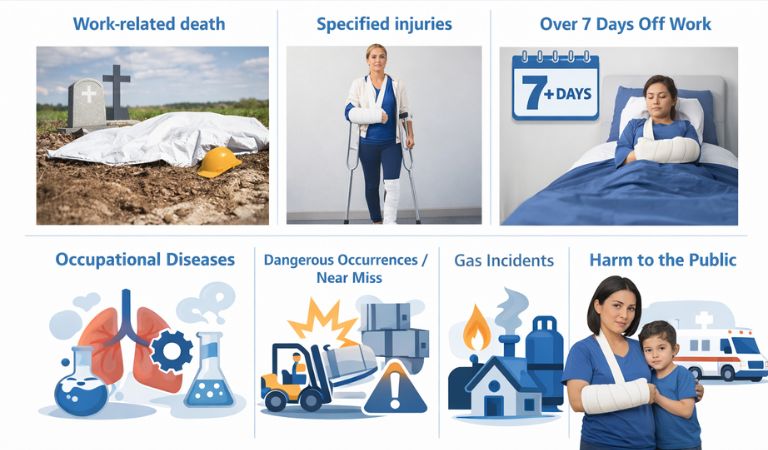
Main Types of Reportable Incidents
- Work-related deaths.
- Specified injuries.
- Injuries that keep a worker off work for more than 7 days.
- Occupational diseases caused by work.
- Dangerous occurrences or near-miss events.
- Gas-related incidents.
- Injuries to members of the public caused by work activities.
What is a Reportable Work-Related Accident?
A reportable work-related accident is a sudden event at work that causes physical harm. It must happen because of work activities. It is not planned and it is not expected. Also, it must be a clear and separate incident that leads to injury. However, long-term illnesses or slow injuries usually do not count as accidents under RIDDOR. In some cases, workplace violence can be reportable if it happens during work and without consent.
Reportable Deaths Under RIDDOR
Under RIDDOR, you must report all work-related deaths. This rule applies to both workers and people who are not workers, like visitors or members of the public. However, RIDDOR does not include suicide in its reporting rules.
In addition, a death must be reported if it is caused by a work-related injury. This also applies when the death happens within 365 days. This helps keep clear records and improves workplace safety.
Which Injuries Must Be Reported?
Some serious injuries are always reportable under RIDDOR. We call these specified injuries. Employers and responsible people must report them quickly when it happen at work.
List of Reportable Specified Injuries
- Fractures (except fingers, thumbs and toes).
- Amputations or loss of a limb.
- Permanent loss or reduction of sight.
- Serious burns reaching more than 10% of the body or affecting vital organs.
- Loss of consciousness or injuries needing resuscitation.
- Injuries that require hospital treatment for more than 24 hours.
Important Injury Notes
- Burns over 10% of the body are always reportable.
- Specified fractures do not include injuries to fingers, thumbs or toes.
- Hospital treatment over 24 hours can still make an injury reportable.
What are the Over-7-Day Injuries?
An over-7-day injury happens when a worker cannot do their normal job because of an injury at work. This situation continues for more than 7 days in a row. This includes weekends and rest days as well. However, the day the accident happens does not count in these 7 days.
In simple terms, the worker must stay away from their normal duties due to the injury. Even if they return to light duties, it may still count if they cannot do their usual work.
Important Over-7-Day Injury Rules
First, if the worker is away from normal work for more than 7 consecutive days you must report it. Next, you must report it within 15 days of the accident. Finally, remember that light duties can still count if the worker cannot do their normal job properly.
What are the Over-3-Day Injuries?
Sometimes a workplace injury is not serious enough to report under RIDDOR. For example, if a worker cannot do their normal job for more than 3 days. You do not need to report it to the authorities. However, you still must record it properly inside your workplace records. This helps you keep track of all accidents and stay safe in the future.
Over-3-Day Injury Rules
If someone stays off work for more than 3 days in a row. You only need to record it in the accident book. You do not send a RIDDOR report at this stage. However, if the absence goes beyond 7 days, then it becomes reportable under RIDDOR.
What is a Dangerous Occurrence Under RIDDOR?
A dangerous occurrence under RIDDOR is a serious “near miss” at work. It means something went wrong, but no one may have been hurt. However, it still had the chance to cause serious harm. So, the law says you must report it even if there is no injury.
Common Dangerous Occurrences
- Collapse or failure of lifting equipment.
- Failure of pressure systems like boilers.
- Scaffold or building collapse.
- An electrical short circuit that leads to fire or explosion.
- Contact with overhead power lines above 200 volts.
- Release or leak of dangerous chemicals or gases.
How to Report a RIDDOR Incident?
To report a RIDDOR incident, you must give the report to the Health and Safety Executive (HSE). In some cases, you may also need to inform local authorities. This process helps record serious workplace incidents and keep everyone safe.
You can report an incident in different ways. The most common way is online through the HSE website. For serious cases like deaths or major injuries, you can also report by phone. In some situations, you may need to use official RIDDOR forms.
What are the Common RIDDOR Reporting Mistakes?
Many businesses make simple mistakes when they deal with RIDDOR reports. As a result, they miss important legal duties and put workplace safety at risk. Let’s look at the most common errors and how to avoid them.
One common mistake is missing reporting deadlines. Some also fail to notice dangerous occurrences that need reporting. Another issue is forgetting about over-7-day injuries. Poor record-keeping also causes problems. In some cases, employers do not report occupational diseases. Many people also confuse accident book records with RIDDOR reporting rules.
How to Avoid RIDDOR Mistakes
To avoid these issues, always use a simple reporting checklist. Train managers so they clearly understand the rules. Keep one central accident log for all incidents. Also, review reports regularly to catch mistakes early. Finally, create clear reporting steps so everyone knows what to do.
What are the Penalties for Not Reporting Under RIDDOR?
Not reporting under RIDDOR is serious. It can be a criminal offense. A business breaks the law if it ignores its duty. As a result, it may face fines. It may also face prosecution. Courts can take legal action.
In serious cases, people in charge may go to prison. Poor reporting can also harm a company’s reputation. It can lower trust from workers, customers and the public. So, every workplace must follow RIDDOR rules.
Final Thoughts
To sum up, what is a RIDDOR is a simple UK safety rule for reporting serious workplace incidents. It plays a big part in keeping workers safe and preventing future accidents. So, employers must follow reporting rules, deadlines and record-keeping. In the end, correct reporting avoids legal trouble and protects everyone at work.
Want to avoid mistakes in workplace accident reporting under RIDDOR? Take our RIDDOR Training Course today.
Frequently Asked Questions (FAQs)
1. What 5 things must be reported to RIDDOR?
- Deaths, specified injuries, over-7-day injuries, dangerous occurrences and occupational diseases must be reported under RIDDOR.
2. What are the four types of incident reports?
- The four main types are injury reports, disease reports, dangerous occurrence reports and gas incident reports.
3. What accidents are exempt from RIDDOR?
- RIDDOR does not usually require reporting of minor injuries, over-3-day injuries and non-work-related accidents.
4. Is RIDDOR for staff only?
- No, RIDDOR also covers visitors, customers and members of the public in work-related incidents.
5. What is notifiable under RIDDOR?
- Serious work-related injuries, diseases, deaths and dangerous events are notifiable under RIDDOR.

RIDDOR Training Course
Course Description :
- Certificate: Yes(Free)
- Accreditation: CPD Accredited
- Access: Lifetime