No products in the basket.
Today, we will explore an important set of safety laws. Specifically, we want to answer the question: what does COSHH mean for you? The full form of COSHH stands for Control of Substances Hazardous to Health. These are important safety rules for every UK workplace. The law protects you from dangerous things like chemicals, dust, and fumes. Each year in the UK, the HSE estimates that 12,000 people die from lung diseases caused by past exposure to hazards at work.
This guide is written for everyone new to the UK workforce. We use simple words to help you understand your legal rights. Moreover, our explanation shows how to stay away from dangerous chemicals. Understanding these safety rules will help you feel much more confident. Let us look at how the British government protects every single employee.
What Does COSHH Stand For?
The word COSHH means Control of Substances Hazardous to Health. These regulations protect workers from dangerous materials in the UK. Most businesses use some form of chemicals or fumes. COSHH sets clear rules for handling these risks safely. Consequently, it prevents long-term illnesses like asthma or skin disease.
Key Requirements
Employers must follow specific steps to stay compliant. Here is how they manage safety:
- Risk Assessments: They identify which substances could cause real harm.
- Control Measures: They put safety guards or fans in place.
- Safety Equipment: They provide gloves, masks, or eye protection.
- Training: Staff learn how to handle every product correctly.
Common Hazards
Many everyday items fall under these rules. You might find them in cupboards or on factory floors. Examples include:
- Cleaning products and bleach.
- Dust from wood or stone.
- Paint, glue, and thinners.
- Fumes from welding or soldering.
Always check the labels on your containers. Look for red and white warning symbols. Furthermore, follow the safety data sheets for every product. This keeps you and your team healthy at work.
What Does COSHH Mean for Your Business?
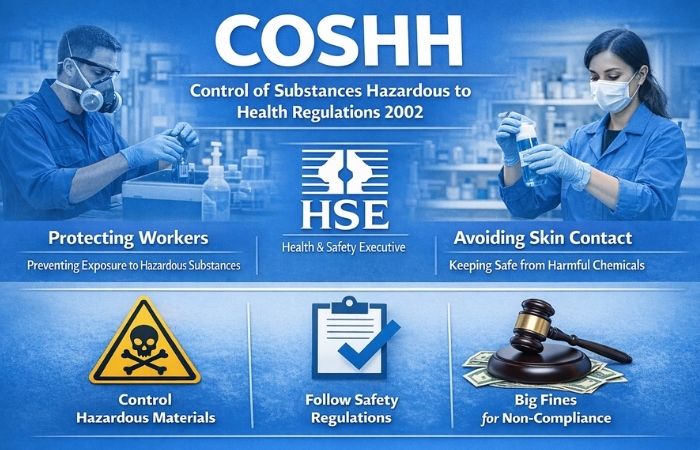
We must define this common term used in every UK office. COSHH stands for the Control of Substances Hazardous to Health Regulations 2002. Essentially, it is a law that requires employers to control toxic materials. These rules ensure that nobody gets sick from breathing in bad fumes. Furthermore, the law prevents workers from getting chemicals on their soft skin.
The Health and Safety Executive, or HSE, manages these important legal rules. They are the government group that checks if businesses are following safety laws. Consequently, every company must follow these rules to avoid getting into trouble. Business owners must protect their staff every day by law. If they fail, the government can make the business pay large fines.
What Substances are Covered Under the Regulations?
You might think that hazardous substances are only found in big factories. However, dangerous things are actually found in almost every single workplace. A “hazardous substance” is anything that can cause harm to your body. Sometimes, these things are easy to see, like a bottle of acid. At other times, the danger is invisible, like a gas or germ.
Chemicals are the most common things that the COSHH rules try to control. This includes cleaning products, paints, and even some types of strong glue. In addition, products used to kill garden pests are also very hazardous. Always check the back of a bottle for safety warning labels. These labels tell you exactly how to stay safe while working.
These important UK safety laws also cover dust and fumes. For instance, sawdust from cutting wood can be very bad for breathing. Similarly, smoke from welding metal can cause long-term damage to your throat. Because these particles are small, you might not notice the danger immediately. This is why the regulations are so important for your future health.
Biological agents are a different kind of hazard found in many jobs. These include tiny germs, bacteria, and viruses that make people feel unwell. People working in hospitals or waste centers deal with these every day. Even nanoparticles, which are incredibly small bits of matter, are now covered. Basically, if it can make you sick, the COSHH law monitors it.
Harmful exposures can also come from the air you breathe at work, like fumes, vapors, and gases. To understand these risks better, check out our guide on What Does COSHH Cover: Fumes, Vapours, and Gases.
What are the 8 COSHH Compliance Steps for Employers?
UK law says that your boss must follow eight specific steps. These steps ensure that the workplace is a healthy environment for everyone. Knowing these steps helps you understand what your employer will expect.
Step 1: Conducting a Risk Assessment
First, the employer must look for anything that could cause harm. They walk around the building to find chemicals or dusty areas. Then, they write down a plan to stop people from getting hurt.
Step 2: Deciding What Precautions are Needed
Next, the boss must think about how to make the job safer. Perhaps they can use a safer soap instead of a harsh chemical. They must find the best way to keep the danger away.
Step 3: Preventing or Adequately Controlling Exposure
Ideally, the employer should remove the hazard completely from the work site. If they cannot, they must use tools to control the bad substances. For example, they might install a fan to suck away bad fumes.
Step 4: Ensuring Control Measures are Used
Moreover, the company must make sure that everyone uses the safety gear. It is not enough to just buy gloves for the workers. The boss must ensure that people actually wear the gloves correctly.
Step 5: Monitoring Exposure in the Workplace
Sometimes, a specialist must come to measure the air in the room. They check if there are too many chemicals floating around you. This step ensures that the safety fans are working perfectly well.
Step 6: Carrying out Health Surveillance
Your employer might need to check your health once a year. For example, they might test your hearing or your lung strength. This helps catch any problems before they become very serious issues.
Step 7: Preparing Plans for Accidents
Emergency plans must be ready in case a chemical spill happens. Everyone should know where the eye-wash station is located in the building. Having a plan saves lives when things go wrong suddenly.
Step 8: Training and Supervision
Finally, every worker must receive clear instructions on how to be safe. You should be told what does COSHH mean during your first week. Your supervisor must watch you to ensure you are working safely.
Why is COSHH Important for Workplace Health?
You might wonder why the UK has such strict rules for chemicals. The main reason is that health problems can take years to show. Some people breathe in dust today and feel fine for many months. However, they might develop a very bad cough ten years later. COSHH rules are designed to prevent these long-term illnesses from starting.
Protecting your lungs is a major goal of these workplace safety regulations. Dusty environments can cause a permanent disease called asthma or even cancer. By using masks and fans, we can keep our lungs very clean. Additionally, these rules prevent skin problems like painful dermatitis or chemical burns. Your skin is your body’s shield, so we must protect it well.
There are also big legal reasons for businesses to care about safety. If a company ignores the law, the police or HSE might intervene. The business could be closed down or forced to pay millions. Furthermore, workers have the right to sue for money if they get hurt. Therefore, following the law is good for the workers and the owners.
Safety creates a much happier and more productive place to work daily. When you feel safe, you can focus on doing a great job. Your family also feels better knowing you will come home healthy. Ultimately, the question of what does COSHH do is about human kindness. It is about making sure that work does not break our bodies.
What are the Common COSHH Hazard Symbols?
You will see red diamond signs on many products. These are called GHS pictograms. They use pictures to show the danger. This helps people from all over the world understand the risk. Learn these signs to protect yourself and your friends.
The “Skull and Crossbones” symbol is very serious. It means the substance is toxic. You could die if you swallow or breathe it. Another common sign shows a large flame. This means the liquid catches fire very easily. Always keep these bottles away from heat or sparks.
You might also see a sign with a dripping liquid. This means the substance is corrosive. It will burn your skin or damage your eyes. An exclamation mark is a general health warning. It might cause a cough or an itchy rash. Finally, a picture of a dead fish means it harms nature. Never pour these liquids down the sink or drain.
How Do You Conduct a COSHH Risk Assessment?
Conducting a COSHH assessment keeps people safe from harmful substances. You must follow five clear steps to protect your team.
Identify the Hazards
Look for every hazardous substance in your workplace. Check for chemicals, fumes, dusts, and even vapors. Read the safety data sheets for each product carefully. These sheets list the specific risks and ingredients.
Assess the Risks
Think about who might face harm. Consider how they use the substance and for how long.
- Does the skin touch it?
- Do workers breathe it in?
- Can it splash into the eyes?
Control the Dangers
Now, implement ways to stop exposure. Always try to swap a dangerous chemical for a safer one first if you cannot, use masks, gloves, or fans.
Record and Review
Write down your findings clearly. Train your staff so they understand the rules. Finally, check your assessment every year or if the work changes. Good records save lives.
What Should Employees Know About COSHH Training?
Training is a legal right for every worker in the UK. Your boss must teach you about the hazards you face. During this training, you will learn what does COSHH mean. You should also learn how to use safety equipment properly.
Your supervisor must show you how to read safety labels. They must explain what to do if a chemical spills. Furthermore, they should tell you about the results of air monitoring. If you need a mask, they must show you how to wear it. Never start a dangerous task without receiving this training first.
Good training makes you feel more confident at work. It helps you avoid mistakes that could hurt someone. If you do not understand something, always ask a question. Your safety is more important than being fast at your job. A good company always welcomes questions about health and safety.
Conclusion on What Does COSHH Involve
Staying safe at work is a team effort in the UK. The COSHH regulations are here to make sure you stay very healthy. From simple cleaning sprays to big clouds of dust, everything is monitored. Your employer must provide training and safety gear for your daily tasks, such as our Control of Substances Hazardous to Health (COSHH) Training Course. Meanwhile, you must follow the rules and report any dangers you see. If you feel sick or dizzy, tell your supervisor immediately without delay. Learning about these rules is the first step to a long career. We hope this guide made the complicated laws much easier to understand. You deserve to work in a place that values your physical well-being.
Frequently Asked Questions (FAQs)
1. What are the 5 main substances covered by COSHH?
- Chemicals, dusts, fumes, vapours, and biological agents (like bacteria and viruses).
2. What are the five principles of COSHH?
- Assess risks, control exposure, use safe practices, monitor health, and provide training.
3. What are the three basic rules of COSHH?
- Identify hazards, control risks, and follow safety procedures.
4. How does COSHH protect employees?
- It reduces exposure to harmful substances by using safety measures, training, and proper handling.
5. What are the 7 types of hazards?
- Chemical, biological, physical, ergonomic, mechanical, electrical, and environmental hazards.
6. What is not covered under COSHH?
- Asbestos, lead, and radioactive substances (they have separate regulations).
7. What is the number one golden rule in COSHH?
- Always assess and control risks before working with hazardous substances.

Control of Substances Hazardous to Health (COSHH) Training Course
Course Description :
- Certificate: Yes(Free)
- Accreditation: CPD Accredited
- Access: Lifetime