
No products in the basket.
If you are looking for a job that combines responsibility, fitness, and public safety, becoming a lifeguard can be a great choice. One of the first questions most people ask is about lifeguard jobs pay and what they can expect to earn. In the UK, lifeguard salaries vary depending on experience, qualifications and location. For example, lifeguards in London earn an average of around £31,500 per year, which works out to about £14.50 per hour. Entry-level roles usually pay between £20,000 and £26,400 annually, while experienced lifeguards and specialist rescue staff can earn £30,000 to £34,500 or more.
In this guide, you will learn how lifeguard jobs pay differs across the UK, what factors impact earnings and how you can increase your income in this rewarding career.
How Much Do Lifeguard Jobs Pay Per Hour?
Usually, the money you earn depends on your current age. The UK government sets a minimum wage for every worker. For example, younger workers often start at a lower rate. Meanwhile, older staff members earn a higher legal minimum. Many leisure centres pay more than the basic legal limit. This happens because they want to attract the best workers.
On average, a new lifeguard might earn £8 to £11. However, some private clubs in London offer much higher rates. You might find roles that offer £13 every hour. Furthermore, holiday pay is often added to your total earnings. This extra money helps when you take a short break. Always ask the manager about the specific hourly rate. Below is a simple table to show typical hourly wages.
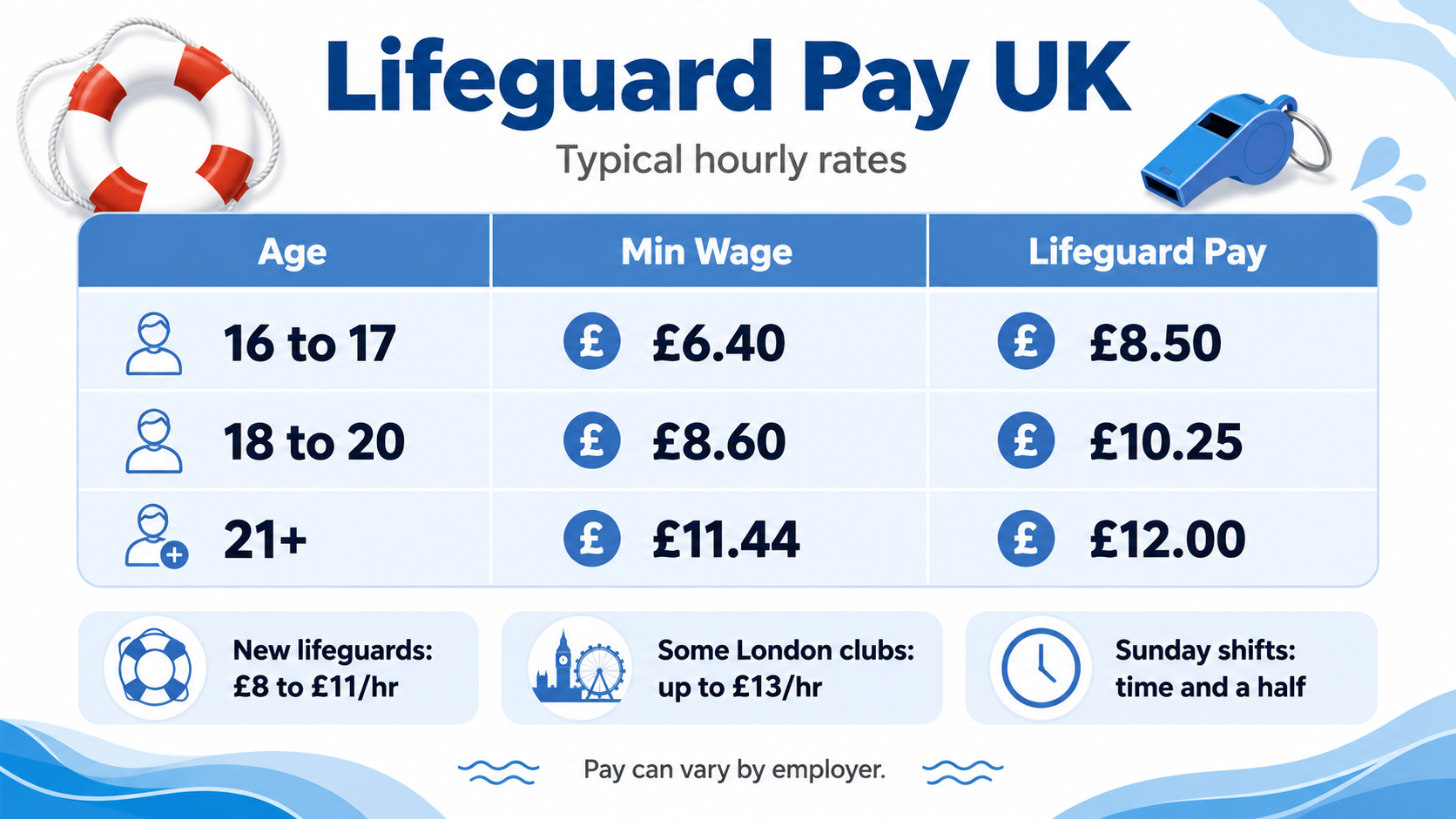
Next, consider the benefits of working on a Sunday. Some pools offer “time and a half” for weekend shifts. Consequently, your weekly paycheck can grow quite quickly. You should always check your contract for these special details. Also, remember that tax might be taken from your pay. Most students do not pay much tax at all. This makes the job perfect for someone starting out.
What Factors Change What Lifeguard Jobs Pay?
Several things can influence the amount of money you see. First, your location in the UK plays a big part. Living in London is very expensive for most people. Therefore, shops and pools there usually pay a higher wage. If you live in a smaller town, the pay might be lower. However, your travel costs will also be much smaller.
Second, your level of experience changes your value to the pool. A head lifeguard earns more than a brand-new trainee. This is because they have more responsibility during emergencies. Also, extra qualifications can lead to a nice pay rise. For instance, learning to teach swimming is a great move. Many places give a bonus to staff who teach kids.
Third, the type of building makes a massive difference too. A large water park might pay more than a local school. Specifically, busy places need more staff to manage the crowds. They often have bigger budgets for their safety teams. On the other hand, small hotels offer a quiet environment. You might earn less there, but the work is calmer. Every pool has its own unique way of paying staff.
Do Indoor Pools Pay Better Than Beaches?
A beachside job sounds like the perfect lifestyle. You get to feel the sun and the salty breeze. However, beach lifeguards usually work for the RNLI charity. Their pay scales are very structured and fair across Britain. Often, these roles are seasonal and only happen in summer. This means you might not have work during the winter.
Indoor pools stay open every day of the year. Therefore, they offer more consistent hours for your weekly budget. You can work during the evenings after your school classes. Next, consider the training required for the deep ocean. Beach guards need very high fitness levels for the waves. Consequently, the training is harder than for a small pool.
Some people prefer the steady pay of a leisure centre. In contrast, others love the adventure of the British coastline. Both jobs are vital for saving lives in the water. Usually, the pay remains quite similar for entry-level positions. You should choose the environment that makes you feel happy. Your happiness at work is just as important as money.
What Skills Do You Need To Be a Lifeguard?
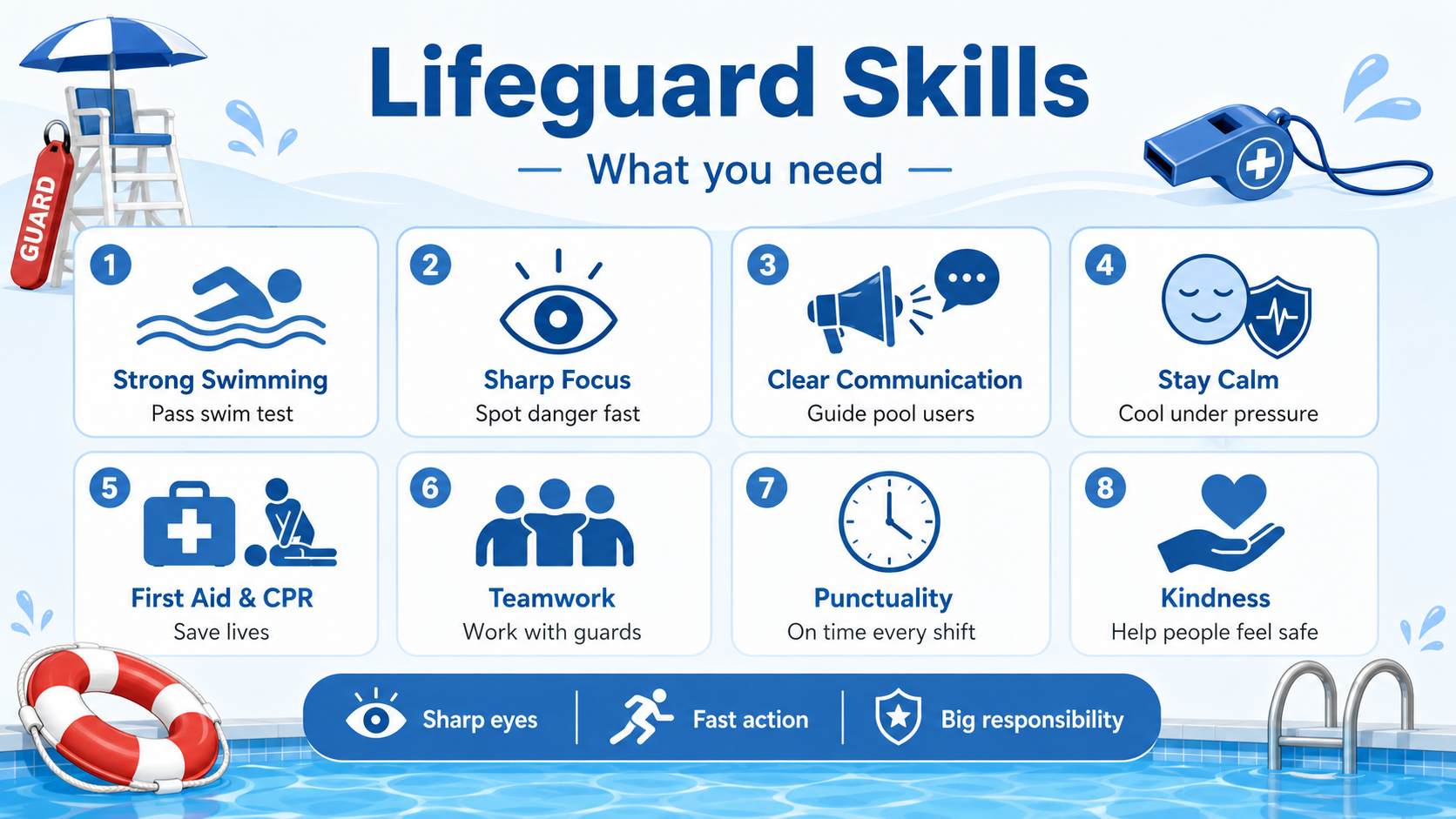
You do not just sit in a high chair. Actually, you must be a very strong and confident swimmer. You need to swim long distances without getting tired. Also, you must be able to dive deep down. This is important if someone sinks to the bottom. Furthermore, your eyesight and hearing must be very sharp. You need to spot trouble before it becomes a disaster.
Communication is another skill that you will use every day. You must talk clearly to children who are running around. Often, you will have to explain the pool rules kindly. Staying calm under pressure is a very big requirement too. If a child gets hurt, you must stay cool. People will look to you for help and guidance.
Moreover, you must learn how to perform First Aid. This includes learning CPR to help people breathe again. Most employers will pay for this training at the start. Therefore, you gain a life skill that stays with you forever. This looks amazing on your resume for future jobs. Employers love seeing that you can handle big responsibilities.
- Strong Swimming: You must pass a timed swim test.
- Focus: You cannot look at your phone while working.
- Punctuality: You must arrive on time for every shift.
- Teamwork: You will work with other guards and managers.
- Kindness: You help people feel safe and happy.
How Do You Get a Lifeguard Job in The UK?
First, you need to get a special certificate. In the UK, this is called the NPLQ qualification. This stands for the National Pool Lifeguard Qualification. Most courses last about one week and are very intense. You will spend time in the water and the classroom. Next, you must pass a practical exam with an assessor. They will check your rescue skills and your medical knowledge.
Once you have your certificate, start looking for local pools. Look at the websites of your local council or gym. Often, they have a “Careers” page with many job listings. You should write a simple CV that lists your skills. Mention that you are hardworking, reliable, and a good swimmer. Then, visit the pool and ask to speak with the manager.
Applying in person shows that you are very brave. Many managers like to see a friendly face before hiring. After you apply, you might have an interview and a swim test. Do not be nervous because they want you to succeed. They need helpful people to join their safety team. Finally, you will sign a contract and start your training. Your journey into the UK workforce begins at the poolside.
Is This The Right Job For You?
Choosing a job is a big decision for a newcomer. You want a role that pays well and feels good. Lifeguarding offers a great balance of both. It teaches you how to be a leader in your community. Also, you make friends with your coworkers very quickly. Most lifeguards become a very close-knit group of friends.
The pay is fair and follows the UK’s legal rules. You will always know when your money is coming in. Furthermore, the hours are flexible for your busy school life. You can work more during the holidays to save money. This helps you buy things you need for your new home. Every shift you work makes you more confident and skilled.
If you love the water, this is the best path. You get paid to stay active and help others. Sometimes the job is quiet, and sometimes it is busy. However, it is never boring because you are always watching. You are the hero of the swimming pool every day. Start your application today and see where it takes you. Your future in the UK looks very bright and safe.
Summary of Lifeguard Career Steps
To conclude, let us recap the most important points. It is important to know the pay for lifeguard jobs before you start this work. Pay can change based on your age, experience, and where you work. In big cities like London, lifeguards earn more because living costs are higher. In smaller towns, pay is lower but the work is often easier and more relaxed. Overall, lifeguard jobs pay a fair wage for beginners and trained workers. This job also helps you learn safety skills, teamwork, and confidence. If you enjoy helping people, it can be a good and simple career choice.
FAQs
1. What is the 10-20 Rule for Lifeguards?
The 10-20 rule means a lifeguard must scan the pool in 10 seconds and be able to reach any swimmer in 20 seconds. It helps ensure quick rescue during emergencies.
2. Who Is the Highest Paid Lifeguard?
The highest-paid lifeguards are usually senior rescue managers or beach safety supervisors in countries like Australia and the USA. They can earn £50,000–£70,000+ per year in top roles.
3. Is 30 Too Old to Be a Lifeguard?
No, 30 is not too old. Many lifeguards work in their 30s, 40s and beyond if they are fit and hold the right qualifications.
4. How Old Is the Oldest Lifeguard?
There is no fixed limit. Some lifeguards continue working into their 50s or even 60s, especially in pool-based or supervisory roles.
5. Is 22 Too Old to Be a Lifeguard?
No, 22 is a very normal age to start or continue lifeguarding. Many people begin in their late teens or early twenties.
6. What Age Is a Rookie Lifeguard?
A rookie lifeguard usually starts from around 16 years old, depending on local rules and when they pass the required lifeguard qualification.