
No products in the basket.
How to use fire extinguisher? It is about quick action and staying safe during a small fire. Fire extinguishers come in different colours. Each colour shows what type of fire it can handle. For example, red means water and cream means foam. These link to fire types like wood, paper, liquids, gas, electrical items and cooking oil.
After that, the PASS method shows simple steps. Remove the pin, point at the base of the fire, then squeeze and move side to side. Use a fire extinguisher only for small fires. If the smoke gets heavy or the fire spreads, leave the place right away and call 999.
Now, let’s dive in and explore how to use a fire extinguisher in detail.
What Should You Check Before Using a Fire Extinguisher?
Before anything else, focus on fire extinguisher safety. Raise the fire alarm straight away. Then call 999 in the UK, so help starts coming quickly. After that, check your exit route. You must always know how to get out safely. Do not let yourself get stuck in the danger area.
Then make sure you pick the right extinguisher for the fire. This matters a lot. The wrong one can make the fire worse. Also, check the extinguisher condition. Look for any damage. Make sure the pin and seal are still in place. This shows it is safe to use.
At the same time, stand at a safe distance before you act. Never go into thick smoke. It can block your view and harm your breathing quickly. Most importantly, only use a fire extinguisher if you can do it without putting yourself at risk.
When to Use a Fire Extinguisher Safely?
Knowing when to use a fire extinguisher is very important. Fire extinguisher safety depends on quick thinking and calm action. You must decide fast, but you must also stay safe.
You can use a fire extinguisher when the fire is small. It should stay in one place and not spread. You should clearly know what is burning. Then you can choose the right extinguisher. Also, your exit route must stay open. Smoke should not block your way. You should feel calm and ready before you act.
When NOT to use a fire extinguisher:
- Flames spread fast and the fire keeps getting bigger.
- Smoke gets thick and makes it hard to see or breathe.
- Fire goes above shoulder height and becomes hard to control safely.
- The escape route is blocked and there is no clear way out.
- The fire source is unclear which can make things more dangerous.
- Any feeling of danger is present, as it often signals real risk.
How to Use Fire Extinguisher with the PASS Method?
The PASS method gives a simple way to remember how to use a fire extinguisher. During a fire, people can panic very quickly. So these four steps help you stay calm and use the extinguisher safely.
Pull
Pull the pin at the top of the extinguisher. This breaks the safety seal and gets it ready to use. At the same time, hold the extinguisher firmly before you start.
Aim
Aim low at the base of the fire. Do not aim at the flames. The base is where the fire keeps burning. So focus on the bottom part of the fire.
Squeeze
Squeeze the lever so the extinguishing material starts flowing. Keep the extinguisher upright while using it. Also, use steady pressure, so you stay in control.
Sweep
Sweep the nozzle from side to side across the base of the fire. Move slowly and cover the full area. Keep sweeping until the flames go out.
The fire extinguisher PASS method works best on small fires. Still, most extinguishers empty very quickly. So use the agent carefully and do not waste it. If the fire does not go out quickly, leave the area straight away and call for help.
Which Fire Extinguisher Matches Each Fire Class?
Different fires need different extinguishers. So understanding fire extinguisher types and fire extinguisher classes UK is very important. The right extinguisher can control a small fire quickly. At the same time, the wrong one can make the fire more dangerous.
Here is a simple guide to help you understand which fire extinguisher to use.
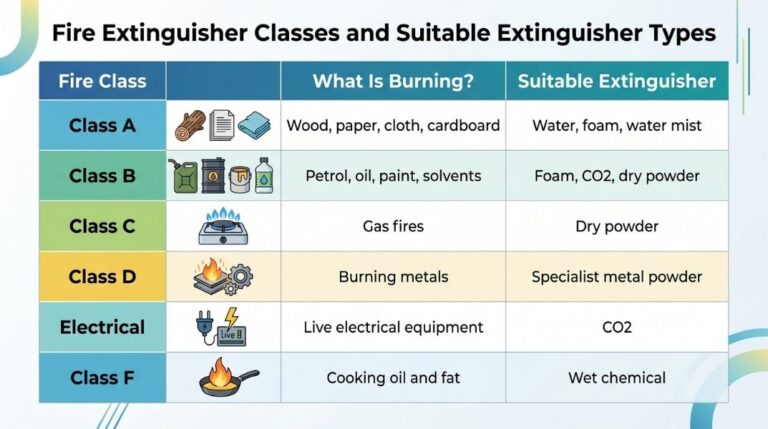
Still, using the wrong extinguisher can make a fire worse. Water can spread burning oil very fast. Also, water can become dangerous near live electrical equipment. So before using any extinguisher, always match it to the correct fire class.
What Do UK Fire Extinguisher Colours Mean?
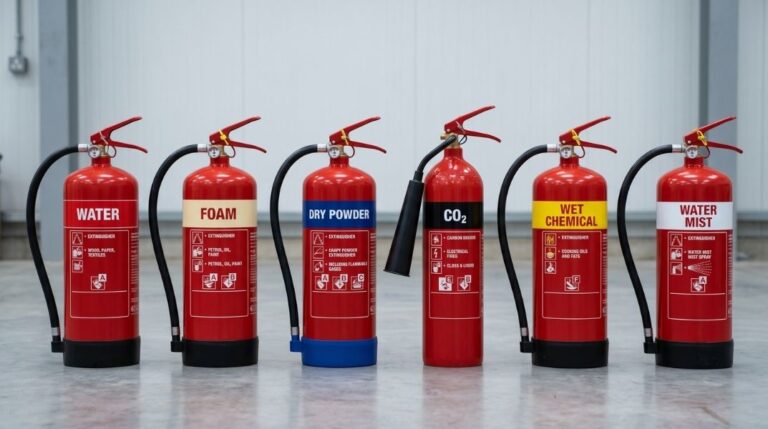
In the UK, fire extinguishers use colour codes so you can act fast in an emergency. Most have a red body. However, the coloured band shows what type of fire it can handle. These fire extinguisher colour codes help you choose quickly when time is short.
Here is a simple guide to fire extinguisher colours UK:
- Red band means water extinguisher. It works on Class A fires like wood, paper and cloth.
- Cream band means foam extinguisher. It works on Class A and B fires like petrol, oil and paint.
- Blue band means a dry powder extinguisher. It covers fire classes A, B, and C, including fires caused by gas.
- A black band means a CO2 extinguisher. It works on electrical fires and some liquid fires.
- Yellow band means a wet chemical extinguisher. It is used for cooking oil and fat fires.
- White with a red stripe means a water mist extinguisher. It works on some Class A fires and gives safer use in many situations.
Still, do not depend only on colour. Always read the label before use. Colour gives a quick idea, but the label gives the safest and most correct information.
What Safety Tips Apply to Each Extinguisher Type?
Different fire extinguishers work in different ways. So the safety rules also change. These basic tips help you stay safe and pick the correct extinguisher easily.
Water Fire Extinguisher
Water works only on solid fires like wood, paper and cloth. Never point it at live electrical fires. Also, stay away from cooking oil fires. Water can spread oil fire very fast and make it worse.
Foam Fire Extinguisher
Foam works well on liquid fires like petrol, paint, or oil. Let the foam fall gently on the fire. Do not spray it with strong force. A hard spray can push the fire and spread it further.
CO2 Fire Extinguisher
CO2 suits electrical fires and some liquid fires. Hold it with care and keep your hands away from the horn. It becomes very cold during use. So avoid touching it at any time.
Wet Chemical Fire Extinguisher
Wet chemical suits for cooking oil and fat fires. Spray it slowly and steadily. It forms a layer over hot oil and helps cool it down. Do not rush, as hot oil can splash.
Dry Powder Fire Extinguisher
Dry powder works for many fire types. It acts fast, but it creates heavy dust. Inside rooms, it can block your view quickly. It can also make breathing harder, so use it with care.
What Fire Extinguisher Mistakes Should You Avoid?
Small mistakes in a fire can turn serious very fast. So it is important to know these fire extinguisher mistakes. They help you stay safe and make better choices. These simple fire extinguisher safety tips can protect you in real situations.
Avoid these mistakes:
- Never use water on electrical fires, as it can cause electric shock.
- Do not use water on cooking oil fires, as it can spread flames quickly.
- Avoid aiming at flames instead of the base, because it will not stop the fire.
- Staying too close to the fire can make you lose safe control.
- Do not fight a fire without keeping a clear exit behind you.
- Trying to handle a large or fast-spreading fire puts you at risk.
- Using an extinguisher with a broken seal or a missing pin is unsafe.
- Touching the horn of a CO2 extinguisher can burn your hand due to extreme cold.
- Turning your back on the fire, even for a moment, increases danger.
- Forgetting to replace or refill the extinguisher after use leaves no protection later.
At the end, trust your judgement. If you feel unsure, leave the area right away and call 999.
Do UK Workplaces Need Fire Extinguisher Training?
Yes, UK workplaces need fire extinguisher training to keep people safe. In a fire, quick action matters. But correct action matters even more.
Every staff member should know the workplace fire plan. They should know where fire extinguishers are kept. Also, they must know which extinguisher matches each fire risk. At the same time, they should clearly know when not to fight a fire and when to leave the area.
Some jobs need extra training. Fire wardens get full workplace fire extinguisher training so they can guide others during an emergency. New staff should also get basic fire safety training when they start work. On top of that, regular fire drills help everyone stay ready and confident.
In UK workplaces, a responsible person must manage fire safety. This can be the employer, owner, landlord, occupier, or building manager.
How Should Fire Extinguishers Be Checked?
Regular fire extinguisher checks help keep people safe at home and at work. These checks take only a few minutes, but they are very important in an emergency. In the UK, proper fire extinguisher maintenance UK keeps equipment ready when you need it most.
Here is a simple checklist:
- Keep the extinguisher in the correct place so you can find it quickly.
- Make sure nothing blocks it so you can reach it easily.
- Check that the pin is in place, as it prevents accidental use.
- Look at the seal and confirm it is not broken.
- Check the pressure gauge and keep it in the green zone.
- Read the label and make sure it is clear and easy to read.
- Look for rust, damage, cracks, or any sign of leakage.
- Check if anyone has used it before, even for a short time.
After that, remember one important point. A used extinguisher must be replaced or recharged, even if it still feels partly full. Also, UK businesses should arrange regular servicing from a trained and approved fire safety provider.
Conclusion
So, how to use fire extinguisher safely is about simple actions at the right time. It can help control a small fire if you stay calm and act quickly. However, you must always pick the correct extinguisher, follow the PASS method and keep your exit route clear.
Fire extinguisher safety is not about taking risks. It is about knowing when to act and when to step away. If the fire spreads, smoke builds, or you feel unsure, leave straight away and call 999.
FAQs
How to use a fire extinguisher step by step?
- Use the PASS method. Pull the locking pin first, then aim down where the fire is strongest. After that, squeeze the handle and sweep side to side. Keep a safe distance. Move only if the fire stays small and under control.
What fire extinguisher for magnesium?
- Use a Class D extinguisher with special metal powder. Never use water, foam, or CO2. Magnesium reacts strongly and can make the fire worse.
What are 5 fire safety rules?
- Raise the alarm quickly. Keep exits clear. Know your escape route. Do not use lifts in a fire. Leave immediately if the fire grows or the smoke gets heavy.
What type of fire extinguisher is used for potassium acetate?
- Use a wet chemical extinguisher. It works well on cooking oil and fat fires, including potassium acetate in kitchen fire systems.
What are the 7 types of extinguishers?
- Water, foam, CO2, dry powder, wet chemical, water mist and specialist metal (Class D) extinguisher.
What does K mean on a fire extinguisher?
- “K” means kitchen fires. It mainly covers cooking oils and fats. It uses a wet chemical agent to cool and form a safe layer on hot oil.