
No products in the basket.
Bricklaying is the skilled job of building walls, houses and other structures using bricks and mortar. A bricklayer is the tradesperson who carries out this work on construction sites and building projects. Many people ask, how much money do bricklayers make per brick UK. In most cases, bricklayers earn between 65 pence and £1.79 per brick, while specialist brickwork can pay £2.26 to £5.00 per brick. Earnings can vary based on experience, brick type, location and payment method. Some bricklayers work on piecework, while others earn a day rate or annual salary.
This guide explains per-brick rates, bricklaying pay rates, day rates, the average wage bricklayer UK and how earnings change with experience. Let’s break down bricklayer pay rates and earning potential across the UK.
What is the Average Pay for a Bricklayer in the UK?
The average pay for a bricklayer in the UK depends on experience, qualifications and employment status. An apprentice bricklayer typically earns around £11,063 per year while learning the trade. Once qualified, earnings can rise to about £31,942 a year. The average wage bricklayer UK for an employed worker is around £40,102 annually.
Self-employed bricklayers often have higher earning potential. A sole trader can earn about £56,052 per year. While a limited company owner may earn around £59,002. This higher income reflects the ability to set rates and take on more projects.
However, self-employed bricklayers must cover business costs such as tools, insurance, fuel and taxes. As a result, the average wage for a bricklayer UK can vary significantly depending on how they work and the type of projects they complete.
How Much Money Do Bricklayers Make Per Brick UK at the Beginning?
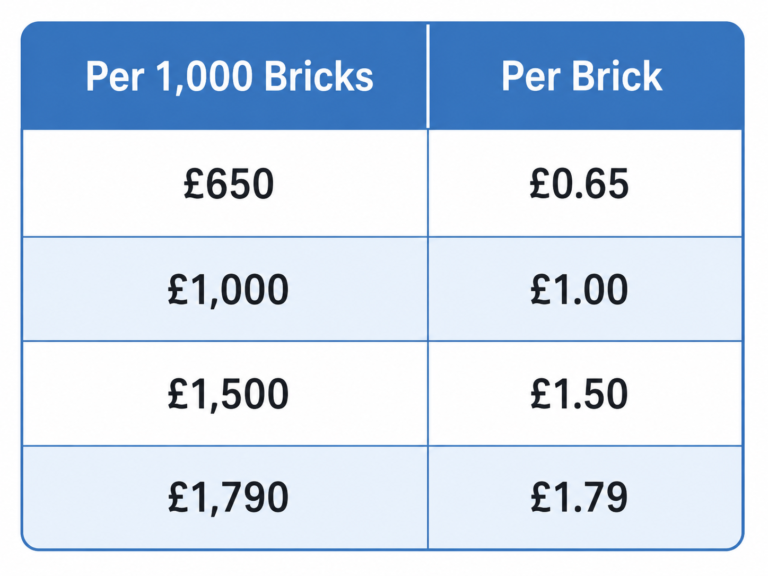
Most bricklayers in the UK earn between 65p and £1.79 per brick on standard bricklaying jobs. In most cases, contractors and builders calculate pay per 1,000 bricks rather than per brick. This method makes it easier to price large projects and compare labour costs.
Typically, bricklayers earn between £650 and £1,790 per 1,000 bricks laid. The exact rate depends on the type of brick, the difficulty of the work and the location of the project. Some self-employed bricklayers work on price work and earn based on the number of bricks they lay. Meanwhile, others charge a day rate or agree on a fixed project price. As a result, earnings can vary from one job to another.
Do Bricklayers Get Paid by the Brick?
Yes, many bricklayers get paid by the brick, especially when they work on bricklaying piecework. Under this system, payment depends on the number of bricks laid rather than the hours worked. This gives skilled bricklayers the chance to earn more by working efficiently. Bricklayers usually work under three payment methods.
Many self-employed bricklayers choose price work because it can increase their earnings. However, income can vary from one job to another. Weather, site conditions and material delays can affect productivity. Because of this, per-brick payment offers higher earning potential but less certainty than a fixed day rate.
If you want a clearer overview of income levels, including daily pay and yearly earnings, check our full guide on Average Wage for a Bricklayer UK.
What are the Current Bricklaying Price Work Rates?
Current bricklaying piecework rates in the UK vary on the type of brick and the complexity of the project. Most contractors calculate bricklaying pay rates per 1,000 bricks laid. This method helps estimate labour costs and keeps pricing consistent across different jobs.
Common Bricks
Bricklayers typically earn between £650 and £1,500 per 1,000 bricks when laying common bricks. These bricks are widely used in house building and general construction work. Since they are easier and quicker to lay, they usually attract lower price work rates.
Engineering Bricks
Engineering brickwork generally pays between £650 and £1,790 per 1,000 bricks. These bricks are denser and stronger than standard bricks. Because of their weight and technical requirements, bricklayers often earn slightly higher rates for this type of work.
Clay Facing Bricks
Clay facing bricks can pay between £2,260 and £5,000 per 1,000 bricks. These bricks remain visible once the building is complete. Therefore, bricklayers must achieve clean joints, straight lines and a high-quality finish. This extra skill and attention to detail help justify the higher rates.
How Many Bricks Can a Bricklayer Make in a Day?
It depends on experience, working conditions and the type of project. In general, most bricklayers lay between 400 and 600 bricks per day. Skilled and experienced workers can often lay 500 to 800 bricks daily when conditions are good.
Across the construction industry, 500 bricks per day is a common benchmark for measuring productivity. However, output can vary from site to site. Weather conditions such as rain, strong winds and extreme heat can slow down progress. Site setup also matters. When bricks and materials are easy to access. Bricklayers can work more efficiently.
Labour support plays a key role as well. A good labourer keeps materials ready and helps maintain a steady workflow. This often allows bricklayers to achieve higher daily output.
What is the Typical Day Rate for a Bricklayer?
The day rate for a bricklayer changes based on how many bricks they lay and the rate per brick. So, every day their income changed. For example, if a bricklayer lays 500 bricks at 65p each, they can earn around £325 in a day. If the rate goes up to £1.00 per brick, the same work can bring in about £500 a day.
It really depends on speed, site conditions and how smooth the job runs. Some days go fast, some days slow. That’s why earnings can shift from one job to another. If the rate reaches £1.50 per brick, a bricklayer could earn around £750 per day. A highly productive worker who lays 800 bricks at £1.00 per brick could earn about £800 per day.
Many contractors also hire a two-man bricklaying gang. A bricklayer and a labourer typically cost between £350 and £550 per day. Actual earnings may vary depending on site conditions, workload and expenses.
Why Do Some Bricklayers Earn More Than Others?
Several factors affect how much a bricklayer can earn. While some bricklayers work at standard rates, others can charge higher prices because of their skills, experience and the type of projects they complete.
- Experience: Experienced bricklayers often work faster and handle complex jobs more efficiently. This can lead to higher earnings.
- Qualifications: Industry qualifications such as NVQs and CSCS cards can help bricklayers access better-paid roles and larger projects.
- Speed: Bricklayers who lay more bricks each day can often earn more, especially when working on price work contracts.
- Quality of Work: Contractors value neat, accurate brickwork. High-quality work can lead to repeat business and better rates.
- Location: Bricklayers in London and the South East often earn more because demand and labour costs are generally higher.
- Type of Projects: Large commercial projects and specialist jobs often pay more than standard residential work.
- Labour Support: Good labourers help keep materials ready, allowing bricklayers to work more efficiently and increase productivity.
- Specialist Brickwork: Heritage restoration, decorative brickwork and premium facing brick projects usually command higher rates due to the extra skill required.
What Qualifications Can Increase Bricklaying Wages UK?
The right qualifications can increase bricklaying wages UK and help bricklayers access better-paid jobs. An NVQ Level 2 shows basic skills and safe working ability on site. After that, an NVQ Level 3 builds advanced knowledge and improves earning potential further. A Blue CSCS Card is also important because many UK sites require it before allowing workers to start. It proves training and safety awareness.
Many bricklayers begin through apprenticeships, where they learn practical skills while working on real sites. This gives strong experience from the start. Over time, bricklayers can earn more by learning specialist masonry skills such as decorative brickwork or stonework. Work in restoration and heritage projects also pays higher rates because it needs extra care, accuracy and experience.
How Much Money Do Bricklayers Make Per Brick UK Compared with Other Pay Methods?
Bricklayers in the UK earn money in different ways and each method affects total income. In price work, they earn about 65p to £1.79 per brick, depending on skill, brick type and job difficulty. This method usually pays the most for fast and experienced workers.
Contract work pays one fixed price for the whole job, so pay depends on the deal made before starting. Price work can pay more if the bricklayer works fast and stays productive. Day rate is good for beginners because it gives steady and safe income. Contract work suits experienced bricklayers who handle full jobs and manage everything on site.
Final Thoughts
To sum up, how much money do bricklayers make per brick UK? Most standard work pays 65p to £1.79 per brick. Premium facing bricks can reach £2.26 to £5.00 per brick. Bricklayers often lay 500 to 800 bricks per day, depending on conditions. Overall earnings can reach £40,000 to £60,000+ per year. Employed workers earn steady pay. While self-employed bricklayers can earn more but face higher costs and income changes.
Start your bricklaying journey with our professional bricklaying course. Join our Bricklaying Training Course.
FAQs
1. How long does it take to lay 500 bricks?
- Most bricklayers take about one full working day, usually 6 to 8 hours, to lay around 500 bricks.
2. Do you get paid 1 per brick?
- Some bricklayers do, but most earn between 65p and £1.79 per brick.
3. Can bricklayers make 100k a year?
- Yes, but only very experienced self-employed bricklayers on large projects can reach £100,000 or more.
4. What is the going rate for a self-employed bricklayer?
- Self-employed bricklayers usually earn around £150 to £300+ per day or 65p to £1.79 per brick.
5. How much do bricklayers charge per 1000 bricks in the UK?
- They usually charge between £650 and £1,790 per 1,000 bricks.
6. Is 30k a low salary in the UK?
- Yes, £30,000 is around average entry-level income in the UK.
7. Can a bricklayer lay 1000 bricks a day?
- In rare cases, yes, but most bricklayers lay around 400 to 800 bricks in a normal working day.
8. How much do bricklayers make per hour UK?
- Bricklayers usually earn around £15 to £30 per hour.
9. Is bricklaying a dying trade?
- No, bricklaying is still in high demand in the UK due to ongoing construction and housing needs.
10. What are the highest paying self-employed jobs in the UK?
- Skilled trades like electricians, plumbers, construction specialists and bricklayers can all earn high incomes.