
No products in the basket.
How much does bricklayer earn in the UK? This is one of the most common questions people ask when they think about a bricklaying career. That makes sense because bricklaying is one of the top 20 most in-demand trades in the UK.
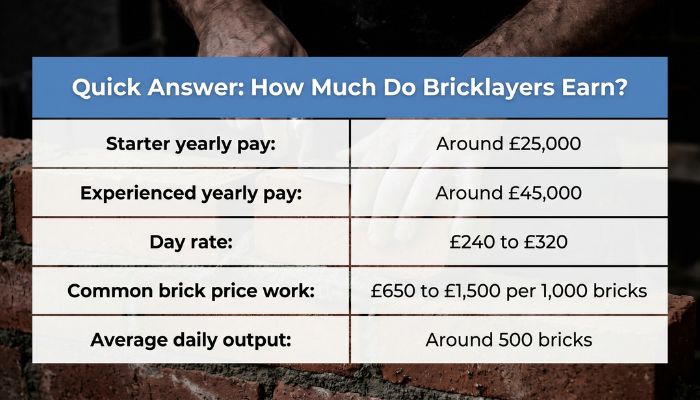
Primarily, bricklayer pay UK depends on experience, location, type of job and how you work. You may work as an employee or you may be self-employed. Most employed bricklayers earn between £25,000 and £45,000 per year. Self-employed bricklayers can earn more but they also pay their own costs like tools, travel and tax. But what about working hours? Well, most bricklayers work around 40 to 44 hours each week.
Now let’s dive in and explore how much do bricklayers get paid in detail.
How Much Do Bricklayers Earn?
What Is the Average Wage for a Bricklayer UK?
The average wage for a bricklayer UK depends on experience, job type and work setup. It also changes if you work for a company or run your own business. Most bricklayers in the UK earn between £25,000 and £45,000 per year. This range gives a clear idea of normal pay in this trade across the country.
Pay also changes with skill level. An apprentice usually earns around £11,063 per year while learning on-site. After qualifying, a newly trained bricklayer earns about £31,942 per year. With more experience, a skilled bricklayer can earn around £40,102 per year. Your income grows as your speed, skill and confidence improve.
Self-employed bricklayers often earn more on paper. A sole trader may earn around £56,052 per year, while a limited company owner can reach about £59,002 per year. Some reports even show £60,000 to £90,000. Still, these figures show total income before costs. You still pay for tools, fuel and insurance, so real take-home pay is lower.
Some industry estimates suggest even higher earning potential:
- Newly qualified bricklayers: £30,000 to £38,000
- Experienced bricklayers: £38,000 to £45,000
- Self-employed sole traders: £60,000 to £85,000
- Ltd company owners: £65,000 to £90,000
These higher figures are often quoted before tax and business expenses. Self-employed bricklayers must account for fuel, insurance, tools, vehicle costs and other overheads before calculating actual profit.
How Much Does Bricklayer Earn by Experience?
Experience has a strong effect on pay. The answer to how much does bricklayer earn changes as people gain skills and move up in their career.
What Do Apprentice Bricklayers Earn?
Apprentice bricklayers earn around £11,063 per year while they learn on site. Pay stays low at this stage because they are still in training. They focus on basic bricklaying, safety rules and simple tool use.
From April 2026, apprentices will get at least £8 per hour. This gives new starters a better base income. After some time on site, most apprentices improve their skills and move to higher pay.
What Do Newly Qualified Bricklayers Earn?
After finishing training, pay increases quite quickly. A newly qualified bricklayer earns about £18.19 per hour. That is around £145.52 per day or £31,942 per year.
At this stage, work becomes steadier. Skills get better with daily practice. As confidence grows, earnings also increase step by step.
What Do Experienced Bricklayers Earn?
Experienced bricklayers earn much more than beginners. Most earn around £40,102 to £45,000 per year. Some skilled workers earn even more on large building jobs.
Here’s the simple truth. Fast work and good quality bring better pay. Over time, a strong name in the trade helps you get better jobs and higher rates.
What Do Foremen or Business Owners Earn?
Foremen and business owners earn the highest in this trade. They do more than bricklaying. They manage workers, jobs and client needs.
Because of this, their income often goes above normal site pay. Earnings depend on job size, contracts and workflow. Many earn well above the average bricklayer salary in the UK.
What Is the Day Rate for a Bricklayer?
The day rate for a bricklayer depends on experience, location and the type of work. It usually applies to small jobs like repairs, home extensions and short projects. These jobs can change in size, so a fixed price does not always work well.
Now let’s look at typical day rates. An apprentice earns around £50–£80 per day. A newly qualified bricklayer earns about £145–£176 per day. An experienced bricklayer earns around £152–£192 per day. A sole trader may charge £304–£440 per day. A limited company owner can charge £320–£480 per day.
On busy building sites, many skilled bricklayers earn around £240–£320 per day. This often applies to workers who work fast and do neat, strong work.
A day rate often does not include extra costs. Materials, scaffold hire, waste removal and helper costs usually come separately. Also, many bricklayers set a minimum charge for small jobs. So, always check what the price includes before you agree. A lower day rate can cost more if extra charges come later.
Do Bricklayers Get Paid by the Brick?
Yes, some bricklayers work on a system known as price work.
But what is the bricklaying price work? Mainly, bricklaying price work means a bricklayer gets paid based on output rather than time. Instead of charging by the hour or day, payment is often based on the number of bricks laid. This method is common on large housing developments and new-build projects where productivity is easy to measure.
So, How Much Do Bricklayers Get Per Brick?
The pay per brick depends on the type of brick and how difficult the job is. Some bricks are easy to lay. Others need more care and time, so the pay goes higher.
Let’s start with common bricks. Bricklayers usually earn around £650 to £1,500 per 1,000 bricks. These are basic bricks, so the work goes faster and feels simpler. Moving on, engineering bricks pay a similar rate, up to about £1,790 per 1,000 bricks. These bricks are stronger, so bricklayers still need to take care while laying them.
The highest pay comes with facing bricks. These need a clean and smooth finish. Bricklayers can earn around £2,260 to £5,000 per 1,000 bricks. This work takes more skill, so better quality brings better pay.
In simple terms:
- Common bricks may work out at around 65p to £1.50 per brick.
- Engineering bricks often pay more because they can be heavier and harder to work with.
- Facing bricks can command much higher rates because appearance and precision matter more.
When Does Price Work Pay Well?
Price work often delivers higher earnings when:
- Walls are long and straight
- Projects are on new-build sites
- Access is good
- Drawings are clear
- Brick patterns repeat
- Materials are ready on site
When Can Price Work Pay Less?
Earnings may drop when:
- Access is poor
- Jobs are small
- Scaffold delays occur
- Complex bonds are required
- Arches and detailed features are involved
- Heritage work requires extra care
- Multiple brick types are used
- Weather causes delays
Is Employed or Self-Employed Bricklayer Pay Better?
Many bricklayers eventually decide whether to remain employed or become self-employed. Both options offer advantages.
What Do Employed Bricklayers Get?
Employed bricklayers get stable work and regular pay. They know when money will come in, which gives peace of mind. They also get paid holidays and fixed working hours. On top of that, they deal with less paperwork and fewer costs. On average, they earn around £19.28 per hour. That is about £154.24 per day or £40,102 per year. Still, pay growth stays slow after some years. So, income usually has a clear limit in this path.
What Do Self-Employed Bricklayers Get?
Self-employed bricklayers enjoy more control over their work. They choose their jobs and set their own rates. When work stays steady, income can rise much higher. Typical earnings sit around £38 per hour, £304 per day and £56,052 per year.
However, this freedom also brings pressure. There is no paid holiday. There is no fixed income each month. You also manage all work and money yourself.
What Costs Reduce Profit?
Self-employed bricklayers also pay all work costs. These include van fuel, tools, insurance, PPE, training, software and accountant fees. Yearly costs can reach around £7,006. After these costs, real take-home pay may drop to about £37,589. So, higher earnings often come with more responsibility and higher costs.
What Affects Bricklayer Pay in the UK?
Bricklayer pay UK is not the same everywhere. It changes with place, skill and demand. Small factors can push your earnings up or down.
- Location- Pay is higher in London and the South East. But higher living costs, fuel, parking and travel can eat into that extra money.
- Type of job- Every job pays differently. New-build homes, extensions, commercial sites, garden walls, chimneys and repairs all come with different rates.
- Speed- Faster bricklayers earn more, especially on price work. Still, quality must stay strong. Clean work keeps your income steady.
- Qualifications- Most sites ask for proper cards and training. An NVQ Level 2 and a CSCS Skilled Worker Card help you access better-paid jobs.
- Demand- When construction is busy and skilled workers are few, pay goes up. When work slows, rates often drop.
What Bricklaying Jobs Pay the Most?
Some bricklaying jobs pay more than others. It depends on skill, speed and the type of work. So, your job choice can change your income a lot. New-build housing sites often pay well. The work repeats the same pattern many times. Because of this, bricklayers can work faster and earn more in less time.
Commercial projects usually pay higher rates. These jobs have strict deadlines and big work areas. They also expect strong quality from start to finish. Heritage and restoration work also pays well. This work needs care and experience. Bricklayers often use lime mortar and work on old buildings. So, each brick needs extra attention and care.
Decorative and custom brickwork can pay the highest. These jobs include feature walls and special designs. Clients pay more because they want neat, detailed and good-looking work.
How Can Bricklayers Earn More?
Bricklayers do not need only longer hours to earn more. Small smart changes in skills, work type and planning can increase income fast.
- Get qualified- An NVQ Level 2, a CSCS card and real site experience open better-paid jobs. These basics build trust with employers and clients.
- Choose higher-value work- Some jobs simply pay more because they need extra skill. These include heritage restoration, commercial work, extensions, repointing, chimney repairs, lintel installation, steps, entrances and detailed repair work.
- Price jobs properly- Good pricing protects your money. Always use clear written quotes. Set minimum charges and take deposits. Add stage payments, travel costs and agree on extra work prices before starting.
- Build trust online- More trust brings better jobs. Focus on customer reviews, before-and-after photos, Google Business Profile, local SEO and trade directories. Word-of-mouth also matters a lot.
- Control downtime- Empty days reduce income. So plan smart. Work around weather, mix big and small jobs, keep backup work ready and organise your schedule well.
Final Thoughts: Is Bricklaying Good Pay?
So, how much does bricklayer earn in the UK? For most employed workers, pay sits between entry-level and experienced wages. Still, no two bricklayers earn the same amount. It depends on skill, speed, location, bricklayer job type and how they work.
Overall, bricklaying can give a high and steady income. It rewards hard work, skill and experience over time. As skills grow, pay also grows step by step.
Self-employed bricklayers often earn more money. However, they also pay their own costs like fuel, tools, insurance and travel. So, higher income also needs careful money control.
In the end, the highest earners follow a simple approach. They focus on good quality work, stay reliable and build strong skills. They also keep steady work all year round. This mix creates long-term success and stronger bricklayer pay UK and bricklaying wages UK.
FAQs About Bricklayer Pay UK
1. How much do UK bricklayers earn per brick?
- It depends on the brick type and the job. Common bricks usually pay around £650 to £1,500 per 1,000 bricks. Facing bricks pay much more and can reach up to £5,000 per 1,000 bricks because they need a clean finish.
2. Can bricklayers make 100k a year?
- Yes, but it is not common. Some self-employed bricklayers can reach £100k on large and steady projects. They need strong skills, fast work, and full-time busy schedules.
3. Is bricklaying a high paying job?
- It can be a good-paying job. Skilled bricklayers often earn around £40,000 or more per year. Self-employed workers can earn higher, but they also pay their own costs.
4. Can a bricklayer lay 1000 bricks a day?
- Yes, some can on simple and repetitive work. But it depends on the site, brick type, and weather. On harder jobs, the number is usually lower.
5. Do bricklayers get 1 pound per brick?
- No, not normally. Bricklayers do not get paid per single brick. They usually get paid per 1,000 bricks, and the rate changes with difficulty.
6. What is the 3 4 5 method of bricklaying?
- It is a simple way to make sure corners are straight. Bricklayers measure 3, 4, and 5 units to form a perfect right angle. This helps keep walls accurate and square.