
No products in the basket.
How much does bricklayers get paid in the UK? Mainly, the pay depends on experience, job type and how a bricklayer works each day. Most bricklayers earn around £25,000 to £45,000 per year. Beginners usually stay near £25,000. Skilled bricklayers move closer to £45,000 as they work faster and better.
Also, some bricklayers earn more through self-employment. Others choose price work or specialist jobs that pay by output. This can raise total income. But costs like tools, travel, tax and gaps between jobs can reduce take-home pay.
Now let’s dive in and break down the full picture, from salary and hourly pay to day rates and per-brick earnings.
Bricklayer Pay Overview at a Glance
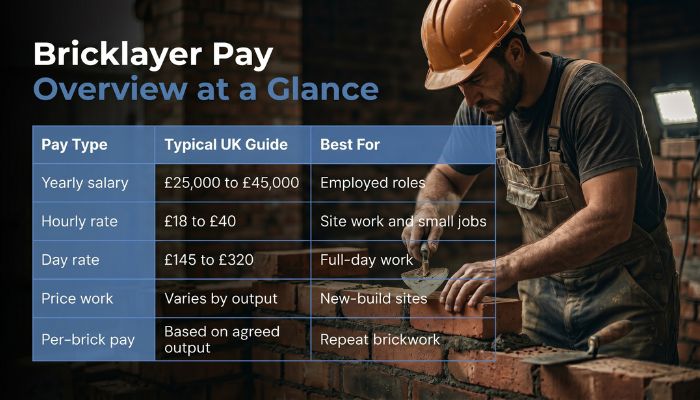
How Much Does Bricklayers Get Paid in the UK?
Most bricklayers earn around £25,000 to £45,000 per year in the UK. Beginners usually sit near £25,000. Skilled bricklayers move closer to £45,000 as they work faster and produce better quality work.
At the same time, apprentices earn less while they train on real sites. Their pay increases step by step as they gain real work experience.
On top of that, some bricklayers earn more through self-employment. Others choose price work or specialist jobs that pay per job instead of an hourly rate. This can increase total earnings. However, costs like tools, travel, tax and gaps between jobs can reduce take-home pay.
Also, Ltd company bricklayers may show higher total income on paper. Still, real income depends on steady work, location, job type, and skill level.
What Is the Average Wage for a Bricklayer UK?
The average wage for a bricklayer UK is fully influenced by experience, skill and work type. Pay goes up step by step as a bricklayer moves from training into full site work.
At the start, apprentices earn less because they are still learning on real jobs. As they gain experience, their pay increases. After that, newly qualified bricklayers earn more once they can work alone. Experienced bricklayers earn the most because they work faster and do better quality work. On top of that, self-employed bricklayers often earn more. However, they also pay for tools, travel, tax and time between jobs. So, take-home pay can be lower than total earnings.
Here is a simple breakdown:
- Apprentice: roughly £11,000+ per year
- Starter: about £25,000 per year
- Newly qualified: close to £31,000 per year
- Experienced: up to £45,000 per year
- Sole trader: near £56,000 gross per year
- Ltd company owner: approximately £59,000 gross per year
What Is the Hourly Rate for a Bricklayer?
The hourly rate for a bricklayer depends on experience, skill and the type of job. This pay method works well for small jobs and flexible work. It also suits jobs where the work can change during the day.
At the same time, hourly pay works well for short tasks and repair work. It also fits jobs that move from one task to another. Skilled bricklayers earn more per hour because they finish work faster and with better quality. However, hourly pay does not always show full yearly income. Weather, travel time, gaps between jobs and unpaid quotes can also reduce total earnings.
Here’s how bricklayer hourly rates look in simple form:
- Apprentice: £6.30 per hour
- Newly qualified: £18.19 per hour
- Employed bricklayer: £19.28 per hour
- Sole trader: £38 per hour
- Ltd company owner: £40 per hour
What Is the Day Rate for a Bricklayer?
The day rate for a bricklayer means a fixed price for one full day of work. This rate works well for bigger jobs like extensions, garden walls, repairs and general site work. It also keeps pricing clear for both the bricklayer and the customer.
Most of the time, newly qualified bricklayers usually earn around £145 per day. Self-employed bricklayers often charge around £304 to £320 per day. This rate depends on how skilled, how fast and what the job is. Also, in places like London and the South East, rates can be higher.
On top of that, small jobs often come with a minimum charge, even if the work takes only a few hours. Extra costs can also add up. Travel, parking, poor site access and waste removal can increase the final price.
Do Bricklayers Get Paid by the Brick?
Yes, some bricklayers get paid by the brick. This usually comes under bricklaying price work. Here, pay depends on how much work gets done, not just time on site. At the same time, many bricklayers still work on hourly pay or a day rate, depending on the job.
On top of that, per-brick pay works best for simple and repetitive work. It suits new-build sites, long straight walls and jobs with clear plans. When the work runs well, bricklayers can earn more in less time. However, it does not suit complex repairs or decorative brickwork. These jobs need more care and slow down the work.
To make it clear, hourly pay means you get paid for time worked. A day rate means you get paid for a full day. Price work means you get paid for finished work. Per-brick pay links earnings to the number of bricks or an agreed-upon amount of work.
How Much Do Bricklayers Get Per Brick?
It usually costs £0.65 to £5 per brick in the UK bricklaying market. In most real jobs, builders do not pay for every single brick. Instead, they use a price based on 1,000 bricks. This often ranges from £650 to £5,000 per 1,000 bricks, depending on the job type and finish. This system works better on-site. It also makes it easier to plan pay based on output.
Here is a simple breakdown by brick type:
- Common brickwork: £650–£1,500 per 1,000 bricks (roughly £0.65–£1.50 per brick)
- Engineering brickwork: £650–£1,790 per 1,000 bricks (close to £0.65–£1.79 per brick)
- Clay facing brickwork: £2,260–£5,000 per 1,000 bricks (about £2.26–£5.00 per brick)
There is no fixed rate. Common bricks are quicker to lay. Engineering bricks take more effort. Facing bricks need more care for a neat finish.
Per-brick pay can look high but it only works when the job runs well. Delays, bad access, weather, or unclear plans can reduce earnings quickly. At the same time, corners, openings, patterns and poor access slow the work. A clean and easy site helps bricklayers earn more from price work.
What Affects Bricklaying Wages and Best-Paying Work?
Here are the main things that affect bricklaying pay:
- Experience: More experience brings faster and cleaner work. This often leads to better pay.
- Location: London and the South East usually pay more. But living and travel costs are also higher.
- Job type: New-build sites, home jobs, commercial work, repair work and old building work all pay differently.
- Site conditions: Things like scaffolding, parking, site access, waste removal, weather, and delays affect how much work gets done. Hard sites slow work.
- Quality level: Facing bricks, decorative work and old building repairs need more skill. These jobs often pay more.
Top Paying Bricklaying Work Types
Some bricklaying jobs pay more because they need more skill, speed, or care. New-build housing gives steady work and regular pay. After that, commercial projects often pay more because they involve bigger sites and strict deadlines. Domestic extensions come next and offer steady local work with fair pay.
On the other hand, repair and repointing work pays based on how much fixing is needed. Heritage restoration pays more because workers handle old and delicate buildings. Decorative masonry often pays the most because it needs high skill and a very clean finish.
Overall, the more skills and care a job requires, the higher the pay usually is.
Employed vs Self-Employed: Which Pays Better?
Employed bricklayers get steady work and a fixed wage. They also get holiday pay and set working hours. This option feels safe and stable. It suits beginners who want to learn on-site. Pay comes in regularly, so money feels easy to plan.
On the other hand, self-employed bricklayers can earn more. They also choose their own jobs and have more freedom in how they work. However, this also brings more pressure and less job security. Income can change from week to week.
At the same time, self-employed work has extra costs. These include a van, fuel, tools, PPE, insurance, tax, accountant fees, training, marketing and software. All of these reduce take-home pay.
So, which pays better? The answer: self-employment can pay more when work stays steady and pricing is done well. Employed work gives safety and routine, while self-employed work offers higher earning potential with more responsibility.
How Bricklayers Can Earn More Through Training and Cards?
Training helps open better job options. This includes college courses, apprenticeships, and starting work as a labourer or hod carrier. Qualifications like Level 2 bricklaying, Level 3 craft bricklaying and a CSCS card can also help you get more site work. However, training alone does not increase pay. Real site experience still matters a lot.
At the same time, practical skills make a big difference. Working faster while keeping good quality helps increase earnings. Clean pointing, decorative work and heritage skills can also lead to higher-paying jobs. Strong project photos and good customer reviews also help bring in more work.
Here are simple ways bricklayers earn more:
- Set a clear minimum charge for every job
- Add travel time and access costs into pricing
- Avoid underpricing small jobs
- Build strong links with builders and developers
- Track monthly costs and income clearly
- Use deposits or staged payments for safety
Overall, More money does not always mean more work hours. Better pricing and fewer wasted days can increase profit much faster.
So, How Much Do Bricklayers Get Paid Finally?
There is no single answer to how much does bricklayers get paid in the UK. Two bricklayers doing the same job can still earn different amounts of money. So, what really changes the pay? Income is shaped by skill, speed, and trust on-site. As experience builds, most bricklayers move into steadier and better income.
At the same time, salary shows only part of the picture. Hourly rate, day rate and price work all affect total earnings. Self-employed bricklayers can earn more, but they also pay extra costs like tools, travel, tax and insurance. On top of that, income grows with smart choices. Training, good reviews, better pricing and specialist skills all help increase pay over time.
If you want to earn more as a bricklayer, start with proper training. Our Bricklaying Training Course builds the right foundation for new bricklayers. Then build real site experience, improve your finish and learn how to price your work with confidence.
Frequently Asked Questions (FAQs)
1. How much is a bricklayer paid in the UK?
- Bricklayers in the UK usually earn between £25,000 and £45,000 a year. Self-employed workers can earn more, but costs also reduce take-home pay.
2. Do bricklayers earn good money?
- Yes, many bricklayers earn good money. Income grows with skill, speed and steady work on site.
3. How much does a bricklayer get per 1000 bricks?
- Most work pays between £650 and £5,000 per 1,000 bricks. It depends on the brick type and job difficulty.
4. How much does a bricklayer earn per day in the UK?
- Day rates often range from about £145 to £320. Location and experience make a big difference.
5. What is the average hourly rate for a bricklayer?
- Hourly rates usually range from £18 to £40. Skilled and self-employed bricklayers earn higher rates.
6. Do bricklayers get paid by the brick or by the day?
- Both. Some jobs pay per day, others use price-work based on bricks or output.
7. What affects a bricklayer’s pay in the UK?
- Pay depends on skill, speed, experience, location and job type. Better skills often mean better pay.

Bricklaying Training Course
Course Description :
- Certificate: Yes(Free)
- Accreditation: CPD Accredited
- Access: Lifetime