No products in the basket.
How much do bricklayers get paid in the UK? Actually, that depends on skill, speed, experience, location and the type of work they take on. Starter bricklayers can earn around £25,000 per year. On the other hand, experienced bricklayers may earn around £45,000.
Still, bricklayer pay UK does not always come through a yearly salary. Some bricklayers earn through hourly rates, day rates, job quotes, or price work. That means earnings can change from one job to another.
In this guide, you’ll learn how much do bricklayers earn at different career stages. You’ll also see hourly estimates, day rates, self-employed income, business costs and easy ways to increase earnings over time.
UK Bricklayer Pay Breakdown
Here’s a simple look at the main details of bricklaying wages in the UK:
- Starter pay: around £25,000 per year
- Experienced pay: around £45,000 per year
- Apprentice pay: lower while training
- Self-employed pay: higher before business costs
- Pay methods: salary, hourly rate, day rate, job quote, or price work
- Main factors: experience, speed, location, site access and brickwork type
What Do Bricklayers Actually Do?
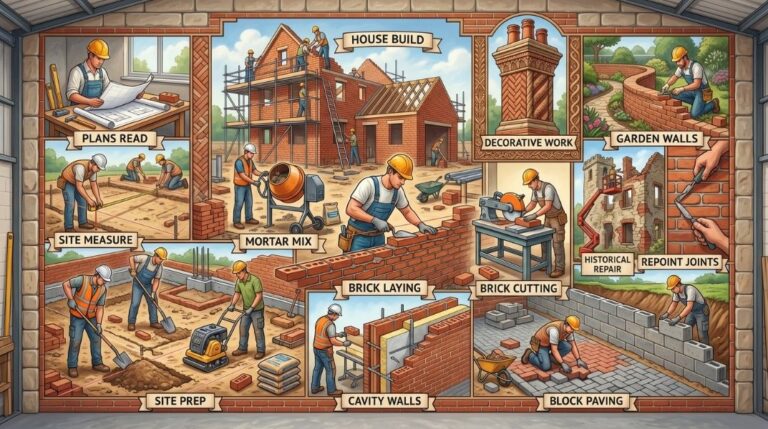
You need to know that some people also call them ‘brickies’ or ‘masons’. Here’s what they usually do:
- Build houses, walls, chimneys, extensions and garden walls
- Repair old brickwork and fix broken mortar
- Work on old buildings and decorative brickwork
- Read simple plans and follow building drawings
- Measure areas before starting work
- Mix mortar and lay bricks or blocks carefully
- Cut bricks to fit corners and small spaces
- Check levels to keep walls straight and safe
- Repoint joints to fill gaps and make walls strong again
- Work on block paving, cavity walls, retaining walls and site preparation
How Much Do Bricklayers Get Paid in the UK?
Starter bricklayer pay starts at around £25,000 per year. On the other hand, experienced bricklayers can earn up to £45,000 per year. This gives a clear and simple idea of basic earnings in this trade.
Still, average pay for bricklayer roles is not the same for everyone. It changes with skill, location, job type and work setup. Some bricklayers work as employees with fixed pay. Others work for themselves, and their income can go up or down.
What Is the Average Wage for a Bricklayer UK?
Bricklayers usually work around 40 to 44 hours each week. Most days run from 8 am to 6 pm, depending on the site and job.
So, yearly pay turns into hourly pay. A £25,000 salary works out at about £12.02 per hour on a 40-hour week. It also comes to about £10.93 per hour on a 44-hour week. At the higher end, a £45,000 salary becomes about £21.63 per hour on a 40-hour week. It drops to about £19.68 per hour on a 44-hour week.
These figures are only estimates. They come from simple maths using yearly pay and weekly hours. Still, the average wage for a bricklayer in the UK can change based on experience, job type, and location.
What Is the Day Rate for a Bricklayer?
The day rate for a bricklayer usually sits around £240–£320 for experienced work. Some experienced bricklayers also charge about £32.50–£37.50 per hour. This pay often covers jobs like garden walls, extensions, chimney repairs, repointing and small repair work.
At the same time, each bricklaying job can have different pay rates. Hard access, extra travel, scaffolding needs, waste removal, urgent work, or weekend jobs can push the price higher.
It is also important to know that the day rate for a bricklayer is not the same as the yearly salary. A day rate only shows what a bricklayer earns in one day of work.
How Much Do Bricklayers Earn by Career Stage?
Bricklayer pay grows step by step as skills improve. Apprentices usually start around £11,063 while they learn on-site. Some apprenticeship listings also show about £16,640, depending on the employer and training setup. At this stage, workers focus on basic skills and real-site experience. After that, starter bricklayers earn around £25,000 per year. As they improve, newly qualified bricklayers can earn about £31,942. They begin to take more responsibility and need less help on-site.
Then, employed bricklayers often earn around £40,102. This gives steady work and regular income. After more experience, bricklayers can reach around £45,000 per year. At a higher level, sole trader bricklayers may earn about £56,052 before costs. On the other hand, Ltd company owners can go up to around £59,002, depending on projects and workload.
So, each step in the trade brings better pay and more responsibility. With time, simple training work can turn into skilled jobs and higher earning opportunities across the UK.
Do Bricklayers Get Paid by the Brick?
The simple answer is no. Most bricklayers do not get paid for every single brick they lay. However, some jobs use price work. In this system, pay depends on the total work done. It does not count one brick at a time. Most of the time, bricklayers earn per 1,000 bricks or through a full job price.
So, how much do bricklayers get per brick? This is not a common way to pay on-site. People often say “per brick pay” just to explain the price of work in a simple way. In real work, builders and contractors look at the full job cost, not each brick.
Here are the average cost ranges for 1,000 bricks in different brick types:
- Common bricks: £650–£1,500 per 1,000 bricks
- Engineering bricks: £650–£1,790 per 1,000 bricks
- Clay facing bricks: £2,260–£5,000 per 1,000 bricks
How Much Do Self-Employed Bricklayers Take Home?
Gross income is not the same as take-home pay. This is very important for sole traders and Ltd company owners. What you earn before costs is not what you keep at the end.
A sole trader bricklayer may earn around £56,052 per year. However, the take-home pay is about £37,589. A Ltd company owner may earn around £59,002. The take-home pay is about £38,830. At first, these figures look high. Still, real income goes down after tax, business costs and unpaid time. Travel time, slow weeks and gaps between jobs can also reduce earnings.
So, wages for bricklayers in self-employed work depend on pricing and steady work. As a result, bricklayer pay UK can look strong on paper, but feel lower in real life.
What Costs Do Bricklayers Need to Cover?
Self-employed bricklayers do not keep all the money they earn. They first pay for tools, transport, and basic business cover. These costs come before profit, so they matter a lot in real life.
- Public liability insurance: around £100–£120 per year
- Brick mixer: around £579
- Basic tool kit: a few hundred pounds
- Mid-range setup: can reach the low thousands
- High-end setup: can cost several thousand pounds
On top of that, daily work needs extra items. Bricklayers use bricks and mortar, brick bolsters and chisels, spirit levels, trowels, wall ties, wheelbarrows, and PPE. They also spend on a van or transport, fuel, training, marketing and admin or accounting work.
As a result, these costs reduce the final money they take home. That is why bricklayer pay UK as a self-employed worker depends on both income and expenses.
Where Do Bricklayers Earn the Most in the UK?
Bricklaying wages UK vary across regions. London leads with an average of about £38,245 per year and a range of £30,975–£47,222. Birmingham sits lower at around £32,161, with £26,956–£38,371. Manchester and the North can reach £40,000–£46,000. Scotland stays around £38,000–£44,000. Wales and Northern Ireland sit close to £35,000–£42,000. Across the UK, the average sits near £40,150 per year.
At first, London seems like the best-paying option. Still, higher living costs often take away part of that advantage. Travel, parking and congestion can also make day-to-day work harder.
On the other hand, cities like Birmingham and Manchester offer steady construction work. Scotland also shows strong demand in many areas, which helps keep work consistent.
So, the best location is not just about the highest number. It is about steady jobs, fair pay, and lower daily costs.
Which Bricklaying Work Pays Best?
Here’s a quick look at the types of bricklaying work that often pay more:
- New-Build Housing work- New-build sites often pay well. The layout stays simple and tasks repeat. This helps bricklayers work faster and stay consistent.
- Commercial projects- These jobs can pay more. Deadlines stay tight and quality checks stay strict. Large sites also need skilled and experienced workers.
- Heritage and Restoration jobs- This work often pays higher. It needs careful work, old building methods and skills like lime mortar work.
- Decorative Masonry work- Arches, patterns and feature walls take more time and skill. That extra detail can lead to better pay.
- Urgent repair work- Emergency jobs like chimney or wall repairs often pay more. These jobs need quick response and fast, accurate work.
What Can Reduce a Bricklayer’s Real Earnings?
Bricklayer pay can go down for many simple reasons. Bad weather can stop outdoor work and waste working time. Poor site access can also slow progress and reduce daily output. At the same time, waiting for materials can take away working hours. Long travel time also cuts into real work time. Tool repairs or van problems can delay jobs and reduce daily income.
On top of that, late payments from clients can affect cash flow. Underpricing small jobs also reduces profit from the start. Rework from poor planning wastes both time and effort, even if the price work can pay less when delays or setup issues slow the job.
So, bricklaying wages UK depend not only on skill. They also depend on smooth work, good planning and steady job flow.
How Can Bricklayers Increase Their Pay?
Bricklayers can increase their pay by building strong skills and working in a smart way. Getting an NVQ Level 2 or Level 3 helps show real skill. Keeping a valid CSCS card also helps you stay ready for site work.
After that, learning heritage masonry and lime mortar work can open better-paying jobs. Speed matters, but quality must stay high every time. A good balance brings better work and better income. At the same time, reputation matters a lot. A strong local name brings more job offers. Client reviews and photos of past work online help build trust and bring new customers.
On the business side, setting a minimum charge helps protect time on small jobs. Adding travel and waste costs to quotes also helps avoid loss. Using deposits and staged payments keeps money flow steady. Finally, good links with builders and contractors bring regular work. Extra services like repointing, steps, lintels, garden walls and emergency call-outs can also increase income over time.
How Do Bricklayer Pay Rates Change by Job Type?
Clear breakdown of earnings by work category:
| Situation | Likely Pay Style | Key Point |
| Apprentice | Training wage | Lower pay while learning |
| Employed bricklayer | Salary | Stable income |
| Experienced bricklayer | Salary or day rate | Higher pay with skill |
| Self-employed bricklayer | Day rate or quote | Higher gross, higher costs |
| Ltd owner | Project profit | Higher risk, higher reward |
| Price work | Per 1,000 bricks or job rate | Best on fast, clean sites |
So as skills grow, pay also grows step by step. It starts with training work. Then it moves into skilled site jobs. After that, many move into self-employed work where earning can increase more.
Final Thoughts
So, how much do bricklayers get paid? It totally depends on experience, location, job type and work setup. No two bricklayers earn the same. Some follow steady salary work. Others move into self-employed work where earnings can go higher but costs also rise.
On top of that, bricklayer pay UK also changes with how the work is done. Some earn through salary. Some earn through day rates, job quotes, or price work. Each option gives a different balance of risk and reward.
In the end, how much do bricklayers earn comes down to skill, speed, smart pricing and steady work. Those who plan well and stay busy usually earn more over time.
FAQs
Do bricklayers earn good money?
Yes, many bricklayers earn good money in the UK. Pay grows with skill, speed and experience. Self-employed bricklayers often earn more, but they also cover their own costs.
How much should I pay a bricklayer per day?
Day rates usually depend on location and job type. Simple jobs cost less. Hard access, urgent work, or skilled jobs cost more.
How much do bricklayers get paid in the UK?
Most bricklayers earn around £25,000 as starters. Experienced bricklayers can reach about £45,000. Self-employed workers may earn more before costs.
Can bricklayers make 100k?
Yes, but it is not common. It usually happens for top self-employed bricklayers with strong skills, steady work and full-time busy schedules.
What jobs pay 500 pounds an hour?
Very few normal jobs pay this. It usually applies to top-level specialists, legal experts, or high-level consultants, not general construction work.
How long does it take to lay 500 bricks?
A trained bricklayer can place about 400 to 600 bricks in a day when conditions are good. Time depends on access, weather and brick type.
What are the three rules of bricklaying?
Accuracy, strength, and neat finish. Brickwork must be level, strong and clean to last long and look good.

Bricklaying Training Course
Course Description :
- Certificate: Yes(Free)
- Accreditation: CPD Accredited
- Access: Lifetime