No products in the basket.
Choosing the right fire extinguisher can help control a fire and keep people safe. However, different fires need different types of extinguishers. The different types of fire extinguishers are water, foam, dry powder, CO₂, wet chemical, water mist and specialist Class D extinguishers. Each type works best on certain fires.
Some tackle burning wood and paper while others suit electrical equipment or cooking oil fires. Fire classes and coloured labels help you identify the right extinguisher. Always check the manufacturer’s instructions before use. For workplaces, a fire risk assessment helps you choose suitable extinguishers for the risks present.
This guide covers extinguisher types, their uses and how to choose the right one.
What are the Different Types of Fire Extinguishers?
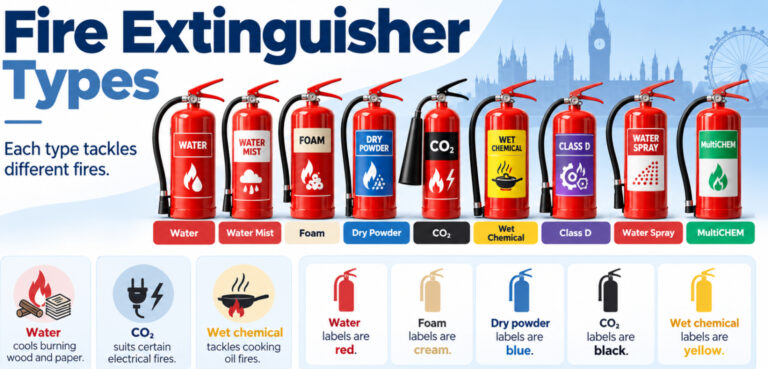
The UK has several types of fire extinguishers. These include water, water mist, foam, dry powder, CO₂ and wet chemicals. Class D extinguishers tackle metal fires. Water spray and MultiCHEM types are also available. Each type tackles different fires. Water cools burning wood and paper. CO₂ suits certain electrical fires, while wet chemical tackles cooking oil fires.
Each extinguisher has a label colour. Water labels are red, foam labels are cream and dry powder labels are blue. CO₂ labels are black, while wet chemical labels are yellow. However, colour alone cannot tell you which fire extinguisher suits you. Always check the label and follow the maker’s instructions before use.
What are the Different Classes of Fire?
Fires can start from different materials, such as wood, petrol or cooking oil. In the UK, fire classes help you identify the type of fire. Each class covers a different fuel, including gases and metals. Electrical fires have a separate category. These fire classes help you choose the right extinguisher.
| Fire class | Fuel | Example |
| Class A | Solid materials | Wood and paper |
| Class B | Flammable liquids | Petrol and paint |
| Class C | Flammable gases | Propane and butane |
| Class D | Combustible metals | Magnesium |
| Electrical | Powered equipment | Electrical appliances |
| Class F | Cooking oils and fats | Fryer oil |
What is a Water Fire Extinguisher Used For?
A water fire extinguisher puts out Class A fires. These fires involve things like wood, paper, cardboard and cloth. Water cools these items and helps stop the fire. You may find water extinguishers in schools, offices, warehouses and other workplaces. They have red labels and often cost less than other fire extinguishers.
However, water extinguishers are not safe for every fire. Cold weather can freeze the water inside some models. Never use an ordinary water extinguisher on live electrical equipment, burning oil or petrol fires. Water can make these fires worse. Always check the label before use to make sure the extinguisher is right for the fire.
What is the Difference Between Water Mist and Water Spray Extinguishers?
Water spray extinguishers spread water over a wide area. They cool burning materials and help put out Class A fires. Water mist extinguishers spray tiny drops of water. These drops take in heat and help cool the fire. Both use water but they spray it in different ways.
Water mist extinguishers may suit schools, factories and commercial kitchens. Some models can put out fires beyond Class A. Certain models may also be safe for electrical fires if they have the right approval. However, not all water-based extinguishers are safe for electrical fires. Always check the label before use.
What is a Foam Fire Extinguisher Used For?
Foam fire extinguishers can put out Class A and Class B fires. These include fires involving wood, paper, petrol and paint. The water cools the fire, while the foam covers the burning liquid. This foam layer helps stop the fire from starting again. Foam extinguishers have a cream label.
You may find them in offices, schools and workplaces that use flammable liquids. However, ordinary foam extinguishers are not safe for live electrical equipment or burning metals. Some foam products may also harm the environment. Cold weather can affect some models. Always check the label and follow the maker’s instructions before use.
What is a Dry Powder Fire Extinguisher Used for?
A dry powder fire extinguisher puts out fires involving wood, petrol and gases like propane. Most models have a blue label and work on Class A, B and C fires. You may find them in garages and workshops. However, the powder can make it hard to see and breathe indoors. It can also damage equipment and leave a mess.
- Class A fires: Wood, paper and other solid materials.
- Class B fires: Petrol, paint and other flammable liquids.
- Class C fires: Flammable gases, such as propane and butane.
- Indoor risks: Powder can affect breathing and reduce visibility.
- Important warning: Standard dry powder extinguishers are not suitable for burning metals.
What is a CO₂ Fire Extinguisher Used For?
A CO₂ fire extinguisher uses carbon dioxide gas to put out fires. It works on electrical fires and some fires involving liquids, such as petrol and paint. The gas helps stop the flames by pushing away oxygen. You can spot a CO₂ extinguisher by its black label.
You may find these extinguishers in offices and rooms with computers. They leave no powder or foam behind, so cleaning is easy. However, CO₂ can make breathing difficult in small rooms. The horn also gets very cold during use. Leave the area if the fire grows or becomes unsafe.
What is a Wet Chemical Fire Extinguisher Used for?
A wet chemical fire extinguisher mainly puts out Class F fires. These fires involve hot cooking oil and fat, often in deep-fat fryers. The liquid cools the oil and forms a layer over it. This layer helps stop the fire from starting again. You can spot these extinguishers by their yellow labels.
You may find them in restaurant kitchens, canteens and fish and chip shops. Some models can also put out Class A fires. However, never use one without checking the label. Water can spread burning oil and make the fire worse. Always check that the extinguisher is right for the fire.
What is a Class D Fire Extinguisher Used for?
A Class D fire extinguisher puts out fires caused by burning metals. These metals include magnesium and titanium. Water and standard ABC powder may not be safe for these fires. Special powder covers the burning metal and helps stop the flames. Different metals need different types of powder.
For example, L2 powder tackles lithium fires, while M28 powder tackles some other metal fires. These extinguishers are common in workplaces that handle metals. They may also cost more than standard extinguishers. Always ask a fire safety expert to help you choose the right type.
What Do Fire Extinguisher Colours Mean?
In the UK, most fire extinguishers have a red body and a coloured label. The label tells you what type of extinguisher it is. Each type has a different label colour. However, colour alone cannot tell you which fire it can put out. Always read the label before use. The right extinguisher can help stop a fire but the wrong one can make it worse.
- Red: Water and water mist extinguishers.
- Cream: Foam and MultiCHEM extinguishers.
- Blue: Dry powder extinguishers.
- Black: CO₂ extinguishers.
- Yellow: Wet chemical extinguishers.
- Class D powder: Check the model label for details.
What is a MultiCHEM Fire Extinguisher?
MultiCHEM is a special fire extinguisher that can tackle different types of fires. CheckFire lists its model with an ABF rating. This means it can tackle Class A, B and F fires. These include fires involving solid materials, flammable liquids and cooking oil. CheckFire also lists a six-litre model with a 34A fire rating.
The company claims it can tackle large liquid fires and deep-fat fryer fires. However, this rating comes from CheckFire’s information. MultiCHEM is a product name, not a general term for all extinguishers. Always check the label and approved uses before choosing one.
How Do You Choose the Right Fire Extinguisher?
Choosing the right fire extinguisher starts with checking what could catch fire in your building. This could include wood, paper, petrol, gas or cooking oil. Water extinguishers tackle some fires involving solid items. CO₂ extinguishers suit some electrical fires. Wet chemical extinguishers tackle fires caused by hot cooking oil.
Your building and the size of each room help you decide which extinguishers you need. In England, businesses must assess fire risks and provide suitable safety equipment. A fire safety expert can help if needed. No single extinguisher works on every fire. Always read the label before using one.
Where Should Fire Extinguishers Be Placed and Maintained?
Fire extinguishers should be easy to find and reach. Place them near exits and escape routes. Keep them clear of boxes and other items. People should never have to go near a fire to get an extinguisher. A fire safety check helps decide how many extinguishers a building needs and where to put them.
UK guidance suggests one water-based extinguisher for every 200 m² in some offices and shops. It also suggests at least two per floor. However, each building has different needs. Check extinguishers often, arrange regular servicing and teach staff how to use them safely.
Final Thoughts
The different types of fire extinguishers help tackle different fires. Check the fire type and extinguisher label before use. Businesses should choose extinguishers after a fire risk check. If a fire becomes dangerous, raise the alarm and leave at once. Want to improve your fire safety skills? Enrol in our Level 2 Fire Safety Course and help keep people safe at home and work.
FAQs about Different Types of Fire Extinguishers
1. What are the 5 types of fire extinguishers used for?
- The five common types are water, foam, dry powder, CO₂ and wet chemical extinguishers. Each type tackles different fires, such as burning wood, flammable liquids, electrical equipment or cooking oil.
2. What are the 7 types of extinguishers?
- The seven types include water, water mist, water spray, foam, dry powder, CO₂ and wet chemical extinguishers. Specialist Class D extinguishers are also available for fires involving combustible metals.
3. What are the four main types of fire extinguishers?
- The four main types often include water, foam, dry powder and CO₂ extinguishers. Each type suits different fire risks, so always check the label before use.
4. What are class A, class B, class C and class D fires?
- Class A fires involve solid materials, such as wood, paper and fabric. Class B fires involve flammable liquids, Class C fires involve flammable gases and Class D fires involve combustible metals.
5. Is a CO₂ extinguisher class A?
- A CO₂ extinguisher cannot put out Class A fires involving wood, paper or fabric. It is mainly used for electrical equipment fires and some flammable liquid fires.
6. What is a class D fire extinguisher used for?
- A Class D extinguisher puts out fires caused by metals such as magnesium, sodium and lithium. It uses a specialist extinguishing powder designed for the metal involved.

Level 2 Fire Safety Course
Course Description :
- Certificate: Yes(Free)
- Accreditation: CPD Accredited
- Access: Lifetime