
No products in the basket.
Asbestos was once widely used in buildings, homes and many everyday products. However, people can develop serious health problems after breathing in its fibres. There are 3 main types of asbestos:
- Chrysotile
- Amosite and
- Crocidolite
Each type has different features, colours and common uses. Chrysotile is known as white asbestos and was the most widely used type. Amosite is called brown asbestos and often appeared in building materials and insulation. Crocidolite, or blue asbestos, has thin fibres and is known for its high health risks. These types belong to two mineral groups: serpentine and amphibole. So, understanding their differences can help you learn where asbestos may be found. It is also important to remember that you cannot confirm asbestos by colour alone. Always seek expert advice if you suspect it in a building.
What Are the 3 Main Types of Asbestos?
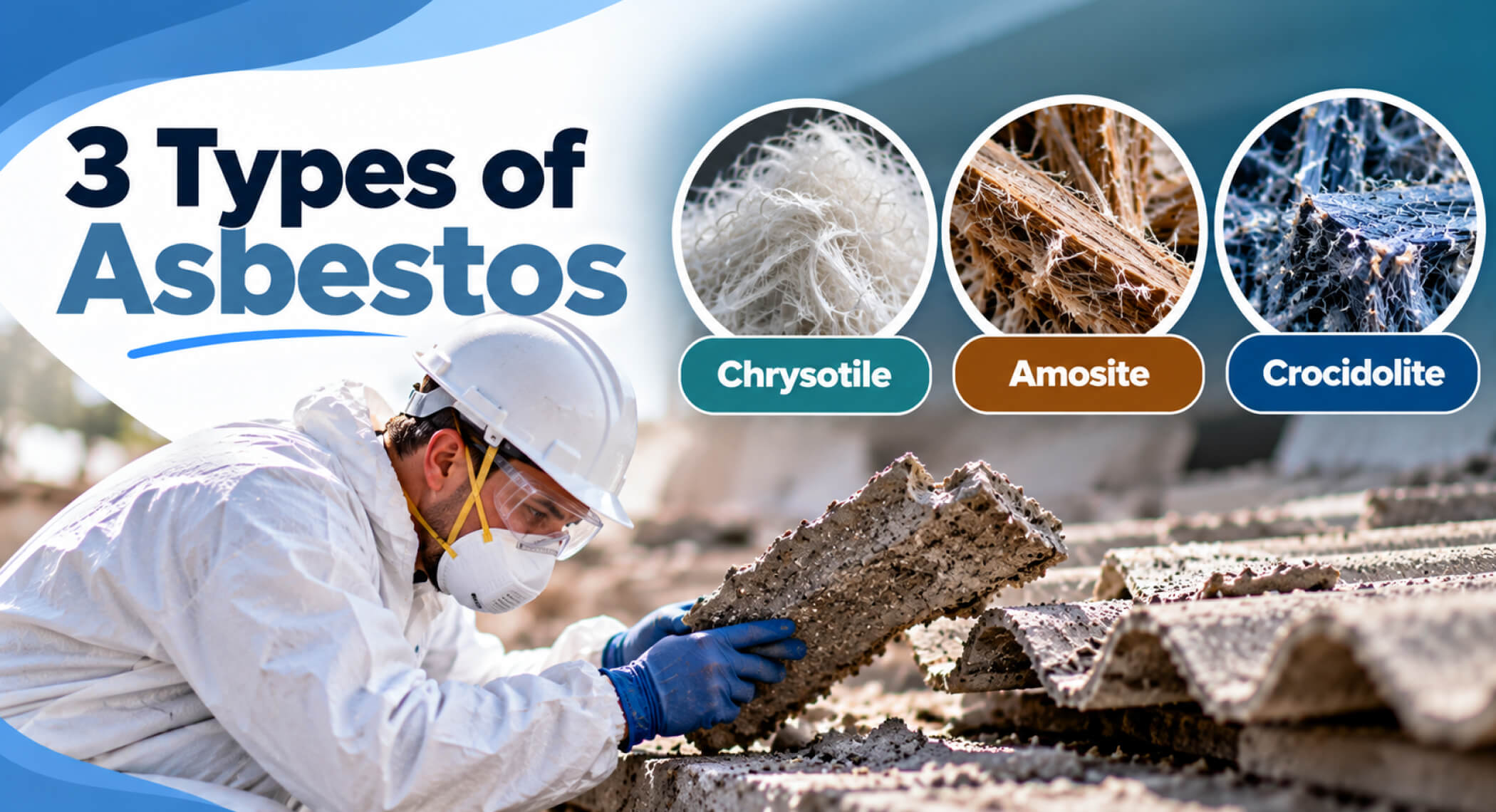
Asbestos comes from natural minerals that people once used in buildings and everyday items. These minerals resist heat, fire and chemicals. However, breathing in asbestos fibres can cause serious health problems. The 3 main types of asbestos are chrysotile, amosite and crocidolite. Each type has different features, colours and common uses.
Chrysotile, also known as white asbestos, has curly, flexible fibres. It was the most widely used type and appeared in products such as roof sheets, floor tiles and pipe insulation. Amosite, or brown asbestos, has straight, needle-like fibres. Builders often used it in insulation boards, cement sheets and ceiling tiles. Crocidolite, known as blue asbestos, has thin, brittle fibres. People used it in some insulation products and steam engine pipes.
What Is Chrysotile Asbestos (White Asbestos)?
Chrysotile is also called white asbestos. It is the most common type of asbestos. It belongs to the serpentine mineral group and has curly, flexible fibres. In the past, people used it in many building materials and everyday products because it can resist heat. However, breathing in its tiny fibres can cause serious health problems.
What Colour Is Chrysotile Asbestos?
Chrysotile usually looks white or pale grey. Its fibres are curly and flexible. However, other materials can change its appearance. So, you cannot identify chrysotile by colour alone. If you think a material contains asbestos, do not touch or break it.
Where Was Chrysotile Asbestos Commonly Used?
People used chrysotile in many products because it adds strength and handles heat well. Common uses included:
- Roof sheets and cement products: It helped make roofing sheets and cement boards strong.
- Floor tiles and adhesives: Some older floor tiles and the glue beneath them contained chrysotile.
- Insulation materials: Manufacturers used it in some pipe insulation and other heat-resistant products.
- Brake linings and vehicle parts: Some older brake pads, linings and gaskets contained chrysotile because it could handle high temperatures.
However, not every old building material contains asbestos. A trained professional can help identify materials that may contain it.
What Is Amosite Asbestos (Brown Asbestos)?
Amosite is also called brown asbestos. It belongs to the amphibole mineral group. Unlike chrysotile, it has straight, thin fibres. In the past, builders used amosite in many buildings because it can resist heat. However, breathing in its tiny fibres can cause serious health problems.
What Colour Is Amosite Asbestos?
Amosite usually looks brown or grey-brown. Its fibres are long, thin and straight. However, other materials can change its appearance. So, you cannot identify amosite by colour alone. If you suspect asbestos in your home, do not touch or break the material.
Where Was Amosite Asbestos Commonly Used?
Builders used amosite in many products because it can handle high temperatures. Common uses included:
- Thermal insulation boards: These boards helped control heat in buildings.
- Pipe and boiler insulation: Amosite helped protect pipes and boilers from high temperatures.
- Ceiling tiles: Some older ceiling tiles contained amosite for insulation.
- Building boards: Manufacturers added amosite to some insulation boards and other building products.
However, not every old ceiling tile or building board contains asbestos. A trained professional can help check the material.
What Is Crocidolite Asbestos (Blue Asbestos)?
Crocidolite is also called blue asbestos. It is one of the most dangerous types of asbestos. It has thin, straight fibres. In the past, people used it in buildings because it can stand up to heat and chemicals. However, its tiny fibres can harm people when they breathe them in.
What Colour Is Crocidolite Asbestos?
Crocidolite is usually blue or blue-grey. Its fibres are thin and straight. They can also break easily. However, you cannot tell if a material contains asbestos just by looking at it. If you think something contains asbestos, do not touch or break it.
Where Was Crocidolite Asbestos Commonly Used?
In the past, people used crocidolite in several products. These included:
- Spray-on insulation: It helped protect buildings from heat.
- Pipe and boiler insulation: It helped keep heat inside pipes and boilers.
- Cement products: Some old cement sheets and pipes contained crocidolite.
- Special insulation: Some factories used it to protect equipment from heat.
However, not all old building materials contain asbestos. A trained expert can check the material safely.
What Health Risks Can Amosite, Chrysotile and Crocidolite Asbestos Cause?
All three types of asbestos can cause serious health problems. These include amosite (brown asbestos), chrysotile (white asbestos) and crocidolite (blue asbestos). Their tiny fibres can enter the lungs when people breathe them in. The fibres can stay in the body for many years and cause damage. Health problems may take a long time to appear.
All three types can cause the following diseases:
- Asbestosis: This disease causes scars in the lungs. It can make breathing difficult.
- Lung cancer: Asbestos fibres can damage lung cells and cause cancer.
- Mesothelioma: This rare cancer affects the thin lining around the lungs or other organs.
However, crocidolite is especially dangerous because its thin fibres can enter the lungs easily. Amosite and chrysotile can also cause serious harm. No type of asbestos is safe to breathe in. To stay safe, never cut, drill or break materials that may contain asbestos. Instead, contact a trained asbestos professional for advice.
What Is the Difference Between the 3 Main Types of Asbestos?
The three main types of asbestos look different. People also used them to make different products. The table below shows how they differ.
| Type | Common name | What it looks like | Common uses |
| Chrysotile | White asbestos | White, curly fibres | Cement, floor tiles and car parts |
| Amosite | Brown asbestos | Brown, straight fibres | Insulation boards and heat protection |
| Crocidolite | Blue asbestos | Blue-grey, straight fibres | Spray-on insulation and some cement products |
However, you cannot tell the type of asbestos by its colour alone. Some materials may look the same but contain different types of asbestos. So, never try to identify asbestos by looking at it. If you think a material contains asbestos, do not touch, cut or break it. Instead, ask a trained asbestos expert to check it safely.
Which Type of Asbestos Is the Most Dangerous?
All three types of asbestos can cause serious health problems. These include lung cancer, mesothelioma and asbestosis. However, crocidolite, also called blue asbestos, is often seen as the most dangerous type. Its tiny fibres can enter the lungs when people breathe them in. Amosite (brown asbestos) and chrysotile (white asbestos) can also cause serious harm.
The risk depends on how much asbestos dust you breathe in. It also depends on how long you breathe it in. Damaged asbestos materials can release tiny fibres into the air. These fibres can harm your health without you knowing. Remember, no type of asbestos is safe to breathe in. If you think a material contains asbestos, do not touch, cut or break it. Instead, ask a trained asbestos expert for help.
Where Can You Find These 3 Types of Asbestos?
Asbestos may still exist in some old buildings. In the past, builders used it in many products because it could resist heat and fire. However, not every old building contains asbestos.
You may find asbestos in these places:
- Roofs and walls: Some old roofs, walls and cement sheets contain asbestos.
- Ceilings and boards: Some old ceiling tiles and insulation boards contain asbestos.
- Pipes and boilers: Older heating systems may have asbestos around pipes and boilers.
- Floors: Some old floor tiles and the glue beneath them may contain asbestos.
- Garages and sheds: Some older buildings have roofs made from asbestos cement.
However, the presence of asbestos depends on the building’s age, location and materials. You cannot tell if something contains asbestos by looking at it. If you suspect asbestos, do not touch or break the material. Keep children away from it, too. Instead, ask a trained asbestos expert to check it safely.
How Can You Identify the 3 Main Types of Asbestos?
You cannot tell the type of asbestos just by looking at it. Its colour does not always tell you what it contains. Some materials may look the same but contain different types of asbestos. If you think a material contains asbestos, ask a trained expert to check it. The expert can look at the material and decide if it needs a test. Sometimes, a lab test can confirm if the material contains asbestos. Never take a sample yourself, as this can release harmful fibres into the air.
To stay safe, do not cut, drill, break or remove materials that may contain asbestos. These actions can release tiny fibres that can harm your health. So, it is always best to ask an expert for help.
What Should You Do If You Find Asbestos in Your Home?
Finding something that may contain asbestos can feel worrying. However, you can take simple steps to keep yourself and your family safe. First, do not touch or disturb the material. Avoid cutting, drilling or breaking it, as this can release harmful fibres. If the material looks damaged or dusty, keep children and other people away from the area. Then, contact a trained asbestos expert for advice. The expert can check the material and decide if it needs testing or removal.
Always follow local safety rules and the expert’s advice. Remember, asbestos in good condition may pose less risk if you leave it alone. However, damaged materials need extra care. So, do not try to remove them yourself. Ask an expert to help you choose the safest next step.
Final Words
A little knowledge about asbestos can help you make safer choices and protect your health. The 3 main types of asbestos are chrysotile, amosite and crocidolite. Although they look different, all three can cause serious health problems. You may find asbestos in older roofs, walls, floors and insulation. However, you cannot identify it by colour alone. If you suspect asbestos, do not touch or damage it. Instead, seek help from a trained expert. You can also take “Asbestos Awareness Training” to learn about asbestos risks and how to stay safe at home or work.
FAQs About 3 Main Types of Asbestos
1. What is the most common asbestos in the UK?
- Chrysotile, also called white asbestos, was the most common type used in the UK. It was often found in cement, floor tiles and other building materials.
2. What is level 3 asbestos?
- Level 3 asbestos usually refers to training for higher-risk asbestos removal work. In the UK, the training you need depends on the type of work you do.
3. What are the three most common asbestos diseases?
- The three main diseases linked to asbestos are asbestosis, lung cancer and mesothelioma. These illnesses can take many years to develop.
4. What is the most commonly found type of asbestos?
- Chrysotile, or white asbestos, was widely used in older buildings. However, you cannot confirm the type by looking at it. A professional may need to test a sample.
5. Will 30 minutes of asbestos exposure hurt you?
- One 30-minute exposure does not mean you will become ill. However, asbestos fibres can harm your health. The risk depends on how many fibres you breathe in and how often you are exposed.

Asbestos Awareness Training
Course Description :
- Certificate: Yes(Free)
- Accreditation: CPD Accredited
- Access: Lifetime