
No products in the basket.
A PAT tester examines electrical appliances to ensure everyone stays protected at work and school. Understanding what is PAT testing is significant because it identifies faults and risks before dangerous accidents occur. This essential process prevents shocks, fires, and equipment breakdowns. Every year in the UK, around 1,000 workers suffer electrical accidents like shocks or burns, and sadly, about 30 of these incidents lead to death. Therefore, learning this skill is both rewarding and meaningful for those who enjoy practical work and want to save lives.
First, adults must complete the right training and earn a certified qualification to do this work. These classes teach people how to perform visual checks, use testing tools, and follow safety laws.
Let us dive in to see how these professional skills and the right training help people test electrical appliances safely.
How Does PAT Testing Work and What Is It?
Portable Appliance Testing is a simple way to check if an electrical item is safe for people to use. You can think of it as a doctor’s check-up or a health exam for anything that has a plug. If a tool or a toy uses electricity, it probably needs a test to ensure it is not broken. ‘Portable’ means you can move the item easily, such as a lamp, a toaster, or a charger.
The test ensures that the electricity stays inside the wires where it belongs. First, a person looks at the plug for any cracks or loose parts. After that, they use a special machine to check the hidden parts that our eyes cannot see. This keeps our classrooms and houses safe and prevents scary electrical fires from starting.
- Visual Check: Looking for broken plastic or burnt bits on the plug.
- Insulation Test: Checking the plastic coat that hides the powerful electricity.
- Earth Test: Making sure the safety wire is working inside the machine.
- The Result: Getting a special sticker to show the gadget is healthy.
Is Every Plug-In Toy or Tool Part of What Is PAT Testing?
Many things you use every day need regular checks to keep people safe. Since almost everything in a modern classroom uses power, the list of items can be quite long. However, not every single object is part of this safety mission. Only things that move and have a plug are usually included in the check.
- Laptops and Tablets: Your school computer needs a regular check to keep your homework safe.
- The School Toaster: Even the staff room snacks need safe heat to cook without starting a fire.
- Kettles and Lamps: Anything with a wire that moves or gets hot needs a regular check.
- Hair Dryers: These use a lot of power very quickly and must stay in top shape.
- Vacuum Cleaners: Because these move across the floor, their wires can get tired and worn out.
All the items listed above are perfect examples of what a tester looks at during their rounds. Many things around you need a safety check to keep your space secure.
Who Is the Mystery Person That Does the Testing?
The person who does this job is called a ‘PAT tester’. They are like technical experts who know exactly where to look for hidden electrical dangers. Usually, these people have to take special classes to learn all the rules of science and safety. Sites like Training Tale help these grown-ups understand how electricity behaves so they can protect everyone. Therefore, they learn how to identify tiny problems, like a loose screw or a weak wire, before they become big accidents.
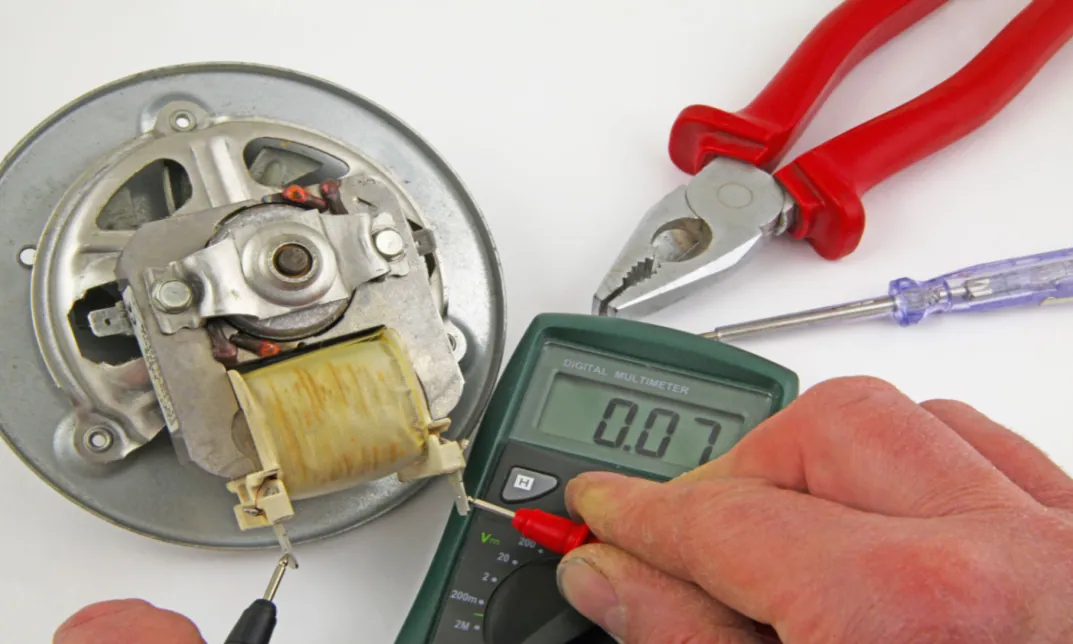
Furthermore, these experts carry a special bag of tools everywhere they go to do their work. Their main tool is a PAT testing machine that can actually talk to the wires inside a plug. It sends a tiny, safe bit of power through the item to see if it is healthy. Consequently, if the machine stays happy and gives a pass, then the gadget is safe for you to use in class.
Why Do We Bother With Checking Our Wires Anyway?
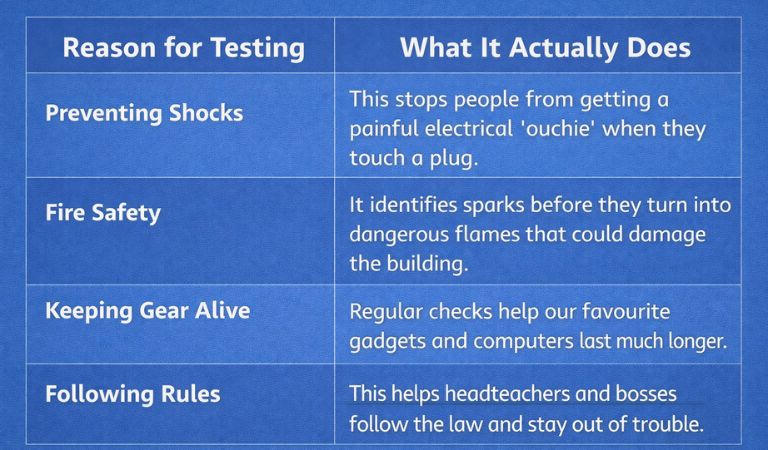
Safety is the main reason why we take the time to inspect every single wire in a building. Even though electricity is very helpful, it can also be quite dangerous if it escapes from its plastic casing. By checking our wires regularly, we make sure that every student and teacher stays out of harm’s way. Furthermore, conducting these checks helps in many different ways across the school or office. Consequently, a small check today prevents a big crisis tomorrow because it is much better to find a loose wire now than to deal with a broken computer later.
What Are the Three Secret Steps of a PAT Test?
There is a specific order to how these tests happen to ensure nothing is missed. It is almost like a secret mission where the tester must be very careful. First, they use their eyes to look for cracks or burns on the outside of the plug. After that, they use a special robot box to check the hidden parts that the eyes cannot see. Finally, they use a sticker to tell everyone if the item is safe.
Consequently, following these steps ensures every gadget is handled correctly:
- The Visual Check: This is the most important part because most faults are found just by looking closely at the wires and plugs.
- The Electronic Test: The tester plugs the item into a machine to check if the electricity is flowing safely inside.
- The Sticker Stage: This is the final step where the famous green or red label is placed on the device to show the result.
How Often Should a School Check Its Gadgets?
Not every item needs a test every single month because some things are naturally more dangerous than others. For example, a gym treadmill or a classroom vacuum cleaner moves around a lot, which means their wires can get tired quickly. On the other hand, a computer that sits still under a desk is much safer and does not need checking as often. Therefore, the school creates a special plan based on how much an item is used and where it stays. This ensures that the most active gadgets get the most attention to keep everyone safe.
Furthermore, the environment makes a big difference in the testing schedule. Handheld tools that are moved all the time usually need a check every year because they are handled frequently. In contrast, stationary equipment like refrigerators stays in one place and remains very safe for longer periods. Consequently, office computers might only need a test every few years, while school kitchen gear is checked much more often due to the busy and wet environment. Each gadget has its own specific rule to follow.
Is PAT Testing a Legal Rule in the UK?
The UK has a very important rule book called the Electricity at Work Regulations. This set of rules says that all bosses and building managers must keep their workers and students safe from harm. Because of this, schools and offices take these safety measures very seriously to ensure nobody gets hurt. While the law does not strictly say you must use a specific sticker, it does say you must prove that your equipment is safe. Consequently, most people choose these tests because they are the most reliable way to show they are following the rules.
Furthermore, insurance companies and safety inspectors often look for these records to make sure a building is being looked after properly. If a workplace can show its testing papers, it proves it cares about every person in the building. Therefore, even though the law is written in a complicated way, the message is simple: keep your gadgets healthy to keep your people happy. It is a big responsibility that helps every UK workplace stay secure and professional.
What Happens If a Piece of Equipment Fails the Test?
If a gadget fails its test, take it away right now to prevent accidents. The tester will usually place a bright red “FAIL” sticker on the item so that nobody accidentally plugs it in.
- Quarantine: The item is locked away, or the plug is removed, so no one can use it by mistake.
- Minor Repair: Sometimes a simple fix, like changing a fuse or a plug, can make the tool as good as new.
- Professional Repair: A skilled electrician might need to open the machine to fix internal wiring.
- Replacement: If the damage is too big, the item is recycled and replaced with a safer, brand-new one.
This is a crucial step because a failed machine could cause a fire or a nasty shock if it stays in the classroom or office. Consequently, the dangerous item is tucked away in a safe place until a professional can take a proper look at it. Furthermore, the person in charge must decide whether the equipment can be fixed or if it needs to be thrown away. Therefore, failing a test is actually a good thing because it catches a problem before it can hurt anyone.
How Can You Stay Safe Around Electricity at Home?
You can practise safety every day in your own house. Stay safe by following these easy tips:
- Never pull a plug by the wire at all.
- Always pull the plastic head of the plug instead.
- Keep your drinks far away from your gaming console.
- Do not overload a socket with too many extension leads.
- Tell a grown-up if a wire looks funny or broken.
- Keep electrical items away from water in the kitchen or bathroom.
- Check that your phone charger doesn’t get too hot while it is plugged in.
- Make sure wires are not tucked under heavy rugs or carpets where they can be squashed.
- Switch off your gadgets at the wall when you are finished using them.
- Avoid using any toy or tool that has a loose or wobbly plug.
Final Thoughts on What is PAT Testing
Electrical safety is a superpower that keeps our schools and houses running without any scary surprises. By understanding what PAT testing is, we can all play a part in preventing accidents before they start. Checking wires and plugs keeps everyone safe.
If you want to become a safety expert and protect others, you can check out our online PAT testing courses today. Learning these professional skills ensures a much brighter and safer tomorrow for everyone. This simple step today prevents a big tragedy tomorrow!
Frequently Asked Questions (FAQs)
1. Can you PAT test yourself?
- Yes, you can carry out PAT testing yourself if you are a “competent person”. You do not need to be an electrician, but you must have the right tools and the knowledge to use them safely. Many people take a short PAT testing course to learn how to use the equipment and keep proper safety records.
2. Can any electrician do PAT testing?
- Most electricians are qualified to do this, but the task is not limited to them. Anyone who has finished specific training and knows how to use a PAT machine can do the work. This makes it a great skill for maintenance staff, building managers, or office workers to learn.
3. How to pass PAT testing?
- To pass, your equipment must be in great physical and electrical shape. You can prepare by checking that plugs are not cracked, wires are not frayed, and the correct fuse is inside. If the item looks brand new and the internal wiring is secure, it will likely get a green “PASS” sticker.
4. What will fail a PAT test?
- An item fails if it has visible damage like exposed wires, a cracked case, or burn marks. It will also fail if the testing machine finds hidden faults, like a broken safety wire inside the plug. Using the wrong fuse for the device is another very common reason for a failure.
5. Is it a legal requirement to PAT test?
- In the UK, PAT testing itself is not a strict legal rule, but keeping electrical equipment safe is the law. Rules like the Electricity at Work Regulations 1989 say employers must ensure all gear is safe. Testing is the most reliable way to prove you are following these safety duties.
6. How often is PAT testing required in the UK?
- The timing depends on the equipment and the environment. For example, a vacuum cleaner that moves a lot might need a check every year, while a stationary office computer might only need a test every 2 to 4 years. Many workplaces choose annual checks to stay as safe as possible.
7. What happens if you fail the PAT test?
- Stop using broken equipment right away and put a red “FAIL” sticker on it. A professional must fix it, or you should recycle it. Never use a failed item until it is fixed and tested for safety
8. What is exempt from PAT testing?
- Items that are brand new usually do not need a test for their first year. Also, battery-powered gadgets (like a wireless mouse) or “low voltage” items that do not plug directly into a wall socket are usually exempt. Only portable items that plug into the mains power need a check.
9. How long should a PAT test take?
- A single test usually takes between 5 and 10 minutes per item. This includes looking closely at the plug and wire, running the machine test, and putting on the sticker. If a building has many items, a tester can usually check about 15 to 20 gadgets in an hour.
Professional Development PAT Testing Course (Portable Appliance Testing)
Course Description :
- Certificate: Yes(Free)
- Accreditation: CPD Accredited
- Access: Lifetime