
No products in the basket.
COSHH stands for Control of Substances Hazardous to Health. It is a set of rules that keeps workers safe from harmful chemicals and materials. But you may wonder, what are the 3 main regulations of COSHH? First, employers must assess risks (Regulation 6) to spot hazards. Then, they must prevent or control exposure (Regulation 7) to dangerous substances. Finally, they must inform and train employees (Regulation 12) so everyone knows how to stay safe. In fact, every year about 17,000 people in the UK develop lung or breathing problems because of harmful substances at work. That is why these rules are so important. Overall, these regulations protect workers, reduce accidents, and make workplaces safer for everyone.
Now let’s dive in and learn more about how COSHH keeps workplaces safe. We will get to know about the three main rules of COSHH in detail.
What Are the COSHH Regulations?
There are some regulations of COSHH assessment. Everybody must know what is COSHH regulations and how many regulations COSHH have. The UK laws help keep workers safe from harmful substances like chemicals, dust, fumes and biological agents. First, employers must assess risks. Then, they put safety measures in place. Next, they train staff. Also, they check workers’ health when needed. Finally, they maintain equipment and follow all safety rules.
COSHH Regulations 2002: Simple Guide
Substances Covered
Chemicals, cleaning products, fumes (like welding), dust (like silica or grain), gases, and biological agents.
Employer Responsibilities:
- Assess Risks: Find hazardous substances and check the dangers.
- Control Exposure: Use safer options, ventilation or PPE.
- Maintain Controls: Keep equipment like fume cupboards working well.
- Train Staff: Give instructions and safety training.
- Monitor Health: Check employees’ health when needed.
- Hazard Identification: Look for warning symbols on containers.
- Non-Compliance: Breaking COSHH is a criminal offence and can lead to prosecution.
Common COSHH Control Measures
- Elimination: Remove the hazard completely.
- Substitution: Replace with safer substances.
- Engineering Controls: Use local exhaust ventilation (LEV) or enclose processes.
- Administrative Controls: Limit exposure time or restrict access.
- Personal Protective Equipment (PPE): Gloves, masks, or goggles as a last choice.
Overall, following COSHH rules keeps workers safe and healthy. Therefore, employers and staff must take these regulations seriously. For more details, the HSE website offers full guidance on COSHH compliance.
What Is COSHH?
COSHH means the rules for controlling substances that can be harmful to health. It is a UK law that helps employers control dangerous substances. First, it covers planning, managing, and monitoring these substances.
Also, it keeps workers safe. According to the ILO, protecting workers’ health is very important. However, many people still face risks from harmful substances. For example, they can cause cancer, poisoning, or organ damage. In addition, fires and explosions may happen. Finally, these substances can harm the environment. COSHH helps prevent these risks at work.
What Does COSHH Do?
- COSHH makes rules to control hazardous substances, so employers know what to do.
- It keeps workers safe from chemicals, dust, fumes, and germs, which stops health problems.
- COSHH shows how to plan, manage, and check these substances, and it helps everyone follow safety steps.
- Checking risks and using safety tools makes workplaces safer, therefore reducing accidents.
- COSHH tells workers which substances are dangerous, so they can stay safe.
- Following these rules protects health, prevents accidents, and gives workers confidence at work.
Who Created COSHH?
COSHH rules were made by the UK government in 2002 to protect workers from dangerous substances. Before that, work was much riskier. Factories were full of smoke, dust, and harmful chemicals. People often did not wear masks or gloves. As a result, many workers became very ill later in life because of the air and dust they breathed every day.
The COSHH laws changed everything. Now, every company in the UK must follow these rules. Also, they have saved thousands of lives over the last twenty years. In addition, the rules encourage safer ways to make products and handle chemicals. Finally, COSHH makes workplaces healthier, safer, and more responsible for everyone.
What Substances Does COSHH Cover?
COSHH covers substances that can harm health at work. These include:
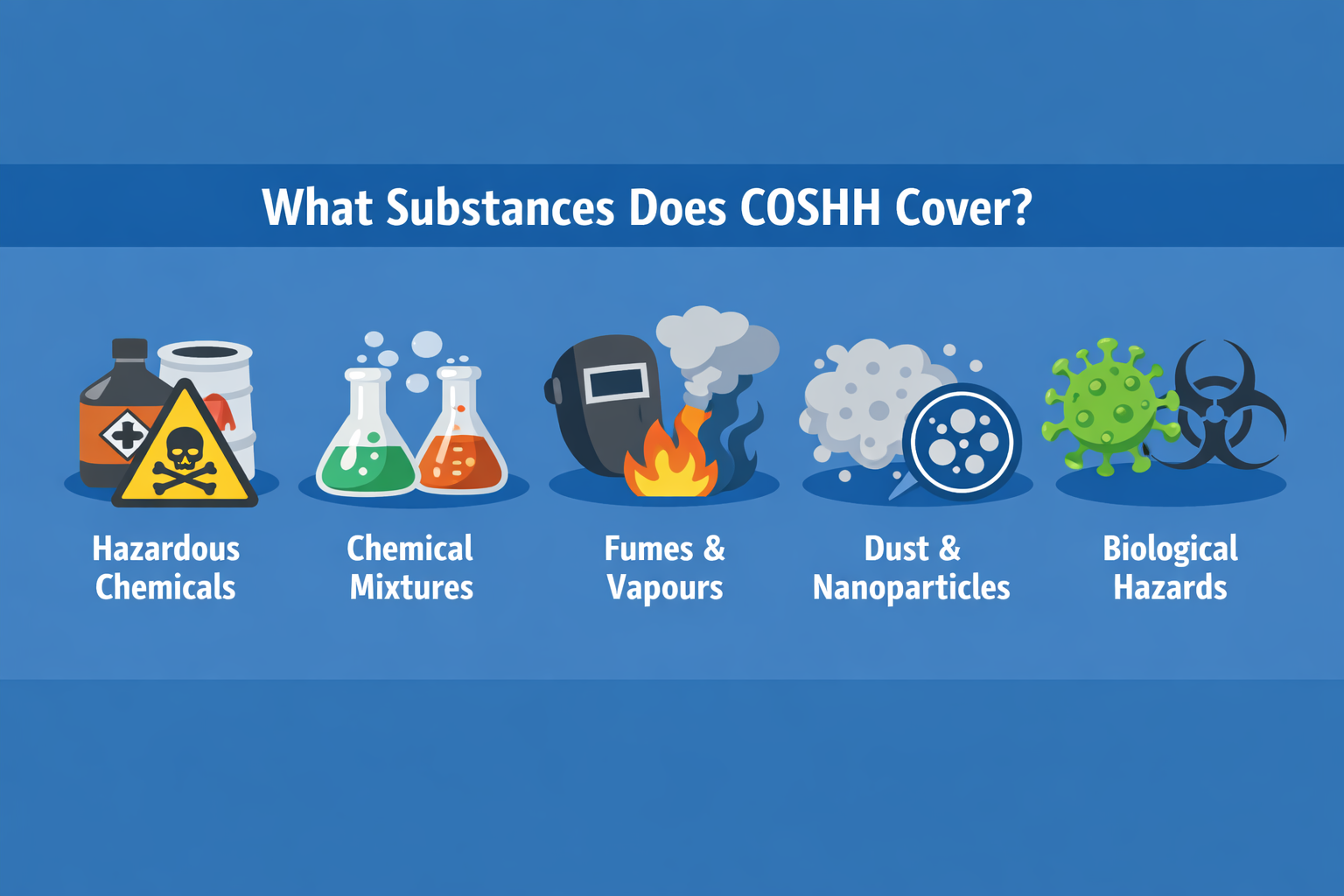
- Dust, like sawdust, cement dust, or flour dust, which can cause breathing problems.
- Hazardous chemicals, such as cleaning products, acids, and solvents.
- Mixtures of dangerous chemicals, which can be more harmful than single substances.
- Fumes or smoke from fire, welding, or explosions can irritate the lungs.
- Vapours, mists, and gases, which can cause poisoning or other health issues.
- Nanoparticles or nanomaterials are very small materials that can enter the body easily.
- Biological agents, like germs, bacteria, or viruses, can spread infections.
These substances can cause health problems like lung disease, skin irritation, allergies, or serious illness if not controlled properly.
Which Hazardous Substance Does COSHH Not Cover?
Some dangerous substances are not covered by COSHH. These include:
- Asbestos is covered by the Control of Asbestos Regulations 2012.
- Lead is governed by specific lead health and safety rules.
- Radioactive substances are controlled under nuclear and radiological safety laws.
- Explosives or materials under extreme pressure or temperature are dangerous because they can explode, catch fire, or cause harm.
- Medicines, when given intentionally to patients, are not included under COSHH.
These substances are very dangerous. For example, they can cause serious illness, long-term organ damage, or death. Also, they can harm the environment, making it hard to keep workplaces and surroundings safe.
Overall, COSHH focuses on substances you meet at work most often, but other dangerous materials still need special safety rules.
What Are the 3 Main Regulations of COSHH?
COSHH rules exist in UK law to keep workers safe at work. You might be wondering what the main rules are.
There are three key regulations of COSHH:
-
- Risk Assessment (Regulation 6)
- Control Measures (Regulation 7)
- Health Surveillance (Regulation 11)
We will describe these three rules in detail next so you can understand how each one keeps workers safe.
Risk Assessment (Regulation 6)
The first key rule of COSHH is risk assessment. Initially, it finds hazards in the workplace and checks dangers from harmful substances. Next, it looks at other safety and health concerns that could affect workers.
A COSHH risk assessment examines several important areas:
- Amounts of hazardous substances used at work.
- How many workers are exposed to these substances?
- Possible health effects from exposure.
- Duration of exposure to dangerous substances.
- For example, it checks if substances reach workers through breathing, eating, skin contact, or absorption.
- In addition, it identifies workers who are more vulnerable to these risks.
- Finally, it helps prevent accidents and illness by spotting potential hazards early.
Overall, risk assessments guide employers to take proper safety steps and protect everyone.
Control Measures (Regulation 7)
The second key rule of COSHH is control measures. These measures help prevent risks at work. After completing a risk assessment, employers understand the hazards and potential risks. Next, they can decide how to control them effectively.
Key parts of this regulation include:
- Choosing effective controls for each substance
- Making a list of the most hazardous substances and classifying them
- Categorising substances by the level of exposure
- Categorising substances by the duration of exposure
- Applying Workplace Exposure Limits (WEL) to reduce risks
- Planning practical solutions for emergencies, incidents, or accidents
- Reducing the use of hazardous substances to the lowest level possible
Overall, control measures make the workplace safer and help protect workers’ health.
Health Surveillance (Regulation 11)
The third key rule of COSHH is health surveillance. This means checking workers’ health regularly. It helps keep them safe and stops them from working in unhealthy conditions.
Making clear plans and procedures for health checks is very important. These plans must match the control measures used at work. Also, checking how well the control measures work is part of health surveillance.
Health surveillance helps with:
- Identifying workers who are most at risk from hazardous substances.
- Monitoring workers who have existing health problems, such as asthma, because they are more vulnerable to dust, fumes, vapours, mists, or gases.
- Making sure workers get first aid or emergency help after exposure.
- Checking the severity of workplace injuries, incidents, and accidents.
- Spotting unsafe work conditions that can harm health or the environment.
Overall, COSHH rules are important for keeping workers healthy. They make sure workplaces follow safety regulations across the UK. In short, health surveillance protects workers and ensures a safe and healthy work environment.
What Are the 5 Words of COSHH and What Do They Mean?
To understand COSHH better, let’s look at each word one by one. When you understand the name, you understand why the rules exist. First, this makes the whole law easier to remember.
Control
Control means staying in charge of a substance. It means stopping it from spreading or causing harm. Think about a dangerous animal in a strong cage. It cannot hurt anyone if it stays locked in. In the same way, workplaces use lids, sealed containers, cupboards, and extraction fans to control harmful substances. As a result, workers stay protected from breathing in or touching something dangerous.
Of
The small word “of” connects the other words together. It may look simple, but it links the full meaning. Basically, it shows that the rules are about controlling harmful substances that affect health.
Substances
Substances are different types of materials. They can be liquids like cleaning products, powders like flour, or gases you cannot see. For example, dust in the air or chemical fumes are also substances. If you can touch it, breathe it, or smell it, the law may treat it as a substance.
Hazardous
Hazardous means dangerous or harmful. A hazardous substance can cause skin problems, breathing issues, or eye irritation. Therefore, workers must handle these materials with care and use proper safety equipment.
Health
Health means your body and how it works every day. COSHH protects your lungs, skin, and eyes from damage. Finally, the main goal is simple. You should go home feeling just as healthy as when you arrived at work.
Why Are COSHH Regulations Important?
COSHH rules are important because they keep workplaces safe and healthy. For example, they stop accidents and illnesses caused by harmful substances like chemicals, dust, fumes, and biological agents. Also, they make sure workers know how to handle these substances safely. This prevents short-term problems like skin irritation or breathing difficulties and long-term illnesses like lung disease.
Benefits for Employers and Employees
These rules help both employers and workers. Workers feel safe, confident, and cared for at work. In addition, employers can reduce accidents, sickness, and related costs. Moreover, COSHH helps employers plan safety measures and show staff that their wellbeing matters. Following these rules also improves productivity because healthy workers can do their jobs properly.
Legal and Ethical Obligations
There are legal and ethical reasons to follow COSHH. For instance, ignoring the rules can lead to fines, legal action, or closure of workplaces. Furthermore, it is morally important to protect workers from harmful substances. Finally, following COSHH not only protects workers but also creates a safe and positive workplace where everyone feels secure.
What Are the Common Mistakes to Avoid Under COSHH?
Many mistakes happen when handling hazardous substances. For example, some employers do not carry out proper risk assessments. Also, failing to check how much or how long workers are exposed can increase the risk of illness.
Common mistakes to avoid include:
- Not doing proper risk assessments to find hazards and risks
- Ignoring the level or duration of workers’ exposure to dangerous substances
- Poor training, so staff do not know how to use protective equipment or follow safety steps
- Handling chemicals, dust, fumes, or biological agents incorrectly
- Not reviewing safety plans regularly to make sure they are effective
- Failing to follow COSHH rules, which can lead to fines, legal action, or closure
Finally, following these steps keeps everyone safe and shows that the workplace cares about its people.
What Are the 8 Important Steps in a COSHH Assessment?
To keep workers safe, companies follow an eight-step plan. Here is a simple guide:
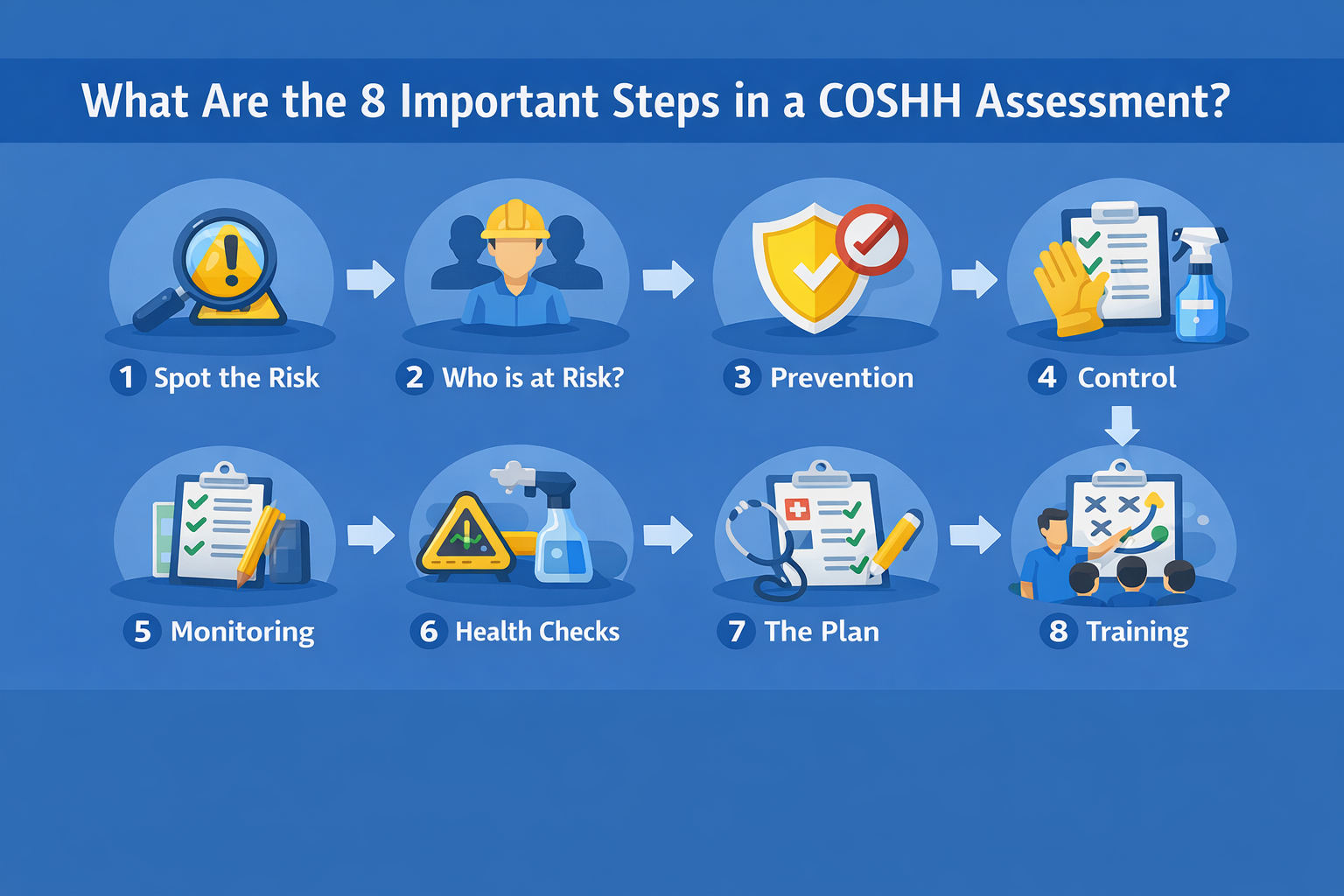
Step 1: Spot the Risk
Look at all substances in the workplace. Check for red diamond symbols on containers. Walk around and see where dangerous items are stored. Also, think about spills, dust, or fumes that may escape.
Step 2: Who is at Risk?
Think about who could be harmed. Is it the person using it, someone passing by, cleaners, or visitors? In addition, consider workers with health problems, like asthma, who may be more vulnerable.
Step 3: Prevention
Ask if the dangerous substance can be stopped or replaced. For example, use a safer glue or chemical instead of a strong, smelly one. This is called substitution. Therefore, removing hazards is always better than just controlling them later.
Step 4: Control
If the substance must be used, control it carefully. Use lids, fans, closed containers, or locked cupboards. As a result, nobody touches it by mistake, and the air stays clean for breathing.
Step 5: Monitoring
Use gadgets to check air quality. They detect dust, fumes, or gas. If needed, alarms warn everyone to leave before exposure becomes dangerous. Moreover, regular monitoring keeps the workplace safe every day.
Step 6: Health Checks
Doctors may check workers’ health. They look for rashes, coughing, or breathing problems. Also, lung tests or skin checks can catch early signs of illness before it gets worse.
Step 7: The Plan
Write a clear plan for emergencies. For instance, if a chemical spills, workers need instructions to clean it safely. Show where first aid kits and safety showers are. Furthermore, everyone should know the steps before an accident happens.
Step 8: Training
Teach every worker how to stay safe. Explain warning symbols and show how to use gloves, masks, and goggles. Finally, every new worker must complete training before starting. In addition, regular refreshers keep everyone aware and confident.
What Are the Benefits of Following COSHH Regulations?
Following COSHH rules keeps workers safe and healthy. For example, it protects them from harmful substances like chemicals, dust, fumes, and germs. Also, it stops short-term problems like skin irritation, breathing difficulties, and eye irritation. In addition, it reduces long-term health issues, such as lung disease or other serious illnesses caused by exposure.
These rules help businesses too. Moreover, legal compliance avoids fines, penalties, and other legal problems. Furthermore, safe workplaces boost productivity because healthy workers can do their jobs better and feel confident. Finally, following COSHH shows that employers care about their staff. It creates a positive, safe, and happy workplace where everyone feels valued.
Conclusion
COSHH rules help keep workers safe from harmful substances at work. First, employers must carry out a risk assessment to find hazards. Then, they must use control measures to reduce or remove the risks. Next, they should carry out health surveillance to check workers’ health. As a result, workplaces become safer and healthier. In addition, proper training helps staff understand the dangers and follow safety steps. Moreover, following COSHH helps employers avoid fines and legal trouble. Finally, when everyone works together and follows the rules, they create a safe, caring, and responsible workplace for all.
Frequently Asked Questions (FAQs)
1. What are the three basic rules of COSHH?
- The three basic rules are risk assessment, control measures, and health checks. First, employers must find the hazards, reduce the risks, and check workers’ health.
2. What are the 5 main substances covered by COSHH?
- COSHH covers chemicals, dust, fumes, vapours, and germs. For example, these can harm people if they breathe them in or touch them.
3. What are the COSHH regulations?
- The COSHH Regulations 2002 are UK safety rules. Basically, they tell employers to assess risks, control harmful substances, and protect workers.
4. What is Section 7 of the COSHH regulations?
- Regulation 7 is about control of exposure. In simple terms, employers must stop or reduce contact with harmful substances.
5. What is the golden rule for COSHH?
- The golden rule is to stop exposure if possible. Otherwise, reduce it as much as you can.
6. What is Regulation 3 of the Health and Safety at Work Act?
- Regulation 3 says employers must carry out a proper risk assessment. Therefore, they can protect workers and others.
7. What three substances are not covered by COSHH?
- COSHH does not cover asbestos, lead, and radioactive materials. Instead, other strict laws control them.
8. What are the 7 main hazardous substances?
- The seven common hazardous substances are chemicals, dust, fumes, vapours, gases, germs, and mists. Overall, these can cause harm if not controlled.