
No products in the basket.
A Quality Associate plays a big role in ensuring that products and services stay at top quality. They check every step, spot problems before they become bigger and suggest ways to make things run better. This helps businesses deliver results people can really trust. Plus, quality assurance keeps mistakes away, ensures rules are followed, and keeps customers happy and confident.
In a nutshell, this Quality Associate Job Description covers the main tasks, skills, tools, career path, challenges, and why this role is so important.
Quality Associate Job Description
What is a Quality Associate?
A Quality Associate helps make sure products and services are always top quality. Every day, they check processes, inspect products, and work closely with the team to fix problems before they get bigger. This role is important in quality management and keeps production running smoothly.
You usually find Quality Associates in industries like pharma, manufacturing, and IT, where high standards really matter. They act like the team’s eyes and ears, making sure everything follows the rules and works safely. In short, a Quality Associate keeps things reliable, safe and running the way they should.
Key Responsibilities of a Quality Associate
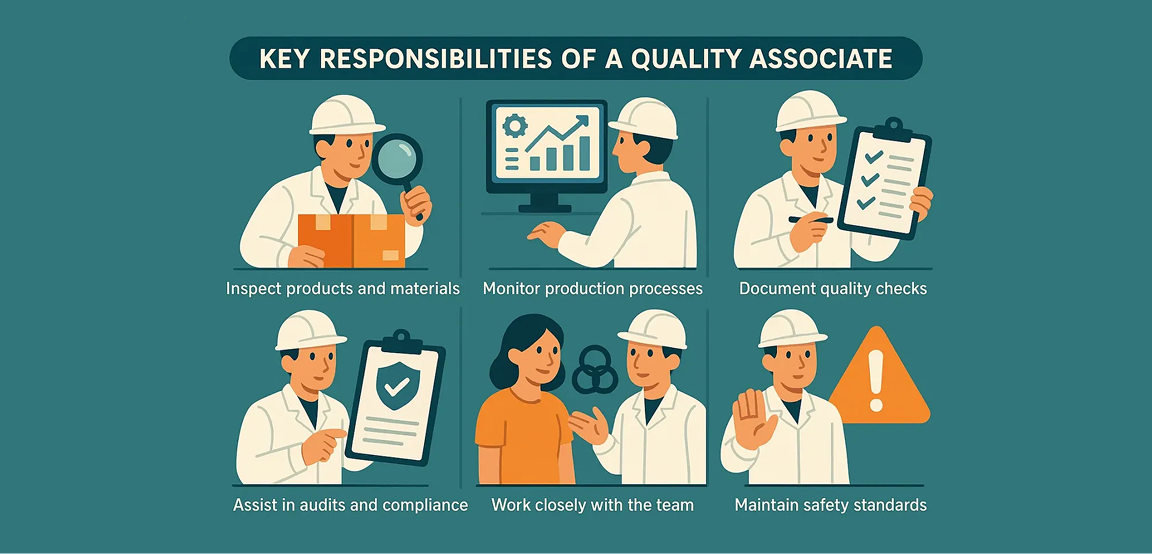
A Quality Associate plays a big role in keeping products and processes running perfectly. Every day, they handle important tasks like:
- Inspect products and materials: Look closely for mistakes or defects so customers always get something they can rely on.
- Monitor production processes: Keep an eye on how things are made and suggest easier, smarter ways to avoid problems.
- Document quality checks: Write down results and reports to help the team solve issues faster.
- Assist in audits and compliance: Follow rules carefully and support checks to keep the company safe and reliable.
- Work closely with the team: Collaborate with team member to fix problems quickly and make production smooth.
- Maintain safety standards: Make sure everyone follows safety rules to protect employees and customers.
Every task matters, and the work of a Quality Associate makes products safe, reliable and top quality.
Essential Skills and Competencies
A Quality Associate needs a mix of technical skills and personal abilities to do their job well. Here’s what makes them successful:
- Technical skills: They know how to test products and follow standards like ISO and GMP. This helps make sure everything is safe and high quality.
- Attention to detail: They spot small mistakes that others might miss. Because of this, problems don’t reach customers.
- Problem-solving: When problems happen, fix them quickly to keep work moving and everyone stress-free.
- Good communication: They explain problems clearly and work with the team to fix them. This keeps everyone on the same page.
- Familiarity with tools and software: They use QA tools and tracking systems to monitor quality. By doing this, they make the process faster and more accurate.
Basically, a great Quality Associate combines skills, sharp eyes, clear thinking, and teamwork to keep products and processes running perfectly.
Qualifications and Experience Required
To do well as a Quality Associate, you need the right mix of education, certifications and some experience. Here’s what usually helps:
- Education: Most employers look for a diploma or degree in Life Sciences, Engineering, or IT. This gives you the knowledge to understand how quality works.
- Certifications: Having certificates like ISO, Six Sigma, or other QA certifications can really help. They show you know the rules and best ways to keep things top quality.
- Experience: Some jobs welcome entry-level candidates, while others want a bit of experience in quality control. Either way, hands-on work helps you learn faster and make a bigger difference.
Basically, the right education, certifications, and practical experience make you ready to succeed as a Quality Associate and shine in the role.
Quality Associate Career Path UK
Working as a Quality Associate is just the start of a really exciting journey. As you learn new things and gain experience, you can move up to roles like:
- Senior Quality Associate: Lead small projects and guide new team members.
- QA Specialist: Focus on improving systems and solving complex quality issues.
- QA Manager: Manage a team, plan strategies and ensure company-wide quality goals are met.
What’s even more exciting is that your growth doesn’t stop there. With more training and certifications like Six Sigma or ISO, you can keep moving forward. Step by step, your effort, curiosity, and passion open new doors for your career growth in quality assurance and lead to real QA job progression.
Working Conditions and Salary
As a Quality Associate, you’ll work in clean, organised spaces like labs, offices, or production areas where every detail matters. You’ll spend your day checking products, running tests, recording results and working closely with your team to solve problems. Some days might feel fast-paced, while others can be a bit repetitive, but the environment is safe, structured and supportive, giving you the chance to grow while doing meaningful work.
In the UK, the average salary is around £30,885 per year, with entry-level roles starting near £26,000 and experienced positions reaching £35,000–£38,000+. Pay changes depending on location, experience and company size. On top of that, many companies offer QA job benefits like training, bonuses and flexible hours. Altogether, it’s a role with good growth potential, where your effort really makes a difference every day.
Everyday Tools for QA Experts
Quality Associates rely on smart tools and technology to maintain high standards and consistent results.
- Zephyr – Used for test management and tracking test cases efficiently.
- TestRail – Helps organise, manage, and report on testing progress.
- JUnit – A popular framework for unit testing Java applications.
- Selenium – Automates web application testing to catch issues early.
- Bugzilla – Tracks bugs and issues throughout the development process.
- Jira – Manages workflows, assigns tasks, and keeps the whole team aligned.
Because of these tools, work becomes faster, more accurate, and less stressful. A skilled Quality Associate uses technology to make sure every product meets high standards, every single time.
Common Challenges Faced by Quality Associates
Being a Quality Associate can be really rewarding, but it comes with some challenges. For example, production delays happen when defects appear or processes slow down. You need to stay calm and work closely with your team to fix things quickly. Also, keeping accurate documentation can be time-consuming, but it’s crucial for compliance. On top of that, regulation changes mean you must adapt processes and help staff follow new rules.
By handling these QA job difficulties with care, attention, and teamwork, you help the company stay reliable and maintain high-quality standards every day.
Best Practices for Quality Associates
Here are some easy and practical tips to help you do your best every day:
- Focus on the details: Watch for small mistakes because they can become big problems.
- Stay organised: Use checklists or simple tools to make work easier and faster.
- Talk with your team: Share updates with supervisors and coworkers to fix issues quickly.
- Keep good records: Write down tests and results clearly to avoid mistakes and stress later.
- Keep learning and improving: Try new quality assurance methods and always look for ways to improve QA performance.
By following these QA best practices, you make your work smoother, reduce errors, and show your value to the team every day.
Industry-Specific Roles of a Quality Associate
A Quality Associate can have very different tasks depending on the industry. Here’s a closer look:
- Pharma QA jobs: In this field, checking drugs, running lab tests, and making sure products meet safety rules is critical. Mistakes can affect people’s health, so attention to detail really matters.
- Manufacturing Quality Associate: Here, inspecting materials, monitoring production lines, and suggesting small improvements keeps everything running smoothly and avoids costly errors.
- IT QA roles: Testing software, reporting bugs, and helping developers fix problems to ensure systems work well. Every improvement makes users’ lives easier and better.
Across all industries, industry-specific QA responsibilities focus on delivering high-quality results and helping the team succeed.
Misconception About Quality Assurance and Quality Control
Many people think quality assurance (QA) and quality control (QC) are the same, but they are actually quite different.
Firstly, QA focuses on preventing problems before they happen. QA professionals improve processes, set standards, and guide teams to avoid mistakes. For example, in a pharmaceutical lab, QA ensures procedures are correct so medicines are safe from the start. Meanwhile, QC focuses on finding issues in finished products. QC specialists inspect, test, and catch defects. For instance, a QC worker in a car factory checks tyres to make sure they are safe.
Ultimately, QA is proactive, stopping issues early, while QC is reactive, fixing problems after they appear. Together, they ensure top-quality results.
Importance of a Quality Associate in the Organisation
Quality Associates don’t just check products—they make a real difference every single day:
- Keep products safe: Catch mistakes before customers ever see them.
- Delight customers: Make sure products work well and meet expectations.
- Follow rules: Stay on top of regulations so the company avoids any problems.
- Save time and money: Fix issues early to prevent bigger, costly problems later.
- Support business growth: Help the team work better, protect the brand, and drive the company’s success.
FAQs
- What is the role of a Quality Associate?
A Quality Associate checks products and processes, finds issues early, and keeps operations running smoothly.
- What does a Quality Service Associate do?
They monitor service quality, handle customer complaints, and ensure services meet company standards.
- What is a QC Associate job description?
A QC Associate inspects products, tests quality, documents results, and reports defects to the team.
- What is the difference between QA officer and QA associate?
QA Officers plan and manage quality systems, while QA Associates perform daily checks and inspections.
- How to become a QA Associate?
Complete a diploma or degree in Life Sciences, Engineering, or IT, earn QA certifications, and gain hands-on experience.
- What are the 4 types of quality control?
Preventive QC, Detective QC, Corrective QC, and Statistical QC.
- Is QA an entry-level job?
Yes, many QA roles accept beginners, though experience helps you grow faster.
Conclusion
The Quality Associate Job Description shows how this role keeps products safe, processes smooth, and customers happy. Quality Associates solve problems, follow rules and help the business grow every day. This career gives you teamwork, learning, and a chance to make a real difference. Plus, knowing why you want to become a quality associate helps you see the benefits of a QA career and the importance of QA roles in any organisation.
To gain the skills and knowledge you need, explore the Quality Assurance and Quality Management Diploma at TrainingTale today.

Quality Assurance and Quality Management Diploma
Course Description :
- Certificate: Yes(Free)
- Accreditation: CPD Accredited
- Access: Lifetime