
No products in the basket.
Want a job that keeps you active instead of sitting at a desk all day? Working as an electrician could be a great option. You can work on homes, buildings, shops and construction projects while learning a valuable trade. But how to become an electrician in the UK? The journey usually starts with proper electrical training. You then need hands-on experience and the right industry qualifications. You can choose an apprenticeship or take a college and adult training route. Both options can help you develop the skills needed for the job. You also need to understand electrical safety and follow wiring rules carefully. Once qualified, you can work for an employer or build your own business.
Let’s look at each step in simple terms.
What Work Does an Electrician Do?
An electrician works with electricity in homes, shops, offices, and other buildings. Their main job is to install, check, and fix electrical systems. The work can be different every day, which keeps it interesting.
For example, an electrician may:
- Install electrical wiring in new buildings.
- Find and fix electrical faults.
- Test electrical systems to make sure they work safely.
- Fit sockets, switches, lights, and other electrical parts.
- Check wiring and equipment for safety problems.
- Read wiring diagrams to understand how a system works.
- Use electrical tools and testing equipment to find faults.
Good electricians also need to work carefully. Even a little mistake can cause major problems. So, they follow safety rules and check their work properly.
How to Become an Electrician Through an Apprenticeship
An apprenticeship is a good way to learn the electrician trade. You work for an employer while you learn. You also spend some time at a college or training centre. During your apprenticeship, you get real work experience. You may help with tasks such as:
- Installing wires
- Fitting lights
- Fitting sockets and switches
- Testing electrical systems
- Finding electrical faults
- Using basic electrical tools
You learn by doing the job. This helps you understand how electrical work happens in real places.
Another good thing is that you earn money while you train. You do not need to give up work to study full-time. You can learn, work, and earn at the same time. Your employer and training provider will guide you during your apprenticeship. You also work towards an electrical qualification.
An apprenticeship usually takes around three to four years. The exact time can vary by training route. It may seem like a long time, but you gain useful skills and work experience. Once your training is complete, you can continue towards electrician qualification.
What Education Do You Need to Become an Electrician?
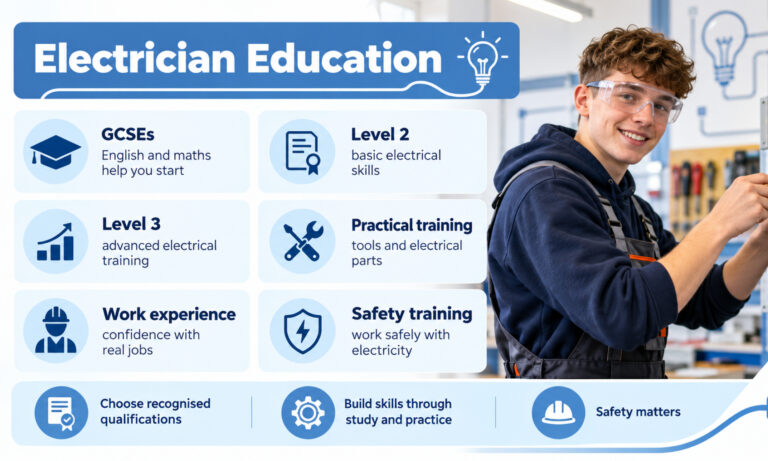
You need the right training and qualifications to become an electrician in the UK. You do not need a university degree for this career. However, you need good electrical knowledge and practical skills. GCSEs in English and maths can help you start your training. You can then take a Level 2 or Level 3 electrical course. These courses teach you about wires, circuits, tools, and safety.
Common skills and qualifications include:
- GCSEs: English and maths can help you enter electrical training.
- Level 2 course: This teaches basic electrical skills and knowledge.
- Level 3 course: This gives you more advanced electrical training.
- Practical training: You learn how to use tools and work with electrical parts.
- Work experience: This helps you gain confidence with real jobs.
- Safety training: You learn how to work safely with electricity.
It is also important to choose a recognised qualification. This can help you find work and show employers that you have the right skills. Safety plays a big part in this job. Electricity can cause serious injury if you handle it wrongly. So, you must learn the correct safety rules and check your work carefully. With the right mix of study and practice, you can build a strong start in this career.
How to Become an Electrician Through College
College can be a good way to start your electrician career. It gives you time to learn the basics before you start full-time work. You can study electrical skills in a classroom and practise them in a workshop. Many students start with a Level 2 electrical course. After that, you can move on to a Level 3 course. These courses can teach you about wiring, circuits, tools, and electrical safety.
You will also get practical training. For example, you may practise fitting wires, sockets, and switches. Some colleges may also help you get work experience with an electrical company. After finishing your course, you can look for an entry-level job. You may start as an electrician’s mate, trainee, or improver. This gives you more real work experience.
However, a college course may not be the final step. You may need more workplace training and assessments before you can work as a fully qualified electrician. So, choose a course that matches your career plans.
What Skills Do You Need to Become an Electrician?
A good electrician needs more than qualifications. You also need practical skills and a careful approach to your work. The good news is that you can improve these skills with practice.
Some useful skills include:
- Problem-solving: You need to find and fix electrical problems.
- Basic maths: Simple maths can help with electrical work.
- Attention to detail: You need to spot small mistakes.
- Good hand skills: You must handle wires and tools carefully.
- Patience: Some jobs take time, so you should not rush.
- Communication: You need to speak clearly with customers and workers.
- Safety awareness: You must follow safety rules at all times.
- Tool skills: You need to learn how to use tools correctly.
You should also be willing to keep learning. Electrical work can change as new systems and technology appear. The more you practise, the more confident you can become.
How Long Does It Take to Become an Electrician?
The time can vary from person to person. Your chosen training route, work experience, and extra training can all affect the time. An electrician apprenticeship usually takes around three to four years. During this time, you work with an employer and study your electrical course. You also gain useful experience from real jobs.
The college route can take a different amount of time. You may start with a Level 2 course and then move to Level 3. However, classroom learning alone may not give you enough real work experience. Workplace training is very important. It helps you learn how to deal with real electrical jobs. You also learn how to use tools and follow safety rules correctly.
You may also need extra training or assessments as you progress. So, becoming a skilled electrician takes time. You need both good knowledge and practical experience. With steady practice, you can build your skills and move closer to your career goal.
How to Become a Self-Employed Electrician
Working for yourself can be an exciting step. You have more control over your work and working hours. However, running your own business also brings extra responsibility. Before you start, make sure you have the right electrical skills and qualifications. Then, set up your business correctly and understand your legal duties.
Here are some important steps to follow:
- Register your business: Choose the right business type and register it correctly.
- Get insurance: Suitable insurance can protect you if something goes wrong.
- Understand tax: Keep records of your income and business costs. You also need to understand your tax duties.
- Build a good name: Do quality work, arrive on time, and treat customers well.
- Join a scheme: Consider joining NICEIC or NAPIT as part of a competent person scheme.
- Find customers: Use a simple website, local listings, social media, and customer recommendations.
Good customer service can make a big difference. Happy customers may recommend you to others. Over time, this can help you get more work. Self-employment can take effort, but it can also feel rewarding. You can grow your list of customers and take your business to the next level.
Do You Need a Licence to Become an Electrician in the UK?
The UK does not have one general licence for electricians. However, you still need the right training and qualifications to do electrical work safely. A qualification shows that you have learned the skills needed for electrical work. Registration is different. It shows that a business or electrician meets certain industry standards.
If you work for an electrical company, your employer may handle some of the required checks and registrations. However, things can be different when you work for yourself. Self-employed electricians can join a competent person scheme. These schemes allow qualified electricians to show that they can carry out certain work safely and correctly.
Well-known schemes include NICEIC and NAPIT. Joining a scheme can give customers more confidence in your work. It can also make some building work easier to manage. However, you still need the right skills and qualifications. Registration does not replace proper electrical training. So, there is no single UK electrician licence. Instead, you need suitable training, practical experience, and the right industry recognition for the work you plan to do.
How Much Does an Electrician Earn in the UK?
Electrician pay can vary quite a lot across the UK. Your experience, location, skills, and type of work can all affect your earnings. The ONS reported £39,039 as the median annual pay for full-time employees this year. Electrician salaries can sit around this level, but actual pay depends on the job and employer. As you gain more experience, you can often earn more. Specialist work can also offer higher pay.
Typical earning levels may include:
- Apprentice: £12,000 to £22,000
- Newly qualified: £26,000 to £34,000
- Experienced electrician: £35,000 to £52,000
- Senior or specialist roles: £55,000 to £85,000 or more
Your location can also make a difference. Electricians in London and the South East may earn more than those in some other areas. For example, the 2026 JIB national standard rate starts at £18.38 an hour for an electrician. An approved electrician can earn £20.08, while a site or installation technician can earn £22.70. So, electrician work can offer good earning potential. With experience and extra skills, your pay can grow over time.
Steps to Become an Electrician
Becoming an electrician takes time and practice. However, you can make the journey easier by following a few clear steps. Here is what you need to do.
1. Check the Entry Requirements
Start by checking the entry rules for your chosen course or apprenticeship. GCSEs in English and maths can help you get started. Some training providers may have other requirements too.
2. Choose a Training Route
Next, choose how you want to learn. You can take an apprenticeship or study at college. An apprenticeship lets you work and learn at the same time. College gives you more time to study and practise your skills.
3. Complete an Electrical Qualification
Work towards a suitable electrical qualification. You will learn about wiring, circuits, tools, testing, and safety. Take your time and understand each part of the training.
4. Gain Practical Workplace Experience
Try to gain real work experience with an electrical company. This helps you understand how electricians work on homes, shops, offices, and other buildings.
5. Develop Your Electrical Skills
Keep practising your skills as you work. Learn how to use tools correctly and find common electrical faults. Good attention to detail also matters.
6. Complete Further Training If Needed
You may need extra training or assessments as you progress. Keep learning so you can improve your skills and knowledge.
7. Consider Competent Person Registration
If you want to work for yourself, consider joining a competent person scheme. Registration can help customers feel more confident about your work.
8. Apply For Jobs Or Start Your Own Business
Finally, apply for electrician jobs or start your own business. With good training, practical experience, and patience, you can build a strong career.
Final Words
Working as an electrician can be a good option for practical people. The journey takes time, but each step helps you build useful skills and confidence.
You can choose an apprenticeship or start with a college course. Then, gain real work experience and keep improving your skills. Safety should always remain a top priority.
If you want to know how to become an electrician, start by choosing the right training route for you. With hard work, patience and good training, you can build a stable career. You may even choose to work for yourself later.
If you want to build your electrical knowledge first, explore the Professional Electrician Course from Training Tale. It can help you understand key electrical topics and build useful knowledge before taking your next career step.
FAQs
1. What qualifications do I need to be an electrician in the UK?
You need proper electrical training and qualifications. GCSEs in English and maths can also help. You also need practical work experience.
2. Is it hard to train as an electrician?
It can be hard at first. You need to learn electrical work, safety rules, and how to use tools. With practice, it gets easier.
3. Is 30 too late to be an electrician?
No, 30 is not too late. You can start training as an adult. You can choose an apprenticeship or college course.
4. Is electrician a well paid job?
Yes, electricians can earn good money. Your pay can grow as you gain more skills and experience.
5. Is the uk shortage of electricians?
The UK has a need for skilled electricians. However, demand can change by area and type of work.