
No products in the basket.
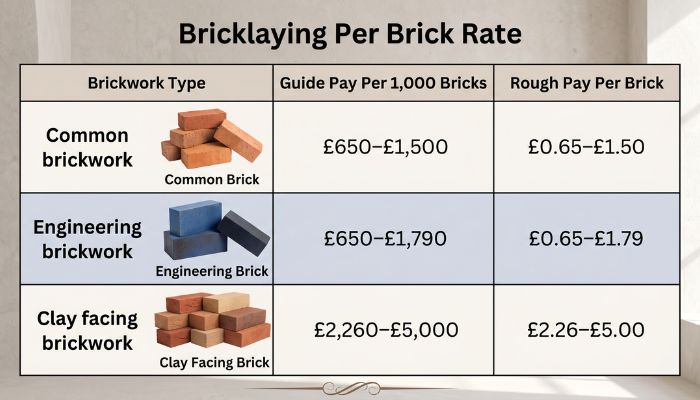
For anyone asking how much do bricklayers get per brick, the short UK answer is £0.65 to £5 per brick. UK brickwork typically ranges from £650 to £5,000 per 1,000 bricks, depending on the job type and finish. Simple brickwork pays less because the work is quicker and easier.
But facing brickwork, restoration and detailed work pay more. These jobs need more care and skill, so the rate goes up.
Let’s dive into this guide which explains per-brick rates, day rates, hourly pay and yearly wages. You will also learn about London pay and self-employed costs.
Do Bricklayers Get Paid by the Brick or Day?
Yes, bricklayers do get paid by the brick, but not always. Some earn per brick. Others work on a day rate or fixed price. Most jobs use day rates, hourly pay, or a set quote. It depends on the job and how the work is planned.
Per-brick pay works well for big and simple jobs. The work repeats, so it is easy to count and price. On the other hand, day rates suit repair work and mixed jobs. The tasks can change during the day, so a daily rate fits better.
Hourly rates suit short jobs or quick call-outs. Fixed quotes suit homeowners. They like one clear price before work starts, so everything stays simple.
Here is a quick view of payment methods:
- Per brick: Works well for large, simple and repetitive jobs
- Day rate: Fits small jobs, repairs and mixed work
- Hourly rate: Suits short jobs or quick call-outs
- Fixed quote: Matches well for home jobs with a clear work scope
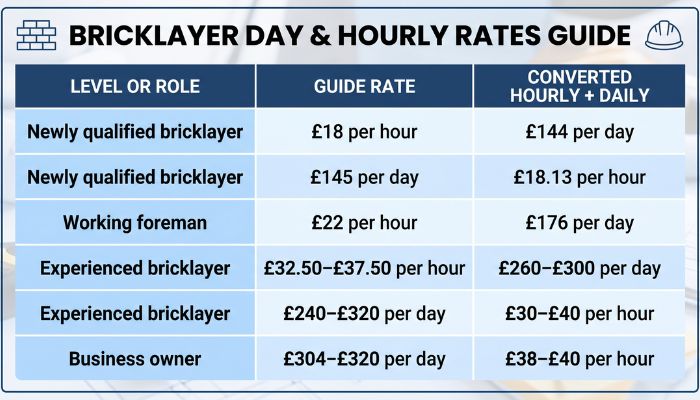
To keep it simple, experienced bricklayers may earn around £32.50 to £37.50 per hour. A normal day rate sits around £240 to £320 per day. Some business owners may earn about £304 to £320 per day, depending on demand and job type.
How Much Do Bricklayers Get Per Brick UK?
Bricklayers usually price work per 1,000 bricks. Then they break it down into a per-brick rate. Primarily, how much do bricklayers get per brick depends on the brick type and the finish needed.
To start, simple brickwork sits at the lower end. It moves fast and needs less detail. After that, engineering brickwork needs more care, so the price goes higher. Then, clay-faced brickwork sits at the top. It needs a clean finish and careful work on every brick.
Here is a clear look at bricklaying pay rates:
What Is the Average Wage for a Bricklayer UK?
The average wage for a bricklayer UK is not the same for everyone. It changes from person to person. It depends on experience, location and type of work. Big cities often pay more. Small towns usually pay less. Also, site work, repair work and specialist jobs do not always pay the same.
So, when we look at the bricklaying average wage, we focus on yearly pay. These figures are guide numbers only. They are not fixed wages in the UK. Real pay can go up or down based on job type, skills and site conditions.
Here is a simple breakdown of yearly earnings:
- Apprentice bricklayer: around £11,063
- Newly qualified bricklayer: near £31,942
- Employed bricklayer: close to £40,102
- Sole trader bricklayer: roughly £56,052
- Ltd company owner: nearly £59,002
These figures help explain average pay for bricklayer roles in a clear way. Still, they stay as guide numbers. Pay changes with region, experience, workload and site conditions.
In real life, how much bricklayers earn can look higher for self-employed workers. But they also pay for tools, travel, tax and other costs. So, take-home money often becomes lower than total income.
What Take-Home Pay Can Self-Employed Bricklayers Expect?
Self-employed bricklayers do not keep all the money they earn. Gross income looks high at first. But real take-home pay drops after costs. This is important when we look at how much do bricklayers earn in real life.
To make it clear, we need to look at costs. Self-employed bricklayers pay for tax, tools, van, fuel, insurance, training, accountant fees and marketing. These costs come from their own money. So, they reduce the final profit.
Here is a simple breakdown:
- Sole trader bricklayer: Gross income £56,052 | Take-home pay £37,589
- Ltd company owner: Gross income £59,002 | Take-home pay £38,830
This shows a clear gap between total income and real money in hand. So, when people check bricklayer pay UK, they must need to think about costs.
What Are Bricklayer Day Rates and Hourly Rates?
Bricklayers get paid in different ways. Some jobs use a day rate. Other jobs use an hourly rate. Day rates suit small jobs, repairs and mixed work. Hourly rates suit short jobs or work where the time is not clear.
In real jobs, skilled bricklayers earn more. After that, pay can rise in London, on weekends, for urgent work, hard access sites and specialist jobs. So, bricklayer pay UK changes from job to job.
Here is a simple breakdown of wages for bricklayers:
How Does Bricklayer Pay Grow With Experience?
Here are the stages of a bricklayer’s career:
- Apprentice Bricklayer: Learns basic site skills. Builds speed, confidence and safe work habits step by step.
- Newly Qualified Bricklayer: Can earn around £18 per hour or £145 per day as a guide. Then, they start working more on their own with less supervision.
- Employed Bricklayer: Earns around £40,102 per year as a guide. After that, they get steady work and regular pay on building sites.
- Foreman or Site Supervisor: Earns around £22 per hour or about £41,000 per year as a guide. At this stage, they lead workers, check quality and keep work safe and on track.
- Business Owner: Has a higher earning potential. However, they also pay for costs, take more risk and find their own work.
What Are Bricklayer Pay Rates in London?
London bricklayer pay is usually higher than the UK average. At first, this looks like better earnings. But higher travel, parking, rent and living costs can reduce real profit. So, bricklayer pay UK in London does not always mean more money in your pocket.
Also, London has a strong demand for bricklayers. New build homes, commercial sites and repair work keep jobs steady. So, a bricklayer’s earnings often look higher than in many other UK areas. Still, daily costs can change what you actually keep.
To make it clear, pay levels in London usually look like this. An apprentice may earn around £15,000–£18,000, while the UK average sits around £12,000–£16,000. A newly qualified bricklayer may earn £30,000–£38,000 in London, compared to £25,000–£32,000 in the UK. An experienced bricklayer may earn £40,000–£52,000 in London, while UK pay sits around £35,000–£45,000. Self-employed bricklayers may reach £50,000–£60,000 in London, compared to £45,000–£55,000 across the UK.
Overall, the average wage for a bricklayer UK is higher in London. Still, higher costs also come with it. Travel time, traffic, parking and daily costs all affect take-home pay.
Are Employed or Self-Employed Bricklayers Paid Better?
Employed bricklayers get steady work and a fixed income. They also get support like holiday pay, sick pay and pension. So, bricklayer pay UK feels more safe and stable in this type of work.
On the other hand, self-employed bricklayers work in a different way. They can earn more in busy weeks. They also take price-work jobs, which can increase earnings. So, how much do bricklayers earn can be higher when work is strong. But income does not stay the same every week.
After that, costs also play a big part. Self-employed bricklayers pay for tools, travel, tax, van, and other work costs. They also go through quiet times when work is slow. This can affect the average pay for bricklayers across the year.
In simple words, employed work gives steady pay and less worry. Self-employed work gives a higher earning chance but also more risk and pressure.
What Affects Bricklaying Pay Rates?
Here are the main factors that change pay on site:
- Location: Pay is often higher in London and the South East. These places have more work and higher living costs.
- Site access: Easy access helps work move faster. Tight spaces slow the job and reduce daily output.
- Brick type: Common bricks go up quickly. Facing and engineering bricks need more care and time, so the pay is higher.
- Weather: Rain, frost, strong wind, or heat can slow work. Doing less work in a day can affect pay.
- Labour support: A good labourer helps carry materials and keep work moving. This makes the job faster and easier.
- Job complexity: Straight walls are quicker. Curves, arches, pillars and decorative work take more skill, so they cost more.
- Site setup: Poor setup slows everything down. Scaffold delays, parking issues, delivery gaps, and waste removal all affect speed and pay.
How Many Bricks Can a Bricklayer Lay Per Day?
A bricklayer’s daily work output depends on the job and site conditions. In a good setup, a skilled bricklayer can lay around 500 bricks per day. This is a normal and realistic number for many standard jobs.
Also, some jobs can reach 500 to 800 bricks per day. This happens when the work is simple and the site runs smoothly. Still, harder work reduces the number. Facing brickwork, detailed work and heritage jobs take more time and slow the pace.
Now, let’s look at what this means in simple gross earnings. At 500 bricks, earnings can be around £325 at £0.65 per brick, £500 at £1.00 and £750 at £1.50. If a bricklayer reaches 800 bricks in a day, gross pay can range from £520 to £800, based on the rate.
These figures show gross income only. They do not include tax, tools, transport, insurance, or unpaid downtime.
Which Bricklaying Jobs Pay More?
Not all bricklaying jobs pay the same. Some jobs pay more because they need extra skill, care, or time. New-build brickwork gives steady work. The tasks repeat again and again. So the work moves fast. As a result, this often suits price work and can improve earnings.
On the other hand, commercial brickwork often pays better. These jobs are bigger and come with strict rules and tight deadlines. So, bricklaying pay rates can go up because of pressure and large project size. Also, facing brickwork pays more than basic brickwork. It needs a clean and neat finish. Even small mistakes show clearly. This level of care can increase bricklayer pay for skilled workers.
After that, heritage and restoration work stand out. This work uses old bricks and lime mortar. It also needs careful repair work. So, it often pays more because it needs special skill and patience. Finally, decorative masonry can bring higher pay. Arches, curves, pillars and detailed designs take more time and skill. So, how much do bricklayers earn can rise a lot in this type of work.
What Tools and Costs Should Bricklayers Budget For?
Bricklayers need to plan for real costs before they start work. These costs reduce take-home pay, so they matter in daily earnings. To begin with, self-employed bricklayers buy and look after their own tools. Tools wear out over time. So, they need to be replaced again and again. This means part of the income always goes back into the job.
After that, there are regular work costs. Public liability insurance costs around £100–£120 per year. A cement mixer costs about £579. Basic hand tools cost a few hundred pounds. A mid-range setup can reach the low thousands. A high-end setup can go into several thousand pounds.
On top of that, bricklayers also spend money on PPE, transport, fuel and simple job software for quotes and planning.
Overall, these costs build up across the year. So, a bricklayer’s earnings also depend on what they spend to keep the work running.
What Training Helps Bricklayers Earn More?
Training has a direct impact on bricklayer pay UK. It builds skills and opens better job chances on-site.
To begin with, apprenticeships help beginners earn while they learn. They gain real site experience from day one. This builds strong basic skills step by step.
After that, NVQ Level 2 shows a good level of site skills. It helps bricklayers move into steady work. NVQ Level 3 goes further. It supports higher skill work and better pay.
At the same time, a CSCS card is very important. Most UK construction sites ask for it. So, it helps bricklayers get more job options.
On top of that, specialist training can increase how much bricklayers earn. Skills like heritage work, lime mortar, facing brickwork, repairs, repointing and decorative masonry often lead to higher-paying jobs.
Final Thoughts
So, how much do bricklayers get per brick in the UK? A fair guide is around £0.65 to £5 per brick, depending on brick type and job detail. Most bricklayers also price work at £650 to £5,000 per 1,000 bricks.
On top of that, many jobs use day rates and hourly rates too. A common day rate sits around £240 to £320. Skilled workers can earn more per hour based on experience and the type of work.
Still, one key point matters. Self-employed pay is not full profit. Costs like tools, travel, insurance and tax take part of the money. In simple terms, skill makes the biggest difference. Better skills bring better speed. Better speed brings better pay.
Frequently Asked Questions (FAQs
1. How much does a bricklayer get per 1000 bricks?
- A bricklayer usually earns around £650 to £5,000 per 1,000 bricks. Simple work pays less. Clean facing or detailed work pays more.
2. Can bricklayers make 100k?
- Yes, but not everyone. It can happen with big contracts, fast work, or a strong self-employed setup. Most bricklayers earn less than this.
3. What does a bricklayer charge per brick?
- Most charge about £0.65 to £5 per brick. The price depends on brick type, finish and job difficulty.
4. What is the going rate for a self-employed bricklayer?
- Self-employed bricklayers often earn around £240 to £320 per day. Busy weeks can push earnings higher, but quiet weeks reduce income.
5. How much is a bricklayer per day in the UK?
- A typical day rate sits around £240 to £320 per day. Newer bricklayers may earn less, while skilled ones may earn more.
6. Do bricklayers get paid per brick in the UK?
- Yes, some do. But many also work on day rates, hourly rates, or fixed job quotes. It depends on the job type.
7. How long does it take to lay 500 bricks?
- A skilled bricklayer can take one full working day to lay around 500 bricks. Complex work can take longer.