No products in the basket.
How do you become a phlebotomist UK? Let’s break it down clearly. You start with GCSEs or similar school education. After that, you can take a phlebotomy course or start work as a healthcare assistant. Many people also complete Level 2 or Level 3 phlebotomy qualifications. These are well recognised in the UK.
Phlebotomists work in hospitals, GP clinics, and laboratories. They play a key role in patient care by collecting blood samples for testing. Some also complete Basic Life Support (BLS) training for emergency situations. All routes like college courses, apprenticeships, or direct entry lead to the same job goal.
Now let’s dive in and explore how to become a phlebotomist UK and what it really takes.
What Does a Phlebotomist Do in the UK?
A phlebotomist takes blood samples from patients for medical tests. Phlebotomy means taking blood from the body. Venepuncture means putting a needle into a vein to collect blood safely.
Now let’s look at phlebotomist UK duties. They take blood samples from patients. Then they label each sample carefully. After that, samples go to laboratories for testing. The phlebotomist also checks everything to avoid mistakes. At the same time, they speak with patients before and during the process. This helps patients feel calm and safe.
Phlebotomists work in many places across the UK. They work in hospitals, GP clinics, and care homes. Some also work in private laboratories and mobile health units. This wide range of work settings shows how important this role is in everyday healthcare.
What Do You Need to Become a Phlebotomist UK?
Entry Requirements
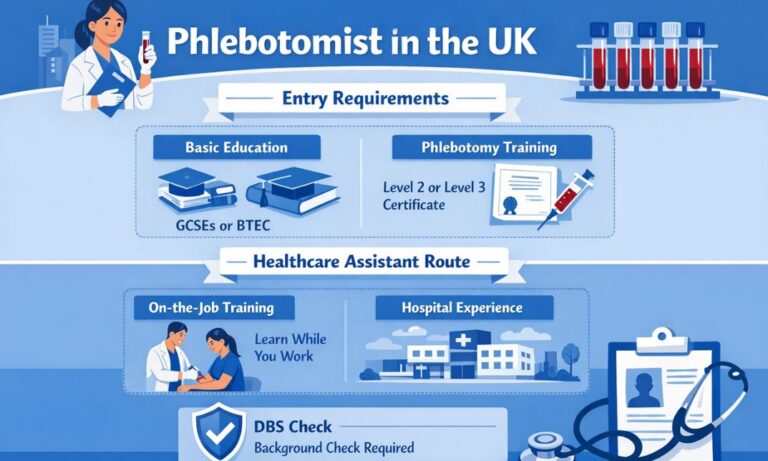
Who can become a phlebotomist UK? Let’s keep it simple. You need basic school education like GCSEs or a BTEC. Some employers also accept similar qualifications. After that, many people take a Level 2 or Level 3 Certificate in Phlebotomy or Healthcare Support.
Some NHS jobs follow a different route. You may start as a healthcare assistant. Then you learn phlebotomy at work with supervision. This helps you gain real hospital experience while you build skills. Some roles also ask for a DBS check to make sure you are safe to work with patients.
Skills Needed
Becoming a phlebotomist UK is not only about study. It also depends on your personal skills. You need clear communication to speak with patients in a calm way. Patience helps when patients feel nervous. Steady hands help you take blood safely. Attention to detail helps you avoid mistakes.
Along with that, soft skills matter in daily work. Empathy helps you understand how patients feel. Teamwork helps you work well with nurses and doctors. Following clear steps helps you stay safe and do the job right.
With the right education and skills, many people can start this career. It gives a clear path into UK healthcare with strong job opportunities.
How Do You Become a Phlebotomist UK?
Becoming a phlebotomist UK follows a clear and practical path. Most people start with phlebotomy training UK through college, apprenticeships, or workplace training.
Training Routes
- College courses in healthcare or phlebotomy
- NHS or private clinic apprenticeships
- On-the-job training in hospitals or clinics
Theory Learning
- Learn how veins work and where blood is taken safely
- Study infection control to keep patients safe
- Understand correct blood collection steps
- Learn basic patient care and comfort
Practical Training
- Practice first on mannequins
- Then move to supervised blood taking from real patients
- Gain experience with children and older patients when possible
Workplace Experience
- Train in hospitals or clinics with supervision
- Learn from experienced staff and mentors
- Complete skill checks to show safe practice
This mix of study and real practice builds confidence. It prepares you for safe and daily patient work in UK healthcare.
Which Qualifications Are Recognised for Phlebotomy in the UK?
When it comes to qualifications, most people start with Level 2 or Level 3 Certificates in Phlebotomy. These cover safe blood taking, infection control, and basic patient care. Most employers in the UK accept these qualifications.
After that, some learners study Healthcare Support Worker or Healthcare Science Assistant courses. These build wider healthcare skills. They also help you get NHS jobs more easily.
On top of this, Basic Life Support (BLS) training is often needed. It helps you act quickly in emergencies and keep patients safe during care
You may also see approved courses that follow UK training rules. These give extra trust to your skills. Some employers also value training linked with groups like NAP or IBMS for extra recognition.
Overall, these qualifications show one simple thing. You can manage duties carefully, follow standards, and assist patients in daily care.
How Do You Become a Phlebotomist UK in Different Ways?
If you search how to become a phlebotomist UK, you will find more than one clear path. Each route can lead to the same job. For example:
- College cours7des in health and social care- Study theory in class and get placement in real workplaces. This helps build skills quickly. However, course fees apply and study time stays fixed.
- Apprenticeships- Earn while training in real healthcare jobs. Early NHS experience helps build confidence. The downside is strong competition, as places are limited.
- Direct entry- Start work as a healthcare assistant in hospitals or clinics. Then learn phlebotomy on the job. This gives strong real experience, but progress can feel slower at the start.
How Much Does a Phlebotomist Earn in the UK?
A phlebotomist’s salary in the UK totally depends on experience, role, and location. Starting out, entry-level jobs usually pay £18,000 to £21,000 per year. As experience grows, mid-level pay goes up to £23,000 to £30,000. With strong skills and more responsibility, senior roles can reach £34,000 or more.
In NHS jobs, pay follows Band 2 to Band 4. Band 2 is for beginners with lower pay. Band 4 is for more experienced staff with higher duties and better pay. On top of salary, NHS jobs also include good benefits. These include a pension, paid holidays, and staff discounts. Some roles also offer overtime pay, which increases total earnings.
What Is the Career Path for Phlebotomists in the UK?
Career growth in phlebotomy in the UK follows a clear and steady path. Many people start as a junior phlebotomist in hospitals or clinics. With time and real work experience, they move into a senior phlebotomist role. At this stage, they help new staff and handle more difficult blood tests.
After that, some move into team leader jobs. Here, they manage daily work and guide other staff. They also make sure patients get safe and fast care every day.
Some people choose a different path. They move into biomedical science and lab-based work. With more training, this can lead to specialist biomedical scientist roles later.
CPD also plays a big role in career growth. It helps phlebotomists learn new skills and stay updated with healthcare rules. It also helps them feel more confident when caring for patients.
Professional groups like NAP and IBMS also support development. They offer training, events, and chances to meet other healthcare workers.
What Is It Like to Work as a Phlebotomist UK?
Daily Work and Routine
A phlebotomist starts the day by taking blood samples from patients. After that, you get tools ready, label samples, and send them to the lab. Then you talk with patients and help them feel relaxed. Many people feel nervous, so your calm words really help.
Challenges You Face
Some patients feel scared of needles or blood tests. So, you stay calm and patient in every situation. Sometimes, patients may feel dizzy or faint. At the same time, you follow strict infection control rules to keep everyone safe.
Teamwork in Action
You always work as part of a team. You work closely with nurses, healthcare assistants, and biomedical scientists. Together, you share tasks and support each other. This teamwork helps patient care run smoothly and safely.
Work Hours and Settings
Most phlebotomists work around 37.5 hours each week. Shifts can include mornings, evenings, and weekends. Hospital work often feels fast and busy. On the other hand, clinic work feels more calm and planned.
How Can You Keep Your Skills Updated as a Phlebotomist UK?
Refresher Training and Updates
Phlebotomy work keeps changing over time. So, refresher courses help you stay safe and confident. You also learn updated national guidelines from health bodies. This helps you follow the right steps in daily work.
CPD and Self-Improvement
CPD means Continuous Professional Development. It helps you learn new skills and improve your current skills. You also think about your daily work and learn from small mistakes. Over time, this makes your work better and safer.
Professional Support and Learning
At the same time, groups like NAP and IBMS support your learning. They give training, workshops, and useful study materials. These help you understand your job in a better way. They also support your career growth step by step.
Networking and Events
You also learn when you meet other phlebotomists. Training events and workshops give you real tips from daily work. You hear simple ideas that you can use in your job. This makes your work easier and builds your confidence.
How to Apply for a Phlebotomy Role in the UK?
Finding a phlebotomy job in the UK starts with a simple job search. You can check NHS Jobs, private labs, and local clinics. These places often post new job openings. So, check them often and stay ready to apply.
After that, prepare a clear and strong CV. Add your healthcare experience, training, and key skills like patient care and communication. Keep your CV simple and easy to read. This helps employers understand your strengths quickly.
Then move to interview preparation. You may get questions about blood collection and patient safety. You may also face simple real-life situations, like helping a nervous patient. So, stay calm and answer in a clear and simple way.
Final Thoughts on Becoming a Phlebotomist
So, how do you become a phlebotomist UK? It starts with simple training and a caring attitude. A phlebotomist takes blood samples, helps patients feel calm, and supports doctors with test results. This job plays an important role in hospitals and clinics.
To begin with, you can join a phlebotomy course, NHS training, or an apprenticeship. These routes teach real skills like blood collection, patient care, and safety rules. Pay usually starts around £18,000. With experience, it can grow up to £34,000.
Overall, this job gives steady growth and clear steps in healthcare. So, if you feel interested, start by looking for approved courses or healthcare experience. You can also step in today with our Level 3 Phlebotomist Training and build real skills that match hospital and clinic needs. So, take a simple step today and move closer to your phlebotomy career.
FAQs
How long does it take to become a phlebotomist in the UK?
- It can take a few weeks to a few months. Short courses are quick. NHS or on-the-job training may take longer.
How much do phlebotomists get paid in the UK?
- Most phlebotomists earn around £18,000 to £30,000 a year. With experience, pay can go above £34,000.
Can I do a phlebotomy course for free?
- Yes, sometimes. NHS training, apprenticeships, or employer-funded courses can cover the cost. You need to check local options.
Are phlebotomists in high demand in the UK?
- Yes, demand stays strong. Hospitals and clinics always need skilled staff for blood testing work.
How much does NHS pay a phlebotomist?
- The NHS usually pays under Band 2 to Band 4. Pay starts lower and grows with experience and role.
Is phlebotomy a stressful job?
- It can feel busy at times. Some patients feel nervous or unwell. But good training helps you manage it well.
Will phlebotomists be replaced by AI?
- No, not fully. Machines can help with tests, but patient care needs real people. Human contact still matters most.
Level 3 Phlebotomist Training
Course Description :
- Certificate: Yes(Free)
- Accreditation: CPD Accredited
- Access: Lifetime