
No products in the basket.
How do you become a phlebotomist in the UK? The answer is simple to explain. You usually start in a hospital or clinic. Many people begin as a trainee or healthcare support worker. Next, you learn how to take blood samples from real patients. Step by step, you build this skill in real healthcare settings.
You do not always need a degree to become a phlebotomist in the UK. Most people enter with GCSEs, an apprenticeship, or basic healthcare experience. Some people also take an optional phlebotomy course to learn the basics before work. After that, they get hands-on training at the job with full support. Because of this, the role offers an easy entry into healthcare and also opens doors to steady NHS career growth.
Now let’s dive in and explore how you become a phlebotomist in the UK step by step.
What is a phlebotomist’s job?
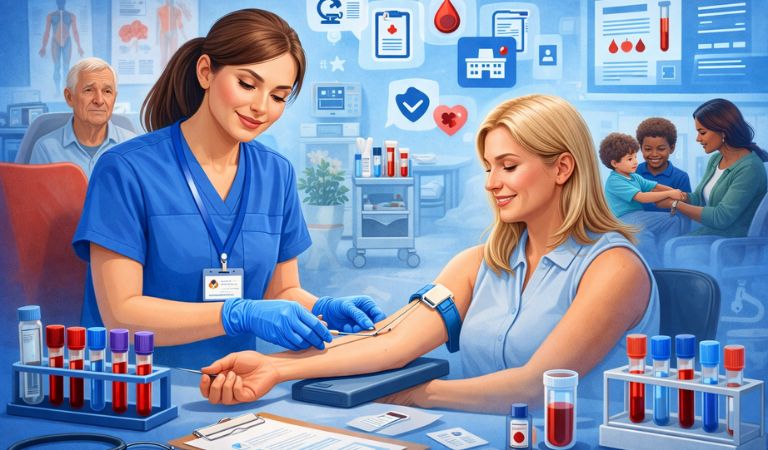
A phlebotomist is a healthcare worker who collects blood samples for medical testing. These tests help doctors check health and find illness early. You will often see phlebotomists working in hospitals, clinics, and GP surgeries.
The main method they use is called venipuncture. This means a small needle goes into a vein to take blood. After that, they send the sample to a lab. Doctors then use the results to choose the right treatment for the patient.
Also, phlebotomists work with many types of patients. This includes adults, children, and older people. Each patient needs care and clear communication. Some people feel nervous about needles. So, the phlebotomist explains each step in a calm and simple way.
Which is why the job needs focus and care every time. It also needs a steady hand and strong attention to detail. Even a small mistake can change test results. So, accuracy matters in every step.
What does a phlebotomist do daily? (240–260 words)
Here’s what a phlebotomist carries out each day:
- Check patient identity: Make sure you have the right patient before starting. This helps avoid mistakes.
- Explain the test: Tell the patient what will happen in simple and clear words.
- Calm nervous patients: Help people feel relaxed if they feel scared or worried.
- Take blood safely: Collect blood from a vein using a clean and correct method.
- Label samples correctly: Write the right patient details on every sample.
- Send samples to the lab on time: Make sure samples go to the laboratory quickly for testing.
- Follow hygiene rules: Clean equipment and follow infection control steps to keep everyone safe.
- Update patient records: Write down the details of the blood test in the system.
- Work with healthcare staff: Talk and share updates with doctors, nurses, and lab staff.
Important point
- Avoid mistakes at all times: Correct patient checks and clear labeling are very important. Even a minor error can impact test results. That is why accuracy matters in every step of the job.
Where do phlebotomists work in the UK?
Phlebotomists work in multiple care settings across the UK. Most work in NHS hospitals. There, they take blood from patients who stay in the hospital or come for tests. Many phlebotomists also work in private hospitals, GP surgeries, clinics, and health centers. These places handle regular check-ups and blood tests every day.
Do they only work in hospitals? Actually no. Phlebotomists work in many places. Some phlebotomists also work in care homes. They support older people who need regular blood tests. In some cases, they also visit patients at home. This helps people who cannot travel easily.
They also work as part of a healthcare team and closely with nurses, doctors, and lab scientists. Here, they send samples and share updates quickly. This teamwork helps doctors make fast and correct decisions for patient care.
What skills do phlebotomists need?
Here are the key skills that define a good phlebotomist:
- Good communication: Speak in a clear and simple way. Explain each step to patients.
- Calm nature under pressure: Stay focused and steady, even on busy days.
- Empathy and care: Understand patient fear and treat everyone with kindness.
- Attention to detail: Check small details to avoid mistakes in blood samples.
- Steady hands and coordination: Take blood samples with care and control.
- Follow instructions: Listen well and follow each step correctly.
- Teamwork skills: Work closely with nurses, doctors, and lab staff.
- Basic computer skills: Enter patient details and keep records updated.
Personal traits that matter:
- Confidence with needles: Stay calm when taking blood.
- Comfort with blood: Feel okay working in medical situations with blood.
- Patience with anxious patients: Help people who feel scared or nervous.
But remember, this job is not only about skill. It is also about care and patience. You use your hands and your heart every day.
What are phlebotomist entry requirements?
Most phlebotomist roles in the UK do not require a degree. Most phlebotomist roles in the UK are entry-level. So you can start with basic skills and the right attitude.
Firstly, many employers ask for GCSEs in English and Maths. These help you speak clearly and handle simple paperwork. Next, some roles may ask for a Health and Social Care study. But many employers still accept you without it.
In some cases, you can apply with no formal qualifications. Instead, employers look at how you behave at work. They want people who stay calm, listen well, and learn fast.
Now let’s talk about experience. It really helps you stand out. You can get it through hospital volunteering or care home work. Also, many people start as healthcare assistants before moving into phlebotomy. Another strong route is an apprenticeship in healthcare support. It gives you training and work experience together.
In the NHS, this path is very common. Many people start as trainee support workers. Then they move into phlebotomy after on-the-job training.
How Do You Become a Phlebotomist Step by Step?
Here’s the thing. The path is simple. You just follow these steps one by one.
Step 1: Get healthcare experience
Try to get some care experience. You can volunteer in a hospital or care home. This helps you learn basic patient care. It also shows how healthcare teams work every day.
Step 2: Check if this job suits you
Think about your own skills. You should feel okay around needles and blood. Also, you need to talk to patients in a clear and kind way. This job needs calm behavior and patience.
Step 3: Apply for trainee jobs
Look for trainee phlebotomist jobs. You can find them in the NHS or private clinics. Many employers take beginners. They also give full training while you work.
Step 4: Learn on the job
You start gaining skills while doing the job. Mainly, you learn how to take blood safely from patients. You also learn hygiene rules and safety steps. A trained staff member guides you all the time.
Step 5: Gain competency
At this stage, you build skill and confidence and repeat the work until you do it in the right way. After that, your workplace may give you a certificate.
Step 6: Take optional courses
You can improve your skills with extra training. Level 2 or Level 3 phlebotomy courses help you grow. Basic Life Support training also helps in real work.
Step 7: Apply for full roles
Finally, you move into a full phlebotomist job. You work on your own with patients. Not only that, you also support doctors, nurses, and lab teams every day.
What training is needed for phlebotomy?
Phlebotomy training in the UK is mostly practical. Most learning happens in real healthcare settings like NHS hospitals and clinics.
Firstly, basic theory comes in. This includes simple anatomy, the study of the body. It also covers how the body works. This helps explain why blood tests matter. Next, practical training starts. Blood collection skills are taught step by step. This is called venepuncture. Safe use of tools also becomes part of the training.
After that, safety rules take focus. Infection control is covered in detail. Proper cleaning of equipment is also included. This protects both patients and staff. Then, communication skills become part of the training. Patients need calm and clear explanations. Many people feel nervous, so simple words matter a lot.
Next, extra training options are available. Private phlebotomy courses can support beginners. Healthcare support apprenticeships also combine training with real work experience. Finally, one key point stands out. Real skill does not come from classroom study alone. Confidence builds through supervised practice in real work settings.
How Much Do Phlebotomists Earn in the UK?
The phlebotomist’s salary in the UK is simple and steady. It grows as skills and experience grow. Most jobs follow NHS pay bands, so the pay stays clear.
Basically, entry-level roles usually pay between £19,000 and £21,000 per year. This is where most people start. At this stage, the focus stays on learning and gaining experience.
Next, with more experience, better roles open up. A team leader can earn up to £23,000 per year. This role also brings more duties at work. After that, higher roles offer better pay. Specialist phlebotomists can earn up to £34,000 per year. This depends on skills, experience, and the workplace.
Then, job options stay flexible. You can work full-time or part-time. Some people also work as locum phlebotomists. These roles pay by the hour and offer flexible shifts.
What is a phlebotomist’s working day like?
A phlebotomist working in the UK is busy and fast. Here’s how a typical day runs in simple steps.
- Check patient identity: Confirm the correct patient before starting. This helps avoid mistakes.
- Prepare tools and equipment: Set up needles, tubes and clean items before work starts.
- Call patients: Call patients in order and guide them to the right place.
- Explain the procedure: Use simple words to explain the blood test clearly.
- Calm nervous patients: Speak in a kind way and help patients feel relaxed.
- Take blood safely: Take blood from a vein using safe and clean steps.
- Label samples correctly: Write correct patient details on every sample.
- Send samples to the lab on time: Send samples quickly for testing.
- Update patient records: Enter clear and correct details into the system.
- Work with healthcare staff: Share updates with doctors, nurses and lab teams.
What is a phlebotomist’s career progression?
Phlebotomist career growth in the UK follows a clear path. You grow step by step as your skills improve. This job can lead to many long-term healthcare roles.
Most people move into senior phlebotomist roles. In this role, you take on more work. You also help new staff learn the job. Next, some move into team leader or supervisor roles. Here, you guide a small team. You also manage daily work and support staff.
After that, some choose to build more skills. They move into healthcare assistant roles with more duties. This lets you take care of more patient needs. Then, some people choose a different path. They move into biomedical science with further study. Others go into specialist lab roles that focus on testing samples.
Finally, one key point is clear. Experience and training open many doors. As skills grow, better roles become easier to reach in the NHS.
Is phlebotomy a good career choice?
Phlebotomy can be a solid option for people who want stable work. It gives steady healthcare work and daily contact with patients.
However, the job also brings some challenges. You work with blood every day. You also meet patients who feel worried or nervous. Long hours on your feet can feel tiring. The job needs strong focus because small mistakes can cause issues.
Still, it suits the right person well. It fits you if you enjoy helping people. It also suits you if you stay calm in stressful situations. Many people choose it because they like practical healthcare work, not office work.
In the end, it depends on how you feel about these tasks. If you feel comfortable, phlebotomy can offer a stable and meaningful career.
Final Thoughts On Becoming A Phlebotomist
So, how do you become a phlebotomist in the UK? The path stays simple and practical. You do not need a long study route. Most people start with on-the-job training in NHS hospitals or clinics.
To begin with, focus on the skills that matter in real work. You need care for patients, clear speaking, and strong attention. These skills matter more than classroom study. Next, look at job demand. Phlebotomy jobs stay steady in both NHS and private healthcare. This gives more chances for stable work.
In the end, this job suits people who care about patients and want steady healthcare work. If you like helping others and learning by doing, this path can fit you well.
No long wait. No confusion. Join our Level 3 Phlebotomy Training Course and get ready for real patient care experience. Get trained, get confident, and step straight into patient care roles with purpose.
FAQs About How to Become a Phlebotomist
1. What qualifications do I need to be a phlebotomist?
- You do not always need a degree. Most employers look for GCSEs in English and Maths. Many people start as healthcare assistants. Then they learn phlebotomy on the job. Some employers also accept beginners with no experience. Training often comes with the role.
2. Is it hard being a phlebotomist?
- It can feel challenging at first. You deal with blood and nervous patients. You also need focus and care. But with training and practice, it becomes easier. Many people build confidence quickly on the job.
3. How long does it take to qualify as a phlebotomist?
- It depends on the route. On-the-job training can take a few weeks to months. Full confidence usually comes with steady practice over time. Some formal courses also take a few weeks.
4. What is the quickest way to become a phlebotomist?
- The fastest route is a trainee role. NHS hospitals often hire beginners. You start work and learn at the same time. This gives real experience from day one.
5. How much does an NHS phlebotomist get paid?
- In the NHS, entry roles often start around £19,000 to £21,000 a year. With experience, pay can rise up to £23,000 or more. Senior or specialist roles can reach around £34,000.
6. What is the hardest part of phlebotomy?
- The hardest part is handling pressure. You must stay calm with anxious patients. You also need to be very careful every time. Small mistakes can affect results, so focus is key.
7. What is the 2 stick rule for phlebotomy?
- The “2 stick rule” means two attempts to find a vein. If it does not work after two tries, another trained staff member steps in. This keeps patients safe and avoids discomfort.
Level 3 Phlebotomist Training
Course Description :
- Certificate: Yes(Free)
- Accreditation: CPD Accredited
- Access: Lifetime