
No products in the basket.
Define COSHH: What Does COSHH Stand For and What Is It?
What does COSHH stand for in full?
The letters in COSHH have a very specific and important meaning. ‘C’ stands for ‘Control’, which means managing a risk very carefully. ‘O’ and ‘S’ stand for ‘Of Substances’, referring to any material used. ‘H and H’ means ‘Hazardous to Health’, which implies something quite dangerous. Together, they create a shield of protection for every single British worker.
What is COSHH in simple terms (plain-English definition)?
In plain English, COSHH is a set of common-sense safety rules. It tells your boss to look for things that could cause injury. For example, a strong cleaning spray might hurt your eyes or lungs. COSHH forces the company to find a safer way to use it. It is like wearing a coat when it rains to stay dry.
Is COSHH a law or a set of guidance documents?
COSHH is a formal law passed by the British Parliament in 2002. It is not just a suggestion or a friendly piece of advice. Companies must follow these rules, or they will face very serious trouble. Because it is a law, you have a legal right to safety. This ensures that profit never comes before the lives of the workers.
Who enforces COSHH in the UK (HSE, local authorities)?
The main group in charge of safety is the Health and Safety Executive. Most people simply call this group the HSE for short. In some smaller shops, the local council or authority might check things. These inspectors visit workplaces to make sure everyone is following the safety law. They have the power to stop work if they find big dangers.
Who does COSHH Apply to in the UK (and who is responsible)?
Does COSHH apply to employers, the self-employed, and sole traders?
The law covers almost every type of worker in the whole country. If you own a business and hire people, you must follow it. Even if you work alone as a sole trader, you have duties. You must protect yourself and anyone else who might be nearby. Essentially, no one is allowed to ignore these vital health protection rules.
What duties do employees have under COSHH?
As an employee, you also have a very important role to play. You must follow the safety training that your employer provides for you. If you are given gloves or a mask, you must wear them. Always report any spills or problems to your manager right away, please. Your cooperation is the only way the safety system actually works well.
Does COSHH apply to volunteers, charities, and community groups?
Yes, these rules extend to people who work for free as well. Charities and community groups must keep their volunteers safe from harmful chemicals. Even if no money is exchanged, the risk of harm remains exactly the same. Therefore, the law protects the kind people who give their time freely. Everyone deserves a safe environment, regardless of their pay or job title.
What happens if more than one contractor works on-site?
Sometimes, many different companies work in the same building or site. In this case, they must all talk to each other about safety. One company’s chemicals must not hurt the workers from another company nearby. They share the responsibility to keep the entire work area very safe. Cooperation prevents accidents that happen when people do not communicate their risks.
Define COSHH for Workplaces: What Substances are Covered Under COSHH?
What counts as a “substance hazardous to health”?
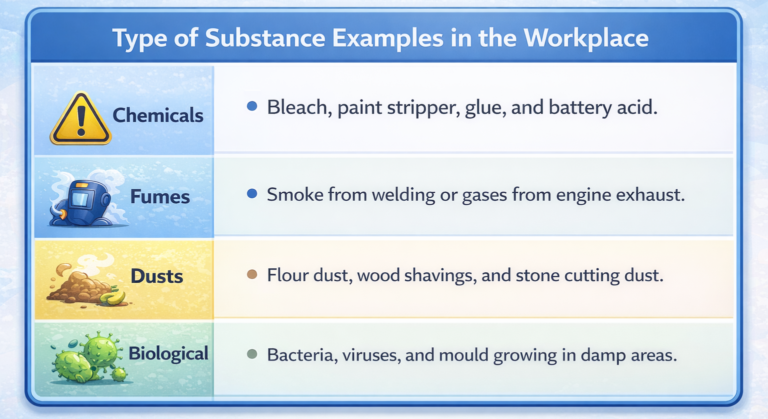
A hazardous substance is anything that can cause you any physical harm. This could be something you touch, breathe in, or even swallow accidentally. It includes mixtures of chemicals or simple things like concentrated fruit acids. If it can damage your body, it is covered by the law. Understanding this helps you identify risks before they cause an actual injury.
Are cleaning products covered by COSHH?
Many people think simple cleaning products are safe because we use them. However, industrial cleaners are often much stronger than the ones at home. Bleach can burn your skin and eyes if you are not careful. Floor cleaners can give off fumes that make you feel very dizzy. For this reason, all professional cleaning supplies fall under COSHH rules.
Are biological hazards covered (e.g., bacteria, viruses, and mould)?
Tiny living things can be just as dangerous as man-made chemicals. If your job involves waste, animals, or healthcare, you face biological risks. Bacteria and viruses can make you very sick or cause long-term illness. Mould in a damp office can also hurt your breathing and lungs. COSHH requires your boss to protect you from these invisible, tiny threats.
Do dusts, fumes, vapours, and mists count under COSHH?
Sometimes the danger is something you cannot see easily in the air. Dust from sanding wood or cutting bricks is very bad for the lungs. Fumes from hot metal or vapours from open paint cans are dangerous. Even a fine mist from a spray bottle can enter your body. The law covers all these forms because they all pose health risks.
What substances are not covered by COSHH?
Not every single dangerous thing is covered by this specific COSHH law. Lead and asbestos have their own special sets of very strict rules. Radioactive materials also fall under a different law for your safety. Explosives and pressurised gases are handled by other safety regulations in Britain. These items are so dangerous that they need their own dedicated legal focus.
What is a COSHH Assessment, and When Do You Need One?
What is the purpose of a COSHH risk assessment?
An assessment is a careful look at what could cause harm. The goal is to decide if you are doing enough safety. It helps the boss plan how to keep everyone healthy and happy. By thinking ahead, the company can stop accidents before they ever happen. This is a proactive way to manage a busy and safe workplace.
When is a COSHH assessment legally required?
You need an assessment whenever hazardous substances are used or produced. If there is a chance of exposure, the law says “stop”. You must write down the risks and the plan for safety. This must happen before the work starts, not after an accident occurs. It is a mandatory step for every responsible business in the UK.
What are the 5 key steps in a COSHH assessment?
Performing an assessment follows five simple steps to ensure nothing is missed. Firstly, you must identify every hazardous substance present in the building. Secondly, decide who might be harmed and how that harm happens. Thirdly, evaluate the risks and decide which safety controls are needed most. Fourthly, record your findings and implement those controls in the real world. Finally, review the assessment regularly to make sure it still works well.
Do you need a COSHH assessment for every product?
You do not need a giant report for every single tiny thing. However, you must consider everything that could potentially cause a health problem. If three products are very similar, you might group them together safely. The important thing is that no risk is ignored or forgotten about. Your safety depends on being thorough and careful with every single item.
How often should COSHH assessments be reviewed in the UK?
There is no fixed date like “every six months” in the law. However, you must review it if the work changes in any way. If you buy a new chemical, you must update your safety plan. Also, review it if you think the old plan is not working. Most excellent companies check their assessments at least once every single year.
How Do You Carry Out a COSHH Assessment (step-by-step)?
1. Where do you find the information you need?
You can find most facts on the product label or bottle. Manufacturers must also provide a Safety Data Sheet, often called an SDS. This document tells you exactly what is inside the chemical bottle. It explains how to treat an injury if someone gets hurt accidentally. Always read these sheets before you start using a new product, please.
2. How do you judge exposure routes?
You must think about how the poison gets into your body. Inhalation means breathing it in, which is very common with fine dust. Skin contact happens if you touch a liquid without wearing thick gloves. Ingestion occurs if you eat with dirty hands or swallow a spray. Lastly, some chemicals can splash and hurt your eyes very badly indeed.
4. How do you choose the right controls?
The UK uses a “hierarchy of control” to make the best choices. The best way is to stop using the dangerous thing entirely. If you cannot, try to swap it for a much safer chemical. You can also use machines to keep the chemicals away from people. Only when these steps fail should you rely on masks or gloves.
5. What PPE is appropriate—and when is PPE not enough?
Personal Protective Equipment (PPE) includes things like goggles, gloves, and aprons. It is your last line of defence against a dangerous chemical spill. However, PPE is never the only solution to a safety problem. A mask might leak, or a glove might tear during a job. Therefore, you should always prioritise making the workplace safer first.
6. What should you record in your COSHH assessment template?
Your record should show that you did a very thorough check. Write down the names of the chemicals and the possible health risks. List the safety steps you have put in place for the workers. Name the people who are responsible for checking the safety equipment daily. This document proves to the government that you are following the law.
What Are Common COSHH Control Measures in UK Workplaces?
How do you safely store chemicals under COSHH?
Chemicals should be kept in a cool, dry, and locked place. Never store them near food or drinks that people might consume. Keep liquids low on shelves so they do not fall on heads. Ensure the storage area has good air moving through it at all times. Proper storage prevents leaks from turning into a very big office disaster.
What does COSHH say about ventilation and extraction?
Ventilation means bringing in fresh air to clear out any bad fumes. Some jobs need a special fan called Local Exhaust Ventilation (LEV). This machine sucks the dust away right where it is being made. It is like a vacuum cleaner for the air you are breathing. Keeping the air clean is one of the most important safety steps.
How should hazardous substances be labelled and decanted?
Every bottle must have a clear label saying what is inside. Never put a cleaning chemical into an old water bottle, please. This mistake could lead to someone drinking the poison by pure accident. If you move a liquid to a smaller jar, label it immediately. Use the correct hazard symbols so everyone can see the danger clearly.
How do you safely handle mixing and dilution?
Mixing chemicals can sometimes cause a dangerous heat or gas reaction. Always follow the instructions on the bottle very carefully and slowly. Usually, you should add the chemical to the water, not vice versa. Wear your goggles and gloves during this process to stay very safe. Never mix two different cleaners together, as they might create toxic gas.
What are the rules on spills, first aid, and emergency procedures?
Every workplace must have a plan for when things go wrong. You should have a spill kit with sand or pads nearby. Know where the nearest eye-wash station and first aid kit are. If a chemical touches your skin, wash it with water immediately. Your boss must train you on these emergency steps before you start.
How do you dispose of hazardous substances safely in the UK?
You cannot just pour strong chemicals down the normal sink drain. This can harm the environment and break several other British laws, too. Use special waste bins for oily rags or empty chemical containers. A professional company might need to come and take the waste away. Following these rules protects our beautiful rivers and land for the future.
What Training and Documentation Do You Need for COSHH Compliance?
What COSHH training should staff receive?
Staff need to know exactly what the risks are at work. They should be taught how to use safety equipment the right way. Training should happen when you start a new job in the UK. It should also be repeated if the rules or the chemicals change. Good training makes sure everyone knows how to stay healthy every day.
What documents should you keep on-site?
You should keep a folder that is easy for everyone to find. This folder should hold all your safety assessments and data sheets. It acts as a library of safety for all the staff members. If an inspector visits, they will want to see these papers first. Keeping good records shows that you take your legal duties very seriously.
Do you need COSHH sheets and a COSHH file/binder?
Yes, having a dedicated COSHH binder is a very smart business practice. It keeps everything organised so you can find information during an emergency. Each chemical should have its own section with the SDS and assessment. This file should be updated whenever you buy a new cleaning product. It is the heart of your health and safety management system.
How do you communicate COSHH risks?
Use bright signs with symbols to warn people about specific dangers. You can also hold short meetings called “toolbox talks” to discuss safety. New workers should receive a full safety induction on their first day. Simple posters in the breakroom can remind people to wash their hands. Clear communication ensures that no one is left in the dark.
What are the penalties for not complying with COSHH in the UK?
What can HSE or local authorities do after an inspection?
Inspectors have several tools to make sure companies follow the law. They can give advice if they find a very small mistake. If the problem is bigger, they might give you a formal warning. They can also charge the company money for the time they spend. Their goal is always to make the workplace safer for you.
What are improvement notices vs prohibition notices?
An improvement notice is a list of things you must fix soon. You usually get a few weeks to make the changes required. A prohibition notice is much more serious and stops work immediately. It means the danger is so high that someone might die today. Work cannot start again until the inspector says the area is safe.
Can you be prosecuted for COSHH breaches?
Yes, the courts can punish companies that do not follow COSHH. This can lead to very large fines that cost thousands of pounds. In the worst cases, business owners can even be sent to prison. These punishments exist to show how important your health is to society. The law ensures that being unsafe is never worth the risk.
Final Thoughts
Staying safe at work is a right that everyone in the UK enjoys. By learning to define COSHH and following the steps, you protect your future. Always remember to ask questions if you are unsure about a chemical. Your boss is there to help you stay healthy while you work. We hope this guide makes your new British job feel much safer. Together, we can keep every workplace free from hidden and dangerous health hazards.
What are the next practical steps for UK businesses?
To stay safe and follow the law, you should act now. You must define COSHH protocols in your office and start your safety checks today.
- Create/refresh COSHH assessments: Look at every chemical you use.
- Gather SDS sheets: Make sure you have the latest manufacturer info.
- Train staff: Tell everyone how to use products without getting hurt.
- Review controls regularly: Check that your fans and gloves still work.
FAQs
1. What is COSHH meaning?
- COSHH means Control of Substances Hazardous to Health Regulations, which are rules that protect workers from harmful substances.
2. What are the 5 main substances covered by COSHH?
- COSHH covers chemicals, fumes, dusts, vapours, and biological agents that may harm health.
3. What are the five principles of COSHH?
- The five principles include identifying hazards, assessing risks, controlling exposure, using protective measures, and reviewing safety procedures.
4. What are the three basic rules of COSHH?
- The three basic rules are to identify hazardous substances, control exposure, and protect workers with safe procedures and equipment.
5. What is the main aim of COSHH?
- The main aim of COSHH is to prevent or reduce workers’ exposure to hazardous substances in the workplace.
6. What are the 7 types of hazards?
- The seven common hazard types are chemical, biological, physical, ergonomic, safety, environmental, and psychosocial hazards.