
No products in the basket.
Have you ever seen a red diamond with a black picture on a cleaning spray or paint tin? Those are COSHH symbols. COSHH means controlling substances that could harm people’s health. It’s the UK system that makes sure chemicals are used, stored and handled safely. In the UK, these hazard symbols are part of the GB CLP system. They replaced old orange signs in 2015, and now they match global rules. Therefore, keep a COSHH symbols poster handy in your chemical store—it could save a life.
This guide explains all nine symbols, what “Danger” and “Warning” mean, and where to spot them at work.
What Are COSHH Symbols?
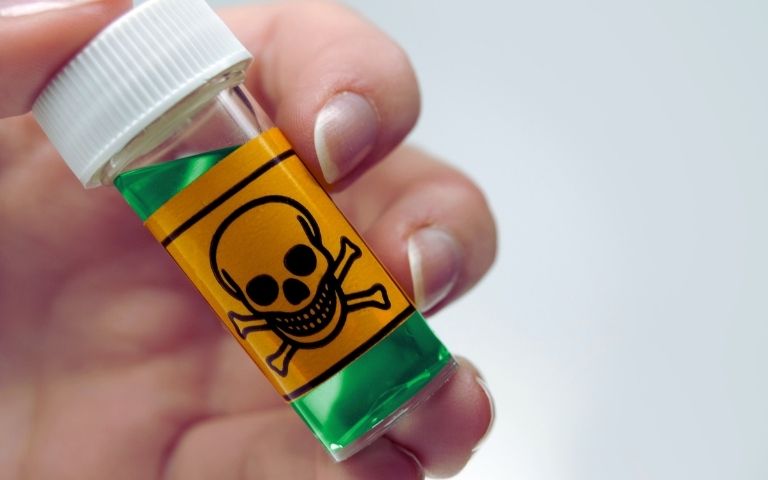
COSHH symbols are the red diamond hazard pictograms used across Great Britain. They show black icons on a white background inside a red border. These are not just stickers—they are official signs under the GB CLP Regulations. You’ll find them on product labels, Safety Data Sheets (SDS), and workplace COSHH signs.
They are different from general safety signs like “Wear Goggles” or “Hard Hat Required”. Hazardous signs tell you about the chemical itself—not what you must do.
For example, a skull means it’s toxic, not that you must wear a mask (though you probably should!). These hazard pictograms help you act fast and stay safe. They are a key part of COSHH symbol meanings and everyday chemical safety.
Why Are COSHH Symbols Used on Chemicals?
COSHH symbols give you instant clues about a chemical’s risks. They help you choose the right gloves, store chemicals safely, or act fast in a spill.
When you see a flame symbol, you know it’s flammable—keep it away from heat. If you spot corrosion, you’ll wear eye protection and check metal shelves for damage. These signs support your workplace COSHH risk assessment.
Because the symbols are the same worldwide, training becomes quicker and clearer. That’s why understanding hazard symbols and meanings matters to everyone handling chemicals. It’s also part of your legal duty under COSHH law.
What Is the Globally Harmonised System (GHS)?
The Globally Harmonised System (GHS) began in 1992. It was created by the United Nations to make chemical rules the same everywhere. Before GHS, one country might call a chemical “dangerous” while another called it “safe”. This confused global trade and put workers at risk.
The UNECE (a UN group) said all nations need consistent information to protect people and the planet. Now, thanks to GHS, a flame symbol means “flammable” in the UK, Japan, and Brazil. Similarly, Great Britain uses this system through the GB CLP Regulations.
So when you learn GHS symbols and meanings, you’re learning a global safety language.
How Did COSHH Symbols Change Over Time?
Before 2015, the UK used orange square signs called CHIP symbols. They looked different and only worked in the UK and the EU.
In 2015, Europe (and later GB) switched to red-diamond GHS/CLP symbols. This change made hazard signs the same as in the US, Canada, Australia, and more. Even after Brexit, GB kept the system and calls it GB CLP. Therefore, never use old orange CHIP graphics in new training or labels—they’re out of date.
Today’s chemistry hazard symbols UK workers see are all red diamonds under CLP rules. This ensures everyone reads the same message, no matter where the chemical came from.
What Are the GB CLP Regulations?
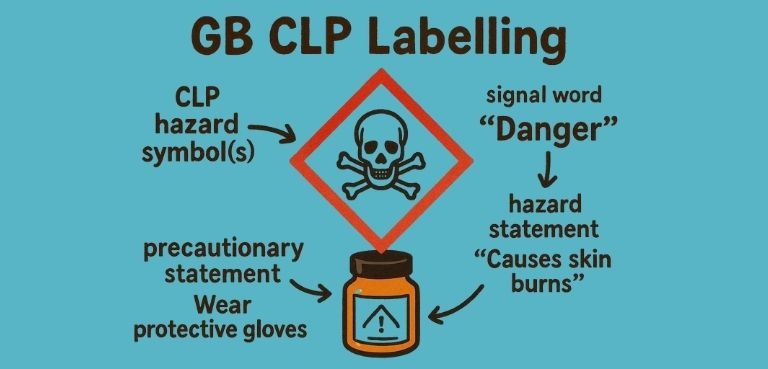
GB CLP stands for Classification, Labelling and Packaging Regulations. These rules say exactly how chemicals must be labelled in Great Britain. Every label must show:
- One or more red-diamond CLP hazard symbols
- A signal word: “Danger” or “Warning”
- A hazard statement (like “Causes skin burns”)
- A precautionary statement (like “Wear protective gloves”)
GB CLP covers nearly every substance used at work—even bleach and glue. It links directly to COSHH risk assessments. If a chemical has a hazard label, it likely falls under COSHH rules too. This is why COSHH hazard labels matter to cleaners, teachers, factory workers, and more.
Why Were the Old Orange CHIP Symbols Replaced?
The orange CHIP symbols were replaced for three good reasons.
- First, to match the global GHS system.
- Second, to reduce mix-ups in international trade.
- Third, so workers everywhere see the same hazardous symbols and meanings.
Imagine a UK worker in Germany—seeing the same flame symbol builds trust and safety. On the contrary, old orange signs are confusing, especially with imported chemicals. Now, thanks to CLP, every hazard symbol means the same thing worldwide. This keeps everyone safer, from warehouses to school science labs.
Who Created the New Hazard Pictograms and Why?
The United Nations designed the GHS pictograms through its UNECE group.
Their goal was simple: give every country clear, consistent chemical information. With this, nations can build strong safety systems for workers, the public, and nature. These chemical risk symbols help governments control chemical use, transport, and disposal.
Because the UK follows GB CLP, we use these UN-made signs too. So every hazard symbol you see is part of a global safety plan. That’s a big reason why hazard symbols chemistry are now easier to learn and apply.
How Do COSHH Symbols Improve Chemical Safety?
COSHH symbols make safety decisions faster and clearer. Workers use three parts of the label together to decide how to handle a substance safely.
- Pictogram – shows the main hazard at a glance.
- Signal word – tells you the severity (“Danger” or “Warning”).
- Hazard and precautionary statements – explain the risks and the steps to stay safe.
This is what makes COSHH hazard warning symbols essential across workplaces. For example, the corrosion pictogram signals skin and eye burns, so gloves, eye protection and metal-safe storage are required. When workers understand hazard signs and symbols and meanings, they handle hazardous substance symbols with more confidence, and COSHH symbol meanings become part of routine safety.
Another example: the long term health hazard symbol (a person with a star on their chest) means cancer or organ damage risk. You’d then check ventilation and avoid breathing fumes. Using COSHH hazard warning symbols this way cuts accidents and keeps teams healthy.
What Do the Nine Hazard Pictograms Mean?
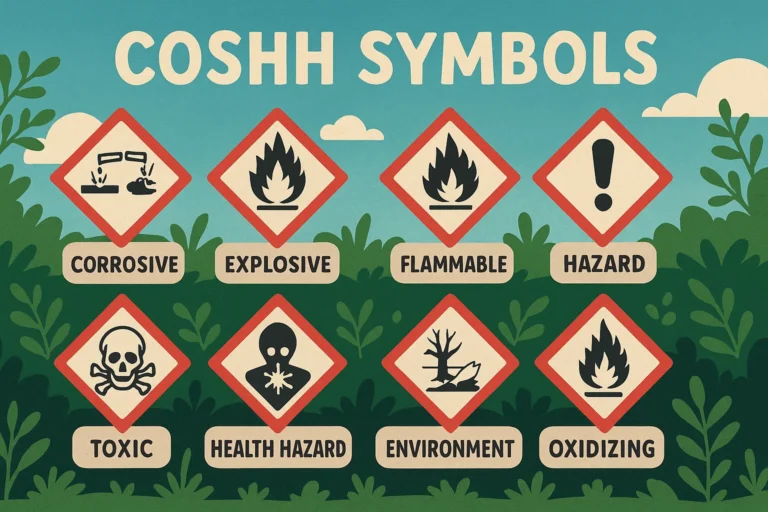
Here’s a simple guide to the nine official GB CLP hazard pictograms:
- Exploding Bomb – Explosive or unstable. Can burst without warning.
- Flame – Flammable. Catches fire easily or heats up on its own.
- Flame over Circle – Oxidiser. Makes fires burn hotter and faster.
- Gas Cylinder – Gas under pressure. It can burst or leak if damaged.
- Corrosion – Burns skin or eyes. Also eats through metal.
- Skull and Crossbones – Acute toxic. Even a small amount can kill.
- Exclamation Mark – Irritant or harmful. May cause dizziness or rash.
- Health Hazard (silhouette) – Serious long-term effects like cancer or breathing trouble.
- Environment (dead tree/fish) – Toxic to water life. Harmful if spilt.
These hazard pictograms UK rules require are your quick safety guide. What is the corrosive symbol meaning? Don’t touch it without gloves. What does the toxic symbol mean? Keep it locked away from food and kids. Therefore, each hazard pictogram tells a clear story if you know how to read it.
What Do “Danger” and “Warning” Signal Words Mean?
Every chemical label shows one signal word—never both.
- “Danger” = high risk (like poison or strong acid)
- “Warning” = lower but still real risk (like mild irritant)
Always read the signal word with the pictogram. For example, a flame with “Danger” means highly flammable—keep far from sparks. A flame with “Warning” might mean it catches fire only if heated. Thus, the CLP warning symbols only tell half the story without the signal word. So check both—every time.
Why Must Workers Understand COSHH Symbols?
Under UK law, employers must control exposure to hazardous substances. This is called a COSHH assessment, and it relies on understanding the harmful symbol and meanings. If you don’t know what a symbol means, you can’t store or use the chemical safely. As a result, mistakes can lead to burns, breathing problems, or fires. Besides, knowing hazardous substance signs helps you:
- Choose the right PPE
- Store chemicals apart (e.g., acids away from bleach)
- React fast in spills or exposure
- It’s not just smart—it’s the law.
Where Can You Find COSHH Symbols in the Workplace?
Look for the COSHH toxic symbol in these places:
- On the original product label
- In the Safety Data Sheet (SDS)
- Using your COSHH risk assessment sheet
- At cabinet doors or chemical store entrances
- Regarding decanted containers (you must re-label these!)
- On delivery notes or shipping boxes
- Inside training posters near workstations
If your team uses cleaning fluids, paints, or solvents, you need visible signs. Hence, a COSHH warning signs poster near the storage area helps everyone stay alert. Moreover, check for the hazard symbol for harmful (exclamation mark) on everyday products like disinfectants.
Final Thoughts on Understanding COSHH Symbols
Coming into the play, spot the pictogram, read the signal word, then check the full safety instructions. Follow your COSHH assessment, and never ignore an old orange label. Replace outdated signs, keep a COSHH symbols UK poster in clear view, and train every new starter.
Even if you’re a cleaner, lab tech, or factory worker, knowing hazard symbols and signs keeps you and your team safe. And remember: the hazardous to environment sign (dead fish) isn’t just about nature; it often means the chemical is risky to you, too.
If you want to build real confidence with chemicals, a short, structured course makes the whole system easier to use. The Control of Substances Hazardous to Health (COSHH) Training Course from Training Tale gives you the necessary steps, examples and scenarios that bring these rules to life.
FAQs About COSHH
1. What are the COSHH symbols?
They’re the hazard pictograms used in the UK to show how a substance could harm people or the environment.
2. What are the 9 hazard symbols?
Explosive, Flammable, Oxidising, Gas Under Pressure, Corrosive, Toxic, Health Hazard, Serious Health Hazard, and Hazardous to the Environment.
3. Are COSHH symbols required by law?
Yes. Employers must use the correct symbols under UK safety regulations.
4. What are the 10 golden rules for COSHH?
Identify hazards, read labels, follow your COSHH assessment, use PPE, work in ventilated areas, store chemicals safely, avoid mixing substances, clean spills quickly, wash hands, and report issues.
5. Is caution a COSHH symbol?
No. “Caution” is a general safety message, not an official COSHH pictogram.
6. What are the 7 types of chemical hazards?
Physical, health, environmental, corrosive, reactive, toxic, and flammable hazards.
7. How many official COSHH symbols are in use?
There are nine official pictograms used under the current CLP system.
8. What are the most common chemical symbols?
Flammable, corrosive, toxic, health hazard, and environmental hazard are the ones you’ll see most often.
9. What are the 5 main substances covered by COSHH?
Chemicals, fumes, dusts, vapours, and biological agents.
10. What are safety symbols?
Simple images are used to warn, guide, and protect people by showing risks or required actions at a glance.