No products in the basket.
What is the COSHH definition, and why does it matter so much in the UK today? This is a question many people ask when they want to stay safe. Recent safety reports show that thousands of workers still get ill each year because they do not follow these rules correctly. We want everyone to feel protected, but sometimes the big words in safety books feel a bit tricky to read. However, following these steps is essential for every school and office to prevent accidents.
But do not worry at all because we make the 2026 safety guidelines simple for everyone to follow. By the end of this easy guide, you will understand these rules and spot dangers like a pro detective. Let’s start this journey together and make your environment the safest place it can be.
Why Do We Need a Specific COSHH Definition?
Why do we need a specific COSHH in our daily lives? First of all, these rules act as a mask to stop people from getting itchy skin or nasty coughs. Because some liquids are very strong, the law in the UK says every workplace must keep its people safe.
- Health Protection: These rules stop people from getting itchy skin or nasty coughs.
- Legal Rules: It is the law in the UK to keep every student and teacher safe.
- Knowledge: Everyone needs to know exactly what is inside every single bottle.
- Safety First: Cleaners use strong chemicals that require special care every day.
In addition to these points, having a clear set of rules helps everyone work together without any confusion. Consequently, this special definition ensures that everyone knows how to handle hazardous substances properly. However, when we follow these guidelines, we create a much happier and healthier environment for everyone to enjoy.
What are the Different Types of Hazardous Substances?
Many things around us can be a bit tricky to handle. Because some items look like water or sugar, we must learn to identify them correctly. Consequently, we can split these items into four main groups so they are much easier for everyone to understand and remember.
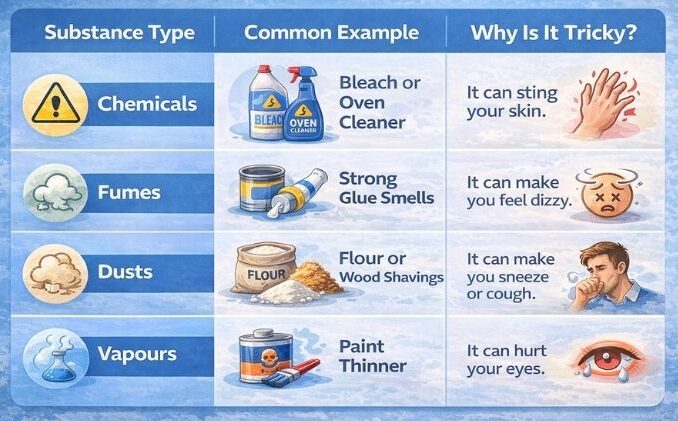
In addition to these common groups, always remember that some hazards are completely invisible. Furthermore, even a small amount of a substance can cause a big problem if you do not use it properly. Therefore, you should always check the label first to see which group the substance belongs to before you start your work.
Did You Know?
Even something that smells like lemons or flowers can be hazardous if it gets in your eyes. Always ask an adult before you touch a cleaning spray.
How Can You Identify a Hazard Using COSHH Symbols?
Finding a red diamond on a bottle is your first clue in the big safety game. These bright pictures are the special language of the COSHH. Because these signs appear on bottles all over the UK, anyone can look at a label and immediately know the danger. For instance, a skull and crossbones warns you that a liquid is very toxic and dangerous to touch. Furthermore, a flame symbol tells you to keep that container far away from any heaters or matches. If you see an exclamation mark, it simply means you must be extra careful and follow the instructions. Consequently, these simple pictures act like a shield to keep you safe from harm.
Always remember that these labels are there to help you stay healthy. Therefore, you should never pick up a bottle if you see one of these red diamonds on the back. By checking for these clues, you become a safety champion who knows exactly how to avoid accidents.
What are the Risks of Ignoring COSHH?
Ignoring COSHH can lead to many different problems in our daily lives. Some strong liquids can hurt your body in ways you might not expect. Consequently, we must learn about these five main risks so we can avoid them and stay healthy. Furthermore, when we know the dangers, we can take the right steps to protect ourselves and our loved ones.
- Skin Irritation: You might get red rashes or itchy spots on your hands.
- Prevention Tip: Always wash your hands after science class or after using any liquids.
- Eye Damage: Some liquids cause a very painful stinging feeling if they splash.
- Prevention Tip: Wear safety goggles during experiments to keep your eyes safe.
- Breathing Problems: Strong smells or dust can make you cough or feel short of breath.
- Prevention Tip: Keep the room well ventilated and airy to let the fresh air in.
- Fires: Flammable liquids can start a fire if they get too hot or stay near a flame.
- Prevention Tip: Store bottles away from heaters and bright sunlight.
- Long-term Sickness: You might feel poorly much later in your life because of bad habits now.
- Prevention Tip: Follow every safety rule every single time to stay healthy for the future.
In addition to these five risks, remember that accidents often happen when people are in a hurry. Therefore, you should always take your time and read the labels carefully before you open any bottle. By staying calm and following the rules, you can prevent these problems from happening.
How Training Tale Teaches Safety?
Training Tale works just like a super school for adults. We teach teachers and office workers how to be safety experts by taking the scary words out of the COSHH. Because we use simple language, it helps big people understand exactly how to protect small people from harm. Consequently, when an adult finishes our special COSHH training course, they receive a certificate to show they are a safety champion.
In addition to earning a certificate, these learners find out how to read labels and use chemicals correctly. Furthermore, they discover the best ways to keep every room in a building clean and safe. Therefore, this training makes the whole world a much better place for students like you. Since safety is a team effort, having trained adults around means everyone can focus on learning and having fun without any worries.
What are the Steps of a COSHH Risk Assessment?
- Step One: Identify the hazard by looking for those red diamonds on every bottle and box.
- Step Two: Decide who might get hurt or feel poorly if an accident happens nearby.
- Step Three: Evaluate the risk and see how likely an accident is to occur during the day.
- Step Four: Record the findings in a special safety notebook so everyone can read the rules.
- Step Five: Review the plan regularly to make sure it still works as the workplace changes.
In addition to these steps, always remember that a good plan needs to be updated often. Therefore, if a new cleaning spray arrives, the safety detective must start at step one again. By following this cycle, the environment stays protected because everyone knows exactly what to do.
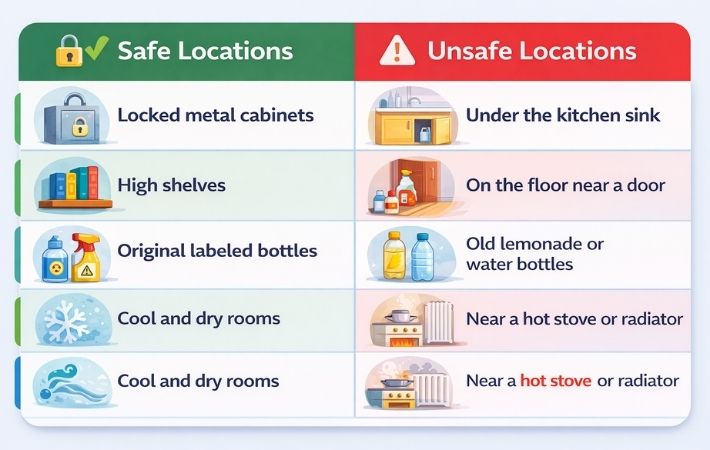
Where Should Hazardous Substances Be Stored Safely?
Keeping things in the right place is a huge part of safety. Check out this list of good and bad areas.
What PPE Do People Use?
Think of PPE as a special safety suit for work. Because some jobs involve messy or strong substances, workers must wear the right gear to stay healthy. Consequently, you will often see people wearing different items depending on the task they are doing.
- Rubber Gloves: Protect your skin from stings or burns when handling liquids.
- Safety Goggles: These look like big science glasses and keep splashes out of your eyes.
- Face Masks: Some people wear these so they do not breathe in dusty air or strong smells.
- Aprons: These keep your clothes clean and provide an extra layer of protection.
In addition to these items, PPE only works if you wear it correctly every single time. Therefore, it is just like wearing a helmet when you ride your bike because it is there to protect you just in case. Furthermore, when workers use their safety gear, they can do their jobs confidently without any worries.
Why is COSHH Important for Your Career?
Understanding the COSHH definition now will give you a head start when you begin your first job. Because every workplace in the UK uses some kind of cleaning liquid or material, bosses always look for people who know how to stay safe. Consequently, having this knowledge makes you a very helpful and reliable team member from your very first day.
In addition to helping you get a job, these rules ensure you stay healthy throughout your entire life. Therefore, by learning to handle substances correctly now, you are protecting your future self from getting ill. Furthermore, being a safety expert shows that you care about your colleagues just as much as you care about yourself.
Final Thought on COSHH definition
Learning about COSHH is a great way to start your safety journey. Because we know how to detect hazards, we can now act like expert detectives. These rules help us stay healthy whether we are at home or in a busy workplace. Consequently, following every label keeps our friends and us out of harm’s way.
In addition to being smart, sharing what you know makes every environment better. Therefore, always look for those red symbols and ask an adult if you feel unsure. By working together, we make every day a safe and fun adventure.
Frequently Asked Questions (FAQs)
1. What is the meaning of COSHH?
- COSHH stands for the Control of Substances Hazardous to Health. It is a set of UK laws that requires bosses to protect their workers from dangerous things like chemicals, dust, and fumes.
2. What are the five principles of COSHH?
- Assessment: Finding out what the dangers are in the building.
- Control: Using safety equipment to stop the danger.
- Instruction: Teaching everyone how to stay safe.
- Monitoring: Checking the air and surfaces regularly.
- Review: Making sure the safety plan still works every year.
3. What are the 5 main substances covered by COSHH?
- Chemicals: Like strong bleach or cleaning sprays.
- Fumes: Such as the smell from strong glue or paint.
- Dusts: Like flour in a bakery or wood shavings in a workshop.
- Vapours: The invisible mist that comes off liquids like petrol.
- Gases: Like the gas used for cooking or heating.
4. What are the three basic rules of COSHH?
- Identify: Look for the red diamond symbols on bottles.
- Protect: Wear gloves or goggles if the label says so.
- Store: Put dangerous bottles away in a locked cupboard when you finish.
5. What are the main COSHH requirements?
- Managers must check for dangers to keep everyone safe.
- They must provide safety gear like masks and gloves for free.
- They must have a clear plan for what to do if a spill happens.
6. What are the 7 types of hazards?
- Toxic: Something that can make you very ill if swallowed.
- Corrosive: Something that can burn your skin or eyes.
- Flammable: Something that catches fire very easily.
- Oxidising: Something that makes a fire burn much hotter.
- Irritant: Something that makes your skin itchy or red.
- Explosive: Something that can go bang if it gets too hot.
- Environmental: Something that can hurt fish and trees if poured down the drain.
7. What is a COSHH checklist?
- A COSHH checklist is a simple list used to check if a workplace is safe. It includes questions like: Are all bottles labelled? Is the safety gear clean? Are the cupboards locked?
8. How to explain COSHH in an interview?
- You should say that COSHH is a law that keeps people safe from hazardous substances. Explain that you always check labels for safety symbols and follow the instructions to prevent accidents.
9. What are the 9 symbols of COSHH?
- The nine symbols are: Explosive, Flammable, Oxidising, Gas Under Pressure, Corrosive, Toxic, Health Hazard (Exclamation Mark), Serious Health Hazard (Star on Chest), and Environmental Hazard.

Control of Substances Hazardous to Health (COSHH) Training Course
Course Description :
- Certificate: Yes(Free)
- Accreditation: CPD Accredited
- Access: Lifetime