
No products in the basket.
Germs spread very fast when we share dirty tools. Unexpectedly, touch spreads nearly 80% of infections. COSHH cleaning colour codes solve this big problem in our daily lives. They stop harmful bacteria from moving from toilets to kitchens. The British Institute of Cleaning Science (BICSc) set these helpful standards in the late 1990s.
The COSHH handles dangerous chemicals, while the colours manage your equipment. You need both systems for a safe job. By the end, you will know how to set up a clean system.
What are COSHH Cleaning Colour Codes, and Why Do They Matter?
Cleaning involves more than just wiping a dirty table. You must control risks to keep people healthy. Control of Substances Hazardous to Health is what COSHH stands for. It covers the safe use of cleaning chemicals. However, chemicals are only half of the safety story. The colour codes for COSHH cleaning are the other vital half.
These codes separate your tools based on the area. This system stops germs from spreading across a building. We call this spread “Cross-contamination”. Imagine using a cloth on a toilet seat. Then, imagine using that same cloth on a desk. That spreads dangerous germs instantly. The colouring system prevents this mistake.
Is this system a strict law in the UK? Actually, colour coding itself is not a specific law. However, the Health and Safety at Work Act requires safety. Therefore, using COSHH cleaning colour codes is considered best practice. It proves you are trying to keep everyone safe. Inspectors look for this system during their visits.
Furthermore, it makes the job easier for staff. They do not have to guess which cloth to use. The colour tells them the answer instantly. This procedure protects the cleaner and the people in the building. A simple system works best for everyone.
Which UK Cleaning Colour Code Chart Should You Use (Red/Blue/Green/Yellow)?
Most places in the UK follow one standard chart. This standard was created by industry experts. It uses four bright and distinct colours. This keeps things clear for every single worker.
Here is the standard mapping used by most companies:
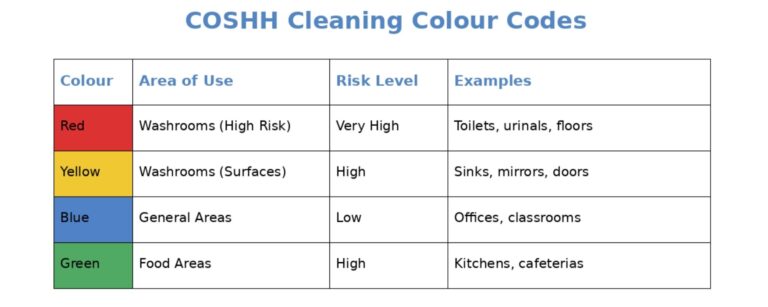
- Red is for the dirtiest places. We use red for toilets because they have high bacteria counts. Using the cleaning colour codes of COSHH here helps prevent serious illness. Never take a red cloth out of the washroom.
- Yellow is also for the washroom. However, it is for cleaner surfaces like sinks. You do not want toilet germs on the sink tap. Therefore, we separate red and yellow even in the same room.
- Blue is for low-risk zones. These are places like offices or hotel bedrooms. The risk of infection here is usually lower. Still, we keep blue separate to maintain high standards.
- Green is strictly for food. Food safety is crucial in the UK. If raw meat touches a cleaning cloth, germs grow. Green equipment stays in the kitchen to stop this.
Do these meanings ever change? Sometimes, a specific site might change the rules. For example, a hospital might have extra colours. However, the four colours above are national standards. Always verify your site plan first.
You must colour-code all your equipment. This includes:
- Microfibre cloths
- Mop heads and handles
- Buckets and wringers
- Dustpans and brushes
- Protective gloves
- Spray bottles
How Do You Create a Site-Specific Cleaning Colour Coding Plan?
Every building in the UK is slightly different. You need a plan that fits your specific rooms. First, you must walk around your building. Look at every room and decide on its risk.
Map your building into hygiene risk zones carefully. A kitchen is always a green zone. A toilet block is always a red and yellow zone. An office is a blue zone. Mark these zones on a simple floor plan.
Next, assign colours without leaving any gaps. Make sure every single room has a colour. Hallways are usually blue. Meeting rooms are blue. Staff canteens are green. If you are unsure, choose the safer option.
How do you align staff to one system? You might have contractors or visitors helping you. Everyone must use the same colour codes for COSHH cleaners. If a visitor helps clean, they must know the rules. You cannot have two different systems in one building. That confuses.
Your written procedure should be very simple. It should include:
- Scope: Where the cleaning happens.
- Zones: Which rooms are of which colour?
- Equipment: What tools have you bought?
- Storage: Where items live.
- Laundry: How to wash clothes.
Finally, roll it out slowly to save money. You do not have to throw everything away today. Phase out the old equipment over a few weeks. Replace old grey mops with new coloured ones. This is cheaper and easier for the budget.
How Do COSHH Cleaning Colour Codes Fit Into COSHH Risk Assessments?
This part confuses many people. COSHH is about chemical safety. Colour coding is about hygiene. However, they work together perfectly. The COSHH codes’ cleaning colour sits inside your “control measures”.
When you write a risk assessment, you list hazards. “Spreading infections” is one hazard. The control for this scenario is “use separate coloured equipment”. Therefore, the colours are part of your safety paperwork.
You must link controls to each cleaning task.
- Task: Cleaning a toilet.
- Chemical: Toilet cleaner (Hazardous).
- Control: Wear gloves and use red equipment.
- Result: Safe staff and a clean toilet.
Always check the Safety Data Sheets (SDS). These sheets tell you about the chemical risks. They might say, “Wear gloves.” Your system says, “Wear RED gloves.” “See how they link up?
You must also think about dilution rates. This is how much water you mix with the chemical. Mixing chemicals wrongly is dangerous. Using the right colour bucket helps. For example, a red bucket might always need 50 ml of sanitiser. Staff will remember this easily.
There is a difference between symbols and colours. Chemical bottles have hazard symbols (like a skull or flame). These warn you about the liquid inside. COSHH cleaning colour codes warn you about the area of use. Do not confuse them.
Keep records to prove you are compliant. You should keep:
- Training registers for all staff.
- Copies of your risk assessments.
- An incident log for any mistakes.
- Audit sheets showing monthly checks.
What Training and Signage Do Cleaning Teams Need to Follow the System?
A system is useless if no one understands it. Training is the key to success. You must train every new starter immediately. Do not let them be clean until they know the colours.
Your induction should cover the basics clearly. Show them the chart. Hand them a red cloth and ask where it goes. Ask them what green is for. This procedure checks their understanding quickly.
Many cleaning teams in the UK speak different languages. This is very common. Because colours are universal, COSHH colour codes are excellent. Red looks the same in every language.
However, you should still use visual aids. Do not rely only on written words. Use pictures and icons on your posters. A picture of a toilet on a red background is clear.
Display these posters in the right places. Putting a poster in the office is not enough. You need them where the work happens.
- Put a red chart on the cleaner’s cupboard door.
- Stick a small guide on the cleaning trolley.
- Place a reminder near the washing machine.
Refresh the training regularly. People forget things over time. Hold a short meeting every few months. We call this event a “toolbox talk”. Remind them why the cleaning colour code for COSHH matters.
Toolbox Talk Agenda Example:
- Ask the team if they have seen any issues.
- Show the four colours again.
- Determine if any equipment is broken.
- Remind them about chemical safety (COSHH).
- Thank them for keeping the building safe.
How Should You Store, Launder and Replace Colour-Coded Cleaning Equipment?
Storage is where many systems fail. Imagine you wash the clothes perfectly. Then, you throw them all into one big pile. The red cloths touch the blue cloths. Now, the blue clothes are dirty again.
You must stop colours from being mixed during storage. Use separate shelves or boxes. Have a red box for red clothes. Have a blue box for blue clothes. Hang mops on a rack so the heads do not touch.
COSHH cleaning colour codes also apply to laundry. You should wash high-risk items separately.
- Wash red and yellow items (washroom) together.
- Wash green (food) items strictly alone.
- Blue (general) items alone if possible.
- Use a high temperature (usually 60°C or higher) to kill germs.
When should you replace the equipment? Cleaning tools do not last forever. A torn cloth holds germs. A bald mop head does not clean well. Set simple rules for inspection.
Check your kit every week. If a handle is cracked, replace it. If a bucket is cracked, replace it. Germs hide in cracks and scratches.
Avoid “emergency swapping” at all costs. This happens when you run out of supplies. A cleaner runs out of blue cloths. They grab a red one to finish the office. This situation breaks the whole system.
To prevent this, manage your stock levels. Keep extra packs of every colour. Do not wait until the last cloth is gone to order more. Effective cleaning colour codes depend on good inventory management.
What Are the Most Common Colour Coding Mistakes—and How Do You Prevent Them?
Even the best teams make mistakes sometimes. It is human nature. However, in cleaning, mistakes can make people sick. You must watch out for common errors.
Mistake 1: Running out of one colour.
As mentioned, staff will borrow other colours.
- Fix: Keep plenty of stock locked away.
Mistake 2: Using one bucket for everything.
Some cleaners carry one bucket and swap the water.
- Fix: Give them a trolley with separate coloured buckets.
Mistake 3: Poor storage mixing.
Cleaners throw damp cloths in a heap.
- Fix: install hooks and drying racks.
Mistake 4: No audit checks.
Managers assume everything is fine.
- Fix: Check the cleaner’s cupboard once a week unexpectedly.
Mistake 5: Ignoring chemicals.
Staff rely only on colour and forget about chemical safety.
- Fix it: Remind them that COSHH colour codes and chemicals go together.
Another issue is “colour blindness”. Some employees may struggle to see colours. If this happens, use labels. Write “TOILET” on the red handle. This technique helps everyone include those with vision issues.
How Do Different UK Settings Apply Colour Coding (With Examples)?
Different buildings have different needs. The standard four colours work most of the time. However, the environment changes the risk level.
Offices and Shared Workplaces
Here, the blue zone is the biggest. Desks, phones, and keyboards hold germs. However, they are not “high risk” like a toilet. The focus here is dust and general grime. COSHH cleaning colour codes ensure the toilet germs don’t reach the coffee machine.
Schools and Nurseries
Children share everything, including germs. Hygiene is vital here. You might use yellow for “classroom sinks” and red for toilets. You must be very strict. Kids touch the floor often. Therefore, floor mops must be very clean.
Care Homes and Healthcare
These are very high-risk areas. Elderly people get sick easily. Healthcare often adds a fifth colour.
- White: Medical or clinical equipment.
- Isolation Rooms: Disposable equipment only.
In these settings, COSHH cleaning colour codes save lives. Cross-infection here can be fatal. Staff must follow the rules perfectly.
Kitchens and Food Areas
Green is the king here. Everything must be green. But be careful. Do not use the same green cloth for raw meat and cooked food.
- Kitchens often use disposable paper for raw meat.
- They use green cloths for surfaces.
- This links to HACCP (food safety) principles.
Quick Compliance Checklist: Is Your Cleaning System Audit-Ready?
Are you ready for a safety inspection? Use this simple checklist. If you tick every box, your system is functioning properly.
- Policy: Do you have a written COSHH cleaning colour codes policy?
- Map: Do you have a floor plan showing the zones?
- Consistency: Do all shifts use the same colours?
- Chemicals: Are COSHH assessments up to date?
- SDS: Are Safety Data Sheets available for staff?
- Training: Is every cleaner trained on the colours?
- Storage: Are colours separated in the cupboard?
- Laundry: Is the washing process safe?
- Stock: Do you have spare clothes in all colours?
- Audits: Do you record your checks monthly?
If you miss a box, fix it today. It is easier to fix it now than explain it to an inspector later.
Conclusion: What Should You Do Next?
Correct COSHH cleaning colour codes protect both staff and the public. They are a simple tool for a complex problem. By separating your equipment, you stop germs from travelling. This keeps your building healthy and compliant.
Safe workplaces are colour-coded. Ensure your team understands the risks today. For more official guidance on chemical safety, you can also visit the HSE COSHH website.
FAQ
1. What are the color codes for cleaning?
- Cleaning colour codes use different colours (such as red, blue, green, and yellow) to prevent cross-contamination between areas.
2. What are the four colors used for cleaning equipment?
- The four main colours are red (toilets), blue (general areas), green (kitchens/food areas), and yellow (washrooms).
3. What is COSHH in cleaning?
- Control of Substances Hazardous to Health Regulations 2002 (COSHH) in cleaning refers to safely handling and storing cleaning chemicals to protect health.
4. What is the BICS color coding for cleaning?
- British Institute of Cleaning Science colour coding uses red for toilets, blue for general areas, green for kitchens, and yellow for washroom surfaces.
5. What are the 7 safety colors?
- The seven safety colours include red, yellow, blue, green, orange, purple, and black, each with different meanings for different hazards and safety.
6. What are the different cleaning codes?
- Cleaning codes refer to colour coding systems and product labels used to identify cleaning tasks and areas.
7. What are the 5 color codes of awareness?
- The five awareness colours often include red, amber, green, blue, and purple to indicate different safety or risk levels.
8. What is R1, R2, R3, R4, R5 in housekeeping?
- R1 to R5 are cleaning product codes used for tasks like toilets (R1), washroom surfaces (R2), general cleaning (R3), disinfecting (R4), and glass cleaning (R5).
9. What is R6, R7, R8, R9 in housekeeping?
- R6 to R9 include products for descaling (R6), floor cleaning (R7), kitchen degreasing (R8), and specialist cleaning tasks (R9).
10. What are the 5S’s of housekeeping?
- The 5S’s are sort, set in order, shine, standardise, and sustain to maintain a clean and organised workplace.