
No products in the basket.
Good communication skills in health and social care are very important. Workers need to be kind and caring when they talk to patients. First, they must handle emotional, tricky, and digital situations. Also, they should listen carefully and overcome different communication problems. Next, they need to work well in both virtual and face-to-face settings. Finally, using these skills helps staff give safe and effective care while following rules. About 70 % of patients say they are happier with their care when communication is clear and respectful, which shows why these skills are so important.
Let’s explore how clear talking and listening help build trust and support people better.
Why Are Communication Skills Important in Health and Social Care?
Good communication in the UK health and social care is very important. It keeps patients safe, helps with correct diagnosis, and makes care focused on the person. Clear communication improves health, follows care plans, builds trust, respects people, and helps teams work together. Also, it helps staff follow the law and professional rules.
Why Communication Skills Are Important
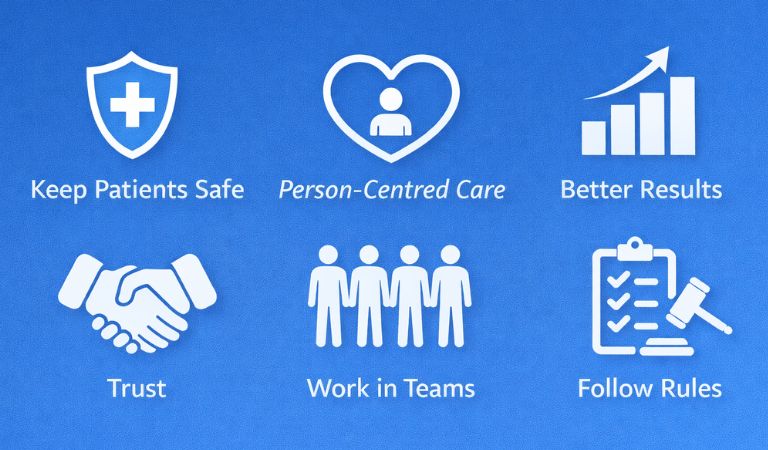
1. Keep Patients Safe
Clear and kind communication helps prevent mistakes. For example, giving the wrong medicine or missing an important symptom can be avoided. It helps staff understand patients better and give the right care.
2. Person-Centred Care
Communication lets people share their needs, wishes, and choices. This means care can match what the patient really wants. It also helps patients feel respected and valued.
3. Better Patient Results
Patients who feel listened to are more likely to follow treatment plans and manage their health well. In addition, they feel happier and more confident in their care.
4. Build Trust and Understanding
Good communication builds trust between staff, patients, and families. It also reduces stress and fear. Patients are more relaxed when they feel understood.
5. Work Well in Teams
Communication helps staff share information clearly. It avoids repeated work, confusion, and mistakes. Teams can plan care better and work more smoothly.
6. Follow Rules and Laws
Staff must follow laws and rules about privacy and confidentiality. Finally, they need to share information safely and treat patients with respect. This keeps the care professional safe for everyone.
What Are Common Barriers to Effective Communication?
Sometimes, communication can be difficult in health and social care. First, language and cultural differences can make it hard to understand each other. Patients may speak a different language or have different customs, which can confuse.
Also, hearing or speech problems can make it hard for patients or staff to share important information. For example, a patient with hearing loss may miss instructions or a staff member with speech difficulties may struggle to explain clearly.
Next, stress and strong emotions can affect communication. Patients may feel scared or anxious and staff may feel under pressure. This can lead to misunderstandings, even when both try their best.
Finally, medical words and technical terms can confuse patients. Many people may not understand words like “diagnosis” or “treatment plan.” As a result, they may feel worried or frustrated.
Being aware of these barriers helps staff communicate better. In addition, using simple words, gestures, pictures, or written notes can make things easier. Good communication takes practice, but it helps patients feel safe, respected, and cared for. Overall, it also helps staff do their job well and avoid mistakes.
What Are the Different Types of Communication Skills?
Good communication skills in health and social care are very important. They help staff keep patients safe, give correct care, and make care centred on the person. Also, communication includes using digital tools, showing empathy, and being clear on virtual platforms. For example, understanding a patient’s needs helps prevent mistakes.
Key Communication Skills
Active Listening
Active listening means fully focusing on the speaker. This way, staff understand patients better and respond carefully. Misunderstandings are avoided.
Verbal Communication
Speaking clearly in meetings, presentations, or team discussions is important. In addition, using the right tone and confidence helps others understand ideas better.
Written Communication
Clear emails, reports, and documents are essential, especially for remote teams. Also, short and professional writing prevents confusion.
Non-Verbal Communication
Body language, facial expressions, and eye contact show understanding. Moreover, this is very important in virtual meetings.
Visual Communication
Charts, infographics, and screen-sharing make ideas simple to understand. As a result, patients and staff follow instructions more easily.
Digital & Hybrid Skills
Switching between in-person meetings, video calls, and messages requires hybrid fluency. Therefore, communication fits the platform. Using AI tools helps summarise information. However, results must always be checked carefully.
Interpersonal & Emotional Skills
Emotional intelligence means understanding feelings and showing empathy. In fact, this builds trust with patients. Respecting cultural differences helps people feel included. Similarly, conflict resolution and negotiation solve disagreements calmly. Finally, assertiveness allows staff to share ideas respectfully.
About 70 % of patients say they are happier with their care when communication is clear and respectful. This shows how important these skills are in health and social care.
How Can Communication Affect Mental Health and Well-being?
Good communication can really help mental health. Here is how:
- Builds confidence: Patients feel more confident when staff explain things clearly and listen carefully. For example, this can help them get better faster and feel safe.
- Reduces stress: Being kind, calm, and clear makes patients feel supported. At the same time, staff feel less worried when everyone understands each other.
- Creates a positive environment: Good communication makes people feel respected and cared for. As a result, everyone feels better and safer.
What Are Practical Tips and Best Practices for Communication?
Here are some easy tips to communicate well in health and social care:
- Listen carefully: Pay full attention and show you care. For example, nod or repeat what they say to check understanding.
- Use simple words: Avoid medical words unless you explain them. Then, speak slowly and clearly so patients feel safe.
- Be kind and calm: Your tone matters. In addition, patience helps anxious or upset patients feel better.
- Check understanding: Ask questions to make sure patients understand instructions. This way, mistakes are avoided.
- Give and get feedback: Listening to colleagues and patients helps you improve. Moreover, it builds trust and teamwork.
Following these tips makes communication easier. Finally, clear and kind communication helps patients feel respected, and staff feel confident.
How Can You Improve Communication Skills in Health and Social Care?
Good communication skills can be learned. Training and workshops show simple ways to talk and listen to patients. They also teach how to handle tricky situations, like emotional patients or misunderstandings.
Practising active listening every day is very important. Pay full attention when someone talks and show that you care. Ask questions if you do not understand. Use clear and simple words. Avoid medical words unless you explain them. Speak slowly and calmly so patients feel safe.
Ask for feedback from colleagues and patients. Find out what you do well and what you can improve. Take notes and work on suggestions.
Practise every day by talking clearly, listening carefully, and explaining things simply. Over time, your communication will get better. Patients will feel cared for, and teamwork will be easier.
What Are Examples of Poor Communication and Their Impact?
Poor communication can cause problems in health and social care. Misunderstood instructions can confuse patients or staff. A patient may take the wrong medicine or miss a step in their care, which can be scary for them.
Patient dissatisfaction is another problem. When patients feel they are not listened to or do not understand what is happening, they may feel worried or frustrated. As a result, they can lose trust in staff, even if the care is good.
Errors in care can also happen. If staff do not explain clearly or check that patients understand, mistakes can occur. For example, giving the wrong dose or missing a procedure can hurt the patient. These situations are stressful for both patients and staff.
Overall, poor communication affects safety, trust, and confidence. Because of this, teamwork can also be harder since staff may misunderstand each other. Good communication helps prevent problems and makes patients feel safe and respected.
How Can Effective Communication Improve Patient Outcomes?
Good communication can make a big difference in patient care. For example, it helps build trust and friendship. When patients feel listened to and understood, they feel safe. This also makes them more confident in their care.
Clear communication can stop misunderstandings and mistakes. Because of this, patients are less likely to get the wrong treatment or miss important instructions. Staff can work better together when everyone understands each other.
Good communication also helps patients feel better emotionally. Also, talking kindly, showing care, and explaining things clearly can help patients feel less worried or scared. Feeling cared for makes their experience much better. Overall, strong communication helps patients feel safe, understood, and respected. This improves their health and helps staff give the best care possible.
How Can You Handle Conflict and Difficult Conversations?
Conflict can happen in health and social care. Here are some ways to handle it:
- Listen carefully: When a patient or family member is upset, pay full attention. For example, nod, make eye contact, and show that you understand their feelings. This helps them feel heard and respected. Listening carefully also helps you understand the real problem.
- Handle complaints and disagreements calmly: Speak clearly and kindly. As a result, the situation is less likely to get worse. Ask questions to understand the problem fully. Also, explain what can be done step by step. Showing patience and staying calm helps everyone feel safer.
- Talk to anxious or upset patients: Stay calm and friendly. At the same time, let them share their feelings and respond with care. In addition, use simple words and a gentle tone to reduce worry. Sometimes, repeating instructions slowly or writing them down helps patients feel more confident.
- Build trust: Handling conflict well shows patients that you care about them. Because of this, they feel respected and safe. Moreover, staff can solve problems faster, work together better, and prevent mistakes. Finally, good communication reduces stress for both patients and staff.
Final Words
In health and social care, good communication is very important. Firstly, it helps patients feel safe, respected, and cared for. Also, clear communication prevents mistakes and makes teamwork smoother. For example, listening carefully, speaking clearly and showing kindness every day helps staff understand patients better. Finally, practising these skills builds trust, reduces stress and improves patient care. Overall, strong communication makes the workplace more positive and confident. Everyone benefits when staff communicate well. Patients feel supported, and staff can provide safe and effective care while working together more easily.
Frequently Asked Questions (FAQs)
1. What is communication in health and social care in the UK?
- It is sharing information clearly and kindly between staff, patients, and families to give safe and good care.
2. What are the 7 C’s of communication in healthcare?
- The 7 C’s are Clear, Concise, Concrete, Correct, Coherent, Complete and Courteous. They help staff talk and write correctly.
3. How to improve communication skills in health and social care?
- Listen carefully, speak clearly, use simple words, show care, ask for feedback, and practice every day.
4. What are communication skills in health care?
- These are skills to listen, speak, write, and use body language well to help patients and staff understand each other.
5. What are the 5 main communication skills?
- Listening, speaking, Writing, Non-verbal, and People skills are the main ones.
6. What are the 4 main types of communication?
- The four types are Talking, Body language, Writing, and Visual tools.
7. What are the four types of communication in healthcare?
- In healthcare, they are talking about body language, Writing, and Digital/Visual tools.
8. What are 5 effective communication strategies?
- Listen well, using simple words, showing care, checking understanding, and giving feedback are five good strategies.

Communication Skills Course
Course Description :
- Certificate: Yes(Free)
- Accreditation: CPD Accredited
- Access: Lifetime