No products in the basket.
How to become a motorcycle mechanic in the UK begins with learning how to service, inspect and repair motorbikes safely. You can enter this trade through a college course, a Level 3 apprenticeship, work experience or direct application if you already have mechanical skills. This career is ideal for people who enjoy practical work, problem-solving and working with engines. It also offers a clear route into a skilled trade, with starter salaries around £25,000 and experienced pay reaching up to £40,000.
In this guide, you will explore the training routes, key skills, license needs, salary expectations and job options available in the UK.
What Does a Motorcycle Mechanic Actually Do?
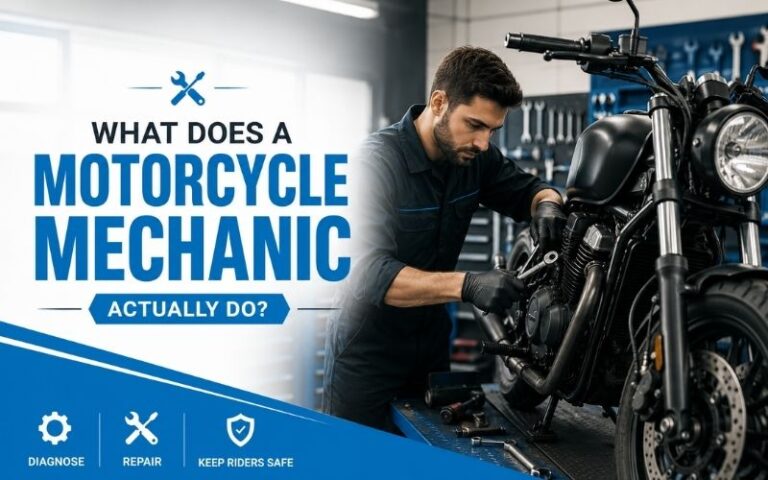
A motorcycle mechanic spends their time finding faults and fixing them to ensure every bike is safe for the road. What do mechanics do on a typical shift? They handle basic maintenance to more advanced mechanical repairs. They must be thorough because a rider’s safety depends on the quality of their mechanical work. Here is what mechanics do on a daily basis:
- Listen to engines to identify leaks, unusual wear, or strange rattling sounds.
- Examine the condition of brakes, tyres, chains, lights and handlebar controls.
- Use diagnostic tools to pinpoint complex mechanical and electrical faults.
- Swap out damaged or worn-out bike parts for high-quality replacements.
- Test the bike on the road after a repair, provided your specific role and licence allow it.
- Talk through repair times and costs with customers using simple, jargon-free words.
- Keep the garage’s records up to date so every service is properly documented.
- Build custom features or modifications to match a customer’s specific style or performance needs.
Is a Motorcycle Mechanic the Same as a Motorcycle Technician?
The two titles often overlap in a modern garage environment. Traditionally, a mechanic focuses on hands-on physical repairs and routine servicing. On the other side, a technician typically deals more with advanced diagnostics, electronics, ABS systems, fuel injection and using computer-based tools to find hidden faults.
Modern motorcycles are complex machines that require both skill sets. Today’s professionals need the practical ability to fix a mechanical part and the digital skill to navigate software. Because of this, many employers now use the term technician to reflect the high level of technical knowledge required for newer models.
How to Become a Motorcycle Mechanic in the UK?
Entering this trade requires a mix of training and practical workshop time. How to become a motorcycle mechanic involves following a few structured steps to build your skills. National Careers lists college courses, apprenticeships and direct applications as the main entry routes into the profession.
Step 1: Understand the job first
Before you sign up for a course, you should understand the daily reality of the role. It involves servicing complex engines, using specialist tools, maintaining accurate service records and explaining technical safety issues to customers.
Step 2: Choose your UK route
Decide which path fits your situation. You can enrol in a full-time college course, find a paid apprenticeship, start with unpaid work experience or apply directly if you have mechanical skills from a different industry.
Step 3: Build basic English and maths confidence
English and maths are essential tools for a modern mechanic. English helps you communicate with customers and write reports. On the other hand, maths is used daily for measurements, engine timing, ordering parts and calculating costs for the workshop.
Step 4: Start training
Look for Level 2 and Level 3 qualifications in Motorcycle Maintenance. Skills England currently lists the Motorcycle Technician role as a Level 3 apprenticeship. This is a popular choice because it allows you to earn a wage while you learn.
Step 5: Get garage experience
Practical experience is the most important part of your CV. So, reach out to local independent garages or large dealerships to ask for a work placement. This helps you see how a professional workshop operates on a busy day.
Step 6: Build proof of skill
Keep a record of your progress as you learn. This should include notes on repairs you have helped with, photos of your work and feedback from experienced mechanics. This creates a portfolio that proves your ability to future employers.
Step 7: Apply for beginner roles
Once you have basic training, look for trainee roles or workshop assistant jobs. Many garages are happy to take on someone who shows a great attitude and a willingness to learn the trade from the ground up.
Which Motorcycle Mechanic Route Is Best for You?
The best route depends on your current lifestyle and background. Young learners often find that a college course or an apprenticeship is the best way to get started. These routes provide a structured environment where you can learn the basics while working toward a nationally recognised qualification.
Adult career changers might prefer starting with a short course and gaining rapid hands-on experience to transition faster. For UK immigrant readers, it is important to check if your existing qualifications meet the entry rules for UK courses. If you are a skilled hobbyist, you might be able to apply directly to a garage if you can prove your repair ability.
What Qualifications Do You Need to Become a Motorcycle Mechanic?
There is no single qualification required by law, but training is essential for safety and job prospects. Most employers look for a Level 2 or Level 3 Diploma in Motorcycle Maintenance and Repair. These certificates show that you understand the safety standards required to work on public vehicles.
Skills England states that apprentices who do not have Level 2 English and maths will need to achieve them before they complete their training. While direct experience is valuable, having formal qualifications helps you stand out and gives you more confidence when dealing with complex modern bike systems.
Is a Motorcycle Mechanic Course Worth It?
Taking a dedicated motorcycle mechanic course is usually worth the investment of time and money. It teaches you how to use professional tools, understand engine layouts and handle electrical systems safely. A course provides a safe space to learn before you are responsible for a customer’s expensive machine.
However, you should be aware that a course is only the beginning. While it provides the structure, your real confidence will grow through daily practice in a garage. Most employers view a course as a sign that you are serious about the career and have a solid foundation of theory.
Can You Learn Motorcycle Mechanics Online?
E-learning is an excellent way to study the theory and science behind how motorcycles work. To learn motorcycle mechanics this way, you can use an online motorcycle mechanic school to study engine cycles, wiring diagrams and diagnostic procedures from your own home.
- Start by checking if the lessons explain tools and bike parts clearly.
- A good course should give practical tasks, not only videos.
- Tutor support matters when beginners get stuck.
- UK career guidance helps you understand what to do after learning.
- The certificate should have clear value, not just a nice design.
- Stay away from any provider that promises a guaranteed job too easily.
Online learning is perfect for understanding the technical side, but you will still need to find a way to practice these skills on a real bike to become fully competent.
Can You Get Motorcycle Mechanic Certification Online?
You can obtain a motorcycle mechanic certification online to prove you have mastered the theoretical side of the trade. This type of certificate is very useful for adding to your CV and showing employers that you have taken the initiative to study the technical details of motorcycle repair.
You should always verify the provider and check for tutor support before paying for a course. While an online certificate is a great addition to your profile, remember that most UK employers will still want to see you demonstrate your practical skills during a trial day in the workshop.
How Long Does It Take to Become a Motorcycle Mechanic?
The timeline for becoming a mechanic depends on your training path. A beginner course might take a few weeks or months. A full-time college course usually lasts one year. A Level 3 apprenticeship typically takes around three years to complete. Skills England confirms that the Motorcycle Technician apprenticeship is a comprehensive three-year commitment.
If you are applying directly with previous mechanical experience, you might become job-ready in a much shorter time. Specialist work like racing diagnostics or custom engine tuning will take several more years of high-level experience to master.
What Skills Do Motorcycle Mechanics Need?
Technical skills gives you a strong start in this role. You need a strong knowledge of engine systems, brakes, tyres and electrical circuits. Good hand-eye coordination helps you handle tiny components safely. At the same time, problem-solving skills help you find the cause of a mystery engine noise or an electrical fault.
People skills are also very important in a modern workshop. National Careers highlights that mechanics need good communication and customer service skills to explain repairs to bike owners. You also need to be organised and keep clear records of every job to ensure the garage runs smoothly.
What Do UK Employers Want From a Beginner Mechanic?
UK garage owners usually look for reliability and a positive attitude in their new recruits. While they want to see technical potential, they also value candidates who are punctual, follow safety rules and show a genuine passion for the work.
- Being on time shows the garage that they can trust you.
- Listening carefully is better than acting like you know everything.
- Safety rules matter from the very first day.
- Keeping tools tidy makes everyone’s job easier.
- Asking good questions shows that you want to learn properly.
- Small tasks still matter when you are new.
- Clear English helps you speak with customers and update job records.
How Can You Gain Experience Before Your First Job?
To gain experience, you should be proactive and contact local garages, workshops and dealerships. Many small business owners are happy to offer work experience to someone who shows a real interest in learning. This is a great way to build your network and see what the job is really like.
National Careers recommends contacting workshops directly to ask about work experience opportunities. You can also look into volunteering at local motorcycle events, such as motocross races or track days. One good contact in the local biking community can often lead to your first professional job offer.
How Can You Prove Your Skill Without a Job?
If you haven’t had a professional job yet, you can still prove your skill to an employer. You can build a simple repair portfolio by keeping notes on any maintenance you have done on your own bikes. Include photos of your work, a list of parts you replaced and any feedback from experienced riders.
Providing proof of your course progress and any certificates you have earned is also essential. This shows an employer that you are methodical and take pride in your work. Being able to show a folder of your achievements is much more effective than just making claims about your ability.
Do You Need a Motorcycle Licence?
A motorcycle licence is usually necessary for most professional roles. This is because many mechanics need to take bikes for a road test after a repair to ensure everything is working correctly. National Careers says that motorcycle mechanics will usually need a valid motorcycle licence to carry out their full range of duties.
While some junior or assistant roles might not require a licence immediately, having one will make you much more employable. If you plan to become a senior technician or an MOT tester in the future, a full licence is a legal requirement.
How Much Can a Motorcycle Mechanic Earn in the UK?
The salary for a motorcycle mechanic varies based on your experience and location. Dealerships often pay higher wages, while independent garages may offer more variety in the types of bikes you work on.
Pay Point |
UK Figure |
| Starter salary | £25,000 |
| UK average estimate | £31,575 |
| Experienced salary | £40,000 |
| Typical weekly hours | 38 to 40 hours |
Pay can also increase if you gain specialist skills. For example, becoming an MOT tester or a diagnostic expert can lead to higher earnings. Self-employed mechanics have the potential to earn more, but they must also cover their own business costs, tools, insurance and rent.
Where Can Motorcycle Mechanics Work?
There are many different environments where you can find motorbike mechanic jobs. You could work for a local independent repair shop, a large manufacturer dealership or a dedicated MOT testing centre. Some mechanics choose to work in mobile repair services where they visit customers at their homes.
Other options include working for motorcycle racing teams, custom bike builders or in the parts department of a large retailer. If you have a specific interest, such as vintage restoration or high-performance superbikes, you can eventually specialise in those niche areas.
What Is the Workshop Environment Like?
The environment in a motorcycle workshop is busy, noisy and physically active. You will spend most of your shift standing, bending and moving bikes. National Careers points out that the working environment can be noisy and dirty, so you should be comfortable working with oil and grease every day.
Most workshops are social places where you work as part of a team. You will wear protective clothing and must follow strict safety rules to prevent accidents. For a person who loves machinery, the workshop is an exciting place to spend a career.
What If You Have Repair Skills but No UK Qualification?
If you already have experience in vehicle repair or mechanical engineering, you might be able to take the direct route. Many employers value practical ability and real-world experience over formal certificates. National Careers confirms that direct application is a valid route for people who can prove they have relevant skills.
When applying this way, you should be prepared to show photos of your work, repair notes or even offer to do a trial day. This allows the employer to see your mechanical ability and safety awareness in person.
Can You Become a Motorcycle MOT Tester Later?
The timeline for becoming a mechanic depends on your training path. A beginner course might take a few weeks or months. A full-time college course usually lasts one year. A Level 3 apprenticeship typically takes around three years to complete. Skills England confirms that the Motorcycle Technician apprenticeship is a comprehensive three-year commitment.
If you are applying directly with previous mechanical experience, you might become job-ready in a much shorter time. Specialist work like racing diagnostics or custom engine tuning will take several more years of high-level experience to master.
Why wait three years before you start learning motorbike maintenance? Start with our Motorbike Maintenance Course and build practical skills in servicing, fault finding and basic repairs before moving into longer training.
How Can Your Career Grow After Your First Garage Job?
A career as a motorcycle mechanic offers many paths for progression. You might start as a trainee or workshop assistant, but with time you can move into roles like Service Mechanic, Diagnostic Technician or Workshop Manager. National Careers lists MOT examiner and business owner as common progression routes.
Some mechanics choose to become specialists in custom bike building or high-end racing performance. Others move into technical training or insurance assessment. The skills you learn in a garage provide a strong foundation for many different roles within the wider automotive industry.
What Mistakes Should Beginner Motorcycle Mechanics Avoid?
Starting a career in mechanics requires a careful approach to avoid common pitfalls. Many beginners make the mistake of rushing into complex tasks before they have mastered the basics of safety and tool use.
- Buying expensive tools too early can waste money.
- Cheap courses may cost more later if they teach very little.
- Online study helps but real bike practice still matters.
- Job applications look weak when there is no proof of skill.
- English, maths and customer talk should not be ignored.
- Pretending to know everything can damage trust fast.
- Stopping after the first job can hold back your growth.
How to Become a Motorcycle Mechanic Without Wasting Time?
How to become a motorcycle mechanic efficiently involves following a clear 90-day plan.
- In the first 30 days, focus on learning the core components of a bike, tool names and workshop safety. This gives you the vocabulary and knowledge to speak professionally to employers.
- From day 31 to 60, you should begin a formal training course and start visiting local garages to ask for work experience.
- From day 61 to 90, focus on building your proof of skill portfolio and applying for entry-level trainee roles.
Taking a structured approach ensures you build the right skills in the right order.
Final Thoughts on How to Become a Motorcycle Mechanic
Choosing to learn how to become a motorcycle mechanic is the start of a rewarding hands-on career. Whether you choose to go through college, take an apprenticeship or apply directly with previous experience, the most important factor is your commitment to quality and safety.
Success in motorbike repair is built on a foundation of steady learning and practical proof. If you are ready to take the first step, look into a beginner-friendly motorcycle repair course to build the confidence you need to walk into your first workshop.
FAQs
How much does a motorbike mechanic get paid?
- A UK motorbike mechanic can earn around £25,000 as a starter and up to £40,000 with experience. Pay can rise with dealership work, MOT testing, diagnostics or self-employment.
How much does a CBT test cost?
- A CBT course does not have one fixed UK price. The cost depends on the training school, your area and whether you use your own bike. Many learners pay around £150 to £200, so always check local prices before booking.
How long does it take to become a motor mechanic?
- It totally depends on your route. A short course may take weeks or months. A full college course may take about one year. A Level 3 apprenticeship usually takes around three years. Real skill grows fastest when you train and practise together.
Do car or motorbike mechanics make more money?
- The pay is quite close. UK car mechanics can earn around £22,000 to £42,000. Motorbike mechanics can earn around £25,000 to £40,000. So, cars may have a slightly higher top salary, but motorbike work can still pay well with the right skills.
Is 25 too late to become a mechanic?
- No, 25 is not too late at all. Many people start this trade later than that. If you enjoy engines, tools and practical work, you can still train, gain garage experience and build a strong career step by step.
How much does a Halfords bike mechanic make?
- A Halfords bike mechanic role is usually linked to bicycle repair, not motorbike repair. UK cycle mechanic pay is often in the low £20,000s, but Halfords roles can change by location, experience, bonus and job level.
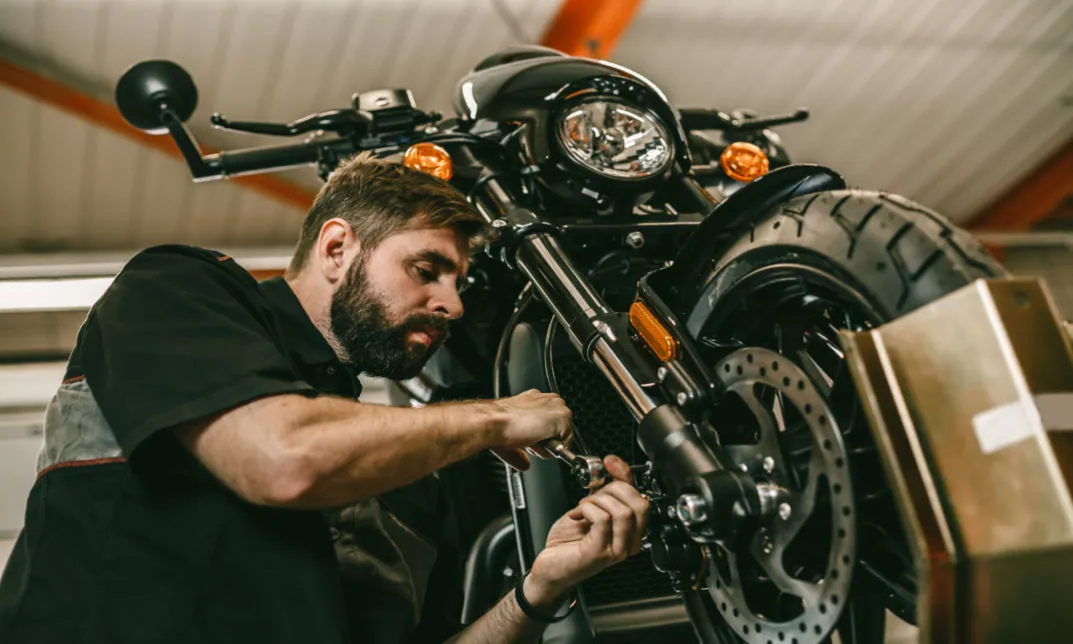
Motorcycle Maintenance Course
Course Description :
- Certificate: Yes(Free)
- Accreditation: CPD Accredited
- Access: Lifetime