
No products in the basket.
Care can make a big difference in someone’s life. Yet, not all care comes from paid workers. What is voluntary care? It means giving unpaid help to people who need support. Volunteers can offer company, help with simple tasks, or support local events. They may also help in care homes, hospitals, charities, and community groups.
Voluntary care also plays an important role in the UK. In 2025/26, 18% of adults volunteered at least once a month. This figure shows how many people give their time to help others.
Volunteering can also reduce loneliness and bring people together. It may help volunteers learn new skills and gain useful experience. Therefore, voluntary care can benefit both helpers and those who receive support.
What Is Voluntary Care?
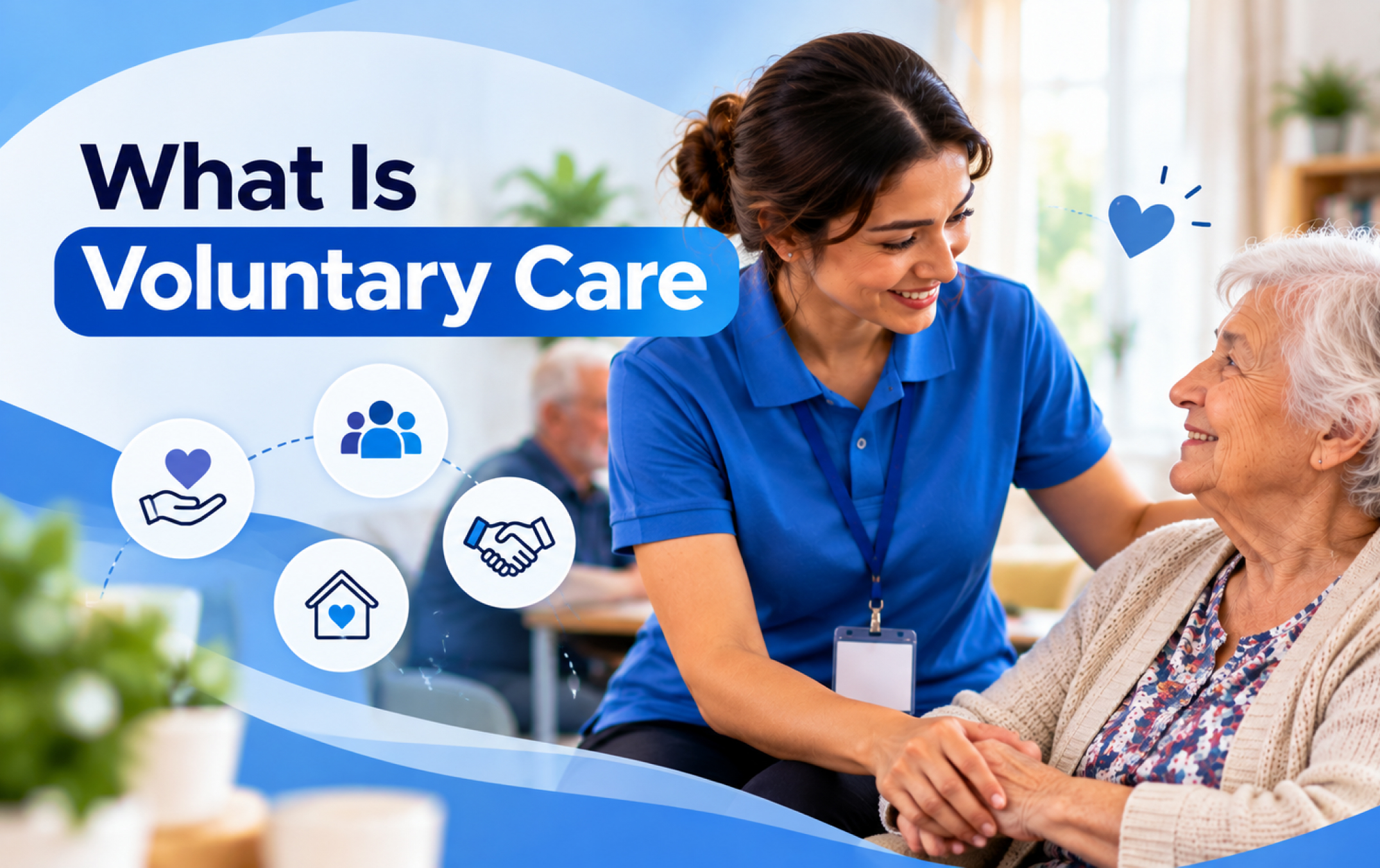
Voluntary care means helping people without getting paid. It means giving your time to support someone who needs help. This support can make daily life easier for many people.
Unlike paid care, volunteers do not get a wage for their work. However, they still need to follow the rules of the group they support. They should also respect each person’s privacy and choices.
Voluntary care can happen in many places. For example, volunteers may help in care homes, hospitals, charities, or local groups. Some may also visit people at home through a trusted organisation. Many people can become volunteers. However, some roles may need training or checks. For example, certain roles may need a DBS check.
Volunteers can help in simple but useful ways. They may chat with someone, help with activities, or offer friendly support. They may also help at local events or community groups. As a result, voluntary care can help people feel less alone. It can also bring people together and build stronger local communities.
What is Voluntary Care Under Section 20?
You have the legal right to change your mind at any time. This is often called the right to withdraw your personal consent. If you want your child back, you can ask for them. Usually, the council must return your child to you immediately. However, you should always give them a little bit of notice.
The local authority has several duties they must follow for you. First, they must provide a high quality of housing for children. They are also responsible for the child’s education and general health. Social workers must visit the child to ensure they are happy. Additionally, they must keep you updated about how your child is doing.
| Feature | Voluntary Care (Section 20) | Care Order (Section 31) |
| Who Agrees? | The Parents | A UK Judge |
| Legal Rights | Parents keep them | Council shares them |
| Duration | Usually short-term | Often long-term |
| Court Involved? | No court needed | Full court case |
Seeking legal advice is a very smart move for every parent. You should speak to a solicitor before you sign any document. A lawyer will explain the fine print in very simple terms. Many parents can get free legal aid for these specific meetings. Therefore, do not be afraid to ask for a professional lawyer.
Is voluntary care a permanent arrangement?
This type of help is meant to be a temporary solution. It should never last forever without a very clear future plan. The goal is always to get the family back together again. Social workers will look at what needs to change at home. Meanwhile, your child stays in a safe and supportive local environment.
Sometimes, the council might feel the child is still at risk. If this happens, they might ask a court for more power. They could apply for a formal Care Order under Section 31. This is a much more serious step for any UK family. Usually, this only happens if the home situation is not improving.
What Are The Pros and Cons for UK Families?
One major benefit is avoiding a long and stressful court case. You can work as partners with your assigned social worker instead. This keeps the atmosphere much more friendly for the young child. Flexibility is another great reason to choose this path for now. You can often agree on the best times for family visits.
However, there are some risks that you should consider very carefully. A big concern is something experts call “drift” in the system. This means a child stays in care longer than they should. Sometimes, the original plan for returning home gets delayed or forgotten. Therefore, you must stay very involved in every single meeting.
How Does It Work?
Voluntary care starts when a person chooses to give their time to help others. They may join a charity, care group, hospital, or local service. Each group has its own rules and needs.
The volunteer usually signs up for a role. They may need to attend a short meeting or complete basic training. Some roles may also need a DBS check.
Then, the volunteer learns about their duties. These duties may include talking to people, helping with simple tasks, or joining group activities. Volunteers should always follow the care group’s rules. They should also respect each person’s privacy, choices, and dignity. If a volunteer has any concerns, they should tell the right staff member.
Most importantly, volunteers should know their limits. They should not carry out tasks that need a trained care worker. In this way, voluntary care gives people safe and useful support. It also helps volunteers make a positive difference in their local community.
What Are the Main Types of Voluntary Care?
Voluntary care can take many forms. People can help others in many places. Each type gives support to people who need it.
Community Support
Community support helps people stay close to others. Volunteers may help at local centres, events, or groups.
They may also:
- Help with simple tasks
- Support local events
- Help people join groups
- Give friendly company
Befriending Services
Befriending gives people someone to talk to. It can help people who feel lonely. Volunteers may visit, call, or chat with them.
Hospital Volunteer Support
Hospitals may have volunteers to help patients and visitors. They can give directions or offer friendly company. They may also help with simple tasks.
Care Home Volunteering
Care home volunteers spend time with residents. They may read books, play games, or join group activities. Their visits can help residents feel happy and less alone.
Support for Older People
Volunteers can help older people stay active. They may chat with them or join social activities. They may also go on short walks with them.
Support for People with Disabilities
Volunteers can support disabled people in many ways. They may help with hobbies, social events, or local trips. They should always respect each person’s needs and choices.
Charity and Community Projects
Charities often need volunteers for local projects. These may include food drives, fundraising, and events. So, volunteers can help others and support their local community.
What Are the Benefits of Voluntary Care?
Voluntary care helps people in many ways. It also helps local areas.
- Gives social support: Volunteers spend time with people. They can talk, listen, and help.
- Reduces loneliness: Some people feel lonely. A visit can help them feel less alone.
- Helps local communities: Volunteers give their time to help others. This makes local areas stronger.
- Helps carers: Carers can get extra help from volunteers. This gives carers time to rest.
- Builds useful skills: Volunteers can learn new skills. They can learn to listen and work with others.
- Brings people together: Volunteering helps people meet others. It can also build trust and friendship.
Overall, voluntary care helps everyone. It supports people who need care. It also helps volunteers and local communities.
What Is the Role of Volunteer Care in the UK?
Volunteer care helps many people across the UK. Volunteers give their time to help people who need support.
They may work with charities, care homes, hospitals, or local groups. Their work can vary based on the needs of each person.
Supporting People
Volunteers can offer friendship and company. They may visit older people or chat with someone who feels lonely. They can also help people join local events and social groups. This can help people feel less alone.
Helping Families and Carers
Family carers may need extra help from time to time. Volunteers can offer company and support with simple tasks. As a result, carers may get some time to rest. Families can also feel more supported.
Helping Local Services
Volunteers can help charities and community groups. They may help at events, food drives, or local activities. However, volunteers do not replace trained care workers. They follow their role and the rules of their group. Overall, volunteer care helps people feel supported and valued. It also brings people together and helps local communities grow.
What Is the Difference Between Voluntary Care and Social Care?
Social care is a very large umbrella term. It covers many different types of support services. The local council manages these services for the public. This includes help for elderly people in their homes. It also covers support for people with physical disabilities. Social care ensures that vulnerable people stay safe and healthy. Furthermore, it includes mental health support for many adults.
Voluntary care is one small part of social care. It specifically focuses on children and their families. As we discussed, this happens with the parents’ consent. You agree to let the council help your child. No judge is involved in this specific arrangement. It is a partnership between you and the social workers. Consequently, it is a very friendly version of help.
The main difference is the scope of each term. Social care means the whole care system. Meanwhile, voluntary care is one way of getting support within that system. In some cases, a court can order social care. Voluntary care, however, is always your choice. This gives you more control over the process. Understanding this difference can help you use the UK care system with confidence. You can ask for social care without giving up control. So, do not fear the term social care. It simply means the council is giving you official support.
Who Can Benefit From Voluntary Care?
Voluntary care can help many people. It gives support, care, and friendly company.
Older People
Older people may need extra help at home. Volunteers can visit them and spend time with them. They can also help with simple tasks.
People With Disabilities
People with disabilities may need support with daily life. Volunteers can offer help and friendly company. They can also help people join local activities.
People Who Feel Lonely
Some people may feel lonely or cut off from others. Regular visits can help them feel less alone. A friendly chat can also lift their mood.
Families Needing Extra Support
Some families may need extra help. Volunteers can give their time and support. This can make daily life easier for families.
People Facing Difficult Times
Life can bring many hard times. People may need extra care and support during these times. Volunteers can offer a kind ear and friendly help.
How Voluntary Care Helps
Overall, voluntary care can help people feel safe and valued. It can also bring people closer together. As a result, local communities can become stronger.
How Can You Get Involved in Voluntary Care in the UK?
You can get help from your council right now. First, you must call the social services team. Tell them clearly that you need extra support. Soon, a friendly social worker will visit your house. They will listen to your story with great care. Furthermore, they will explain the Section 20 plan.
- Call your local council office today.
- Tell the worker about your family.
- Ask for a safe place for your child.
- Sign the paper to start the help.
You might want to help other kids instead. Many people choose to become foster carers. First, you apply to your local council. Then, they will check your home for safety. Next, you will go to fun training classes. Finally, you can look after a child in your home. This helps families who are having a hard time. Therefore, you make a huge difference.
Additionally, you can volunteer with a local charity. These groups always need kind people to help. You can play games or help with school work. However, you must pass a safety check first. Helping others makes everyone feel very happy. Consequently, the whole community becomes stronger. You can start this journey this week! Just send an email to a local group. They want to hear from you.
Conclusion
So, what is voluntary care in simple terms? Voluntary care is a tool to help families stay strong together. It allows you to get support without losing your legal rights. Remember that you are an equal partner in this specific journey. Always ask questions if you do not understand a specific document. Keep a record of all your chats with the social workers.
Good communication is the secret to a successful Section 20 agreement. Be honest about your needs and the needs of your child. If you work together, the process will be much smoother. You are not alone, and there are people who can help. Stay focused on the goal of reuniting your happy family soon.
If you need more help, contact the Family Rights Group UK. They offer free advice to parents involved with social services today. You can also visit the Citizens Advice website for more information. Knowledge is power when you are navigating the UK care system. Take things one step at a time and stay very positive.
FAQs About What Is Voluntary Care
1. What are some examples of voluntary care services?
- Examples include befriending, hospital support, care home visits, and community support. Volunteers may also help older people or disabled people.
2. What do voluntary services do?
- Voluntary services help people and communities. They may offer friendship, support, activities, or help with simple tasks.
3. Does “voluntary” mean without pay?
- Yes. Voluntary work usually means giving your time without getting paid.
4. Can I voluntarily put my child in care?
- You can choose some care services for your child. However, this depends on the type of care and your child’s needs.
5. What does voluntary care mean?
- Voluntary care means helping people without pay. Volunteers give their time to support people and local communities.
6. What are three examples of voluntary work?
- Three examples include befriending, charity work, and helping at community events.
7. Do you get paid for voluntary work?
- Usually, no. Volunteers give their time without a wage. Some groups may cover travel or other costs.