
No products in the basket.
A support worker helps people manage daily tasks and live more independently. They support people with disabilities, mental health needs, autism or other care needs. Their work can include personal care, emotional support and everyday activities. They also help people make choices and build confidence.
Support workers work in care homes, hospitals, supported living services and people’s homes. Their duties depend on the person they support and their workplace.
So, what is a support worker, and how can you become one? This guide covers their duties, qualifications, salary, working hours and career opportunities in the UK.
What Is a Support Worker?
A support worker is someone who helps people live safely and independently. They offer practical, physical and emotional support based on each person’s needs. Their main goal is to help people enjoy everyday life while keeping their independence.
For example, someone with a learning disability might need help preparing meals. Another person may need support with shopping, travelling or attending appointments. A support worker helps them complete these activities while respecting their choices.
However, support work involves more than doing tasks for someone. Workers also help people learn new skills and make their own decisions. This approach is called person-centred care. It puts the person’s wishes, needs and rights at the centre of their support.
Who Do Support Workers Help?
Support workers help people with different needs and circumstances. Some people need daily support, while others only need help with certain activities.
They may support:
- Older people: Helping with everyday activities, mobility and personal care.
- People with learning disabilities: Supporting communication, daily tasks and independent living.
- Autistic people: Providing support based on individual needs and preferences.
- People with physical disabilities: Helping with mobility, personal care and everyday activities.
- People with mental health needs: Offering practical and emotional support.
- People with long-term health conditions: Helping them manage daily activities and maintain independence.
Not everyone needs the same level of care. A good support worker understands these differences and follows each person’s agreed support plan.
What Does a Support Worker Do?
A support worker helps people with daily activities, personal care and emotional wellbeing. They may also support social activities, appointments and independent living skills. Their duties depend on the workplace and the person’s needs.
For example, someone might need help getting dressed in the morning. Another person may want support learning how to cook. Some people simply need encouragement to join community activities.What Skills Does a Support Worker Need?
Here are the main duties of a support worker.
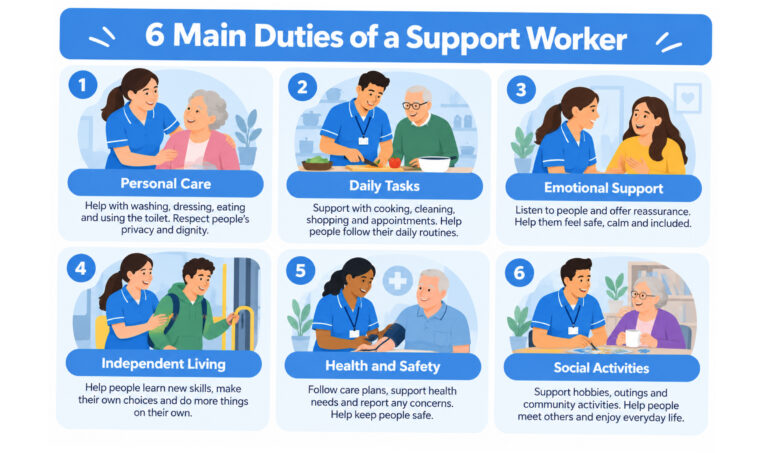
Helping With Personal Care
Some support workers help people wash, dress and use the toilet. They may also support eating, drinking and moving safely. These tasks require patience, respect and proper training.
Workers must protect each person’s privacy and dignity. They should also encourage people to do what they can independently.
Supporting Daily Activities
Daily support can include preparing meals, shopping and completing household tasks. Workers may also help people organise appointments or manage everyday routines.
For example, a support worker might help someone prepare a shopping list. They could then accompany the person to a supermarket. The aim is to build confidence rather than take over every task.
Providing Emotional Support
Support workers listen to people’s concerns and offer reassurance. They help people feel heard, respected and included.
Someone experiencing loneliness may benefit from regular conversations and social activities. Another person might need encouragement when trying something new.
Support workers provide emotional support within their professional role. They do not replace qualified mental health professionals.
Encouraging Independent Living
Helping people become more independent is an important part of support work. Workers encourage people to develop useful skills and make everyday decisions.
These skills might include cooking, using public transport or managing money. Progress can take time, so workers need patience and understanding.
Supporting Health and Wellbeing
Some workers help people attend medical appointments or follow agreed care routines. They may also observe changes in someone’s health and report concerns.
Certain roles include medication support or specific healthcare tasks. However, workers must receive suitable training and follow workplace procedures. They should never carry out tasks beyond their training or authority.
Helping With Social Activities
Support workers also help people enjoy hobbies and community activities. This might include visiting friends, attending classes or joining local groups.
These activities can improve confidence and help people maintain relationships. They also give people more opportunities to make their own choices.
What Are the Main Responsibilities of a Support Worker?
Support workers have responsibilities beyond helping with daily tasks. They must protect people’s safety, dignity, privacy and rights. They also need to follow care plans and workplace rules.
The main responsibilities include:
- Safeguarding: Recognise and report possible abuse, neglect or harm.
- Duty of care: Take reasonable steps to protect people from avoidable harm.
- Respect: Treat people fairly and protect their dignity.
- Confidentiality: Keep personal information safe and share it appropriately.
- Care plans: Follow agreed instructions and report changes in support needs.
- Record keeping: Write clear and accurate notes about care and support.
- Communication: Listen carefully and explain information clearly.
- Teamwork: Work with colleagues, families and other professionals.
- Professional boundaries: Maintain safe and appropriate working relationships.
- Health and safety: Follow workplace procedures and report risks.
These responsibilities help support workers provide safe and reliable care. They also protect the people receiving support.
For example, imagine a worker notices that someone has stopped eating regularly. They should record their concerns and report them through the proper channels. They should not ignore the change or make medical decisions themselves.
What Are the Different Types of Support Workers?
Support workers can specialise in different areas. Some work with adults who need help living independently. Others support children, families or people receiving healthcare.
Although these jobs share similar skills, their duties can differ.
| Type of support worker | Main role | Common workplace |
| Adult support worker | Helps adults manage daily life and maintain independence | Care homes and supported living |
| Learning disability support worker | Supports people with learning disabilities | Homes and community services |
| Mental health support worker | Helps people with mental health needs | Community services and healthcare settings |
| Healthcare support worker | Supports patients and clinical staff | Hospitals and healthcare services |
| Family support worker | Helps children and families manage difficulties | Family services and community organisations |
| Residential support worker | Supports people living in residential care | Residential homes |
| Community support worker | Helps people access services and community activities | Community organisations and outreach services |
patients. While core skills overlap, specific duties vary by role.
| Type | Main Role | Common workplace |
| Adult | Daily living & independence | Care homes, supported living |
| Learning Disability | Tailored daily & social support | Homes, community |
| Mental Health | Recovery & mental wellbeing | Healthcare, community |
| Healthcare | Patient care & clinical assistance | Hospitals, clinics |
| Family | Guidance for families in need | Community, family services |
| Residential | Round-the-clock home care | Residential care homes |
| Community | Access to local activities & care | Outreach, local services |
The exact job title can vary between employers. Therefore, always read the job description before applying.
What Is a Healthcare Support Worker?
A healthcare support worker helps patients and healthcare professionals. They commonly work in hospitals, clinics and community healthcare services.
Their duties may include helping patients wash, eat or move safely. Some workers also check basic health measurements under supervision. They work within their training and follow instructions from qualified healthcare professionals.
Healthcare support workers and adult social care support workers share many skills. However, healthcare roles often involve more direct support within clinical services.
What Is a Family Support Worker?
A family support worker helps children, parents and families manage difficulties. They may support families facing housing problems, parenting challenges or other concerns.
Their work can include home visits, practical advice and helping families access services. They also work with other professionals when children need additional support.
Family support work differs from adult social care. Employers may require specific experience or qualifications related to children and families.
Where Can Support Workers Work?
Support workers can work in several settings across the UK. Their workplace depends on the people they support and the services available.
Common workplaces include care homes, supported living services, hospitals and private homes. Some workers also support people in schools, community centres or specialist services.
- Supported living services help people live in their own homes with suitable support. Workers might visit at agreed times or provide support throughout the day.
- Residential care homes provide accommodation and care for people who need regular help. Support workers often work as part of a larger team.
- Community services help people take part in everyday activities outside their homes. Workers may accompany people to appointments, classes or social events.
Some jobs involve working at one location. Others require travel between different homes or services. This can affect working hours and transport requirements.
What Skills Does a Support Worker Need?
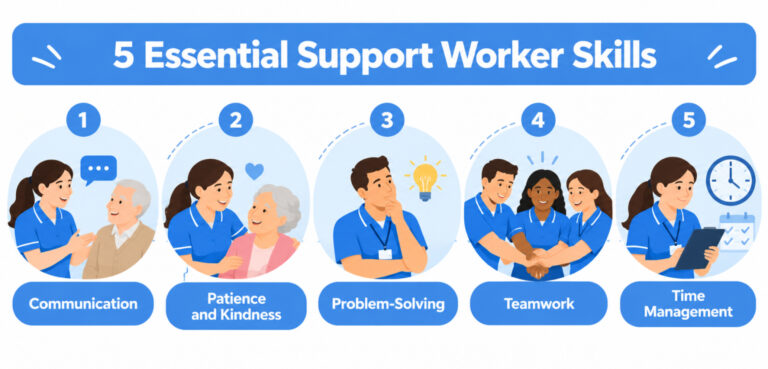
A support worker needs patience, empathy and good communication skills. They must also respect people’s choices and respond calmly to problems.
Technical knowledge matters, but personal qualities are equally important. People receiving support should feel comfortable, safe and respected.
Communication and Listening
Support workers must listen carefully and explain information clearly. They also need to understand different communication needs.
For example, someone may use pictures, gestures or communication aids. A good worker adapts their approach rather than expecting everyone to communicate similarly.
Patience and Empathy
Some people need more time to complete everyday activities. Others may feel worried or frustrated when facing challenges.
Patience helps workers provide support without rushing someone. Empathy helps them understand how another person may feel.
Problem-Solving Skills
Support workers often face unexpected situations. An appointment might change, or someone may need additional support.
Workers must stay calm and follow the correct procedures. They should also know when to ask a manager or healthcare professional for help.
Teamwork and Organisation
Support workers often work with colleagues, families and other professionals. Clear communication helps everyone understand the person’s support needs.
Good organisation also matters. Workers may need to manage appointments, complete records and follow daily support plans.
Respect and Professionalism
Support workers meet people from different backgrounds and circumstances. They must respect each person’s beliefs, privacy and preferences.
They should also understand professional boundaries. Being friendly matters, but workers must maintain appropriate relationships.
What Qualifications Do You Need to Become a Support Worker?
You do not always need formal qualifications to become a support worker. Many employers accept applicants with the right attitude and communication skills. Some also provide training when you start.
However, entry requirements vary between jobs. Certain employers may ask for GCSEs, previous care experience or relevant qualifications.
Useful qualifications can include:
- Level 2 qualifications in Health and Social Care.
- Level 3 qualifications in Adult Care.
- Relevant health and social care apprenticeships.
- The Level 2 Adult Social Care Certificate qualification in England.
- Other recognised qualifications linked to specific support roles.
A qualification can help you understand care principles and develop useful skills. However, completing a course does not automatically guarantee employment.
What Is the Difference Between the Care Certificate and the Level 2 Adult Social Care Certificate?
The Care Certificate sets out the basic knowledge, skills and behaviours expected in certain care roles. The standards help employers plan training and assess workers. The standards were updated in March 2025. There are now 16 standards, including learning disability and autism awareness.
The Level 2 Adult Social Care Certificate is a separate regulated qualification in England. It provides a recognised route for developing knowledge and skills in adult social care.
The Care Certificate itself is not the same as a regulated qualification. Employers may use its standards during induction and workplace assessment.
How to Become a Support Worker in the UK?
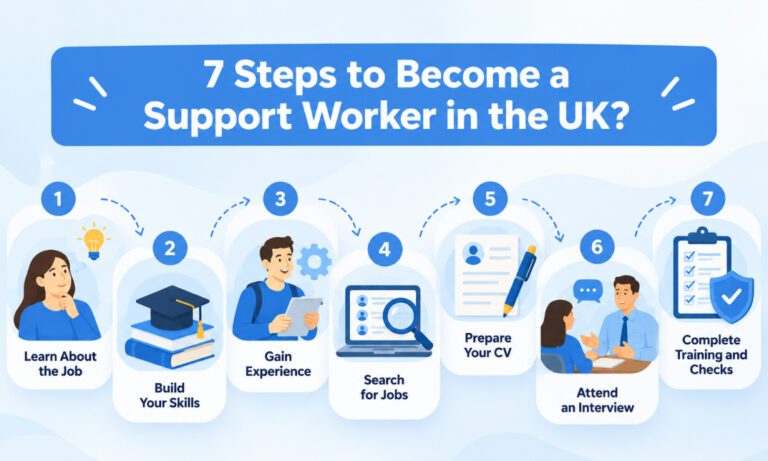
You can become a support worker through direct job applications, training or apprenticeships. Some employers accept beginners and provide training after recruitment. The best route depends on your experience, preferred role and employer requirements.
Step 1: Understand the Role
Start by reading support worker job descriptions. Check the duties, working hours and people you would support. Some roles involve personal care, while others focus more on independent living. Understanding these differences helps you choose suitable jobs.
Step 2: Build Useful Skills
Work on your communication, patience and problem-solving skills. Experience in customer service, childcare or volunteering may also help. You can also explore introductory health and social care training. This may help you understand safeguarding, dignity and person-centred care.
Step 3: Gain Relevant Experience
Volunteering can help you learn about supporting others. Charities, community groups and care organisations may offer suitable opportunities. You might also have transferable skills from previous employment. For example, retail work can develop communication and teamwork skills.
Step 4: Search for Support Worker Jobs
Look for vacancies through employers, care organisations and job websites. Read each advert carefully before applying. Check the required qualifications, shift patterns and location. Also look at whether the employer provides training.
Step 5: Prepare Your CV
Your CV should highlight skills that match the role. Include relevant work, volunteering and training experience. For example, describe situations where you helped someone or solved a problem. Clear examples can show employers how you work with others.
Step 6: Attend an Interview
Employers may ask why you want to become a support worker. They may also ask how you would handle different care situations. Prepare examples that show patience, respect and good communication. Be ready to explain how you would report a safeguarding concern.
Step 7: Complete Checks and Training
Many support roles require background checks before employment. The type of check depends on the role and location. In England, eligible roles may require an enhanced Disclosure and Barring Service check. Scotland, Wales and Northern Ireland have their own relevant checking arrangements.
Once you start, your employer should provide suitable induction and training. You must also follow workplace procedures and work within your competence.
Can You Become a Support Worker With No Experience?
Yes, some employers hire support workers without previous care experience. They often look for kindness, patience and good communication skills. However, not every role accepts beginners. Specialist jobs may require training or experience with particular support needs.
If you are new to care, focus on your transferable skills. You may already have useful experience from volunteering, customer service or helping others. For example, working in a shop can teach you how to communicate with different people. Volunteering can also develop patience, teamwork and responsibility.
Once employed, you can build your knowledge through training and supervised practice. This helps you gain confidence while learning how to provide safe support.
What Training Does a Support Worker Need?
Support workers usually complete induction training when starting a new role. Employers must also provide suitable training for the work they expect staff to carry out. The training depends on the workplace and the people receiving support. Some roles need more specialist knowledge than others.
Common training topics include safeguarding, infection prevention, communication and health and safety. Workers may also learn about person-centred care, confidentiality and duty of care.
Other training may cover:
- Moving and handling.
- Basic life support.
- Medication support.
- Food safety.
- Dementia awareness.
- Autism and learning disability awareness.
- Mental health awareness.
- Record keeping and reporting.
Workers should only perform tasks they have the training and authority to complete. Employers must also check that staff can work safely. Training does not stop after induction. Support workers may need refresher training or additional learning as their responsibilities change.
How Much Does a Support Worker Earn in the UK?
A support worker in the UK can earn around £20,000 to £25,000 a year, based on the National Careers Service care worker profile. This profile includes support worker as an alternative job title.
The figures are a general career guide rather than a fixed national salary. Actual earnings depend on the employer, location, experience and working hours.
For comparison, the National Careers Service lists healthcare assistant salaries at approximately £25,000 to £27,000. It also identifies support worker as an alternative title for some healthcare assistant roles.
What Affects a Support Worker’s Salary?
Several factors can affect how much a support worker earns.
- Experience: Experienced workers may qualify for senior positions with greater responsibilities.
- Location: Pay can differ between regions and employers.
- Workplace: NHS, private care and charity roles may have different pay arrangements.
- Specialist skills: Some positions require additional qualifications or experience.
- Working hours: Night shifts, weekends and overtime may affect total earnings.
Always check the salary and contract details before accepting a job. Also confirm whether the advertised amount includes extra payments for unsocial hours.
What Hours Do Support Workers Work?
Support workers may work full-time, part-time or flexible hours. The National Careers Service lists typical care worker hours as 35 to 45 per week. However, working patterns depend on the employer and service. Some support workers follow regular daytime hours. Others work evenings, weekends, nights or bank holidays.
Services that provide round-the-clock support need staff at different times. Therefore, some jobs involve rotating shifts or overnight work. For example, a worker might help someone prepare for the day during an early shift. Another worker may provide evening support and complete the handover.
Before applying, check whether the job includes sleep-in shifts, waking nights or weekend work. You should also ask about travel requirements and overtime arrangements.
What Is the Difference Between a Support Worker and a Care Worker?
Support workers and care workers often perform similar duties. Both may help with personal care, daily activities and emotional wellbeing.
However, some support worker roles place more emphasis on developing independence and life skills. Care worker roles may focus more heavily on personal care and daily support.
These differences are not fixed. In fact, many employers use the titles interchangeably.
| Support worker | Care worker |
| May focus on independent living and personal goals | May focus on personal care and everyday needs |
| Can support life skills and community activities | Can help with washing, dressing and meals |
| Often works in supported living or community services | Often works in homes or residential care |
| May provide personal care when required | May also encourage independence and personal choices |
The job description matters more than the title. Both roles should provide respectful, person-centred support.
What Are the Challenges of Being a Support Worker?
Support work can be rewarding, but it also brings challenges. Some situations require physical effort, emotional strength and careful decision-making.
For example, workers may support someone experiencing distress. They may also need to respond when a person’s health or behaviour changes.
Shift work can create challenges for personal routines. Some roles also involve travelling between locations or working during weekends.
Support workers must understand their responsibilities and recognise their limits. They should report concerns and seek guidance when needed.
Good supervision, training and teamwork can help workers manage these challenges. Employers also have responsibilities for staff safety and wellbeing.
Is Being a Support Worker a Good Career?
Support work can be a good career if you enjoy helping people. It offers opportunities to build practical skills and support people in everyday life. You may help someone learn to travel independently or take part in a new activity. These changes can make a meaningful difference to their daily routine.
The role also offers different career paths. Some people prefer direct support work, while others move into senior or specialist positions. However, the job requires patience, responsibility and flexibility. It may also involve difficult situations and unsocial working hours.
Before choosing this career, consider the duties and working patterns. Think about whether you enjoy working closely with people who have different support needs.
What Career Progression Can Support Workers Expect?
Support workers can develop their careers through experience, qualifications and further training. Some progress into senior roles, while others specialise in particular areas.
A possible career path is: Support Worker → Senior Support Worker → Team Leader → Deputy Manager → Registered Manager
This is an example rather than a fixed career route. Employers may use different job titles and promotion requirements.
Moving Into Senior Support Roles
Experienced workers may become senior support workers or team leaders. These positions can involve supporting colleagues, checking records and helping organise services.
Workers may also take responsibility for mentoring new staff. Additional training can help them prepare for these duties.
Developing Specialist Skills
Some support workers choose to specialise in dementia care, learning disabilities or mental health support. Others develop skills in communication or supporting complex care needs.
Specialist training can help workers understand the needs of different people. However, training requirements depend on the role and employer.
Progressing Into Management
Workers interested in leadership may move into deputy manager or service manager positions. These roles involve staff supervision, planning and service quality.
Further qualifications may support career progression. For example, the Level 3 Diploma in Adult Care can help workers develop their practice.
Management roles may require additional qualifications and experience. The exact requirements depend on the service and relevant regulations.
Final Thoughts on What Is a Support Worker
So, what is a support worker? A support worker helps people manage daily life while protecting their independence and choices. The role includes practical care, emotional support and helping people build useful skills.
You do not always need previous care experience to enter this career. Many employers offer training to people with the right attitude and skills. However, every job has its own requirements.
Support work can also offer opportunities for career growth. With experience and further learning, you may move into senior or specialist roles.
If you enjoy helping others, support work could be worth exploring. Start by checking local vacancies and comparing the duties, training and working hours.
Frequently Asked Questions
1. What Is the Main Role of a Support Worker?
The main role of a support worker is to help people live safely and independently. They provide practical, physical or emotional support based on individual needs.
2. What Does a Support Worker Do Daily?
A support worker may help with meals, personal care, appointments and everyday activities. They also encourage independence, maintain records and report concerns when needed.
3. What Qualifications Do You Need to Be a Support Worker?
You do not always need formal qualifications. Some employers accept beginners, while others prefer GCSEs or relevant health and social care training.
4. Can You Be a Support Worker Without Experience?
Yes, many entry-level support worker jobs accept applicants without care experience. Employers often provide induction training and supervised learning.
5. How Much Does a Support Worker Get Paid?
The National Careers Service lists care worker salaries at around £20,000 to £25,000 annually. Support worker is one of the alternative titles within this profile.
6. Is a Support Worker the Same as a Carer?
The roles often overlap. Both can provide personal care and daily support. Some support worker jobs focus more on independent living and developing life skills.
7. Do Support Workers Give Medication?
Some support workers help people with medication as part of an agreed care plan. They must receive suitable training and follow their employer’s procedures.
8. Is Being a Support Worker Stressful?
Support work can be stressful during difficult situations or busy shifts. Suitable training, supervision and teamwork can help workers manage their responsibilities.
9. Can a Support Worker Work in the NHS?
Yes, healthcare support workers can work in NHS hospitals and community services. Their duties depend on the healthcare setting and their training.
10. Can a Support Worker Become a Nurse?
Yes, support work can provide useful healthcare experience before nursing training. However, becoming a registered nurse requires completing an approved nursing qualification and meeting professional registration requirements.