No products in the basket.
Every time you turn on a tap, flush a toilet or take a shower, plumbing works behind the scenes. But what does plumbing do, and why is it so important? Plumbing supplies clean water to taps and appliances, removes wastewater and sewage, and supports hot water and central heating systems.
Water supply pipes carry fresh water throughout a building, while drains remove used water and waste. Valves control water flow and pressure, helping taps, showers and toilets work properly. Plumbers install and maintain these systems, fix leaks, clear blockages and repair damaged pipes. Together, these functions help prevent water damage, maintain hygiene and make everyday life easier.
This guide explains how plumbing works, its main functions, common problems and when to call a professional plumber.
What Does Plumbing Do?
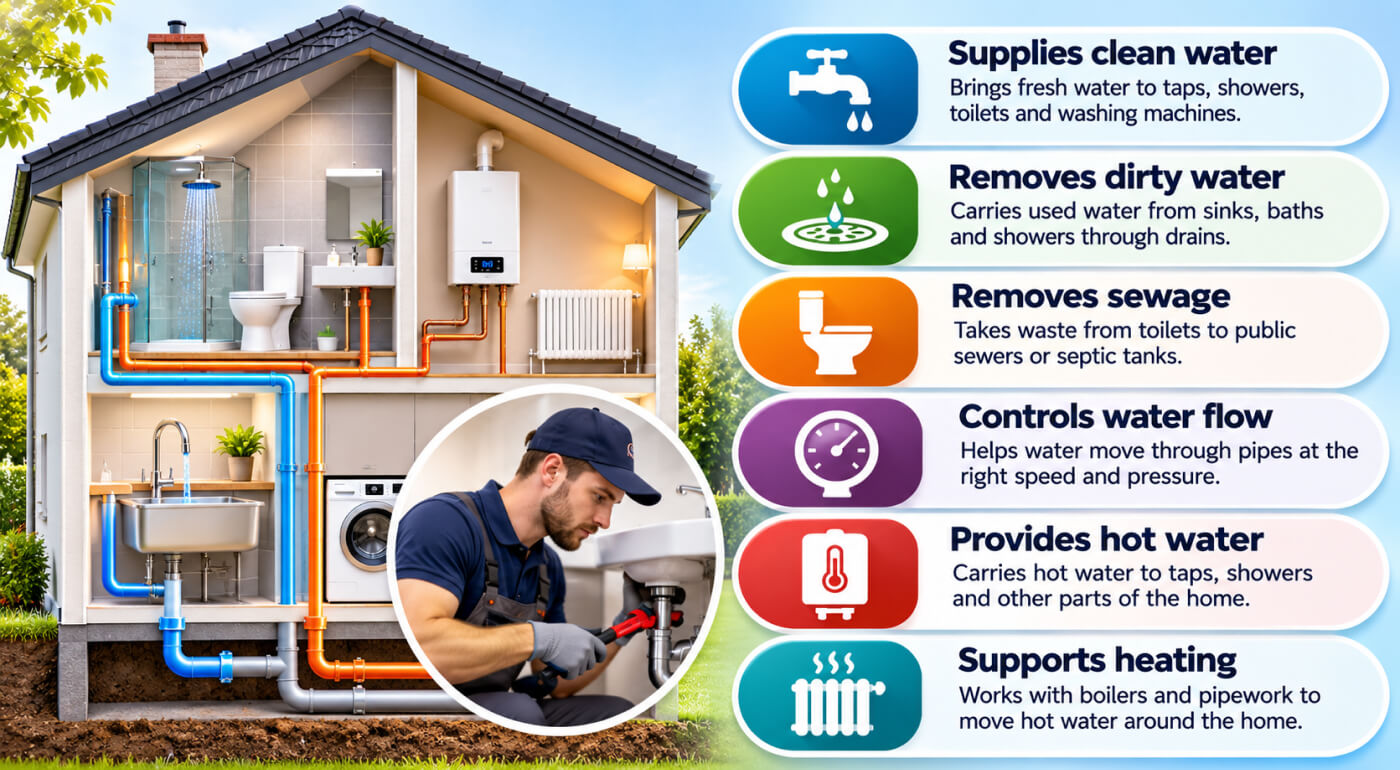
Plumbing helps bring clean water into homes and safely remove dirty water. Its main jobs include:
- Supplies clean water: Brings fresh water to taps, showers, toilets and washing machines.
- Removes dirty water: Carries used water from sinks, baths and showers through drains.
- Removes sewage: Takes waste from toilets to public sewers or septic tanks.
- Controls water flow: Helps water move through pipes at the right speed and pressure.
- Provides hot water: Carries hot water to taps, showers and other parts of the home.
- Supports heating: Helps boilers send hot water to radiators to warm rooms.
Overall, plumbing keeps homes clean, safe and comfortable. It also makes everyday tasks like cooking, washing and bathing much easier.
Why Is Plumbing Important?
Good plumbing makes daily life easier. It brings clean water into your home for cooking, washing and bathing. At the same time, drainage pipes carry dirty water and sewage away. This helps keep your home clean and stops waste from building up.
A good plumbing system also helps prevent leaks and water damage. Strong pipes and working fittings can protect your walls, floors and furniture. Regular checks help plumbers find small problems early. For example, fixing a small leak can stop it from causing bigger damage. You may save money by fixing the problem early. Good plumbing also helps prevent bad smells and keeps homes and workplaces clean and comfortable.
What Are the Main Functions of a Plumbing System?
A plumbing system does more than bring clean water into your home. It also takes dirty water away and helps supply hot water. It keeps water moving through pipes and makes daily tasks easier. Here are its main functions.
Supplying Clean Water
A plumbing system brings fresh water into homes and buildings through pipes. This water comes from a public water supply or a private source, such as a well. The pipes carry water to taps, showers, toilets, washing machines and dishwashers. As a result, you can get water whenever you need it for cooking, washing and cleaning.
Removing Wastewater
Plumbing also takes dirty water away from your home. For example, when you wash your hands, take a shower or use the sink, the water flows down a drain. Waste pipes carry this water away. They also carry waste from toilets to a public sewer or a private septic tank. This helps keep your home clean and free from bad smells.
Controlling Water Pressure and Flow
A plumbing system controls how water moves through pipes. It also helps keep the water pressure at the right level. Good water pressure makes it easier to use taps and showers. Plumbers use valves, pumps and pipes to control water flow. These parts help water reach different rooms without too much pressure.
Providing Hot Water
Plumbing also helps bring hot water to different parts of your home. A boiler or hot water cylinder heats the water. Then, pipes carry it to taps, showers and baths. Hot water helps you stay comfortable while bathing, washing dishes and cleaning your home. It makes daily life easier, especially during cold weather.
What Does a Plumber Do?
A plumber helps keep water systems in homes and buildings working well. Their main duties include:
- Installing pipes to bring clean water into homes and buildings.
- Connecting pipes to taps, sinks and other water fittings.
- Finding and repairing leaking pipes and taps to stop water waste.
- Replacing damaged parts to prevent water leaks and damage to walls, floors and ceilings.
- Clearing blocked drains and toilets using special tools.
- Checking pipes to find the cause of blockages and other problems.
- Installing toilets, baths and showers and connecting their water and waste pipes.
- Checking for leaks to make sure new fittings work properly.
- Inspecting pipes, boilers, radiators and hot water systems for damage.
- Repairing and maintaining water and heating systems to reduce the risk of sudden breakdowns.
What Are the Different Types of Plumbing?
Plumbing systems come in different types. Each type serves a different purpose in homes, workplaces and large buildings.
- Residential Plumbing: Covers water systems in houses, flats and other homes. It brings clean water to taps, showers, toilets and washing machines. It also carries dirty water away through drains. Plumbers fix leaks, clear blocked pipes and repair broken taps to keep homes clean and comfortable.
- Commercial Plumbing: Serves places like offices, shops, hotels and restaurants. These buildings often have more toilets, sinks and pipes than homes. Their plumbing systems must handle many people using water every day. Plumbers install and repair these systems to keep everything working well.
- Industrial Plumbing: Supports large buildings such as factories and production sites. These places often need large pipes, pumps and special water systems. Factories may use water to clean equipment, cool machines or support production. Industrial plumbers install, check and repair these systems.
- Sanitary Plumbing: Removes dirty water and sewage from buildings. It uses waste pipes, drains and toilets to carry waste away safely. The system sends the waste to a public sewer or septic tank. This helps prevent bad smells, leaks and unhygienic conditions.
What Parts Make Up a Plumbing System?
A Online plumbing Course system has many parts, and each one has a special job. Water supply pipes bring clean water to taps, showers and toilets. Drainage pipes carry used water away from sinks, baths and showers. Waste pipes take dirty water and toilet waste to the main drain or sewer. Water tanks store water for later use and can supply different parts of a building.
Taps let you use water, while valves help control or stop its flow. Toilets and sinks support daily tasks like washing and cleaning. They also connect to waste pipes. Water heaters and boilers provide hot water for baths, showers and washing. Boilers can also heat rooms through radiators. Finally, pumps help move water through pipes and supply it to upper floors.
What Are the Most Common Plumbing Problems?
Plumbing problems can happen in any home. Some are easy to fix, but others need a plumber. Learning why plumbing problems happen can help you find them early.
Leaking Taps and Pipes
Taps often leak because of worn washers or loose parts. Pipes may also leak when they crack, rust or get damaged. Even a small leak can waste water and damage your home. Call a plumber if you cannot stop the leak or notice damp walls, floors or ceilings.
Blocked Drains and Toilets
Hair, food, grease and too much toilet paper can block pipes. Water may then drain slowly or stop flowing. You can try a plunger to clear a small blockage. However, call a plumber if the blockage keeps coming back or water starts to overflow.
Low Water Pressure
Low water pressure makes taps and showers run slowly. A blocked pipe, water leak or faulty valve may cause it. Contact a plumber if the problem continues or affects several taps.
Running Toilets
A toilet may keep running because of a broken valve, worn seal or damaged float. This wastes water and can increase your water bill. Call a plumber if the toilet does not stop running.
No Hot Water
A faulty boiler or water heater can stop your hot water supply. Check the power and boiler settings first. If the problem continues, contact a qualified plumber or heating engineer. Never try to fix gas parts yourself.
Burst Water Pipes
Cold weather, high water pressure or old pipes can cause a pipe to burst. Water may then damage your walls, floors and furniture. Turn off the main water supply and call a plumber straight away.
What Is the Difference Between Plumbing and Heating?
Plumbing and heating have different jobs, but they often work together. Plumbing brings clean water into your home and carries dirty water away. Heating keeps your home warm and provides hot water. Plumbing systems use pipes to supply water to taps, sinks, showers, baths and toilets. They also carry dirty water and waste through drains. So, plumbing helps you with daily tasks like washing, cooking and cleaning.
Heating systems keep rooms warm. They use boilers, radiators and pipes to spread heat around your home. For example, a boiler heats water and sends it to the radiators. The radiators then warm your rooms. However, some parts of both systems work together. A plumber may install or repair boilers, radiators, hot water tanks and pipes. A boiler can also heat water for your shower and radiators. In the UK, many plumbers also offer heating services. However, anyone who works on gas boilers or other gas appliances must have Gas Safe registration. This helps protect your home and family.
When Should You Call a Professional Plumber?
Some plumbing problems are easy to fix. However, others need help from a plumber. If you notice a serious leak, burst pipe or blocked drain, call a plumber quickly. Acting early can help stop more damage to your home. Call a plumber if water keeps leaking from a tap or pipe. You should also get help if a pipe bursts. A lot of water can damage your walls, floors and furniture. A badly blocked drain or toilet also needs expert help, especially if dirty water starts to overflow.
Low water pressure can also mean something is wrong with your pipes. So, contact a plumber if your taps or shower run slowly. You should also call for help if you have no hot water and cannot find the cause. A trained plumber can find the problem and fix it safely. Fixing the issue now may prevent costly damage later. When choosing a plumber in the UK, check their training, skills and qualifications. If the job involves gas boilers or gas pipes, make sure they have Gas Safe registration. The Gas Safe Register website lets you check this.
Conclusion
Plumbing plays a big part in keeping your home clean, safe and comfortable. It brings clean water to your taps, removes dirty water and helps provide hot water. Now you know what does plumbing do and why it matters in everyday life. Regular checks can help you spot leaks and other problems early. If you notice a serious issue, call a qualified plumber for help. Good plumbing keeps your home in good shape and saves you time.
FAQs About What Does Plumbing Do
1. What is the main role of a plumber?
A plumber fits and fixes pipes, taps, toilets and drains. They help bring clean water into homes and take dirty water away.
2. Why are plumbers so highly paid?
Plumbers have special skills and training. They also fix urgent problems, such as burst pipes and water leaks. This can help them earn good money.
3. Can I be a plumber without GCSE?
Yes, you can. Some courses ask for GCSEs in English and maths, but others may accept you without them. Check the course rules before you apply.
4. What is the purpose of plumbing?
Plumbing brings clean water into homes and takes dirty water away. It also helps provide hot water for daily tasks.
5. What is the hardest part of being a plumber?
Finding hidden leaks and fixing hard problems can be difficult. Plumbers may also work in small spaces and lift heavy tools.
6. How much for a plumber for 3 hours?
A plumber may charge around £120 to £180 for three hours. The price can change based on the job, location and call-out fee.

Professional Online Plumbing Course
Course Description :
- Certificate: Yes(Free)
- Accreditation: CPD Accredited
- Access: Lifetime