
No products in the basket.
A plumber is a pro who fixes water pipes and drains. But what does a plumber do to help you? They install and repair systems that carry water through your house. Furthermore, these experts keep your home dry and safe every day.
UK homes need help because of old Victorian pipework and hard water. Also, limescale blocks your taps, and shared drains often cause sudden problems. In fact, roughly 60% of UK households struggle with hard water issues. Consequently, older houses require regular care to prevent major leaks or damage. Essentially, a plumber fixes leaks and clears blocked toilets for homeowners. They also install new bathroom fixtures and maintain important heating pipes. Therefore, hiring the right professional ensures your water always flows safely.
What Does A Plumber Do In a UK Home?
A plumber handles the installation of water supply lines. They fix leaks and clear blocked kitchen drains. Additionally, they install new sinks, toilets, and showers. Their primary goal is managing water flow safely. They also maintain the pipes connected to your radiators. So, what does a plumber do for you? They keep your home dry and your systems running.
Which everyday plumbing jobs do plumbers handle?
Plumbers spend most of their time fixing common issues that occur daily. They repair dripping taps that waste water and increase your monthly bills. Furthermore, they fix toilets that do not flush or leak constantly.
- Leaking Pipes: They find and seal cracks in water lines.
- Stopcocks: They ensure you can turn off your main water supply.
- Waste Pipes: They repair the tubes that carry dirty water away.
- Trapped Gullies: They clean out external drains to prevent flooding.
- Outside Taps: They install garden taps for easy watering.
What do plumbers install, repair, or maintain?
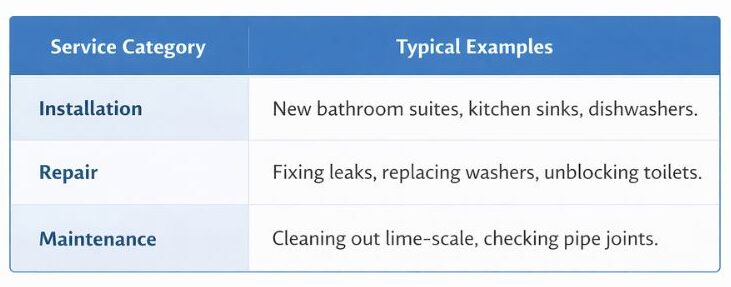
Installation involves putting in entirely new systems or fixtures for your home. For example, they fit new sinks, baths, and showers during renovations. Repairing involves fixing something that is broken, like a burst copper pipe. Maintenance is the process of checking systems to prevent future breakdowns.
Do plumbers work on heating systems and boilers in the UK?
This is a very important distinction for every UK homeowner to understand. Most plumbers work on the radiators and the pipes connecting them. They can also fix thermostats or bleed air from your heating system.
However, they cannot touch the internal parts of a gas boiler. You must hire a Gas Safe-registered engineer for any gas-related work. Many plumbers hold this extra qualification, but you should always check first. Always ask to see their ID card before they start the job.
Which Plumbing Problems Are Most Common In UK Households?
Why do UK homes get low water pressure?
Low water pressure is a frequent complaint in many British households today. Sometimes the issue starts with the main supply from the street. Older houses often have narrow, galvanised steel pipes that restrict water flow. In addition, faulty pressure-reducing valves (PRVs) can cause a sudden drop in power. Shared water supplies in older flats also lead to lower pressure. A plumber can diagnose if the problem is internal or external.
What causes dripping taps and running toilets?
Dripping taps usually happen because a small rubber washer has worn out. Moreover, modern ceramic disc cartridges can also fail over a long period. A broken float or fill valve is frequently the cause of running toilets. This allows water to flow constantly into the overflow pipe. These small issues can waste hundreds of litres of water every week.
What causes leaks under sinks and behind walls?
Leaks often occur at compression joints where two pipes meet together. These joints can loosen over time due to vibrations or physical movement. Furthermore, corrosion can eat through metal pipes, especially in very old systems. Failed silicone seals around baths or sinks also allow water to seep through. Consequently, you might notice damp patches on your ceiling or floorboards.
When Should You Call a Plumber Urgently (And What Can Wait)?
What counts as a plumbing emergency?
An emergency is any situation that threatens your safety or property. A serious emergency that could flood your house is a burst pipe. Sewage backing up into your bathtub is another very serious health risk.
Similarly, a major leak near electrical sockets requires immediate professional help. If you have no water at all, call a plumber quickly. Small drips or a slow-draining sink can usually wait until morning.
What should you do before the plumber arrives?
First, you should locate and turn off your main stopcock immediately. This halts the water’s flow and stops additional flooding damage. Next, isolate specific appliances using their individual shut-off valves if possible.
You should also contain any leaking water using buckets or towels. Finally, take photos of the damage for your insurance company later. This documentation is very helpful when making a claim for repairs.
When should you call your water supplier instead?
Sometimes the problem is not inside your home at all. If you see water bubbling up from the street, call the supplier. They are responsible for the pipes outside your property boundary line. Issues with the external stop tap also fall under their jurisdiction. Check with your neighbours to see if they have similar supply problems.
What Does a Plumber Do During an Emergency Call-Out?
How do plumbers make the property safe first?
The plumber’s first priority is to stop the immediate danger. They will ensure the water supply is completely shut off. In addition, they might drain the remaining water from the system.
They will check that no water is touching electrical wires. This prevents fires or electric shocks while they perform the repair. Safety is always the most important step in any emergency situation.
How do they find the source quickly?
Plumbers use visual checks to find obvious signs of water damage. They also use pressure testing to see where the system fails. Tracing pipe runs through walls helps them locate hidden leaks.
Furthermore, they might use dye or moisture indicators to find dampness. A skilled plumbing technician knows exactly where pipes usually fail in UK homes. Their experience allows them to work much faster than a DIYer.
What temporary vs permanent fixes might be done?
In an emergency, a plumber might use a temporary pipe clamp. This stops the leak so you can use water that night. However, they will usually suggest a permanent fix very soon after. This involves replacing the damaged section of pipe with new material. They will then test the system to ensure it is solid.
How Do Plumbers Diagnose and Fix Blocked Sinks, Toilets and Drains?
What tools do plumbers use for blockages?
A plumber has a wide range of tools for every clog. They start with a professional-grade plunger to create strong suction. If that fails, they use a hand-cranked auger to reach deep.
Moreover, they can remove the U-bend trap to clear debris manually. For tougher clogs, they might use specialised rods to push through. They also use basic jetting equipment to wash away grease buildup.
When is a drainage specialist needed instead of a plumber?
General plumbers handle most clogs inside your home very effectively. However, some problems are buried deep in the main sewer lines. If a pipe has collapsed, you need a drainage specialist. They use CCTV survey cameras to look inside your underground pipes. These experts have heavy-duty machinery for major external blockages or repairs. Your plumber will tell you if the job is too big.
What Qualifications and Certifications Should a UK Plumber Have?
What training routes are common?
Most plumbers in the UK complete a formal four-year apprenticeship. During this time, they earn Level 2 or 3 NVQ diplomas. Others might take courses through City & Guilds at local colleges. This training covers everything from basic pipework to complex system design. In this trade, real-world experience is equally as crucial as classroom instruction.
Which jobs require extra certification?
As mentioned earlier, gas work requires a Gas Safe registration card. Working on unvented hot water cylinders requires a G3 building certificate. These systems are under high pressure and can be very dangerous. Never allow someone without this specific paper to touch these items. Your safety depends on hiring a person with the right training.
What trade bodies and standards are positive signs?
Look for plumbers who belong to the CIPHE or APHC. These organisations ensure that their members follow high professional and ethical standards. TrustMark is another government-backed sign of a reliable and honest trader.
Furthermore, always verify that your plumber has valid public liability insurance. This protects you if they accidentally cause damage to your home. A professional plumber will happily show you proof of their insurance.
How Much Does A Plumber Cost in the UK?
What is a typical hourly rate and call-out fee?
Prices for plumbing services vary significantly across the different UK regions. London and the South East are usually much more expensive than elsewhere.
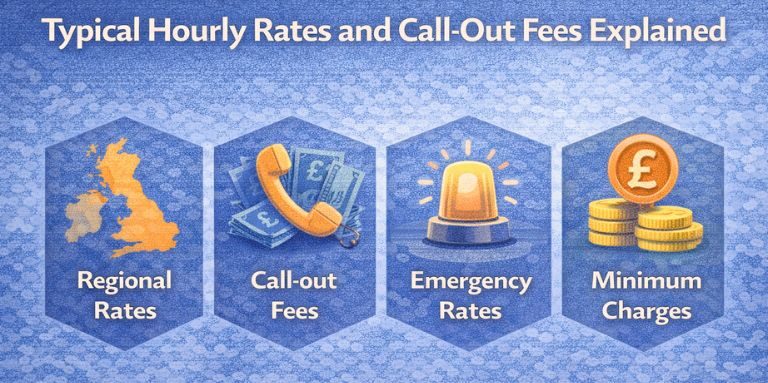
- Regional Rates: Expect to pay £40 to £120 per hour.
- Call-out Fees: These often cover the first hour of work.
- Emergency Rates: Prices may double during nights or bank holidays.
- Minimum Charges: Many plumbers charge for at least one full hour.
What factors change the price the most?
The complexity of the job is the biggest cost factor. If a pipe is behind a wall, it takes longer. Furthermore, the cost of parts like new taps or valves adds up. Parking charges and ULEZ fees in cities can also increase your bill. If the plumber needs a second person, the price will rise. Always discuss these potential extra costs before the work begins today.
Should you expect a quote, estimate, or fixed price?
A predetermined price for a certain task description is called a quotation. An estimate is merely a rough approximation of the potential cost. For large jobs like new bathrooms, always ask for a quote. Moreover, ensure the quote is in writing and lists all exclusions. This prevents surprise charges when the job is finally finished later. Most plumbers offer fixed prices for very common, simple repair tasks.
How Do You Choose a Reliable Plumber Near You?
What questions should you ask before booking?
Start by asking how much experience they have with your issue. Ask if they are available for emergencies or just scheduled work. In addition, enquire about any guarantees they offer on their labour. Ask if they source the parts themselves or if you should. Knowing these details helps you plan the project and your budget.
What red flags suggest you should avoid a plumber?
Be careful if a plumber refuses to give a written quote. Vague pricing is often a sign of future hidden extra costs. Avoid anyone who uses high-pressure tactics to make you sign quickly. Similarly, check if they have a physical address and a landline. A plumber with only a mobile number might be hard to find. If something feels off about a person, heed your instincts.
What should be on a proper invoice/receipt?
A professional invoice should clearly list the labour and parts used. It must show if VAT has been added to the total. Furthermore, it should include details about any warranties for the work. The date and time of the visit are also very important. Keep these documents safe in case you need to prove the repair. This is vital for your home insurance or future house sales.
When Should You Call a Plumber vs. Attempting a DIY Fix?
Minor issues for DIY
You can usually handle very simple tasks without a professional’s help. Changing a showerhead is a basic job for most UK homeowners today. Moreover, you can try plunging a shallow sink clog yourself first. Cleaning out a smelly drain with store-bought liquids is also safe.
Professional required
Call a plumber if you notice low water pressure throughout the house. Similarly, “knocking” pipes, known as water hammer, requires a professional’s touch. Visible damp patches on your walls always need an expert eye. These issues often suggest a much larger problem hidden from your view.
Emergencies
Total loss of water is a clear sign to call someone. A major internal flood requires an immediate response from a plumber. Never attempt to fix a burst main pipe on your own. You could make the damage much worse and increase the cost.
What Can You Do Yourself vs Leave to a Plumber?
What DIY checks are safe for most homeowners?
You should know how to check your main stopcock every year. This ensures it is not stuck when you actually need it. Moreover, bleeding your radiators is a safe way to improve your heating. You can also clean the “P-trap” under your sink quite easily. These small checks can save you from calling a plumber unnecessarily.
What should you not attempt?
- Hidden Leaks: Do not tear down walls to find pipes.
- Gas Work: This is illegal and dangerous for non-experts.
- Unvented Cylinders: These require specialised tools and high-level training.
- Main Pipe Changes: Do not alter the primary water supply lines.
Final Thoughts
Plumbers provide a vital service that keeps our UK homes safe and functional. They manage everything from small drips to major pipe installations with great skill. Knowing what does a plumber do helps you maintain your property much better. If you have a leak, do not wait until it gets worse. Book a local UK call-out or request a fixed quote for your routine maintenance today.
Frequently Asked Questions (FAQs)
1. What is the main role of a plumber?
- The main role of a plumber is to install, repair, and maintain water, heating, and drainage systems.
2. What is the most common job for a plumber?
- The most common jobs include fixing leaks, unblocking drains, and repairing boilers or taps.
3. Is plumber good money?
- Plumbing can be good money, especially for experienced or self-employed plumbers who charge higher rates.
4. How much would a plumber charge for 3 hours?
- A plumber in the UK may charge around £75–£150 per hour, so 3 hours could cost £225–£450.
5. Do you need GCSEs to be a plumber?
- GCSEs are not always required, but Maths and English are helpful for technical understanding and paperwork.
6. What kind of problems do plumbers fix?
- Plumbers fix leaks, blocked drains, burst pipes, faulty boilers, dripping taps, and heating issues.
7. How much do UK plumbers earn?
- UK plumbers typically earn between £25,000 and £45,000 per year, with self-employed plumbers earning more.
8. What is the 135 rule in plumbing?
- The 135° rule in plumbing refers to the maximum bend angle for pipe joints to ensure smooth water flow and prevent blockages.