
No products in the basket.
The meaning of COSHH is about protecting people from substances that can harm their health at work. Control of Substances Hazardous to Health (COSHH) is a UK law that makes employers manage chemicals, dust, fumes, and germs carefully. First, it requires risk assessments, proper control measures, and clear staff training.
Also, employers must check how harmful substances are used and make sure workers follow safety steps. For example, each year about 11,000 people in the UK die from lung diseases caused by past exposure to dust, chemicals, and other harmful substances at work. Therefore, COSHH helps reduce accidents, long-term illnesses, and workplace hazards. In addition, by understanding the meaning of COSHH, businesses can create safer work environments, protect employees’ health, and meet legal responsibilities effectively.
Why Was COSHH Introduced?
COSHH, which means Control of Substances Hazardous to Health, was made to keep workers safe. Before it existed, many people got sick or hurt because they worked with dangerous chemicals without protection. Then, the government created clear rules to help workplaces stay safe.
The main purpose of COSHH is to stop illness, injuries, and accidents caused by harmful substances. Also, it tells employers how to protect their workers. For example, they must provide safety equipment and instructions. So, workers can do their jobs without unnecessary risk.
It is very important because everyone should go home healthy after work. In addition, it prevents long-term health problems from repeated exposure to harmful substances.
What Does COSHH Cover?
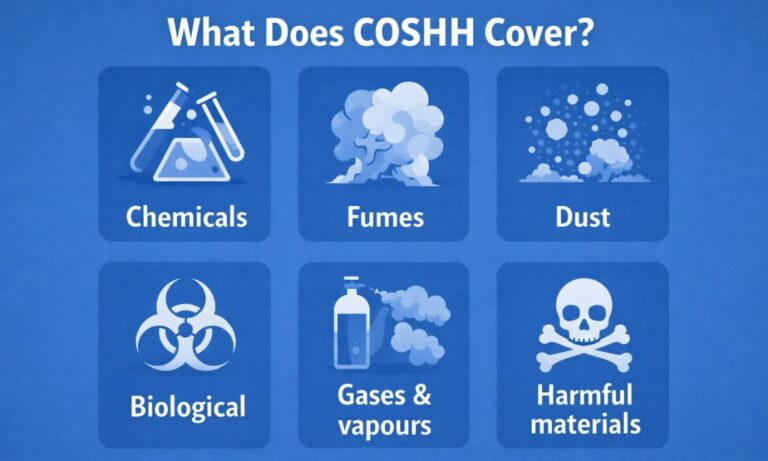
COSHH covers many substances that can harm health. These include:
- Chemicals – paints, cleaning products, and solvents
- Fumes – from welding, burning, or chemical reactions
- Dust – wood dust, silica dust, or flour dust
- Biological agents – bacteria, viruses, and other germs
- Gases and vapours – toxic or flammable gases
- Other harmful materials – oils, powders, and mixtures
First, it helps workers understand what is dangerous. Next, it shows how to handle substances safely. Also, it ensures employers provide protection. Finally, it keeps workplaces safer for everyone.
Who Must Follow COSHH Regulations?
COSHH rules apply to almost everyone at work. First, employers must follow them. They need to make the workplace safe and provide protective equipment like gloves, masks, and goggles. Then, employees must also follow the rules. They must use safety gear, read instructions, and handle substances carefully.
Some examples of workplaces under COSHH include:
- Factories and workshops – where chemicals, dust, or fumes are used every day
- Laboratories – where scientists work with chemicals and germs
- Hospitals and clinics – where staff handle medicines, germs, and cleaning chemicals
- Cleaning companies – where strong cleaning products are used regularly
- Construction sites – where dust, cement, paint, and solvents can harm workers
- Beauty salons – where hair dyes, nail products, and chemicals are common
In addition, even offices may follow COSHH if they store cleaning chemicals or printer toners. Moreover, it applies to all businesses that use hazardous substances. Also, workers must take responsibility for their own safety. Finally, following COSHH rules helps everyone stay safe and healthy at work.
How Does COSHH Keep People Safe?
COSHH protects workers in many ways. First, it requires a risk assessment. This means checking which substances could harm people and deciding how to reduce danger. Then, control measures are set up to make the workplace safer.
Some ways COSHH protects people include:
- Safe handling – wearing gloves, masks, goggles, or aprons when needed
- Proper storage – keeping chemicals in the right containers, away from heat or water
- Safe disposal – getting rid of harmful substances the correct way so no one gets hurt
- Training – teaching workers how to handle substances safely every day
- Clear labelling – all hazardous substances must have warning labels and instructions
- Regular checks – employers must check workplaces often to fix any problems
Also, COSHH encourages workers to speak up if they notice dangers. Furthermore, it reduces long-term health risks. In addition, it helps workplaces stay organised and safe. Finally, these rules give peace of mind, so workers can do their jobs confidently and return home healthy.
8 Key Steps of COSHH Compliance
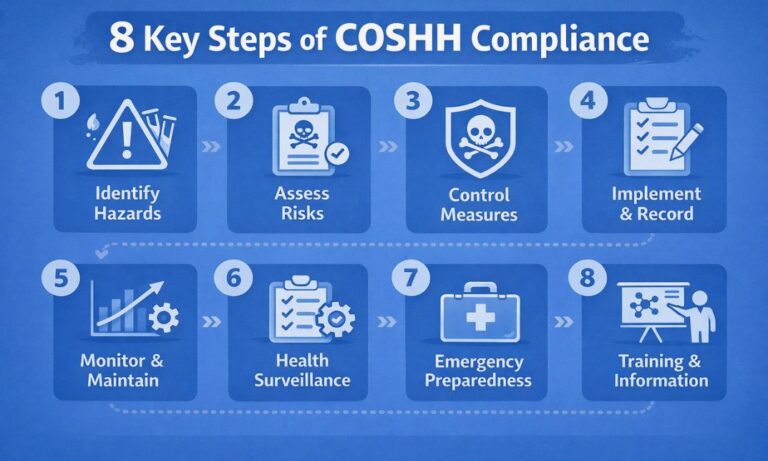
COSHH helps protect workers from harmful substances. Following these steps keeps everyone safe and healthy.
1. Identify Hazardous Substances
Make a list of all materials that could harm people. This includes chemicals, fumes, dust, and germs. Also, check product labels and Safety Data Sheets (SDS) for warnings.
2. Assess the Risks
Decide who might be exposed and how often. Think about how likely harm could happen. In addition, consider new or changing work processes and occasional tasks that could be risky.
3. Decide on Control Measures
There are simple ways to control hazards. First, elimination means removing the hazard completely. Next, substitution means using something safer. Then, engineering controls like equipment or ventilation keep people safe. Also, administrative controls limit how long people are exposed. Finally, PPE like gloves, masks, or goggles is used if nothing else works. In addition, always try the first steps before relying on PPE.
4. Implement Controls & Record Findings
Put the control measures in place to keep everyone safe. Then, write down what you did, especially if there are five or more employees. Also, keeping records helps track safety and make improvements.
5. Monitor and Maintain Controls
Check safety measures often to make sure they work. For example, ensure fans, ventilation, and equipment are working correctly. Also, update safety steps if work or substances change. In addition, regular checks help keep everyone safe.
6. Perform Health Surveillance
Watch workers’ health if they handle harmful substances. In addition, focus on substances that can cause long-term illnesses.
7. Prepare for Emergencies
Make rules for accidents, spills, or other incidents. Also, ensure everyone knows emergency steps clearly. Then, practise procedures when needed. Finally, review them regularly to improve safety.
8. Training and Information
Teach workers about risks and safe handling of substances. Also, show them how to use protective gear correctly. Furthermore, practise and give examples. In addition, answer questions so everyone understands.
What Are the Benefits of Understanding COSHH?
Understanding COSHH helps both workers and employers. First, it makes the workplace much safer. When everyone knows which substances are dangerous and follows simple rules, accidents and illnesses happen less often. For example, workers know when to wear gloves, masks, or goggles. Also, they feel more confident and secure while doing their jobs.
Next, it helps businesses follow the law. Employers avoid fines, legal problems, and unnecessary inspections. In addition, knowing COSHH lowers health risks. Handling chemicals, dust, fumes, or germs safely prevents short-term injuries and long-term illnesses.
Furthermore, it saves money. Fewer accidents and sickness days mean higher productivity. Finally, understanding COSHH creates a better work environment. Workers feel cared for, which improves teamwork and trust. So, safety becomes a normal part of every day at work.
What Does COSHH Do?
COSHH sets rules to control dangerous substances at work. First, it helps employers understand what actions to take. It protects workers from chemicals, dust, fumes, and germs. As a result, it prevents health problems and keeps people safe.
COSHH also shows how to plan, handle, and check substances carefully. In addition, it helps everyone follow the right safety steps every day.
Main things COSHH does:
- Identifies substances that could be harmful.
- Explains ways to lower risks at work.
- Recommends safety equipment like gloves, masks, and ventilation systems.
- Provides guidance for training workers on safe handling.
- Promotes regular monitoring of risks and staff health.
Finally, using COSHH rules makes workplaces safer. Workers stay healthy, accidents are fewer, and everyone can work with more confidence.
What Are the 5 Words of COSHH and What Do They Mean?
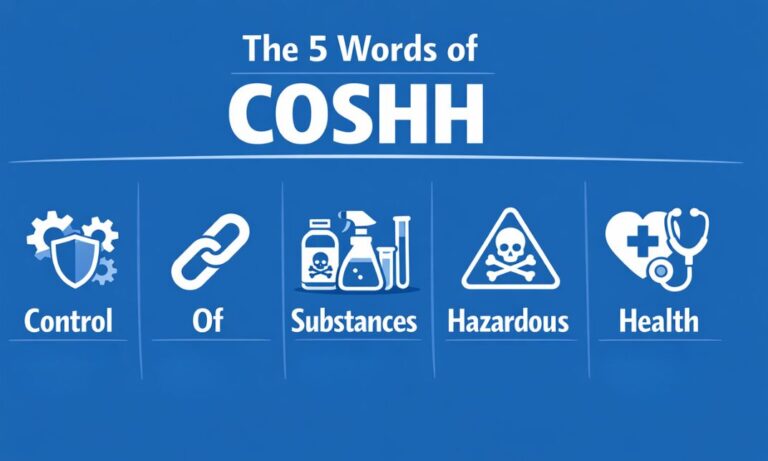
Understanding each word in COSHH makes the rules easier to remember and follow.
1. Control
Control means keeping a substance under control so it does not spread or cause harm. For example, it is like keeping a dangerous animal in a cage. It cannot hurt anyone if it stays inside. At work, control can include using lids, sealed boxes, cupboards, or fans to remove fumes. As a result, workers stay safe from touching or breathing in harmful substances.
2. Of
This word connects the others. Basically, it shows that the rules are about controlling substances that affect people’s health.
3. Substances
Substances are things you might find at work that could cause harm. They can be liquids, powders, or gases. For instance, cleaning chemicals, dust in the air, or smoke are all substances. If you can touch, smell, or breathe it, it counts under the law.
4. Hazardous
Hazardous means dangerous. These substances can harm your skin, eyes, or lungs. Therefore, workers must handle them carefully. Also, they should always use safety tools like gloves, masks, or goggles.
5. Health
Health means your body and how well it works. COSHH protects your lungs, skin, and eyes from harm. Finally, the goal is simple. You should go home feeling as healthy as when you came to work. In addition, following the rules helps workers stay safe and confident while doing their jobs.
What Are Common Misconceptions About COSHH?
Many people get COSHH wrong, so it’s important to explain clearly. First, COSHH is not just about wearing gloves or masks. It is a full system to identify risks and prevent harm. Also, not all chemicals are dangerous if used properly. For instance, small amounts of cleaning chemicals can be safe when instructions are followed.
Next, some workers think COSHH only applies to factories or labs. In fact, it applies to many workplaces, even offices, salons, or cleaning services where chemicals, dust, or fumes are used. In addition, COSHH is not optional. Following the rules protects everyone and prevents serious health problems.
Furthermore, some people believe COSHH is complicated. Actually, it is easy if you follow simple steps: identify hazards, assess risks, use controls, and provide training. Finally, understanding COSHH clears up mistakes and misunderstandings. So, it helps workplaces stay safe, organised, and healthy for everyone.
Final Thoughts on COSHH
COSHH is a law that helps keep people safe at work. First, it tells employers and workers which substances can be dangerous and how to handle them safely. This includes chemicals, dust, fumes, and germs. Also, following the rules reduces accidents and sickness, so workers stay healthy.
Next, employers must provide safety equipment like gloves, masks, and goggles. Then, they should give training and clear instructions on how to use substances safely. In addition, workers must follow the rules, wear protective gear, and handle substances carefully. Furthermore, when everyone works together, the workplace becomes safer. Finally, COSHH protects health, prevents accidents, and helps workers feel confident. Overall, following COSHH is simple but very important for everyone’s safety.
FAQs
1. What are the 5 main substances covered by COSHH?
COSHH covers chemicals, fumes, dust, biological agents (germs), and gases or vapours.
2. What is the full meaning of COSHH?
COSHH stands for Control of Substances Hazardous to Health.
3. What are the five principles of COSHH?
- Assess risks from hazardous substances
- Decide on precautions to reduce risks
- Prevent or control exposure
- Ensure control measures are used and maintained
- Provide information, instruction, and training
4. What are the three basic rules of COSHH?
- Avoid exposure if possible
- Control exposure if unavoidable
- Ensure proper use of protective equipment
5. What are the 7 types of hazards?
- Chemical
- Biological
- Physical
- Ergonomic
- Psychological
- Electrical
- Fire/explosive
6. What are the toxic examples of COSHH?
Solvents, acids, cleaning chemicals, paints, pesticides, welding fumes, and silica dust.
7. What are the main COSHH requirements?
- Identify hazardous substances
- Assess risks
- Implement control measures
- Provide training
- Monitor and maintain safety
8. What are the 4 C’s of safety culture?
- Commitment
- Communication
- Compliance
- Continuous improvement
9. What are the 4 types of hazard controls?
- Elimination – remove the hazard
- Substitution – use safer alternatives
- Engineering controls – use equipment or ventilation
- Administrative controls – rules, procedures, and training
10. What is a COSHH checklist?
A COSHH checklist is a list used to check hazardous substances, risks, control measures, training, and monitoring to ensure workplace safety.