
No products in the basket.
If you want to learn how to start a garden nursery with low costs, begin small and stay flexible. Start with easy, fast-growing plants like herbs, perennials, and bedding plants. These grow quickly, sell well, and give you early wins. And, as you meet local customers, you feel more confident and excited about your nursery journey. Moreover, keep your admin simple. Work as a sole trader at first, and think about VAT only when your turnover reaches £90,000 in any 12 months. This way, you save money, reduce stress, and grow your nursery step by step.
In this article, we explore starting a small plant business in detail. You’ll learn how to begin with minimal costs, what types of plants to grow, how to reach customers, and what equipment and space you really need. You’ll also get tips for keeping plants healthy, selling successfully, and growing your business over time. By the end, you’ll have a clear idea of the steps to take to start and run your own plant business confidently.
How to Start a Garden Nursery with Low Costs
If you want to know how to start a garden nursery without spending much, the easiest way is to begin small at home. Start with a few easy-to-grow seasonal plants. Herbs, perennials, and bedding plants work really well. You can grow them in pots, trays, or small garden beds. Sell directly to customers—set up a table at your driveway, visit local markets, or try small pop-ups. Meeting customers face-to-face is fun, and hearing their kind words builds your confidence.
Then, reinvest your profits. Buy more stock plants, extra trays, and peat-free compost. You might also add a simple shelter, like a cold frame or mini polytunnel. This protects your plants and helps them grow stronger. At the same time, keep track of everything you use. Write down each pot, label, or handful of compost. It may feel small at first, but later it helps you calculate prices correctly and save money.
Finally, observe your plants and learn what grows best. Note what sells quickly, what customers like, and which plants need more care. These habits make your nursery run smoothly, grow gradually, and make your work more rewarding.
What Type of Plants Will You Grow?
Start with plants that are easy to grow and sell well. Herbs like mint, rosemary, and thyme are perfect because they grow fast, smell nice, and people love using them in cooking. Add flowers that attract bees and butterflies, such as lavender and echinacea. These plants not only look beautiful but also help nature. Bedding plants like marigolds are bright, cheerful, and very popular in gardens. You can also grow strong houseplants like spider plants, pothos, or snake plants from cuttings. They are easy to care for and sell quickly.
Then, think about a special twist to make your nursery unique. Try native wildflowers, small edible plants like salad greens or chilli plants, or plants that grow well in shade. You can create fun bundles, for example, a “bee-friendly 3-pack” or a “kitchen herb set.” Add small labels with care tips—customers really appreciate that. Also, pay attention to colours, shapes, and plant combinations. This makes your plants look attractive and encourages people to buy more.
Finally, notice which plants sell faster and which ones people ask about. This helps you plan next season and grow the plants your customers really want. The more you experiment and observe, the better your nursery will become.
What Space Do You Need to Begin?

Your nursery can grow anywhere with sunlight. Even a patio or balcony is enough. Here are some ideas:
- Sunny patio or balcony: Great for pots, small herbs, and bedding plants. You can watch them grow every day.
- Backyard or garden corner: Use a few beds or containers. It gives more space for perennials and vegetables.
- Small greenhouse or cold frame: Protects young plants from the weather and helps them grow faster.
If you want something larger, like a big polytunnel or greenhouse, keep these points in mind:
- Check local rules: Some structures are allowed under permitted development, but it depends on your location and size.
- Ask your planning authority first: This avoids fines or having to remove the structure later.
- Consider sunlight and drainage: Plants need good light and water drainage to grow well.
- Plan space for walking and working: Leave room to move around easily when watering, planting, or selling.
Starting small makes it easier and more fun. As you gain confidence, you can gradually expand your space and grow more plants.
What Equipment Do You Need on a Budget?
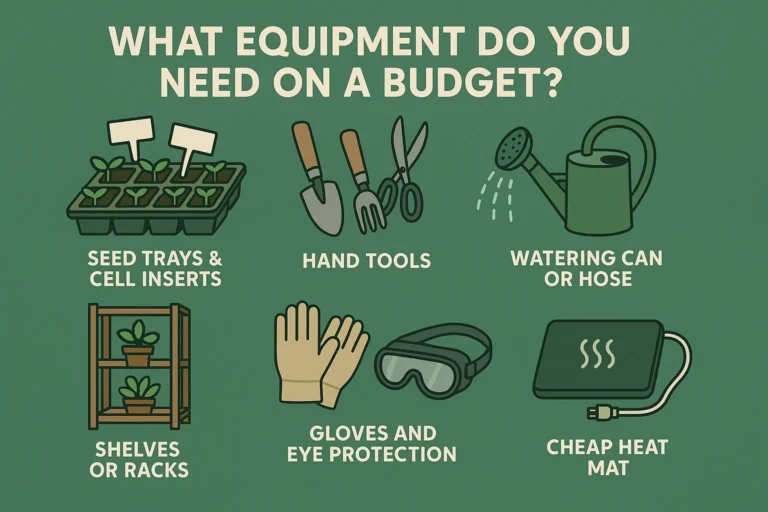
It’s easy to begin your nursery on a small budget. Only buy what you really need. This keeps things simple and stress-free.
- Seed trays and cell inserts: Start seeds and cuttings easily.
- Labels: Remember plant names and care tips.
- Hand tools: Small spades, trowels, and scissors for planting.
- Watering can or hose: Keep plants healthy and hydrated.
- Shelves or racks: Save space and organise plants.
- Gloves and eye protection: Keep your hands and eyes safe.
- Cheap heat mat: Helps seeds grow faster in spring.
Later, when your sales grow, you can buy more things. Add benches to work more easily, an irrigation timer to water automatically, or a mini polytunnel for extra space. Start small, grow slowly, and enjoy seeing your plants thrive.
How Do You Source Seeds and Supplies Cheaply?
Starting your nursery doesn’t have to cost much. With smart choices, you can save money and still grow healthy plants.
- Buy in bulk: Get peat-free compost, coir blocks, and trays or pots in packs. This saves money and keeps you stocked.
- Reuse old pots: Wash and clean them before using again. It is cheap and good for the environment.
- Seeds: Use retail pre-packed seeds. They are easy to start and safe to sell.
Also, if you want to grow and sell your own seeds commercially, you must follow the Seed Marketing Rules. This includes licensing and certification. But most small nurseries buy certified seeds or grow plants to sell. By planning carefully, reusing what you can, and buying smartly, you save money and enjoy growing your nursery step by step.
How Can You Grow Plants Without High Overheads?
You don’t need to spend a lot to grow healthy plants. Firstly, one of the easiest ways is to propagate from stock plants and cuttings. This costs very little and allows you to produce many plants quickly. Also, you can use cold frames or mini-tunnels instead of expensive heated glasshouses. These simple structures protect young plants and let you take advantage of the natural warmth in spring and summer, helping them grow strong.
In addition, collecting rainwater is a smart and cheap way to water your plants. It saves money and is good for the environment. During hosepipe bans, watering for your nursery may still be allowed, but always check your water company’s rules. Moreover, you can save by reusing pots, trays, and labels when possible. Simple cleaning and sterilising keep your plants safe and reduce waste.
Finally, plan your space carefully. Arrange plants so they get enough sunlight and are easy to water and move. Keep a small record of what grows well in different areas. This helps you save money and time while improving plant health. By following these simple steps, you can grow strong, healthy plants without spending a fortune. It feels rewarding to see your nursery thrive while keeping costs low and enjoying each stage of the process.
Do You Need Permissions or Licences?

Starting a nursery is exciting, but you need to follow some rules. Here is what to know:
- Plant passports and registration: If you sell plants online or move them between professional growers, you usually need to register with APHA and issue UK Plant Passports. However, if you sell directly to customers face-to-face, you might not need them. When unsure, ask APHA.
- Biosecurity: Watch out for harmful pests or plant diseases, like Xylella fastidiosa. Always buy from trusted UK suppliers and keep simple records. This protects your plants and customers.
- Markets and pop-ups: Most council-run markets need a stall licence or pitch agreement. Apply to your local council early so you can secure your spot.
- Business basics: You can start as a sole trader using Self Assessment, or set up a limited company. Also, think about public liability insurance for markets and customers—it keeps you safe.
- VAT: You only need to register if your taxable turnover goes over £90,000 in any 12 months. Keep track so you stay within the rules.
By following these steps carefully, you can enjoy running your nursery, grow your plants, and stay out of trouble. Also, simple planning saves time, money, and stress.
How Do You Find Customers for Your Nursery?
Finding customers can be exciting, and it helps your nursery grow quickly. First, focus on local people. You can sell from your driveway (if allowed), attend village fetes, farmers’ markets, or use Facebook and Nextdoor groups. Meeting people face-to-face is fun and helps you understand what they like.
Then, think about getting found online. Set up a Google Business Profile with good photos and reviews. This helps new customers see your plants and trust your nursery. You can also connect with local florists, landscapers, cafés, or allotment societies. These partnerships bring steady customers and help your nursery become well-known in the area.
Also, small extras make a big difference. Give clear care cards with every plant, so customers know how to look after them. Create gift sets like “plant + pot” bundles—they sell well and make people happy. You can even offer seasonal specials, like herb trios in spring or festive plants in winter. By focusing on local sales, online presence, partnerships, and little extras, your nursery will attract customers and keep them coming back. It feels amazing to see people enjoy the plants you have grown with care.
Final Thoughts on Starting a Low-Cost Garden Nursery
Starting a garden nursery is easier if you begin small and keep costs low. Focus on easy plants like herbs, perennials, and bedding flowers. Meet local customers directly and listen to what they like. Reuse pots and labels to save money, and keep simple records of sales and plant growth. Slowly reinvest profits to buy more plants or a small shelter.
Plan your space well, protect plants from pests, and give care instructions to customers. Use local groups or social media to attract people. With patience, care, and small steps, your nursery can grow successfully and be enjoyable.
Frequently Asked Questions
- Is owning a nursery profitable?
Yes, a nursery can make good money if managed well. However, costs like staff, rent, and utilities can be high. - Can I start my own nursery?
Yes, you can start a nursery. You don’t need formal qualifications, but your staff must meet the rules. Business skills help. - What are the disadvantages of a nursery?
A nursery may offer less one-to-one care. Staff often look after several children, so your child might get less attention. - What insurance do you need for a nursery?
If you run a nursery, you need public liability insurance to protect your business and children in your care. - What are the red flags for nursery?
Red flags for a nursery include dirty spaces, changing staff, little child interaction, poor training, and unclear rules.