No products in the basket.
A cleaning business is a service that helps homes or offices stay clean, safe, and organised. Thinking about how to start a cleaning business UK ? You are not alone. Many people want a simple business with low start-up costs. The good news is that cleaning services stay in high demand across the UK. In fact, the UK cleaning, hygiene, and waste industry is worth about £72 billion and is one of the top 10 biggest industries in the UK economy. So, it can be a smart and practical business idea.
First, choose your business type and register with HMRC or Companies House. Next, get public liability insurance and follow safety rules like COSHH. Then, pick your cleaning type and buy basic tools. Finally, promote your services with local ads, social media and a Google Business Profile to get your first clients.
Let’s take a closer look at how to start a cleaning business UK and what steps you need to take to make it successful and safe.
Why Should You Start a Cleaning Business in the UK?
Starting a cleaning business in the UK is a smart and low-cost idea. The cleaning industry is strong, worth over £50 billion, and always in demand. You can start small, work flexible hours, and grow your business as you get more clients.
Why Start a Cleaning Business in the UK?
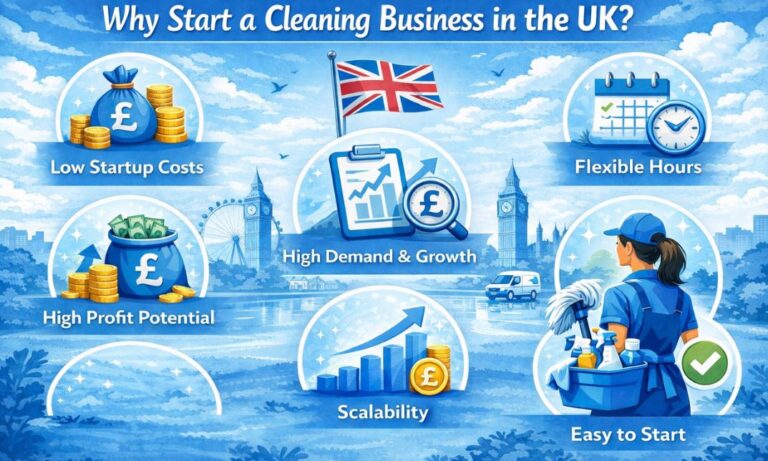
- Low Startup Costs: You do not need a shop or expensive equipment. Moreover, this makes it easy and low-risk to start.
- High Demand & Growth: The UK cleaning industry has over 1.4 million workers and keeps growing. Also, many people and businesses need cleaning services every day.
- Flexible Working Hours: You can choose your own schedule. Next, this helps you balance work and personal life.
- High Profit Potential: With low costs, you can earn good profits. Then, there are chances in both home and office cleaning.
- Scalability: You can start alone and hire staff as your business grows. For example, you could begin as a solo cleaner and later build a team.
- Easy to Start: You do not need special qualifications. Anyone can begin quickly.
Key Things to Think About
- Competition: Many people start cleaning businesses, so you need to stand out.
- Insurance: Protect your business with proper insurance.
- Focus: Success comes from targeting a specific area. Finally, you could focus on eco-friendly cleaning, end-of-tenancy cleaning, or office cleaning.
What Types of Cleaning Services Can You Offer?
When you start a cleaning business, you can offer many services. First, choose services that match your skills and tools. Also, think about what people in your area need most.
Residential Cleaning Services
- Regular Cleaning: Weekly or bi-weekly cleaning. Mop floors, dust furniture, vacuum carpets, and clean kitchens and bathrooms. Next, this keeps homes tidy all year.
- Deep Cleaning: Thorough cleaning of areas people often miss. Scrub tiles, clean behind furniture, and remove built-up dirt.
- Move-In / Move-Out Cleaning: Clean empty homes from top to bottom for new tenants. Many landlords require this. Then, it helps clients get their deposit back.
- Holiday or Event Cleaning: One-time cleaning before or after parties or events. After that, clients can enjoy a clean home without stress.
Commercial Cleaning Services
- Office Cleaning: Clean desks, floors, kitchens, and toilets to keep the workplace tidy.
- Janitorial Services: Empty bins, clean floors, and refill supplies like soap and paper towels regularly.
- Retail / Store Cleaning: Clean shops, floors, and windows for high-traffic areas. Also, a clean store attracts more customers.
- Industrial / Factory Cleaning: Clean warehouses or production areas, removing dust and debris.
- Medical / Healthcare Cleaning: Follow strict hygiene rules to disinfect clinics and medical offices. In addition, this helps prevent illness.
Specialised Cleaning Services
- Carpet & Upholstery Cleaning: Remove stains, smells, and deep dirt from carpets, rugs, and furniture.
- Window Cleaning: Clean windows inside and outside for homes and offices.
- Pressure Washing: Use strong water pressure to clean driveways, patios, and walls.
- Oven & Appliance Cleaning: Remove grease and dirt from ovens, fridges, and freezers. Next, kitchens stay fresh and safe.
- Post-Construction Cleaning: Remove dust, debris, and paint after building or renovations.
- Allergy-Friendly Cleaning: Use HEPA filters and special tools to remove allergens. Finally, this helps people breathe easier.
What Are the Legal Requirements to Start a Cleaning Business UK?
If you want to start a cleaning business UK, you need to follow some legal steps to run it safely and legally. First, you must register your business. You can work as self-employed with HMRC or set up a limited company with Companies House. This gives your business a legal identity and helps you pay taxes correctly.
Next, get the right insurance. Public liability insurance protects you if something gets damaged or someone is hurt while you work. Also, if you hire staff, you must have employers’ liability insurance. This is a legal requirement and keeps your employees safe.
Then, follow health and safety rules. COSHH (Control of Substances Hazardous to Health) rules protect you and your clients when you use cleaning chemicals. You should also provide safety instructions for your staff if you hire anyone.
After that, check if you need any special licences. For example, a waste carrier licence is required if you remove large amounts of rubbish or chemicals. In addition, a DBS check can help build trust with residential clients, even if it is not always legally required. Finally, keep records of everything, like training, insurance, and licences. This makes your business professional and gives your clients confidence that you are trustworthy.
What Equipment and Supplies Do You Need?
When you start a cleaning business UK, having the right tools makes your work easier, faster, and more professional.
- First, cleaning products and tools: You need basics like mops, buckets, brushes, sponges, vacuum cleaners, and all-purpose cleaners. Also, add microfiber cloths, scrubbers, and floor polishers for a better clean.
- Next, uniforms and protective gear: Wearing a uniform looks professional. Gloves, masks, and goggles protect you from chemicals and dust. In addition, proper gear keeps you safe and healthy while working.
- Then, eco-friendly options: Many clients like green cleaning products because they are safe for homes, pets, and the environment. Using eco-friendly products can help your business stand out and attract more customers.
- After that, stay organised: Keep your supplies in a bag or trolley for easy access. Check your stock before each job to avoid running out.
- Finally, maintain your equipment: Clean your tools after each use and replace worn items. This saves time, makes work smoother, and shows clients you are careful and professional.
How Should You Set Your Prices?
Setting the right price is very important for your cleaning business UK. The right price helps you attract clients, cover your costs, and make a fair profit.
- Research local market rates: Check what other cleaners in your area charge so you know your prices are fair and competitive. Look at both small domestic cleaners and larger cleaning companies to see the range.
- Choose how to charge: Decide between hourly rates or fixed prices. Hourly rates work well for smaller jobs, while fixed prices are better for bigger tasks or regular contracts. You can also offer a mix depending on the client’s needs.
- Offer packages or contracts: Create weekly, bi-weekly, or monthly cleaning plans, which give clients convenience and guarantee you a steady income. You can also include special add-ons, like oven cleaning or window washing, to increase your earnings.
- Consider your costs: Include cleaning supplies, travel time, and your own work hours so your prices cover expenses and still give you a profit. Don’t forget insurance and equipment maintenance.
- Explain your prices clearly: Be confident but flexible, which helps build trust with clients. Show them what is included in the price, and offer options if needed.
- Review your prices regularly: As your experience, skills, and reputation grow, you can adjust your rates to match your value. Also, consider inflation or rising supply costs when updating your prices.
What Skills Do You Need to Run a Cleaning Business Successfully?
Running a cleaning business UK is exciting, but it also needs some key skills to succeed.
- Time management: You need to plan your day and jobs well, so you finish on time and keep clients happy. Good time management also helps you take more jobs without feeling stressed.
- Organisation: Keep your tools, cleaning products, and schedule in order. Also, organising your supplies and routes saves time and makes your work look professional.
- Marketing and sales skills: You must let people know about your services and convince them to hire you. Even small efforts, like posting on local Facebook groups or handing out flyers, can bring new clients.
- Customer service: Listen to clients and respond quickly to requests. Happy clients are more likely to recommend you. While skills in cleaning are important, being polite and reliable matters just as much.
- Problem-solving: Unexpected issues happen, like a tough stain or missing supplies. Because you stay calm and solve problems quickly, clients trust you more.
- Basic finance skills: Track income and expenses carefully. Also, knowing your costs and profits helps you price services fairly and grow your business.
- Learning and improvement: Keep learning new cleaning techniques and business tips. Then, you can offer better services and attract more clients.
- Planning for growth: Set goals and plan for the future. Finally, thinking ahead helps your business succeed long-term.
How to Start a Cleaning Business UK
Starting a cleaning business can be smart. If you want to know how to start a cleaning business UK , follow a few simple steps. Many people need cleaning services, so demand is high. Register your business, get insurance, and follow safety rules. Even a small start can grow into a good business. Decide your cleaning type, buy tools, set prices (£15–£20/hour), and also promote your services online and locally.
1. Legal Requirements & Structure
- Register the Business: Be a sole trader with HMRC or a limited company via Companies House.
- Insurance: Public liability insurance protects against damage or accidents. While you may start alone, hire employers’ liability insurance if you have staff.
- DBS Check: Helps build trust with home clients.
- Compliance: Follow COSHH rules when using cleaning chemicals. Before using chemicals, read instructions carefully.
2. Define Your Service
- Residential Cleaning: Easy to start. Includes cleaning and ironing. Requires trust.
- Commercial Cleaning: Offers steady work and higher pay. However, evenings or weekends may be needed.
- Specialised Cleaning: Carpet, oven, or end-of-tenancy cleaning.
3. Equipment & Costs
- Tools: Mops, buckets, cloths, vacuum cleaners, and cleaning products.
- Transport: Reliable vehicle for jobs.
- Pricing: Start at £15–£20/hour. Although common, raise rates as your experience grows.
4. Marketing & Growth
- Local Ads: Flyers, cards, and local Facebook groups.
- Online Presence: Free Google Business Profile.
- Reputation: Good service leads to word-of-mouth. Because happy clients refer you to others.
Common Mistakes to Avoid in a UK Cleaning Business
Starting a cleaning business UK can be great, but some mistakes can cause problems.
- Neglecting high-touch surfaces: Don’t miss light switches, door handles, or keyboards, because these spots have many germs.
- Using the wrong products: Harsh chemicals can damage surfaces. Always read labels and dilute products correctly, while making sure they are safe for the surface.
- Skipping “contact time”: Let disinfectants sit long enough to kill germs. Then, they work properly.
- Reusing dirty supplies: Don’t use the same cloth or mop in different areas, because it spreads germs instead of cleaning.
- Poor ventilation: Open windows or use fans when using strong chemicals. Also, it keeps the air safe and fresh.
- Cleaning in the wrong order: Always clean from top to bottom to avoid spreading dust and dirt.
- Cleaning windows in direct sunlight: Sunlight can leave streaks. Even small mistakes can affect the results.
Final Thoughts
It is cheap to start, always in demand, and lets you work flexible hours. First, follow the legal rules, get insurance and use safe cleaning products. Then, pick your services, buy the right tools and set fair prices. Promote your business locally and online to get clients. To learn faster and improve your skills, try our Cleaning Diploma Bundle Course. It teaches professional cleaning, safety rules, and business tips. Then, with this knowledge, you can offer better services, impress clients, and grow your business quickly.
Do a good job, stay reliable, and keep learning. Success will follow!
FAQs
1. How much to pay a cleaner for 3 hours?
A cleaner in the UK usually earns £12–£20 per hour. So, for 3 hours, you can pay around £36–£60 depending on experience.
2. What is the 20/10 rule for cleaning?
The 20/10 rule means clean for 20 minutes and then take a 10-minute break. This helps you stay focused.
3. What can a cleaner do in 3 hours?
In 3 hours, a cleaner can dust, vacuum, mop, and tidy up kitchens, bathrooms, and living areas.
4. How much is a 1 hour clean?
A 1-hour clean usually costs £12–£20 in the UK, depending on experience and type of cleaning.
5. Is 2 hours a week enough for a cleaner?
For basic cleaning, 2 hours a week can be enough for a small home. However, bigger homes need more time.
6. What is a fair wage for a cleaner?
A fair wage is £12–£20 per hour for domestic cleaning in the UK.
7. What should a cleaner do in 2 hours in the UK?
In 2 hours, a cleaner can dust, vacuum, mop floors, clean bathrooms, and tidy the kitchen.
8. What’s the hourly rate for a self-employed cleaner?
Self-employed cleaners usually charge £12–£25 per hour in the UK. This depends on skills and type of work.
9. How many hours should I clean a day?
For home cleaning, 4–6 hours a day is common. Also, it depends on how many clients or rooms you clean.
Cleaning Diploma Bundle Course
Course Description :
- Certificate: Yes(Free)
- Accreditation: CPD Accredited
- Access: Lifetime