
No products in the basket.
Every safe ride starts with someone who understands what is happening inside the bike. That is where a motorcycle mechanic plays a vital role. They find faults, repair key parts and keep motorbikes safe on UK roads. The interesting part is that you do not need a university degree to enter this trade. Instead, you can begin through a college course, an apprenticeship or hands-on garage experience. A Level 3 apprenticeship usually takes around three years while shorter beginner courses may take only weeks or months. From there, you can move into local garages, major dealerships or specialist racing teams.
Now, let’s explore the training, tools and qualifications needed to build a strong career in motorcycle repair.
What Do Mechanics Do Daily?
Here are the typical jobs they do:
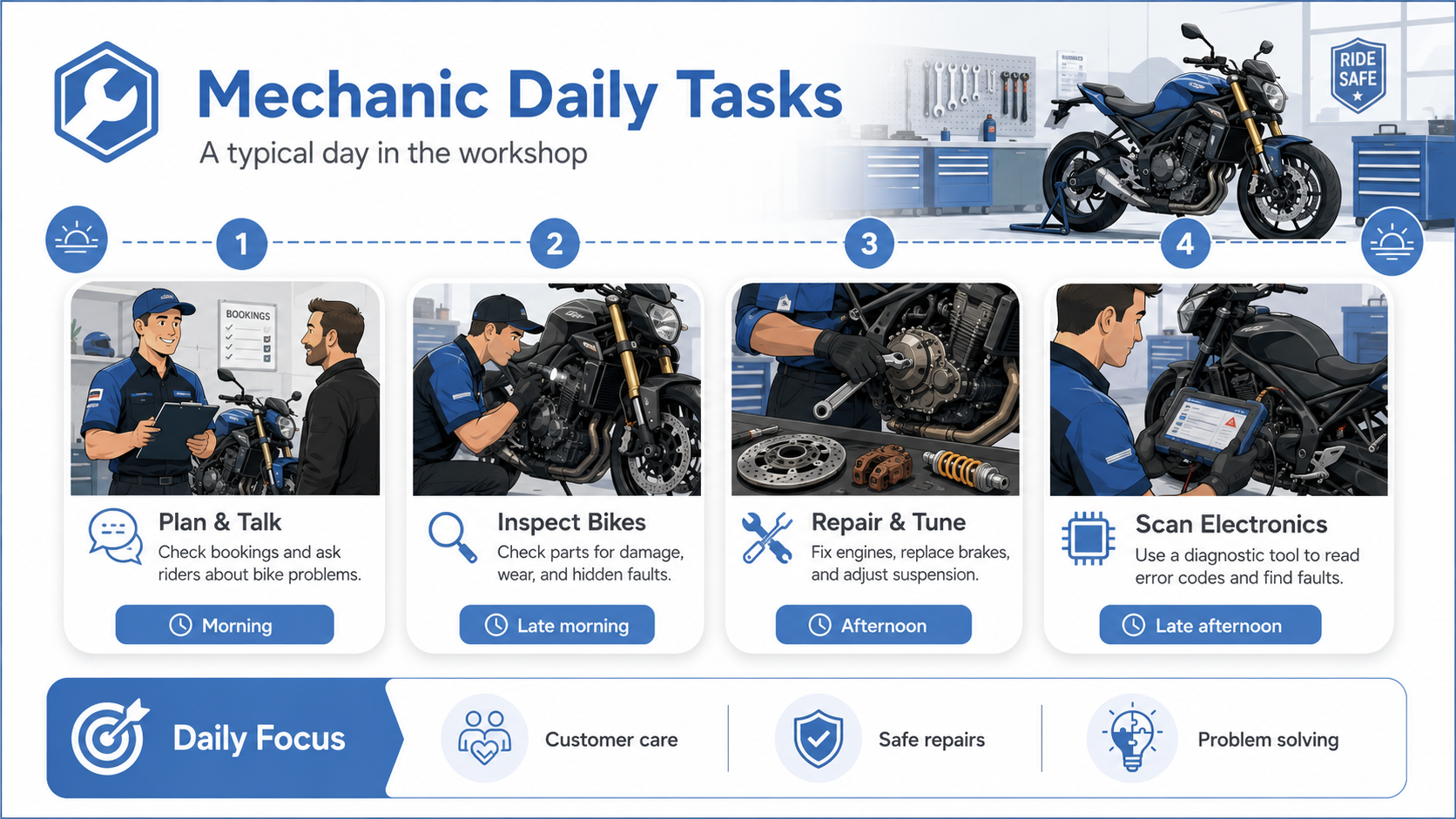
1. Plan the day and talk to customers (early morning):
First, you start the morning by looking at your schedule to see which motorbikes need fixing. Then, you talk to the bike owners to find out what is wrong with their vehicles.
2. Check the motorbikes carefully (late morning):
Next, you look over the whole motorbike very carefully. You do this to check for any hidden broken parts or things that are wearing out.
3. Fix the engines and brakes (afternoon):
After that, you spend your afternoon doing the main repair work. For example, you tune up engines so the bikes run smoothly, and you change old brakes so the riders can stop safely. You also adjust the bike’s suspension to make the ride comfortable.
4. Find tricky electrical problems (late afternoon):
Finally, because modern motorbikes have lots of wires and computers, you use a special scanning tool to check the electronics. However, you plug this tool into the bike’s computer to read error codes and find out exactly how to fix the electrical faults.
How to Become a Motorcycle Mechanic in the UK?
You do not need a university degree to break into this trade, but you do need a clear plan.
At first, you should look at the entry requirements if you are a secondary school leaver. Employers highly value GCSE maths and science because you will need to calculate measurements and understand electrical currents.
Then, you must build up your practical familiarity with bikes. You can get a massive advantage by securing work experience at local garages. Alternatively, you can volunteer to help out at UK motocross and road racing events, which shows employers that you possess real passion.
Which Motorcycle Mechanic Course Routes Give the Best Foundation?
If you want a strong start, you can choose between a few main training pathways in the UK, such as:
Full-Time College Courses
Many students choose to study full-time at a local college. You can enrol in a Level 2 Diploma in Motorcycle Maintenance and Repair, then progress to the Level 3 Diploma. Furthermore, these courses teach you the fundamental mechanical principles in a controlled workshop environment.
Apprenticeships
The Level 3 Advanced Apprenticeship route is highly popular because it combines paid on-the-job training with off-site study. However, this pathway usually takes around 36 months to complete. On top of that, you earn a wage from your employer while attending college one day a week.
Professional Recognition
The Institute of the Motor Industry regulates these training pathways. When you complete an IMI-approved course, you receive a recognised professional qualification that employers across the UK respect.
What Needs to be in Your First Toolbox?
When you start out, you do not need to buy every tool in the shop. However, you do need a collection of good-quality basics to get you started. Having the right tools means you can do your job safely without damaging the motorbikes.
First, you will need tools to undo bolts and screws. Then, you will need tools for gripping and cutting wires. In the end, you must have tools to measure things exactly.
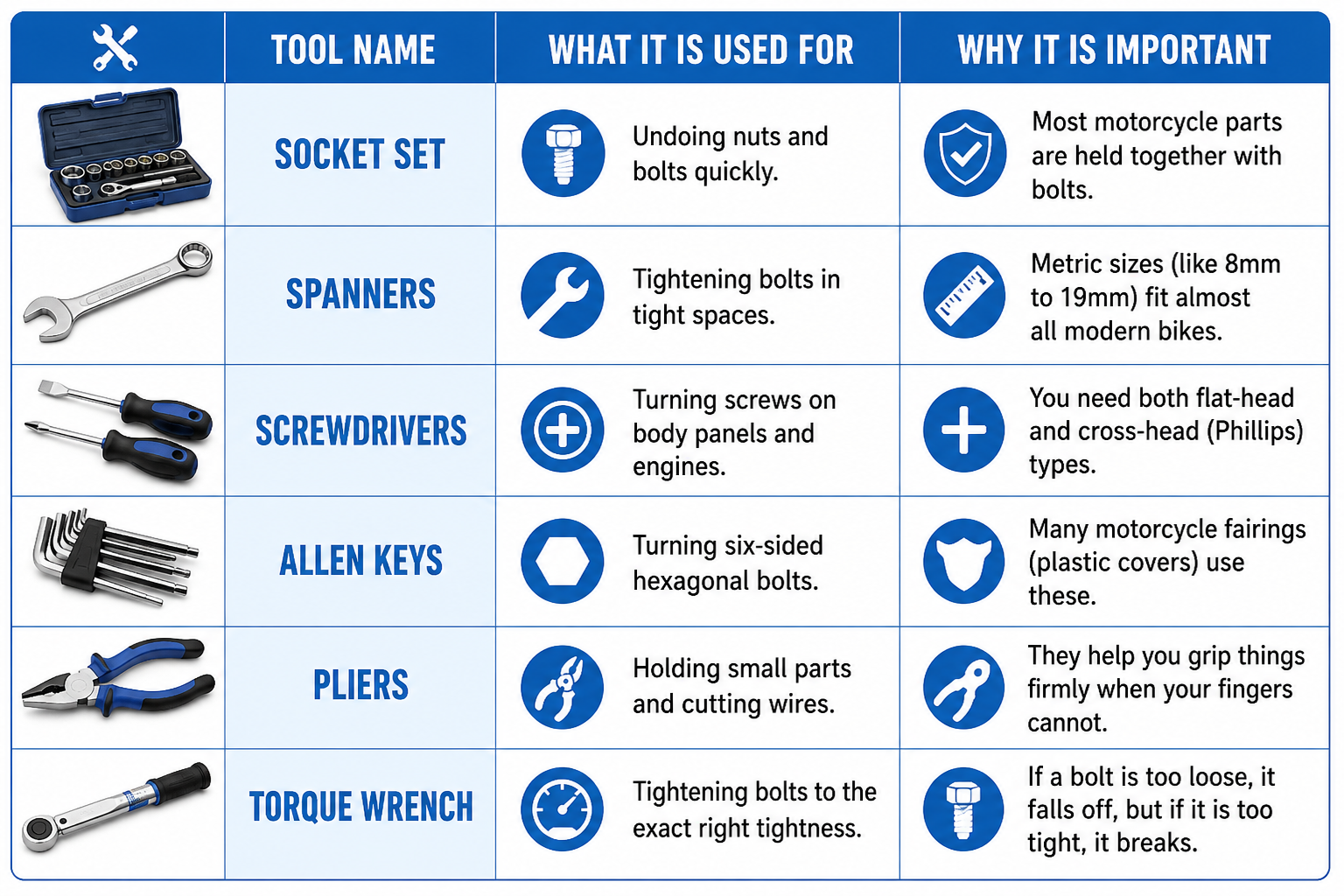
Here is a simple guide to the essential tools you should put in your very first toolbox, like:
Can You Use an Online Motorcycle Mechanic School?
The answer is yes, because e-learning platforms are excellent for mastering motorcycle mechanics theory from the comfort of your home.
An online curriculum covers essential technical topics that you must understand before you touch a spanner or a wrench.
To make your CV stand out, you should look for a CPD-accredited motorcycle mechanic certification online. On top of that, a Continuing Professional Development certificate proves to garage managers that you understand the theory and take your career growth seriously.
What Skills Drive Success in Motorbike Repair?
To become a top-tier technician, you need a specific blend of practical talents and personal traits.
Technical Competencies
You must develop precise hand-eye coordination to handle small engine components. However, you will regularly work with sensitive threads and gaskets where a single mistake can ruin a customer’s engine block.
Soft Skills
Logical problem-solving is vital because bikes often arrive with mysterious faults. Along with that, you also need active communication skills to explain mechanical issues to customers clearly, alongside great workshop time management to meet delivery deadlines.
The Motorcycle Licence
Well, you need to get a valid UK motorcycle licence as soon as possible. Without it you can’t legally take customer machines for test rides on public roads to make sure your repairs actually worked.
Where Can You Find the Best Motorbike Mechanic Jobs?
Once you qualify, you can look for employment across several different sectors. Independent repair shops offer great variety because you will work on many different brands. Main brand dealerships like Honda, Yamaha, or Triumph allow you to specialise in brand-new models and advanced factory tech. However, if you are very lucky, you might even find work with a professional racing team.
If you already possess years of hands-on experience but lack formal diplomas, you can still find work. You should visit local garages directly, show them your skills, and ask for a practical trial.
In terms of career progression, you have plenty of options. You can specialise in advanced computer diagnostics, train to become an official MOT examiner. Or eventually open your own independent workshop.
Future-Proofing Your Career: The Electric Bicycle Shift
When you start your journey as a mechanic, you will need the right tools for the job. However, you do not need to buy everything at once. Initially, it is best to get the essential tools that you will use every single day.
Here are the most important things to put in your first toolbox, such as:
- A Metric Socket Set: Most motorbikes in the UK use metric measurements (millimetres). Therefore, a good socket set will help you undo nuts and bolts quickly and safely.
- Combination spanners: These have an open end and a round ring end. Also, they are perfect for tight spaces where a big socket will not fit.
- Allen Keys (Hex Keys): Many modern motorbikes use hex bolts to hold the plastic covers and engine parts in place. Because of this, you will need a strong set of Allen keys.
- Screwdrivers: You will need both flat-head and Phillips (cross-head) screwdrivers. Next, make sure they have comfy grips so your hands do not slip.
- Pliers and Wire Cutters: These are great for holding small parts, bending clips, and cutting zip ties.
- A Torque Wrench: This is a special tool that tightens bolts to the exact tightness needed. It is very important because overtightening a bolt can snap expensive bike parts.
Final Thoughts on Motorcycle Mechanic
So, what is motorcycle repair for someone who loves bikes? It is a chance to turn your passion into a great, hands-on job. It keeps riders safe on the road and helps them stay moving every day. Through this trade, you will learn how to fix complex engines, solve tricky electrical faults and build a rewarding career that is always in high demand.
However, this work is bigger than just fixing bikes. It is about building trust with every rider who hands you their keys. If you want to master the technical theory right from home and make your CV stand out, taking a structured online programme like this Motorcycle Maintenance Course is a fantastic first step.
FAQs
What is a motorcycle mechanic?
- A specialist technician who repairs and services motorbikes.
What are motorcycle mechanics called?
- They are often called motorcycle technicians or motorbike mechanics.
What is the highest paid type of mechanic?
- Aircraft and aviation mechanics earn the highest average wages.
How much do motorbike mechanics charge per hour?
- UK garages usually charge between £40 and £80 hourly.
How much does a motorbike mechanic get paid?
- Annual earnings typically range between £20,000 and £40,000.
Do you need qualifications to be a motorcycle mechanic?
- Formal diplomas help but practical experience can secure work.
How long does it take to be a motorbike mechanic?
- A standard UK apprenticeship route takes around 36 months.
How hard is it to pass the motorcycle test in the UK?
- It requires dedicated practice to master the two modules.
Which bike is most liked by girls?
- Lightweight scooters and low-seat cruisers are highly popular.