
No products in the basket.
In the UK, over 100,000 families need extra help every single year. Often, life can get very tricky for many parents and children. Sometimes, they feel stuck and do not know who to ask for help; as a result, this is a big problem for happy homes. Fortunately, a family support worker is the best solution for these families. A Family Support Worker usually needs a Level 3 qualification in childcare, social care, or counselling. Some experience with families, young people, or vulnerable adults is also important. Before starting the job, you must pass a DBS check. In addition, good communication skills, patience, and basic safeguarding knowledge help you support families well. Many people gain experience through volunteering or an apprenticeship, which also provides useful training.
So, let us dive in and learn about these amazing community heroes. Are you ready to see how a little bit of help can change a whole life forever?
What Does a Family Support Worker Actually Do?
A family support worker has a very busy job. They do not sit at a desk all day long. Instead, they go out into the world to meet people. Such as:
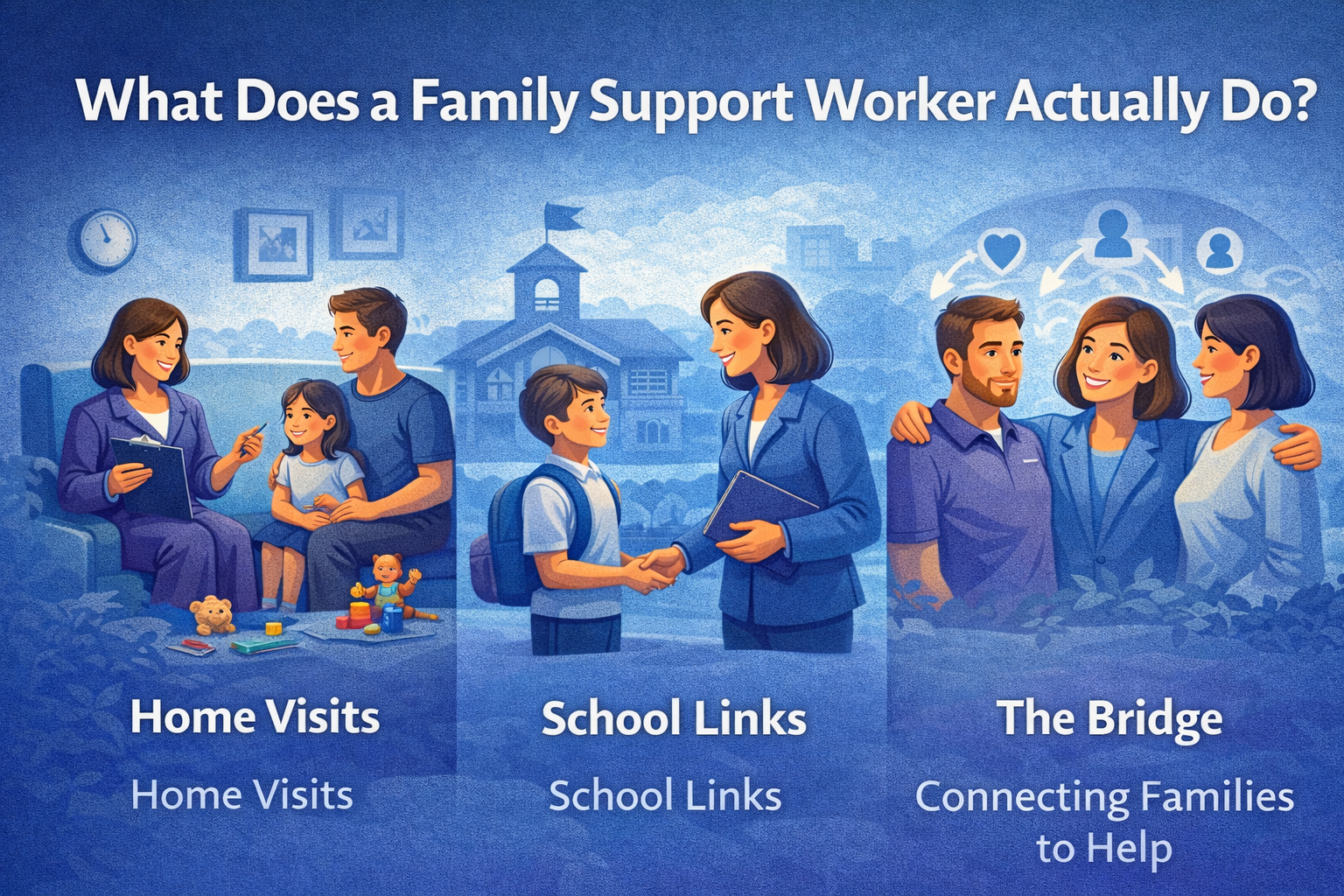
Home Visits: Helping Parents Organise
First, they visit people in their own houses. This helps them see how a family lives. They might help a parent organise a daily routine. For example, they show how to plan healthy meals. They might also help with tasks or simple life skills.
Sometimes, a house can get very messy when people feel sad. A family support worker does not get angry about the mess. Instead, they grab a bin bag and help tidy up. They teach the parents how to keep the home nice. This makes the children feel much calmer at home.
School Links: Making Sure Kids are Happy
Next, they spend a lot of time talking to schools. A family support worker wants every child to attend class. If a student is unhappy, the worker finds out why. They talk to teachers to fix any problems. This makes school a much happier place for the kids.
Sometimes, a child might be bullied at school. Or, they might find the lessons too hard. The worker sits down with the child to listen. Then, they speak to the headteacher to find a solution. This ensures no child falls behind in their learning.
The Bridge: Connecting Families to Help
Think of them as a human bridge. They connect families to the help they need. This might mean finding a good doctor for a sick child. Or, it could mean visiting a food bank for extra groceries. They know exactly who to call when things get tricky.
Many parents do not know how to ask for help. They might feel shy or even a bit scared. A family support worker holds their hand through the process. They go to meetings with the parents so they feel brave. This support makes a huge difference to a struggling family.
Why the Community Needs a Family Support Worker?
Why is the role of a family support worker so essential today? Families are the heart of our whole world. If a family is happy, the children do well. But many families face big hurdles in our modern lives.
A family support worker steps in before things get too bad. They catch problems early, so they do not grow. Without them, many parents would feel completely alone. They give people the tools to fix their own lives. This makes the whole community much stronger and safer.
Preventing Bigger Problems
Imagine a small leak in a water pipe. If you fix it early, the house stays dry. If you wait, the whole floor might rot. A family support worker is the person who fixes the leak. They help with money or behaviour before a crisis happens. This saves the government a lot of money later on.
Keeping Kids Out of Care
Most parents love their children very much. However, some parents hit a very rocky patch. They might lose their job or get very ill. A family support worker provides the extra help they need. This keeps the children living safely at home with their parents. This is always the best result for everyone involved.
Working with Teenagers
Teenagers are not like little children. They have different types of problems. A family support worker has to change how they work for them.
Building Trust with Teens
Many teenagers do not want to talk to adults. They might feel like adults just tell them what to do. A family support worker starts by just “hanging out.” They might play a video game together first. This shows the teen that the worker is a normal person.
Talking About Peer Pressure
Teenagers often worry about what their friends think. They might feel pressured to do things that are not safe. The worker talks to them about making good choices. They help the teen find a hobby like football or dance. This gives the teen something positive to focus on.
Planning for the Future
The worker also helps teens think about jobs or college. They might help them write their very first CV. This gives the young person hope for a bright future. Having a goal makes life feel much more exciting.
Skills You Need to Be a Family Support Worker
Do you think you have what it takes? You certainly do not need to be a genius; however, you do need a very big heart. To help you get started, here are the top skills for a family support worker:
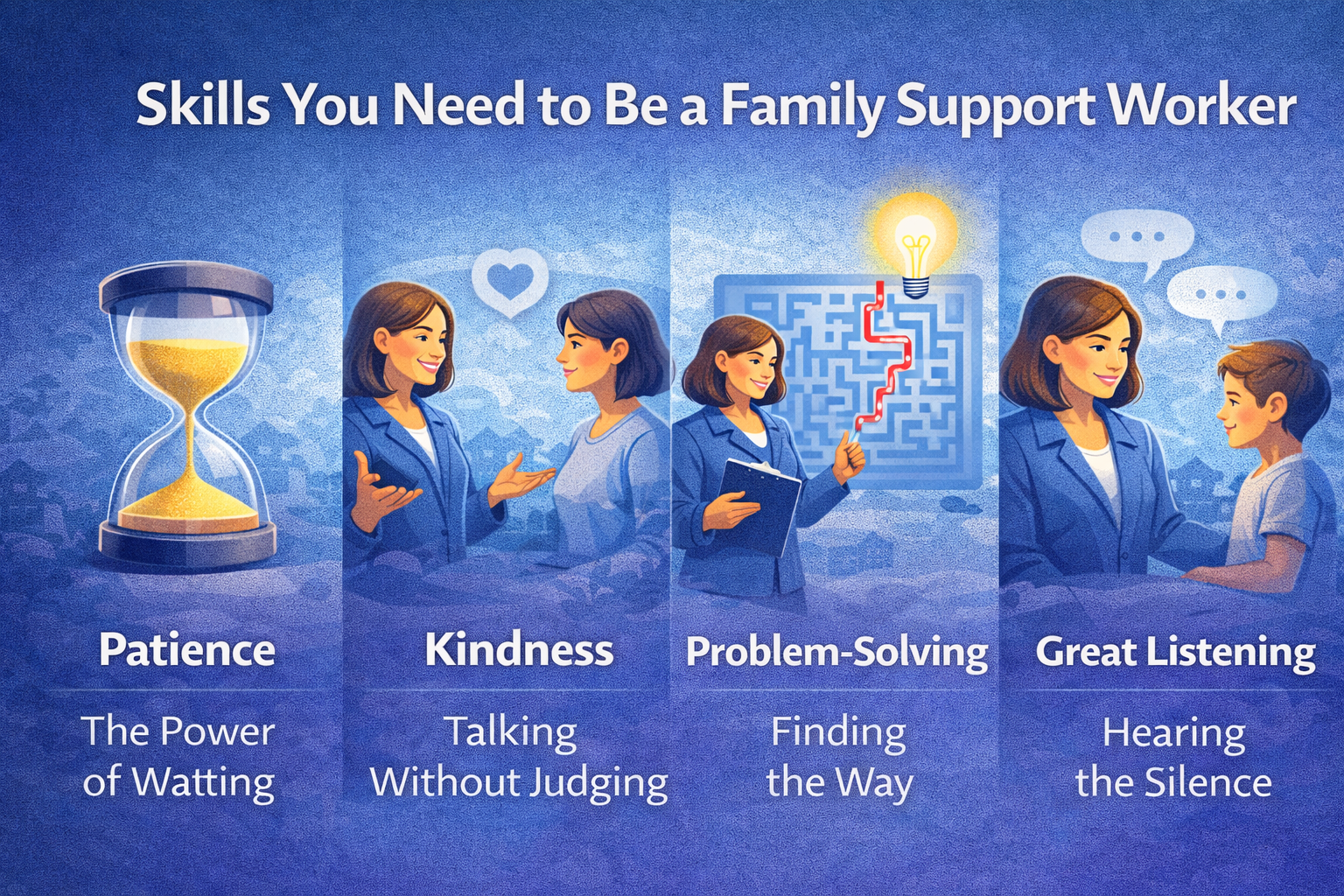
Patience: The Power of Waiting
Big changes do not happen overnight. For this reason, you must be willing to wait for people. Sometimes, a parent might fail a few times before they succeed. Nevertheless, you have to stay positive and keep trying with them, because patience is the most important tool in your kit.
Kindness: Talking Without Judging
In addition to being patient, you must talk to people with love and respect. Never look down on a family because they are struggling or poor; instead, remember that everyone deserves to feel important and heard. Ultimately, if you are kind, people will trust you much faster.
Problem-Solving: Finding the Way
Beyond having a big heart, you also need to find clever ways through tricky situations. For example, if a family has no electricity because of a debt, you may have to call the power company and negotiate. In these moments, you need to be a bit like a detective.
Great Listening: Hearing the Silence
Finally, you must be able to hear the things people are too shy to say. This is crucial because, sometimes, a child says they are fine while looking sad. A family support worker notices these small details and, consequently, asks the right questions to get to the truth.
How to Become a Family Support Worker?
If you like helping people, you can start planning now. It takes some study and some heart.
Step – 1: School Subjects
First, focus on your English and Maths. You will need to write reports and help with budgets. Social Studies is also very helpful for this career. It helps you understand how our society fits together.
Step – 2: College and University
Later, you might study Social Work or Childcare at college. These courses teach you how children grow and develop. You will learn about the laws that keep children safe.
Step – 3: Work Experience
While you study, try to volunteer as much as you can. You could help at a local youth club on Fridays. Or, you could work at a summer camp for kids. This shows you enjoy being around families and children.
Step – 4: The DBS Check
Before you start, you need a DBS check. This is just a way to check your history. It makes sure that only safe people work with children. It is a very important step for everyone in the UK.
Why Writing Reports is Important
You might think a family support worker just talks all day. But, they also have to write a lot. After every visit, they write a report.
Keeping a Record
Reports help everyone remember what happened. If a new worker takes over, they can read the notes. This means the family does not have to repeat their story. Repeating a sad story can be very painful for people.
Evidence for Help
Sometimes, these reports help get more money for the family. They show the government that the family is trying hard. The reports act as proof of the progress being made. Without good writing, the family might miss out on help.
Accuracy is Key
The worker must be very careful with their words. They only write down the facts of what they saw. They do not guess or tell lies in the reports. This keeps everything fair and honest for the parents.
Working with Other Professionals
A family support worker is part of a big team. They do not work alone in a bubble. They talk to many other experts to get the best results.
Talking to Doctors
If a child is always tired, the worker talks to a doctor. Maybe the child is not eating the right vitamins. The doctor and the worker plan a new diet together.
Working with the Police
Sometimes, things at home get very scary or loud. The police might have to visit the house. The family support worker talks to the police to understand what happened. Then, they help the family make sure it never happens again.
Consulting with Therapists
Some children have very big feelings that they cannot control. A therapist can help them talk about these feelings. The worker makes sure the child gets to their therapy sessions on time. They also help the parents practice the therapist’s advice at home.
The Future of the Job Family Support Worker in the UK
As the world changes, the job of a family support worker changes too. Technology is becoming a big part of the work.
Using Video Calls
Sometimes, a worker cannot visit a house in person. They might use a video call to check in instead. This is great for a quick chat to see how the day is going. It helps the worker stay in touch with more families.
Online Resources
There are now many apps to help with parenting. A worker might show a mum a new app for healthy recipes. Or, they might find an online group for parents of children with autism. Using the internet helps families find support faster.
Final Thought
To wrap up, this job is all about heart and soul. It is about being a friend when someone has none. It is about fixing problems with a smile and a plan. True heroes don’t wear capes; they simply possess a profound, genuine care for others. Could you see yourself as a family support worker one day? It is a career that truly changes lives for the better. If you love helping, this might be your dream job.
Frequently Asked Questions (FAQs)
1. What is an example of a family support worker?
- A professional visiting a struggling home to help a parent create a healthy morning routine.
2. What is a family support worker in Australia?
- Someone helping local families navigate child services and community funding to improve their daily lives.
3. What are 5 key duties of a support worker?
- Visiting homes, linking schools, teaching life skills, offering emotional care, and writing very detailed reports.
4. What is another name for a family support worker?
- People often call them family practitioners, family link workers, or even community family support leads.
6. What are 5 personal skills examples?
- Being very patient, solving tricky problems, listening well, managing time, and talking to people clearly.
7. What are 5 important personal qualities of a support worker?
- Showing deep kindness, staying very calm, being honest, acting brave, and never judging any family.
8. What is a support worker called?
- Depending on the location, they are called case workers, family assistants, or social care practitioners.
9. What does family support mean?
- Providing the practical tools and emotional strength families need to stay safe and happy together.
10. What are the 20 words related to family?
- Love, home, parents, children, safety, trust, routine, care, bond, help, growth, kindness, health, food, shelter, school, play, talk, hug, and hope.