
No products in the basket.
A childminder looks after children and gets paid for it in the UK. If you are thinking about how to become a childminder, start by learning the basic rules. Ofsted or a childminder agency checks this work to keep children safe. Most childminders work from their own home or an approved place. They usually care for children under 8 years old. They follow clear safety and early learning rules set by the UK government.
So, how do you become a childminder in the UK? The steps are clear and easy to follow. First, you register with Ofsted or a childminder agency. After that, you complete background checks and basic childcare training. Then, you go through an inspection before you can start work. At the same time, you should plan your costs early. The registration fee is around £35 to £103. A DBS check costs about £49.50. Training can cost between £60 and £200.
Now, let’s dive in and explore the full process of how to become a childminder.
What Is a Childminder in the UK?

A childminder is a person who offers childcare services and gets paid in the UK. If you are looking for the childminder UK meaning, it simply means a childcare provider who works from home or an approved place. Most childminders care for children under 8 years old. They create a safe and friendly space for children during the day.
However, this job is more than just watching children. A childminder does not only supervise. They help children learn, play, and build good daily habits. At the same time, they follow clear safety rules and support early learning in simple ways. As a result, many parents trust a childcare provider in the UK, like a childminder. They also choose them for flexible care that fits busy work schedules.
Who Needs to Register as a Childminder?
To understand Ofsted childminder registration, you first need to know who must register in the UK. You must register as a childminder if you care for children under 8 years old and get paid for it. Payment can be money or other benefits. You also need to register if you look after children for more than 2 hours a day on a regular basis.
Next, these rules help keep children safe. Childcare is a big responsibility. So the law sets clear safety rules for everyone. If you do not follow the childcare registration UK rules, you can face fines or legal action. Also, part-time care can still need registration. Many people think short hours do not count. But this is not always true.
So, always check the rules before you start. This keeps you safe and helps you work in the right way from day one.
Who Does NOT Need to Register?
So, do I need to register as a childminder? The answer depends on your situation. In many cases, you do not need to register.
First, a nanny usually does not need registration when they work in the child’s home for one family. Next, babysitters also do not need registration for short hours. This often includes evening care, like 6 pm to 2 am. Also, you do not need to register if you care for a family friend’s child for less than 3 hours a day. Tutors also stay outside this rule when they only teach and do not give full childcare. On top of that, you do not need registration if you only look after your own relatives.
However, do not assume your case is safe without checking. Small changes in your work can change the rules. So, always check before you start. You can also choose voluntary registration in some cases. This helps if you want to build a proper childcare job or career.
Childminder vs Nanny vs Agency Childcare: What’s the Difference?
When you compare childminder vs nanny UK, small details help you choose the right option. Let’s break it down in a simple way.
Childminder
A childminder works from their own home or an approved place. They must register with Ofsted and follow EYFS learning rules. So, they do more than just care for children. They also support early learning, such as speaking, playing, and behaviour. Childminders can look after children from different families. However, they must follow strict rules on how many children they can care for at one time. They can mix age groups, but only in a safe and planned way.
Nanny
A nanny works inside the child’s home. Most nannies do not need Ofsted registration. However, they must register if they want Tax-Free Childcare support. A nanny can work for up to two families. In many cases, the law treats them as domestic workers. This affects their pay, contract and rights. Many people do not know this.
Agency childcare
An agency links families with childcare workers. They also check documents and background details. Some agencies offer sleep-in nanny services for night care or shift workers. They also add extra safety checks before placing a worker.
When to Choose Each Childcare Option
Choose a childminder for social learning and daily routine. Pick a nanny for personal care at home. Use an agency when you want fast, safe and flexible childcare support.
What Are the Childminder Registration Types in the UK?
Childminders in the UK follow different registration types. Each type depends on the child’s age and where the care takes place. All of them follow Ofsted rules and safety checks.
Early Years Register (UK)
This register covers children from birth to 5 years old. Childminders must follow the EYFS childminder framework. It guides early learning, play, and child growth. So, they do more than just look after children. They also help with skills like speaking, playing, and behaviour. Ofsted also checks its work through regular visits. Also, here is an important point. Childminders must finish approved first aid training before they start work. Without this, they cannot register.
Childcare Register
This register covers children aged 5 to 8 years. The rules are a bit simpler. However, child safety and record keeping still matter a lot. Childminders must follow all legal rules.
Home-based childminder
This is the most common option. Childminders work from their own home. Next, Ofsted checks the whole home, not just one room. They look at safety, cleanliness, and outdoor space. Also, a DBS check is not enough on its own. Ofsted also checks training, safety knowledge, and home setup.
Outside-home childminder
Some childminders work in schools, halls, offices, or outdoor places. These places must get Ofsted approval before care starts. Even outdoor childcare needs full safety checks.
What Are Childminder Requirements in the UK?
Here are the main checks and rules you must meet before starting childminding work:
- Minimum age 18: Childminding is only open to people aged 18 or above.
- Enhanced DBS check (with barred list): A full background check that shows if someone is safe to work with children.
- First aid training for children: Approved training that teaches how to help babies and children in emergencies.
- Health declaration form: A simple form to confirm you are fit in body and mind to care for children.
- Two references: Two people who can confirm your good character and responsible behaviour.
- Proof of identity and right to work in the UK: Documents like a passport or visa to prove who you are and your legal right to work.
- Certificate of good character (if lived abroad): Police check from another country if you lived outside the UK.
- No disqualification history: No past ban or restriction from working with children.
- DBS check for people aged 16+ in the home: Anyone aged 16 or older living with you must also pass an Enhanced DBS check.
How to Become a Childminder Step-by-Step?
Let’s go step by step. Follow each part in order.
Step 1: Choose your setup
- Decide where you want to work. You can work from your own home. Or you can use an approved outside place.
Step 2: Do DBS and health checks
- Apply for an Enhanced DBS check. Then complete a health declaration form to show you are fit to care for children.
Step 3: Complete required training
- Finish childcare training. Also, complete a first aid course for babies and children.
Step 4: Prepare your documents
- Now collect all the needed papers. This includes your ID, proof of right to work in the UK, and two references.
Step 5: Send your application
- Then apply to Ofsted or a childminder agency. Make sure all details are correct.
Step 6: Finish the payment step
- Pay the registration fee. The cost depends on your application type.
Step 7: Background checks
- Ofsted checks your DBS, references and documents. They make sure everything is safe and correct.
Step 8: Inspection visit (if needed)
- In most cases, an inspector visits your home. They check safety, space, and how you plan to care for children.
Step 9: Approval and start work
- Once everything is approved, you get your certificate. Then you can start working as a childminder.
What Are the Costs to Become a Childminder?
Starting as a childminder requires some basic setup costs. Basically, you pay the registration fee. This usually ranges from £35 to £103, depending on your setup. If you choose nanny registration, the fee is around £103. After that, you complete a DBS check. It costs about £49.50 per person. This check looks at your background and helps keep children safe.
Next, you move to training costs. A first aid course for children usually costs between £60 and £200. Childcare training also costs around £60 to £200. These courses help you learn simple, safe ways to care for children.
Then come a few extra costs. Insurance usually costs £25 to £100. It protects you while you work. Also, ICO registration costs around £40 if you keep digital records. A basic health check can cost about £90.
Finally, your childminder cost in the UK depends on your choices and training provider. These costs come under Ofsted childcare fees and usually happen before you start your work.
How to Register as a Nanny in the UK?
Becoming a nanny is simple when you follow the right steps. Firstly, understand where you work. A nanny works in the child’s home. You cannot use your own home. Also, you can care for up to two families at the same time.
Next, start with the basic checks. Apply for an Enhanced DBS check to show you are safe to work with children. Then complete a first aid course for children. This helps you deal with emergencies. At the same time, arrange insurance to protect yourself while working. After that, move to the application step. Apply for nanny registration UK Ofsted. The registration fee is around £103. Check all your details before you submit.
Finally, wait for the process to finish. It usually takes up to 10 weeks. Once you receive approval, you can work as a registered nanny and earn trust from families.
What Is the Ofsted Inspection and Application Timeline?
After you send your application, Ofsted starts checking your details. First, they carry out background checks. They may also contact local councils. This step helps confirm everything is safe and correct.
Next, they check your references. They contact the people you listed. Then they review your documents and training records. After that, they move to the inspection stage. At this stage, an inspector may visit your home or childcare setting. During the visit, they check a few important things:
- Safety in your home and garden
- Understanding of EYFS rules
- Basic English skills for daily communication
- Proof of first aid training for children
Finally, Ofsted makes a decision. They may approve your application or refuse it. If they approve it, you get your registration certificate and can start work. If they refuse it, they explain the reason clearly so you understand what to improve.
Overall, the full Ofsted inspection childminder process usually takes around 10 to 12 weeks. This time is normal for the childcare approval process in the UK.
What Are the Childminder’s Responsibilities After Registration?
Once you become a childminder, your job continues every day. First, you must pay a yearly registration fee to stay active with Ofsted. Next, update your details if anything changes at home or in your personal life. This keeps your records correct and safe. Also, inform Ofsted if anyone aged 16 or above joins your household.
After that, keep clear and simple records for each child. Write down attendance, learning progress and important notes. Then, report any accident or serious incident straight away. Fast reporting helps keep children safe and builds trust with parents.
Finally, Ofsted may visit you for regular checks. They look at your home safety, childcare work, and daily routine. These steps form key childminder responsibilities UK and help you stay safe, legal, and trusted in your role.
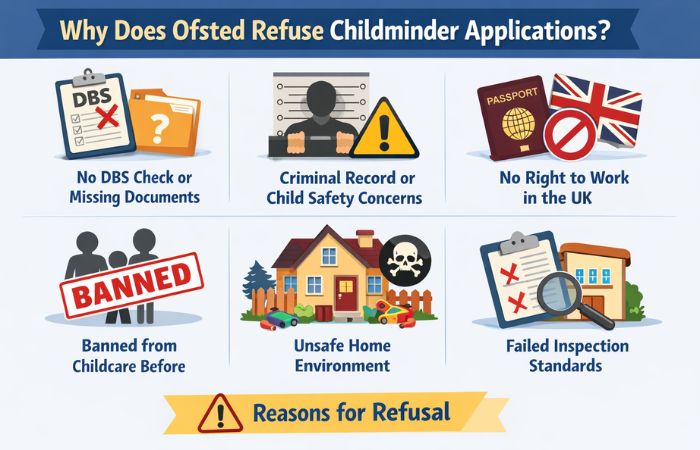
Why Does Ofsted Refuse Childminder Applications?
Ofsted can refuse a childminder application if it finds serious problems. These rules help protect children and keep care safe.
- Missing DBS check or key documents
- Criminal record or child safety concerns
- No legal right to work in the UK
- Previous ban from childcare work
- Unsafe home or garden setup
- Not meeting inspection standards
If Ofsted refuses your application, you still get a chance to respond. You can object within 14 days. Use this time to fix mistakes or explain your side clearly. This helps you get a fair review. After this, you can take the case further. You may go to a tribunal within 3 months. This is your final chance to challenge the decision.
How to Become a Childminder Successfully in the UK?
Here’s what matters most in daily practice:
- First aid early: Learn basic emergency skills before you start caring for children.
- Child-safe home: Make every room safe for play, rest, and learning.
- EYFS understanding: Follow early learning rules to support child growth.
- Clear records: Track attendance, progress, and daily care in simple notes.
- Parent trust: Stay honest, calm and reliable in every interaction.
- Clear communication: Share updates often so parents stay fully informed.
- Inspection ready: Keep your setup ready so Ofsted visits feel stress-free.
These steps support how to pass Ofsted inspection childcare and help you become a confident, trusted childminder.
Final Thoughts
So, how to become a childminder in the UK? Is that too difficult? Not really. It becomes simple when you follow each step clearly.
First, understand this. Childminding is a legal rule for paid childcare in the UK. You must complete checks, training, and an Ofsted inspection before you start work. Each step proves you can care for children in a safe way. Next, think about time and cost. DBS checks, training, insurance and registration fees all add up. The full process can take several weeks, so early planning helps you avoid stress.
Finally, look at the overall picture. Childminding is a stable job in the UK. Many families need childcare, so demand stays strong in many areas. If you stay ready and follow each step, you can become a confident childminder in the UK.
Love working with kids? Thinking about a career in childcare? Join our Level 3 Childcare Training Course and take the first step.
Frequently Asked Questions (FAQs)
1. What qualifications do I need for childminding?
- You do not need a degree to begin. However, you must complete key training. To get started, take a childcare or EYFS course. At the same time, complete first aid training for children and safeguarding training. You will also need to complete an Enhanced DBS check. After that, Ofsted reviews everything before giving approval.
2. How much do you earn as a childminder?
- Your income depends on hours and location. Most childminders in the UK earn around £18,000 to £35,000 a year. Some earn more with full-time care and multiple children.
3. Is it worth being a childminder?
- Yes, if you enjoy working with children. It gives flexible hours and steady demand. You also build strong bonds with families. But it needs patience and daily responsibility.
4. How much does it cost to become a childminder?
- Start-up costs usually range from £200 to £600. This includes DBS checks, first aid training, insurance and registration fees. Some costs may vary based on your setup.
5. How much to pay a childminder per hour?
- In the UK, parents usually pay £5 to £7 per hour per child. Rates can go higher in big cities or for special care needs.
6. Is there a demand for childminders?
- Yes, demand stays strong across the UK. Many parents need flexible childcare, especially for working hours. In some areas, places are still limited.
7. How much is 30 hours of childcare worth?
- It depends on the hourly rate. At £6 per hour, 30 hours equals around £180 per week. Government support may also reduce this cost for eligible families.
Level 3 Childcare Training Course
Course Description :
- Certificate: Yes(Free)
- Accreditation: CPD Accredited
- Access: Lifetime