
No products in the basket.
A lifeguard does more than watch people in the water. You help keep swimmers safe and act quickly when someone needs help. It is an active job, but you may also wonder about the pay. So, how much do lifeguards get paid depends on several things. Lifeguard wages can change based on your location, age, experience, and workplace. In the US, lifeguards often earn around $13 to $18 per hour. In the UK, they may earn about £11.44 to £15 per hour.
This guide explains lifeguard pay in simple terms. You will also learn what can affect your wages and where you may find better-paid jobs.
How Much Do Lifeguards Get Paid in the UK?
Lifeguard pay can change based on several things. These include your experience, location, employer and working hours. The National Careers Service says lifeguards can earn £19,000 to £27,000 a year.
Indeed lists the average UK lifeguard salary at around £25,420 a year. You may find different figures on other websites. This happens because each website uses different job adverts and salary data.
New lifeguards may start near the lower end of the salary range. As you gain more experience, your pay may increase. Some lifeguards also move into senior roles. These roles can offer higher pay and more responsibility.
Your workplace can also affect your salary. For example, you could work at a leisure centre, swimming pool, hotel or beach. Different employers may offer different pay rates for similar jobs. Your working pattern matters too. A full-time lifeguard may earn more each year than someone who works part time. However, part-time work can give you more free time and flexibility.
How Much Does a Lifeguard Earn Per Hour?
Many lifeguards work part time. This option can suit students and people with other jobs. It can also help people who want flexible working hours. Hourly pay can vary between employers. Your location and experience can also make a difference. Some employers may offer higher rates for evening, weekend or extra shifts.
For example, imagine a lifeguard earns £13 an hour. If they work 20 hours each week, they would earn around £260 a week before tax. Their yearly income would depend on how many weeks they work.
Someone who works more hours can earn more over the year. However, lifeguarding often involves different shift patterns. Some jobs may offer extra hours during busy periods or school holidays.
So, check both the hourly rate and weekly hours before applying. This gives you a clearer idea of your possible earnings. Also, check whether the job offers paid training, holiday pay or extra shift rates.
Do Experienced Lifeguards Earn More?
Experience can help lifeguards earn more. New lifeguards often start near the lower end of the pay range. As they gain skills, they may find jobs with better pay. Some lifeguards move into senior lifeguard roles. These roles come with more duties. A senior lifeguard may help new staff learn their work. They may also help keep the pool safe and organised.
Lifeguards can also move into supervisor roles. With more training and experience, some may become pool managers. Others may move into leisure centre management. The National Careers Service lists lifeguard salaries of up to £27,000 a year. However, not every experienced lifeguard will earn this amount.
Your pay can depend on your employer, location and working hours. Your qualifications can also help you apply for different roles. So, if you enjoy lifeguarding, you can build your career over time. Gaining more skills can open the door to new job options.
How Much Do Lifeguards Earn in Different Locations?
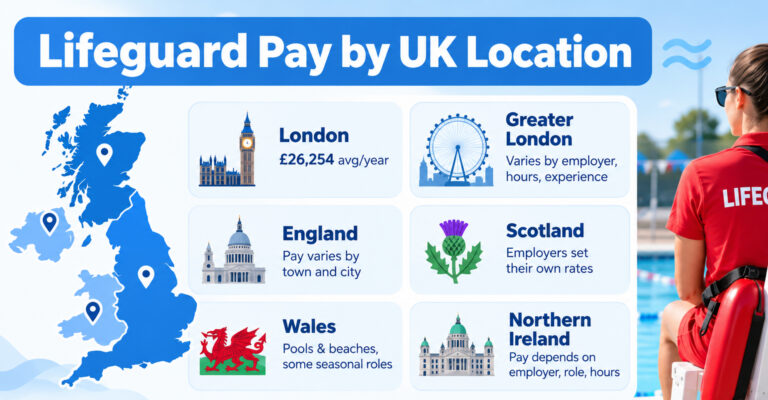
Lifeguard pay can vary across the UK. Employers in different areas may offer different rates. Local demand can also affect the pay in job adverts.
- London: Indeed lists an average lifeguard salary of around £26,254 a year in London.
- Greater London: Pay can vary between employers and leisure centres. Your hours and experience can also affect your earnings.
- England: Lifeguards can work at pools, gyms, hotels and leisure centres. Pay can differ across towns and cities.
- Scotland: You can find lifeguard jobs at pools and leisure centres. Employers set their own pay rates.
- Wales: Lifeguards can work at pools and coastal locations. Some beach jobs may offer seasonal work.
- Northern Ireland: Lifeguards can find jobs at pools and leisure centres. Pay depends on the employer, role and working hours.
Living costs also differ across the UK. Therefore, check both the salary and job location before applying.
What Is the Starting Salary for a Lifeguard?
New lifeguards often start with a lower salary. The National Careers Service gives a salary range of £19,000 to £27,000 a year. Your starting pay may depend on the employer, location and hours you work. You can also find trainee and entry-level lifeguard jobs. These roles can help you gain skills and experience. They can be a good way to start your career.
Your qualifications can also affect the jobs you can apply for. Many employers ask for a recognised lifeguard qualification. For pool jobs, you may need the National Pool Lifeguard Qualification (NPLQ).
However, each employer can set its own rules. Some may also ask for first aid training. Others may have extra requirements for the role. If you are new to this job, start by checking the required qualifications. Then, look for entry-level jobs that match your skills. This can help you take your first step into lifeguarding.
What Can Change a Lifeguard’s Pay?
Several things can change your lifeguard pay. So, two people doing similar jobs may earn different amounts.
- Experience: More experience can help you apply for senior roles.
- Location: Pay can differ between areas.
- Employer: Each employer can set its own rates.
- Working hours: More hours can increase your yearly income.
- Pool or beach setting: Different workplaces may offer different pay.
- Qualifications: Extra training can help you access more jobs.
- Seniority: Senior roles often bring more duties and higher pay.
- Seasonal work: Some beach jobs only run during busy months.
- Contract type: Full-time and part-time jobs have different yearly earnings.
The National Careers Service also says that pay can vary with hours, employer, location, training and seasonal work. When you compare jobs, look beyond the salary. Check the hours, duties and contract too. This gives you a clearer idea of what you could earn.
Do Pool Lifeguards and Beach Lifeguards Earn the Same?
Pool and beach lifeguards may earn different amounts. Their pay can depend on the job, place, and experience. The type of work also matters.
Pool lifeguard pay
Pool lifeguards can work in places such as:
- Leisure centres
- Gyms
- Hotels
- Swimming pools
Many pool jobs offer regular shifts. Some lifeguards work full time. Others work part time. Your pay may also increase as you gain more experience.
Beach lifeguard pay
Beach lifeguards often work in the warmer months. Many beach jobs are seasonal. You may also work in busy coastal areas. Beach lifeguards need extra rescue skills. They may deal with waves and strong currents. They also work outside in different weather. So, beach lifeguarding can need extra training. The National Careers Service lists both pool and beach lifeguarding as career options.
What Do You Need to Qualify as a Lifeguard?
You need the right training to become a lifeguard. The qualification you need depends on your workplace. For pool work, you can take the National Pool Lifeguard Qualification (NPLQ). You can also take a Level 2 Award in Pool Lifeguarding.
For beach work, you can take the National Vocational Beach Lifeguard Qualification (NVBLQ). This course teaches key beach rescue skills. You also need first aid and rescue skills. These skills help you respond during an emergency.
You must also meet the age rules for your course. These rules can differ between training providers. Therefore, check the rules before you apply. Good training can help you start your lifeguard career. The work can feel hard at times. However, helping people stay safe can feel very rewarding.
Can Lifeguards Increase Their Salary?
Yes, lifeguards can earn more as they gain skills and experience. Extra training can also help you find better roles. You could become a senior lifeguard with more experience. You may also become a lifeguard mentor. This role lets you help new lifeguards learn their job.
With more training, you could become a lifeguard instructor. You can then teach others how to stay safe in the water.You could also train as a swimming teacher. This role lets you teach children and adults how to swim.
Another option is to become a pool manager. You may manage staff and check daily pool safety. Some people move into leisure centre management. Others learn pool plant operation. This work involves looking after pool equipment and systems. So, you have several ways to grow in this career. Your next step depends on your skills, training, and goals.
Is Lifeguarding a Good-Paying Job?
Lifeguard pay can differ across the UK. The National Careers Service lists pay from about £19,000 to £27,000 a year. You can also find part-time lifeguard jobs. These jobs may suit people who study or have other work.
Working hours can vary too. Some jobs offer regular shifts. Others offer seasonal work during busy months. You need the right training to work as a lifeguard. Pool lifeguards often need the NPLQ. Beach lifeguards need beach rescue training.
You can also move into higher roles over time. These include senior lifeguard, instructor, swimming teacher, and pool manager. However, lifeguarding comes with important duties. You must watch swimmers closely. You must also act fast when someone needs help.
Final Thoughts
Lifeguarding can offer flexible work and useful career options. Your pay can change with your experience, location, hours and workplace. So, how much do lifeguards get paid depends on several factors.
New lifeguards may start with a lower wage. However, extra training can help you move into higher roles. You could become a senior lifeguard, instructor or pool manager. Part-time and seasonal jobs can also suit different lifestyles.
Most importantly, lifeguarding comes with real responsibility. You help keep people safe and must act quickly when needed. With the right skills, you can build a rewarding career.
If you want to build your lifeguarding knowledge, explore the Lifeguard Course from Training Tale. It can help you learn key safety topics and understand the role with more confidence.
FAQs
1. How much do 17 year old lifeguards get paid?
Pay varies by employer, location, and working hours. A 17-year-old may earn less than an adult lifeguard.
2. What are the highest paid lifeguards?
Senior lifeguards, instructors, and pool managers can earn more. Pay also depends on experience, location and employer.
3. Do the lifeguards get paid for being on Bondi Rescue?
Yes, the lifeguards featured on Bondi Rescue are paid for their normal lifeguard work. The show itself may have separate arrangements.
4. Is 22 too old to be a lifeguard?
No. You can become a lifeguard at 22. You need the right training and must meet the course requirements.
5. Do UK lifeguards get paid?
Yes. UK lifeguards usually receive an hourly wage or yearly salary. Pay varies by employer, location, and experience.
6. Do you need GCSEs to be a lifeguard?
You usually do not need GCSEs to become a lifeguard. However, you must meet the requirements for your lifeguard course.

Lifeguard Course
Course Description :
- Certificate: Yes(Free)
- Accreditation: CPD Accredited
- Access: Lifetime